Inhaltsangabe
" Crafting a new policy toward Iran is a complicated, uncertain, and perilous challenge. Since it is an extremely complex society, with an opaque political system, it is no wonder that the United States has not yet figured out the puzzle that is Iran. With the clock ticking on Iran's pursuit of nuclear capabilities, solving this puzzle is more urgent than ever. In Which Path to Persia? a group of experts with the Saban Center for Middle East Policy at Brookings lays out the courses of action available to the United States. What are the benefits and drawbacks of airstrikes? Can engagement be successful? Is regime change possible? In answering such questions, the authors do not argue for one approach over another. Instead, they present the details of the policies so that readers can understand the complexity of the challenge and decide for themselves which course the United States should take."
Die Inhaltsangabe kann sich auf eine andere Ausgabe dieses Titels beziehen.
Über die Autorin bzw. den Autor
Kenneth M. Pollack is director of research at the Saban Center for Middle East Policy at the Brookings Institution. His books include A Path out of the Desert: A Grand Strategy for America in the Middle East (Random House). Daniel L. Byman is a senior fellow at the Saban Center, director of the Center for Peace and Security Studies at Georgetown University, and author of The Five Front War: The Better Way to Fight Global Jihad (Wiley). Martin Indyk is director of the Saban Center, former U.S. ambassador to Israel, and the author of Innocent Abroad: An Intimate Account of American Peace Diplomacy in the Middle East (Simon & Schuster). Suzanne Maloney is a senior fellow at the Saban Center. She has worked on the State Department's Policy Planning Staff where she provided analysis of Middle East issues. Michael E. O'Hanlon is a senior fellow in Foreign Policy Studies at Brookings and author of Budgeting for Hard Power (Brookings).Saban Center Senior Fellow Bruce Riedel served as chairman of President Obama's Strategic Review of U.S. Policy toward Afghanistan and Pakistan and is the author of The Search for al Qaeda (Brookings).
Auszug. © Genehmigter Nachdruck. Alle Rechte vorbehalten.
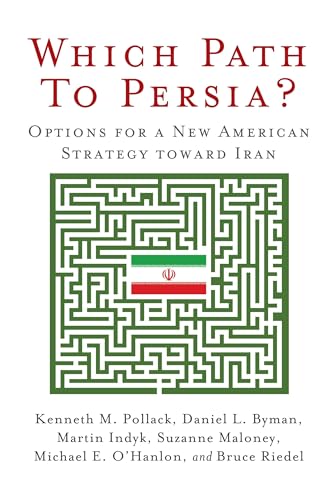
Which Path to Persia?
Options for a New American Strategy toward IranBy Kenneth M. Pollack Daniel L. Byman Martin Indyk Suzanne Maloney Michael E. O'Hanlon Bruce RiedelBROOKINGS INSTITUTION PRESS
Copyright © 2009 THE BROOKINGS INSTITUTIONAll right reserved.
ISBN: 978-0-8157-0341-9
Contents
Preface..........................................................................................viiIntroduction: The Trouble with Tehran: U.S. Policy Options toward Iran...........................1Part I. Dissuading Tehran: The Diplomatic Options................................................291 An Offer Iran Shouldn't Refuse: Persuasion.....................................................312 Tempting Tehran: The Engagement Option.........................................................57Part II. Disarming Tehran: The Military Options..................................................833 Going All the Way: Invasion....................................................................874 The Osiraq Option: Airstrikes..................................................................1035 Leave It to Bibi: Allowing or Encouraging an Israeli Military Strike...........................125Part III. Toppling Tehran: Regime Change.........................................................1416 The Velvet Revolution: Supporting a Popular Uprising...........................................1437 Inspiring an Insurgency: Supporting Iranian Minority and Opposition Groups.....................1578 The Coup: Supporting a Military Move against the Regime........................................170Part IV. Deterring Tehran: Containment...........................................................1799 Accepting the Unacceptable: Containment........................................................183Conclusion: Crafting an Integrated Iran Policy: Connecting the Options...........................201Notes............................................................................................217Authors..........................................................................................227Index............................................................................................231
Chapter One
An Offer Iran Shouldn't RefusePersuasion
To convince Iran to give up its nuclear program, the George W. Bush administration in 2005 adopted a diplomatic approach that employed a combination of positive inducements and the threat of economic and diplomatic sanctions if Tehran refused to comply. By the time Bush left office, the policy had not yet succeeded, although it had accomplished more than many of its critics had predicted. Many Americans believe that this approach could be revived, revised, and made to succeed under a new administration.
Immediately after his election, President Obama himself indicated that this would be the starting point of his administration's approach to Iran. Since then, the administration has finished its policy review and has adopted a multifaceted version of this option.
Like all Iran policy options, this approach faces considerable hurdles. For this option, the first hurdle is overcoming the legacy of the Bush administration's efforts and demonstrating that they failed not because of inherent flaws in the strategy, but because of poor implementation. Those who favor Persuasion (sometimes infelicitously referred to as a policy of "carrots and sticks") believe that the Bush administration hamstrung the process by combining it with elements of other policy options—particularly regime change—that ran at cross-purposes. It also eschewed key diplomatic bargains that might have secured greater international support and refused to put up meaningful positive incentives that could have had a greater impact on the actions of both Tehran and the rest of the international community.
Persuasion also requires building a broad international commitment to a set of powerful sanctions on Iran to punish it for noncompliance at a time when many countries do not see the threat from Iran as a priority, and some have reason to oppose such treatment. Moreover, in the final analysis, this option (and the Engagement option as well) rests on the willingness and ability of the leaders of Iran to sort out their politics in such a way that they agree to comply with the international community. Iran's habitual pugnacity toward external pressure and the Byzantine internal politics of the clerical regime mean that any such effort inevitably begins with a hard row to hoe.
Goal
This policy is intended to convince the government of Iran to change its behavior on issues of critical importance to the United States. It is not intended to try to change the government of Iran. Shortly after taking office, President Obama attempted to underline this point in his Nowruz (Iranian New Year) message to the people of Iran on March 19, 2009, in which he assured Iranians that "The United States wants the Islamic Republic of Iran to take its rightful place in the community of nations." (Emphasis added.) In other words, the president was signaling that he was ready to accept the current Iranian regime, not merely the Iranian people, back into the international community if the regime were willing to work constructively with the United States and the rest of the international community.
A key question that the new U.S. administration will have to address regarding the goals of the Persuasion approach toward Iran is whether to focus only on convincing Iran to cease its nuclear program or also to insist that Iran cease its support for terrorism and other anti-status-quo activities (particularly its efforts to hinder Arab-Israeli peacemaking).
Although there are risks in Iran's mere possession of a nuclear weapons-making capability, the most likely threat is that once Iran is believed to have such a capability, it will pursue its regional anti-status-quo agenda more aggressively than in the past. Specifically, it may provide greater support to terrorist groups and Palestinian rejectionists, it may again attempt to subvert conservative Arab regimes, it may provide arms to countries and non-state actors fighting the United States and its allies, and it may pursue a range of other actions all intended to undermine the American position, topple or "Finlandize" unfriendly governments, and otherwise reorder the region more to its own liking. Even with a nuclear capability, Tehran may still not achieve these aims, but a greater willingness to try will nevertheless result in more violence, mayhem, radicalism, and crises in a region that does not need any more.
In other words, a critical threat behind Iran's pursuit of a nuclear weapons capability is that it will intensify Iran's anti-status-quo activities, which many Americans would argue should necessitate an effort not merely to convince Tehran to halt its nuclear program but also its support for violent extremist groups and other anti-status-quo activities. Indeed, American sanctions on Iran (at least prior to 2001) were always explicitly intended to convince the Iranians to give up all of these problematic behaviors, not merely their nuclear program. As such, this policy would mirror the goals of the successful American policy toward Qadhafi's Libya, which is often seen as a model for how a similar approach should be applied to Iran.
The American Dilemma
There is a critical complication in expanding the policy goals to encompass Iranian behavior beyond its nuclear program: it could undermine the international support that is the sine qua non...
„Über diesen Titel“ kann sich auf eine andere Ausgabe dieses Titels beziehen.
Suchergebnisse für Which Path to Persia?: Options for a New American Strategy...

Beispielbild für diese ISBN
Which Path to Persia? : Options for a New American Strategy Toward Iran
Verlag:
Brookings Institution Press, 2009
ISBN 10: 0815703414
ISBN 13: 9780815703419
Gebraucht
Softcover
Erstausgabe
Anbieter: Better World Books, Mishawaka, IN, USA
Verkäuferbewertung 5 von 5 Sternen

Zustand: Good. 1st Edition. Used book that is in clean, average condition without any missing pages. Artikel-Nr. 14443422-6
Gebraucht kaufen
EUR 19,33
Versand gratis
Versand innerhalb von USA
Versand innerhalb von USA
Anzahl: 1 verfügbar
Beispielbild für diese ISBN
Which Path to Persia?: Options for a New American Strategy toward Iran
Verlag:
Brookings Institution Press, 2009
ISBN 10: 0815703414
ISBN 13: 9780815703419
Gebraucht
Paperback
Anbieter: ThriftBooks-Dallas, Dallas, TX, USA
Verkäuferbewertung 5 von 5 Sternen
Paperback. Zustand: Good. No Jacket. Former library book; Pages can have notes/highlighting. Spine may show signs of wear. ~ ThriftBooks: Read More, Spend Less. Artikel-Nr. G0815703414I3N10
Gebraucht kaufen
EUR 23,65
Versand gratis
Versand innerhalb von USA
Versand innerhalb von USA
Anzahl: 1 verfügbar
Beispielbild für diese ISBN
Which Path to Persia?: Options for a New American Strategy Toward Iran
Anbieter: Revaluation Books, Exeter, Vereinigtes Königreich
Verkäuferbewertung 5 von 5 Sternen
Paperback. Zustand: Brand New. 1st edition. 241 pages. 8.90x5.80x0.80 inches. In Stock. Artikel-Nr. x-0815703414
Neu kaufen
EUR 42,72
EUR 11,55 shipping
Versand von Vereinigtes Königreich nach USA
Versand von Vereinigtes Königreich nach USA
Anzahl: 2 verfügbar