
Verwandte Artikel zu Rest in Power: The Enduring Life of Trayvon Martin
Inhaltsangabe
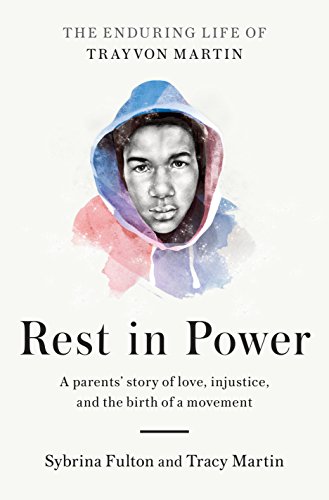
Trayvon Martin’s parents take readers beyond the news cycle with an account only they could give: the intimate story of a tragically foreshortened life and the rise of a movement.
Now a docuseries on the Paramount Network produced by Shawn Carter
On a February evening in 2012, in a small town in central Florida, seventeen-year-old Trayvon Martin was walking home with candy and a can of juice in hand and talking on the phone with a friend when a fatal encounter with a gun-wielding neighborhood watchman ended his young life. The watchman was briefly detained by the police and released. Trayvon’s father—a truck driver named Tracy—tried to get answers from the police but was shut down and ignored. Trayvon’s mother, a civil servant for the city of Miami, was paralyzed by the news of her son’s death and lost in mourning, unable to leave her room for days. But in a matter of weeks, their son’s name would be spoken by President Obama, honored by professional athletes, and passionately discussed all over traditional and social media. And at the head of a growing nationwide campaign for justice were Trayvon’s parents, who—driven by their intense love for their lost son—discovered their voices, gathered allies, and launched a movement that would change the country.
Five years after his tragic death, Trayvon Martin’s name is still evoked every day. He has become a symbol of social justice activism, as has his hauntingly familiar image: the photo of a child still in the process of becoming a young man, wearing a hoodie and gazing silently at the camera. But who was Trayvon Martin, before he became, in death, an icon? And how did one black child’s death on a dark, rainy street in a small Florida town become the match that lit a civil rights crusade?
Rest in Power, told through the compelling alternating narratives of Sybrina Fulton and Tracy Martin, answers, for the first time, those questions from the most intimate of sources. It’s the story of the beautiful and complex child they lost, the cruel unresponsiveness of the police and the hostility of the legal system, and the inspiring journey they took from grief and pain to power, and from tragedy and senselessness to meaning.
“A beautiful, searing account.”—The Washington Post
“A reminder—not only of Trayvon’s life and death but of the vulnerability of black lives in a country that still needs to be reminded they matter.”—USA Today
“A brave, heart-rending narrative from the parents who lost their son far too soon.”—Kirkus Reviews (starred review)
Die Inhaltsangabe kann sich auf eine andere Ausgabe dieses Titels beziehen.
Über die Autorin bzw. den Autor
Sybrina Fulton and Tracy Martin are the founders of The Trayvon Martin Foundation, which aims to create community programming and raise awareness of the impact of gun violence and racial profiling on families. Fulton and Martin live in the Miami, Florida, area.
Auszug. © Genehmigter Nachdruck. Alle Rechte vorbehalten.
Chapter 1
Sybrina
Our Lives Before
Who was Trayvon Martin? I’ve been asked that question a million times since his death. In death, Trayvon Martin became a martyr and a symbol of racial injustice, a name and a face on T-shirts, posters, and protest signs.
When he was alive, of course, he was none of those things. He was simply a boy, growing into a young man, with all of the wonder and promise and struggle that that journey entails.
What else was he? He was loved. Trayvon had struggles—academically, even behaviorally at times—but he loved his friends and family, sports, music, and his dreams of flight. And he saw that love returned and those dreams coming within his reach. In other words, he was a boy, and because he was mine, he was (along with his brother) one of the most important and cherished boys in the world.
His story begins with my own.
My mother named me Sybrina with a y. When I was born, Sabrina with an a was a very common name. “I wanted her name to be different,” my mother said. And so it was Sybrina, and if our given birth name is an indication of our destinies, then from the beginning I was blessed and cursed to stand out.
I was born in Miami, but we soon moved to Opa-locka, which was a working-class Miami suburb. My mother worked at the post office as a clerk. My birth father was a longshoreman, who died young from heart failure. In 1978, when I was eleven, my mom remarried, to a police officer who worked on the streets of Miami. I was a flower girl at my mother’s wedding, dressed in a flowing ivory gown, hair styled up in a bun, and happy. My stepdad was a powerful, strict and taciturn, presence in our house. We lovingly called him Dad.
I was the baby, the youngest of four children, with two brothers who always looked out for me; an older sister; and two stepsisters. We weren’t rich, but my parents made sure we were all well provided for. We never had to worry about our electricity being turned off or not having a place to stay or a car to drive. We had big Christmases, went on summer vacations, and always attended church on Sunday. We were taught the importance of work. My parents had good jobs and high expectations, and they expected me to get a good job, too. Nobody gave anything to me. I had to earn and work for everything I wanted.
We lived in a predominantly black neighborhood, although within the neighborhood there was a blend of different nationalities: Cuban, Jamaican, Bahamian, and Haitian. Back then, in the 1970s, Opa-locka was a paradise. Children played everywhere: in the street, at the school, in the park. There was a house where a lady sold candy and a corner store where we would get soda and chips. Early on, my mom and dad taught me and my two older brothers the proper way of doing things. As soon as I came home from school, I had to change into my play clothes, and before I was allowed to go out and play I had to clean up and do my homework. Then and only then would I be allowed to go outside. We’d play tag and run up and down the street. Even then my dad, the disciplinarian policeman, gave us our perimeters: we had to stay within the two stop signs on our street.
Opa-locka was changing during the 1970s, like a lot of America at the time, suffering from an influx of drugs and an escalation of street violence. Despite that, my mom and dad created a loving and safe environment for us: what went on outside our doors was different, separate, foreign. There were problems raging out there, but we didn’t see or feel them. We were protected. I never saw the violence; I never saw drugs.
By the time I was in my teens, my dad had become a detective, but he didn’t bring the energy of his job home. He was always polite with us, but still very strict. I had a curfew. People couldn’t just walk through our home. Sometimes I’d go to other people’s homes and their parents would allow the children’s friends to just walk all over the place. My friends had to be in the same room where I was: if I was in the den, they had to be in the den.
And, of course, I wasn’t allowed to start dating until I was sixteen.
I felt comfortable in the easy flow and ordinary rhythm of our humble community, but the truth is I didn’t want to be like everybody around me. From a young age, I craved something different, and for me education was the path to a less ordinary life. In middle school, I pursued a series of passions, always backed by my parents. I took classes for acting, etiquette, and modeling, and even learned how to play the piano and clarinet, and I also ran track. When I graduated from high school, there was no question that I would attend college.
My dream was to attend college in Tallahassee, where I had friends—until my older cousin told my mother that everybody went there. So she decided that I needed something different.
“I’m not sending my money—or my daughter—there,” my mother said. “Sybrina, pick another school.”
I flipped through a book of colleges and, almost at random, settled on Grambling State University in Grambling, Louisiana, a place I had never visited, where I knew no one, and that, honestly, I knew nothing about. I just picked it because I wanted to get away from Miami, do my own thing, be my own person, and follow my impulse to do something different. I had never been away from home before, without my parents, other than to attend summer camp.
My mother, impressed with my determination, approved.
My mom, my Auntie Leona, and my brother Mark drove me to Grambling. When we arrived, I checked in to the freshman dorm and got my room key. My family and I went upstairs to my standard dorm room: two beds, two desks, four walls, small space. Okay, it’s just like summer camp, I thought. My mom, my aunt, and my brother helped me move in. We cleaned up everything, made up my bed, plugged in the clock, unpacked my clothes, and hung them in the closet.
It was time to say goodbye.
We all hugged, and Mama kept up a patter of encouraging talk as she slowly moved toward the door: “Sybrina, you will be fine”; “You’re going to do great”; “You’ve always liked to do things on your own”; “You always did like to be adventurous.
“This is awesome and I’m so proud of you,” she said at last, as they were leaving.
I walked out after them down to the sidewalk and watched their car start to pull out, when suddenly it all hit me at once like a big wave: this wasn’t a good thing. In fact, it was the worst thing in the world. I started sniffling. Then crying. Then boo-hooing. Then screaming. Making all this horrible noise in front of the entire freshman dorm. I don’t know where it all came from, but soon I was screaming so loud that my family could hear it from their car, and they turned around and drove back to where I stood. My mother popped open the door and came over to me.
“Sybrina, what’s wrong with you?” my mother asked.
I felt like a puppy that had been left alone in the woods. I looked at her with pitiful eyes.
“Sybrina, look at all these people looking at you!” my mother said, gesturing to the students and parents now staring at us.
“I don’t care, I don’t know these people,” I said, getting back into the car with them, ready to drive away from Grambling forever, and go back home. Instead, they took me to Captain D’s, a fast-food seafood restaurant, for lunch.
“Oh my God, I cannot believe you are doing this,” my mother said, because I’d always been strong. But in that moment I realized how much family really meant to me—not just the idea,...
„Über diesen Titel“ kann sich auf eine andere Ausgabe dieses Titels beziehen.
Suchergebnisse für Rest in Power: The Enduring Life of Trayvon Martin

Beispielbild für diese ISBN
Rest in Power: The Enduring Life of Trayvon Martin
Anbieter: World of Books (was SecondSale), Montgomery, IL, USA
Verkäuferbewertung 5 von 5 Sternen

Zustand: Good. Item in good condition. Textbooks may not include supplemental items i.e. CDs, access codes etc. Artikel-Nr. 00108524843
Gebraucht kaufen
EUR 5,42
Versand gratis
Versand innerhalb von USA
Versand innerhalb von USA
Anzahl: 2 verfügbar
Beispielbild für diese ISBN
Rest in Power: The Enduring Life of Trayvon Martin
Verlag:
Random House (edition First Edition), 2017
ISBN 10: 0812997239
ISBN 13: 9780812997231
Gebraucht
Hardcover
Erstausgabe
Anbieter: BooksRun, Philadelphia, PA, USA
Verkäuferbewertung 5 von 5 Sternen
Hardcover. Zustand: Very Good. First Edition. With dust jacket. It's a well-cared-for item that has seen limited use. The item may show minor signs of wear. All the text is legible, with all pages included. It may have slight markings and/or highlighting. Artikel-Nr. 0812997239-8-1-29
Gebraucht kaufen
EUR 5,96
Versand gratis
Versand innerhalb von USA
Versand innerhalb von USA
Anzahl: 1 verfügbar
Beispielbild für diese ISBN
Rest in Power: The Enduring Life of Trayvon Martin
Anbieter: ThriftBooks-Atlanta, AUSTELL, GA, USA
Verkäuferbewertung 5 von 5 Sternen
Hardcover. Zustand: Very Good. No Jacket. May have limited writing in cover pages. Pages are unmarked. ~ ThriftBooks: Read More, Spend Less. Artikel-Nr. G0812997239I4N00
Gebraucht kaufen
EUR 6,03
Versand gratis
Versand innerhalb von USA
Versand innerhalb von USA
Anzahl: 1 verfügbar
Beispielbild für diese ISBN
Rest in Power: The Enduring Life of Trayvon Martin
Anbieter: ThriftBooks-Dallas, Dallas, TX, USA
Verkäuferbewertung 5 von 5 Sternen
Hardcover. Zustand: Very Good. No Jacket. Former library book; May have limited writing in cover pages. Pages are unmarked. ~ ThriftBooks: Read More, Spend Less. Artikel-Nr. G0812997239I4N10
Gebraucht kaufen
EUR 6,03
Versand gratis
Versand innerhalb von USA
Versand innerhalb von USA
Anzahl: 1 verfügbar
Beispielbild für diese ISBN
Rest in Power: The Enduring Life of Trayvon Martin
Anbieter: ThriftBooks-Dallas, Dallas, TX, USA
Verkäuferbewertung 5 von 5 Sternen
Hardcover. Zustand: Very Good. No Jacket. May have limited writing in cover pages. Pages are unmarked. ~ ThriftBooks: Read More, Spend Less. Artikel-Nr. G0812997239I4N00
Gebraucht kaufen
EUR 6,03
Versand gratis
Versand innerhalb von USA
Versand innerhalb von USA
Anzahl: 1 verfügbar
Beispielbild für diese ISBN
Rest in Power : The Enduring Life of Trayvon Martin
Verlag:
Random House Publishing Group, 2017
ISBN 10: 0812997239
ISBN 13: 9780812997231
Gebraucht
Hardcover
Anbieter: Better World Books, Mishawaka, IN, USA
Verkäuferbewertung 5 von 5 Sternen
Zustand: Good. Former library copy. Pages intact with minimal writing/highlighting. The binding may be loose and creased. Dust jackets/supplements are not included. Includes library markings. Stock photo provided. Product includes identifying sticker. Better World Books: Buy Books. Do Good. Artikel-Nr. GRP104735181
Gebraucht kaufen
EUR 6,25
Versand gratis
Versand innerhalb von USA
Versand innerhalb von USA
Anzahl: 2 verfügbar
Beispielbild für diese ISBN
Rest in Power : The Enduring Life of Trayvon Martin
Verlag:
Random House Publishing Group, 2017
ISBN 10: 0812997239
ISBN 13: 9780812997231
Gebraucht
Hardcover
Anbieter: Better World Books: West, Reno, NV, USA
Verkäuferbewertung 5 von 5 Sternen
Zustand: Very Good. Pages intact with possible writing/highlighting. Binding strong with minor wear. Dust jackets/supplements may not be included. Stock photo provided. Product includes identifying sticker. Better World Books: Buy Books. Do Good. Artikel-Nr. 14689620-6
Gebraucht kaufen
EUR 6,25
Versand gratis
Versand innerhalb von USA
Versand innerhalb von USA
Anzahl: 1 verfügbar
Beispielbild für diese ISBN
Rest In Power: The Enduring Life of Trayvon Martin
Anbieter: WorldofBooks, Goring-By-Sea, WS, Vereinigtes Königreich
Verkäuferbewertung 5 von 5 Sternen
Paperback. Zustand: Very Good. The book has been read, but is in excellent condition. Pages are intact and not marred by notes or highlighting. The spine remains undamaged. Artikel-Nr. GOR011493669
Gebraucht kaufen
EUR 2,51
EUR 6,51 Versand
Versand von Vereinigtes Königreich nach USA
Versand von Vereinigtes Königreich nach USA
Anzahl: 1 verfügbar
Foto des Verkäufers
Rest In Power: The Enduring Life of Trayvon Martin
Anbieter: BoundlessBookstore, Wallingford, Vereinigtes Königreich
Verkäuferbewertung 5 von 5 Sternen
Zustand: Good. Good condition. Light wear to boards. Content is clean and bright. Good DJ with some light edge wear and creasing. Artikel-Nr. 9999-99988957756
Gebraucht kaufen
EUR 3,59
EUR 8,12 Versand
Versand von Vereinigtes Königreich nach USA
Versand von Vereinigtes Königreich nach USA
Anzahl: 1 verfügbar
Foto des Verkäufers
Rest in Power: The Enduring Life of Trayvon Martin
Verlag:
Spiegel & Grau, New York, 2017
ISBN 10: 0812997239
ISBN 13: 9780812997231
Gebraucht
Hardcover
Anbieter: PsychoBabel & Skoob Books, Didcot, Vereinigtes Königreich
Verkäuferbewertung 5 von 5 Sternen
Hardcover. Zustand: Very Good. Hardcover and jacket. Marker pen dot on page block foot; excellent in all other respects - a very good copy indeed. TS. Used. Artikel-Nr. 601261
Gebraucht kaufen
EUR 14,37
EUR 14,53 Versand
Versand von Vereinigtes Königreich nach USA
Versand von Vereinigtes Königreich nach USA
Anzahl: 1 verfügbar