
Verwandte Artikel zu Wake
Inhaltsangabe
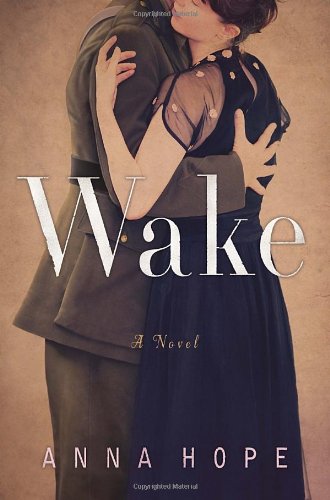
Anna Hope’s brilliant debut unfolds over the course of five days, as three women must deal with the aftershocks of World War I and its impact on the men in their lives.
Wake: 1) Emerge or cause to emerge from sleep. 2) Ritual for the dead. 3) Consequence or aftermath.
London, 1920. The city prepares to observe the two-year anniversary of Armistice Day with the burial of the unknown soldier. Many are still haunted by the war: Hettie, a dance instructress, lives at home with her mother and her brother, who is mute after his return from combat. One night Hettie meets a wealthy, educated man and finds herself smitten with him. But there is something distracted about him, something she cannot reach. . . . Evelyn works at the Pensions Exchange, through which thousands of men have claimed benefits from wounds or debilitating distress. Embittered by her own loss, she looks for solace in her adored brother, who has not been the same since he returned from the front. . . . Ada is beset by visions of her son on every street, convinced he is still alive. Helpless, her loving husband has withdrawn from her. Then one day a young man appears at her door, seemingly with notions to peddle, like hundreds of out-of-work veterans. But when he utters the name of her son, Ada is jolted to the core.
The lives of these three women are braided together, their stories gathering tremendous power as the ties that bind them become clear, and the body of the unknown soldier moves closer and closer to its final resting place.
Advance praise for Wake
“Hope’s unblinking prose is reminiscent of Vera Brittain’s classic memoir Testament of Youth in its depiction of the social and emotional fallout, particularly on women, of the Great War. . . . Hope reaches beyond the higher echelons of society to women of different social classes, all linked by their reluctance to bid goodbye to the world the conflict has shattered.”—The New York Times Book Review
“Wake is a tender and timely novel, full of compassion and quiet insight. The author gives us a moving and original glimpse into the haunted peace after the Great War, her characters drawn by the gravity of the unmarked, the unknown, and perhaps, finally, the unhoped for.”—Chris Cleave, author of Little Bee
“Wake is a compelling and emotionally charged debut about the painful aftermath of war and the ways—small, brave, or commonplace—in which we keep ourselves going. It touches feelings we know, and settings—dance halls, war fronts, queues outside the grocer’s—that we don’t. I loved it.”—Rachel Joyce, author of The Unlikely Pilgrimage of Harold Fry
“Wake is powerful and humane, a novel that charms and beguiles. Anna Hope’s characters are so real, flawed, and searching, and her prose so natural, one almost forgets how very great a story she is telling.”—Sadie Jones, author ofThe Uninvited Guests
“Using telling detail, Hope creates a vibrant physical and emotional landscape in which her leading characters, and a sea of others, move irresistibly into the future, some having found resolution, others still in search. Fresh, confident, yet understated, Hope’s first work movingly revisits immense tragedy while also confirming her own highly promising ability.”—Kirkus Reviews
Die Inhaltsangabe kann sich auf eine andere Ausgabe dieses Titels beziehen.
Über die Autorin bzw. den Autor
Anna Hope studied English at Oxford, attended the Royal Academy of Dramatic Arts, and then received an M.A. in creative writing at Birkbeck. She lives in London.
Auszug. © Genehmigter Nachdruck. Alle Rechte vorbehalten.
Day 1
Sunday, November 7, 1920
Northern France
Three soldiers emerge from their billets near Arras, northern France: a colonel, a sergeant, and a private. It is somewhere close to the middle of the night and bitterly cold. The men make their way to a field ambulance parked next to the entrance gate; the colonel sits in the front with the sergeant, while the private climbs into the back. The sergeant starts up the engine, and drives them out and onto the road beyond.
The young private holds on to a strap dangling from the roof, as the van lurches over the rutted road. He feels shaky, and this jolting is not helping things. The raw morning has the feel of a punishment: When he was woken, minutes ago, he was told only to get dressed and get outside. He has done nothing wrong so far as he can tell, but the army is tricky like that. There have been many times in the six months since he arrived in France when he has transgressed, and only afterward been told how or why.
He closes his eyes, tightening his grip as the van pitches and rolls.
He had hoped he would see things over here. The sorts of things he missed by being too young to fight. The sorts of things his older brother wrote home about. The hero brother who died taking a German trench, and whose body was never found.
But the truth is he hasn't seen much of anything at all.
In the front of the van, the sergeant sits forward, concentrating hard on the road ahead. He knows it well but still prefers to drive in the day, as there are several treacherous shell holes along it. He wouldn't want to lose a tire, not tonight. He, too, has no idea why he is here, so early and without warning, but from the taut silence of the colonel beside him, he knows enough not to ask.
And so the soldiers sit, the engine rumbling beneath their feet, passing through open country now, though there is nothing to show for it--nothing visible beyond the headlights' glare, only an occasional startled animal scooting back into darkness on the road ahead.
When they have been driving for half an hour or so, the colonel rasps out an order. "Here. Stop here." He hits his hand against the dash. The sergeant pulls the ambulance over onto the shoulder of the road. The engine judders and is still. There is silence, and the men climb down.
The colonel turns on his flashlight and reaches into the back of the van. He brings out two shovels, handing one each to the other men. Next, he takes out a large burlap sack, which he carries himself.
He climbs over a low wall and the men follow him, walking slowly, their flashlight beams bobbing ahead.
The frosted ground means the mud is hard and easy enough to walk on, but the private is careful; the land is littered with twisted metal and with holes, sometimes deep. He knows the ground is peppered with unexploded shells. There are often funerals for the Chinese laborers who have been brought over to clear the fields of bodies and ordnance. He saw five dead last week alone, all laid out in a row. They end up buried in the very cemeteries they are over here to dig.
But despite the cold and the uncertainty, he is starting to enjoy himself. It is exciting to be out here in this darkness, where ruined trees loom and danger feels close. He could almost imagine he is on a different mission. Something heroic. Something to write home about.
Soon the ground falls away, and the men stand before a ditch in the earth, the remains of a trench. The colonel climbs down and begins walking along it, and the others follow, single file, along its zigzag lines.
The private measures his height against the side. He is not a tall man, and the trench is not high. They pass the remains of a dugout on their right, its doorway bent at a crazed angle, one of its supports long gone. He hesitates a moment before it, shining his flashlight inside, but there is nothing much to see, only an old table, pushed up against the wall, a rusted tin can still standing open on the top. He pulls his light back from the dank hole, and hurries to keep up.
The colonel turns left into a straighter, shorter trench and at the end of that, right into another, built in short, zigzag sections like the first.
"Front line," says the sergeant, under his breath.
After a few yards, the colonel's beam picks out a rusted ladder slung against the trench wall. He stops before it, placing his boot on the bottom rung, pressing once, twice, testing its strength.
"Sir?" It is the sergeant speaking.
"What's that?" The colonel turns his head.
The sergeant clears his throat. "Do we need to go up that way, sir?"
The private watches as the colonel swallows, his Adam's apple moving slowly up and down. "Have you got a better idea?"
The sergeant seems to have nothing to say to that.
The colonel turns, scaling the ladder in a few swift jerks.
"Fuck's sake," mutters the sergeant. Still, he doesn't move.
Standing behind him, the private is itching to climb. Even though he knows that on the other side there will only be more of the same blasted country, part of him wonders if there may be something else--something close to the thing he came out here for: that vague, brave wonderful thing he has not dared to speak of, even to himself. But he cannot move until the sergeant does, and the sergeant is frozen to the spot.
The colonel's boots appear at the height of their heads; light is flung into their faces. "What's the holdup? Get yourselves over here. Now." He speaks like a machine gun, spitting out his words.
"Yes sir." The sergeant closes his eyes, looking almost as though he may be saying a prayer, then turns and climbs the ladder. The private follows him, blood tumbling in his ears. Once over, they stand, gathering their breath, their beams sweeping wide across the scene before them: great rusting coils of wire, twenty, thirty feet wide, like the crazed skeleton of some ancient serpent, stretching away in both directions as far as the eye can see.
"Bloody hell," says the sergeant. Then, a little louder, "How're we going to get through that?"
The colonel produces a pair of wire cutters from his pocket. "Here."
The sergeant takes them, weighing them in his hand. He knows wire, has cut it often. Apron wiring. Laid enough of it, too. They used to leave gaps, when they had time to do it right--gaps that wouldn't be seen by the other side. But there are no gaps here. The wire is tangled and crushed and bent in on itself. Ruined. Like every bloody thing else. "Right." He hands his shovel to the private. "Make sure you light me, then." He bends and begins to cut.
The private, trying to keep his beam straight, stares at the wire. There are things caught and held within its coils, things that look to have been there for a long time. There are tattered remnants of cloth, stiff with frost, and the light catches the pale whiteness of bones, though whether human or animal it is impossible to tell. The country smells strange out here--more metal than earth; he can taste it in his mouth.
On the other side of the wire, the sergeant straightens and turns, beckoning for the men to follow. He has done a good job, and they are able to pick their way easily through the narrow path he has made.
"This way." The colonel strides out across lumpy ground that is littered with tiny crosses: crosses made from white wood, or makeshift ones made from a couple of shell splinters lashed together. There are bottles, too, turned upside down and pushed into the mud, some of them still with scraps of paper visible inside. The colonel often stops beside one, kneeling and holding his light to read the inscription, but then carries on.
The private searches the man's face as he reads. Who can he be looking for?
Eventually the colonel crouches by one of the...
„Über diesen Titel“ kann sich auf eine andere Ausgabe dieses Titels beziehen.
Suchergebnisse für Wake

Beispielbild für diese ISBN
Wake: A Novel
Anbieter: World of Books (was SecondSale), Montgomery, IL, USA
Verkäuferbewertung 5 von 5 Sternen

Zustand: Very Good. Item in very good condition! Textbooks may not include supplemental items i.e. CDs, access codes etc. Artikel-Nr. 00110583288
Gebraucht kaufen
EUR 5,50
Versand gratis
Versand innerhalb von USA
Versand innerhalb von USA
Anzahl: 1 verfügbar
Beispielbild für diese ISBN
Wake: A Novel
Verlag:
Random House (edition Stated First Edition), 2014
ISBN 10: 0812995139
ISBN 13: 9780812995138
Gebraucht
Hardcover
Anbieter: BooksRun, Philadelphia, PA, USA
Verkäuferbewertung 5 von 5 Sternen
Hardcover. Zustand: Very Good. Stated First Edition. With dust jacket. It's a well-cared-for item that has seen limited use. The item may show minor signs of wear. All the text is legible, with all pages included. It may have slight markings and/or highlighting. Artikel-Nr. 0812995139-11-18-29
Gebraucht kaufen
EUR 5,76
Versand gratis
Versand innerhalb von USA
Versand innerhalb von USA
Anzahl: 1 verfügbar
Beispielbild für diese ISBN
Wake: A Novel
Anbieter: ThriftBooks-Dallas, Dallas, TX, USA
Verkäuferbewertung 5 von 5 Sternen
Hardcover. Zustand: Very Good. No Jacket. May have limited writing in cover pages. Pages are unmarked. ~ ThriftBooks: Read More, Spend Less. Artikel-Nr. G0812995139I4N00
Gebraucht kaufen
EUR 6,13
Versand gratis
Versand innerhalb von USA
Versand innerhalb von USA
Anzahl: 1 verfügbar
Beispielbild für diese ISBN
Wake: A Novel
Anbieter: Wonder Book, Frederick, MD, USA
Verkäuferbewertung 5 von 5 Sternen
Zustand: As New. Like New condition. Very Good dust jacket. A near perfect copy that may have very minor cosmetic defects. Artikel-Nr. I12K-00390
Gebraucht kaufen
EUR 6,42
Versand gratis
Versand innerhalb von USA
Versand innerhalb von USA
Anzahl: 1 verfügbar
Beispielbild für diese ISBN
Wake
Verlag:
Random House Publishing Group, 2014
ISBN 10: 0812995139
ISBN 13: 9780812995138
Gebraucht
Hardcover
Anbieter: Better World Books, Mishawaka, IN, USA
Verkäuferbewertung 5 von 5 Sternen
Zustand: Very Good. Pages intact with possible writing/highlighting. Binding strong with minor wear. Dust jackets/supplements may not be included. Stock photo provided. Product includes identifying sticker. Better World Books: Buy Books. Do Good. Artikel-Nr. 13936515-6
Gebraucht kaufen
EUR 6,74
Versand gratis
Versand innerhalb von USA
Versand innerhalb von USA
Anzahl: 1 verfügbar
Beispielbild für diese ISBN
Wake
Verlag:
Random House Publishing Group, 2014
ISBN 10: 0812995139
ISBN 13: 9780812995138
Gebraucht
Hardcover
Anbieter: Better World Books, Mishawaka, IN, USA
Verkäuferbewertung 5 von 5 Sternen
Zustand: Very Good. Former library copy. Pages intact with possible writing/highlighting. Binding strong with minor wear. Dust jackets/supplements may not be included. Includes library markings. Stock photo provided. Product includes identifying sticker. Better World Books: Buy Books. Do Good. Artikel-Nr. GRP91118498
Gebraucht kaufen
EUR 6,74
Versand gratis
Versand innerhalb von USA
Versand innerhalb von USA
Anzahl: 1 verfügbar
Beispielbild für diese ISBN
Wake
Anbieter: Revaluation Books, Exeter, Vereinigtes Königreich
Verkäuferbewertung 5 von 5 Sternen
Hardcover. Zustand: Brand New. 304 pages. 9.50x6.50x1.00 inches. In Stock. Artikel-Nr. 0812995139
Neu kaufen
EUR 23,99
EUR 14,75 Versand
Versand von Vereinigtes Königreich nach USA
Versand von Vereinigtes Königreich nach USA
Anzahl: 1 verfügbar