
Verwandte Artikel zu Between the World and Me: Notes on the First 150 Years...
Between the World and Me: Notes on the First 150 Years in America. Winner of the National Book Award, Nonfiction 2015 - Hardcover
Buch 3 von 12: One World Essentials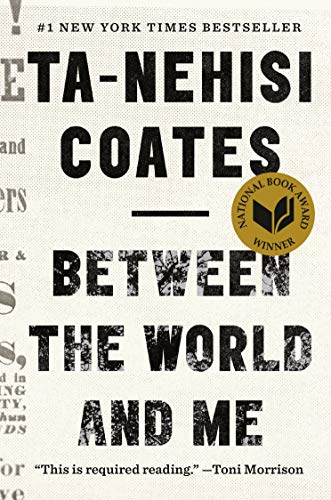
Inhaltsangabe
#1 NEW YORK TIMES BESTSELLER • NATIONAL BOOK AWARD WINNER • NAMED ONE OF TIME’S TEN BEST NONFICTION BOOKS OF THE DECADE • PULITZER PRIZE FINALIST • NATIONAL BOOK CRITICS CIRCLE AWARD FINALIST • ONE OF OPRAH’S “BOOKS THAT HELP ME THROUGH” • NOW AN HBO ORIGINAL SPECIAL EVENT
Hailed by Toni Morrison as “required reading,” a bold and personal literary exploration of America’s racial history by “the most important essayist in a generation and a writer who changed the national political conversation about race” (Rolling Stone)
NAMED ONE OF THE MOST INFLUENTIAL BOOKS OF THE DECADE BY CNN • NAMED ONE OF PASTE’S BEST MEMOIRS OF THE DECADE • NAMED ONE OF THE TEN BEST BOOKS OF THE YEAR BY The New York Times Book Review • O: The Oprah Magazine • The Washington Post • People • Entertainment Weekly • Vogue • Los Angeles Times • San Francisco Chronicle • Chicago Tribune • New York • Newsday • Library Journal • Publishers Weekly
In a profound work that pivots from the biggest questions about American history and ideals to the most intimate concerns of a father for his son, Ta-Nehisi Coates offers a powerful new framework for understanding our nation’s history and current crisis. Americans have built an empire on the idea of “race,” a falsehood that damages us all but falls most heavily on the bodies of black women and men—bodies exploited through slavery and segregation, and, today, threatened, locked up, and murdered out of all proportion. What is it like to inhabit a black body and find a way to live within it? And how can we all honestly reckon with this fraught history and free ourselves from its burden?
Between the World and Me is Ta-Nehisi Coates’s attempt to answer these questions in a letter to his adolescent son. Coates shares with his son—and readers—the story of his awakening to the truth about his place in the world through a series of revelatory experiences, from Howard University to Civil War battlefields, from the South Side of Chicago to Paris, from his childhood home to the living rooms of mothers whose children’s lives were taken as American plunder. Beautifully woven from personal narrative, reimagined history, and fresh, emotionally charged reportage, Between the World and Me clearly illuminates the past, bracingly confronts our present, and offers a transcendent vision for a way forward.
Die Inhaltsangabe kann sich auf eine andere Ausgabe dieses Titels beziehen.
Über die Autorin bzw. den Autor
Ta-Nehisi Coates is a national correspondent for The Atlantic. His book Between the World and Me won the National Book Award in 2015. Coates is the recipient of a MacArthur Fellowship. He lives in New York City with his wife and son.
Von der hinteren Coverseite
A bold investigation into America's racial history and its contemporary echoes from "the single best writer on the subject of race in the United States" (New York Observer), told through the author's own evolving understanding of the subject over the course of his life.
Aus dem Klappentext
In a profound work that pivots from the biggest questions about American history and ideals to the most intimate concerns of a father for his son, Ta-Nehisi Coates offers a powerful new framework for understanding our nation's history and current crisis. Americans have built an empire on the idea of "race," a falsehood that damages us all but falls most heavily on the bodies of black women and men-bodies exploited through slavery and segregation, and, today, threatened, locked up, and murdered out of all proportion. What is it like to inhabit a black body and find a way to live within it? And how can we all honestly reckon with this fraught history and free ourselves from its burden?
Between the World and Me is Ta-Nehisi Coates's attempt to answer these questions in a letter to his adolescent son. Coates shares with his son-and readers-the story of his awakening to the truth about his place in the world through a series of revelatory experiences, from Howard University to Civil War battlefields, from the South Side of Chicago to Paris, from his childhood home to the living rooms of mothers whose children's lives were taken as American plunder. Beautifully woven from personal narrative, reimagined history, and fresh, emotionally charged reportage, Between the World and Me clearly illuminates the past, bracingly confronts our present, and offers a transcendent vision for a way forward.
Auszug. © Genehmigter Nachdruck. Alle Rechte vorbehalten.
I.
. . . we sprawl in gray chains in a place full of winters when what we want is the sun
Amira Baraka, “Ka Ba”
Son,
Last Sunday the host of a popular news show asked me what it meant to lose my body. The host was broadcasting from Washington, D.C., and I was seated in a remote studio on the far west side of Manhattan. A satellite closed the miles between us, but no machinery could close the gap between her world and the world for which I had been summoned to speak. When the host asked me about my body, her face faded from the screen, and was replaced by a scroll of words, written by me earlier that week.
The host read these words for the audience, and when she finished she turned to the subject of my body, although she did not mention it specifically. But by now I am accustomed to intelligent people asking about the condition of my body without realizing the nature of their request. Specifically, the host wished to know why I felt that white America’s progress, or rather the progress of those Americans who believe that they are white, was built on looting and violence. Hearing this, I felt an old and indistinct sadness well up in me. The answer to this question is the record of the believers themselves. The answer is American history.
There is nothing extreme in this statement. Americans deify democracy in a way that allows for a dim awareness that they have, from time to time, stood in defiance of their God. But democracy is a forgiving God and America’s heresies—torture, theft, enslavement—are so common among individuals and nations that none can declare themselves immune. In fact, Americans, in a real sense, have never betrayed their God. When Abraham Lincoln declared, in 1863, that the battle of Gettysburg must ensure “that government of the people, by the people, for the people, shall not perish from the earth,” he was not merely being aspirational; at the onset of the Civil War, the United States of America had one of the highest rates of suffrage in the world. The question is not whether Lincoln truly meant “government of the people” but what our country has, throughout its history, taken the political term “people” to actually mean. In 1863 it did not mean your mother or your grandmother, and it did not mean you and me. Thus America’s problem is not its betrayal of “government of the people,” but the means by which “the people” acquired their names.
This leads us to another equally important ideal, one that Americans implicitly accept but to which they make no conscious claim. Americans believe in the reality of “race” as a defined, indubitable feature of the natural world. Racism—the need to ascribe bone-deep features to people and then humiliate, reduce, and destroy them—inevitably follows from this inalterable condition. In this way, racism is rendered as the innocent daughter of Mother Nature, and one is left to deplore the Middle Passage or the Trail of Tears the way one deplores an earthquake, a tornado, or any other phenomenon that can be cast as beyond the handiwork of men.
But race is the child of racism, not the father. And the process of naming “the people” has never been a matter of genealogy and physiognomy so much as one of hierarchy. Difference in hue and hair is old. But the belief in the preeminence of hue and hair, the notion that these factors can correctly organize a society and that they signify deeper attributes, which are indelible—this is the new idea at the heart of this new people who have been brought up hopelessly, tragically, deceitfully, to believe that they are white.
These new people are, like us, a modern invention. But unlike us, their new name has no real meaning divorced from the machinery of criminal power. The new people were something else before they were white—Catholic, Corsican, Welsh, Mennonite, Jewish—and if all our national hopes have any fulfillment, then they will have to be something else again. Perhaps they will truly become American and create a nobler basis for their myths. I cannot call it. As for now, it must be said that the process of washing the disparate tribes white, the elevation of the belief in being white, was not achieved through wine tastings and ice cream socials, but rather through the pillaging of life, liberty, labor, and land; through the flaying of backs; the chaining of limbs; the strangling of dissidents; the destruction of families; the rape of mothers; the sale of children; and various other acts meant, first and foremost, to deny you and me the right to secure and govern our own bodies.
The new people are not original in this. Perhaps there has been, at some point in history, some great power whose elevation was exempt from the violent exploitation of other human bodies. If there has been, I have yet to discover it. But this banality of violence can never excuse America, because America makes no claim to the banal. America believes itself exceptional, the greatest and noblest nation ever to exist, a lone champion standing between the white city of democracy and the terrorists, despots, barbarians, and other enemies of civilization. One cannot, at once, claim to be superhuman and then plead mortal error. I propose to take our countrymen’s claims of American exceptionalism seriously, which is to say I propose subjecting our country to an exceptional moral standard. This is difficult because there exists, all around us, an apparatus urging us to accept American innocence at face value and not to inquire too much. And it is so easy to look away, to live with the fruits of our history and to ignore the great evil done in all of our names. But you and I have never truly had that luxury. I think you know.
I write you in your fifteenth year. I am writing you because this was the year you saw Eric Garner choked to death for selling cigarettes; because you know now that Renisha McBride was shot for seeking help, that John Crawford was shot down for browsing in a department store. And you have seen men in uniform drive by and murder Tamir Rice, a twelve-year-old child whom they were oath-bound to protect. And you have seen men in the same uniforms pummel Marlene Pinnock, someone’s grandmother, on the side of a road. And you know now, if you did not before, that the police departments of your country have been endowed with the authority to destroy your body. It does not matter if the destruction is the result of an unfortunate overreaction. It does not matter if it originates in a misunderstanding. It does not matter if the destruction springs from a foolish policy. Sell cigarettes without the proper authority and your body can be destroyed. Resent the people trying to entrap your body and it can be destroyed. Turn into a dark stairwell and your body can be destroyed. The destroyers will rarely be held accountable. Mostly they will receive pensions. And destruction is merely the superlative form of a dominion whose prerogatives include friskings, detainings, beatings, and humiliations. All of this is common to black people. And all of this is old for black people. No one is held responsible.
There is nothing uniquely evil in these destroyers or even in this moment. The destroyers are merely men enforcing the whims of our country, correctly interpreting its heritage and legacy. It is hard to face this. But all our phrasing—race relations, racial chasm, racial justice, racial profiling, white privilege, even white supremacy—serves to obscure that racism is a visceral experience, that it dislodges brains, blocks airways, rips muscle, extracts organs, cracks bones, breaks teeth. You must never look away from this. You must always remember that the...
„Über diesen Titel“ kann sich auf eine andere Ausgabe dieses Titels beziehen.
Suchergebnisse für Between the World and Me: Notes on the First 150 Years...

Beispielbild für diese ISBN
Between the World and Me
Anbieter: World of Books (was SecondSale), Montgomery, IL, USA
Verkäuferbewertung 5 von 5 Sternen

Hardback. Zustand: Very Good. #1 NEW YORK TIMES BESTSELLER - NATIONAL BOOK AWARD WINNER - NAMED ONE OF TIME'S TEN BEST NONFICTION BOOKS OF THE DECADE - PULITZER PRIZE FINALIST - NATIONAL BOOK CRITICS CIRCLE AWARD FINALIST - ONE OF OPRAH'S BOOKS THAT HELP ME THROUGH - NOW AN HBO ORIGINAL SPECIAL EVENT Hailed by Toni Morrison as required reading, a bold and personal literary exploration of America's racial history by the most important essayist in a generation and a writer who changed the national political conversation about race (Rolling Stone) NAMED ONE OF THE MOST INFLUENTIAL BOOKS OF THE DECADE BY CNN - NAMED ONE OF PASTE'S BEST MEMOIRS OF THE DECADE - NAMED ONE OF THE TEN BEST BOOKS OF THE YEAR BY The New York Times Book Review - O: The Oprah Magazine - The Washington Post - People - Entertainment Weekly - Vogue - Los Angeles Times - San Francisco Chronicle - Chicago Tribune - New York - Newsday - Library Journal - Publishers Weekly In a profound work that pivots from the biggest questions about American history and ideals to the most intimate concerns of a father for his son, Ta-Nehisi Coates offers a powerful new framework for understanding our nation's history and current crisis. Americans have built an empire on the idea of race, a falsehood that damages us all but falls most heavily on the bodies of black women and men--bodies exploited through slavery and segregation, and, today, threatened, locked up, and murdered out of all proportion. What is it like to inhabit a black body and find a way to live within it? And how can we all honestly reckon with this fraught history and free ourselves from its burden? Between the World and Me is Ta-Nehisi Coates's attempt to answer these questions in a letter to his adolescent son. Coates shares with his son--and readers--the story of his awakening to the truth about his place in the world through a series of revelatory experiences, from Howard University to Civil War battlefields, from the South Side of Chicago to Paris, from his childhood home to the living rooms of mothers whose children's lives were taken as American plunder. Beautifully woven from personal narrative, reimagined history, and fresh, emotionally charged reportage, Between the World and Me clearly illuminates the past, bracingly confronts our present, and offers a transcendent vision for a way forward. Artikel-Nr. 00110300950
Gebraucht kaufen
EUR 3,89
Versand gratis
Versand innerhalb von USA
Versand innerhalb von USA
Anzahl: 13 verfügbar
Beispielbild für diese ISBN
Between the World and Me
Anbieter: World of Books (was SecondSale), Montgomery, IL, USA
Verkäuferbewertung 5 von 5 Sternen
Hardback. Zustand: Good. #1 NEW YORK TIMES BESTSELLER - NATIONAL BOOK AWARD WINNER - NAMED ONE OF TIME'S TEN BEST NONFICTION BOOKS OF THE DECADE - PULITZER PRIZE FINALIST - NATIONAL BOOK CRITICS CIRCLE AWARD FINALIST - ONE OF OPRAH'S BOOKS THAT HELP ME THROUGH - NOW AN HBO ORIGINAL SPECIAL EVENT Hailed by Toni Morrison as required reading, a bold and personal literary exploration of America's racial history by the most important essayist in a generation and a writer who changed the national political conversation about race (Rolling Stone) NAMED ONE OF THE MOST INFLUENTIAL BOOKS OF THE DECADE BY CNN - NAMED ONE OF PASTE'S BEST MEMOIRS OF THE DECADE - NAMED ONE OF THE TEN BEST BOOKS OF THE YEAR BY The New York Times Book Review - O: The Oprah Magazine - The Washington Post - People - Entertainment Weekly - Vogue - Los Angeles Times - San Francisco Chronicle - Chicago Tribune - New York - Newsday - Library Journal - Publishers Weekly In a profound work that pivots from the biggest questions about American history and ideals to the most intimate concerns of a father for his son, Ta-Nehisi Coates offers a powerful new framework for understanding our nation's history and current crisis. Americans have built an empire on the idea of race, a falsehood that damages us all but falls most heavily on the bodies of black women and men--bodies exploited through slavery and segregation, and, today, threatened, locked up, and murdered out of all proportion. What is it like to inhabit a black body and find a way to live within it? And how can we all honestly reckon with this fraught history and free ourselves from its burden? Between the World and Me is Ta-Nehisi Coates's attempt to answer these questions in a letter to his adolescent son. Coates shares with his son--and readers--the story of his awakening to the truth about his place in the world through a series of revelatory experiences, from Howard University to Civil War battlefields, from the South Side of Chicago to Paris, from his childhood home to the living rooms of mothers whose children's lives were taken as American plunder. Beautifully woven from personal narrative, reimagined history, and fresh, emotionally charged reportage, Between the World and Me clearly illuminates the past, bracingly confronts our present, and offers a transcendent vision for a way forward. Artikel-Nr. 00108564793
Gebraucht kaufen
EUR 3,89
Versand gratis
Versand innerhalb von USA
Versand innerhalb von USA
Anzahl: Mehr als 20 verfügbar
Beispielbild für diese ISBN
Between the World and Me
Anbieter: World of Books (was SecondSale), Montgomery, IL, USA
Verkäuferbewertung 5 von 5 Sternen
Hardback. Zustand: Fair. #1 NEW YORK TIMES BESTSELLER - NATIONAL BOOK AWARD WINNER - NAMED ONE OF TIME'S TEN BEST NONFICTION BOOKS OF THE DECADE - PULITZER PRIZE FINALIST - NATIONAL BOOK CRITICS CIRCLE AWARD FINALIST - ONE OF OPRAH'S BOOKS THAT HELP ME THROUGH - NOW AN HBO ORIGINAL SPECIAL EVENT Hailed by Toni Morrison as required reading, a bold and personal literary exploration of America's racial history by the most important essayist in a generation and a writer who changed the national political conversation about race (Rolling Stone) NAMED ONE OF THE MOST INFLUENTIAL BOOKS OF THE DECADE BY CNN - NAMED ONE OF PASTE'S BEST MEMOIRS OF THE DECADE - NAMED ONE OF THE TEN BEST BOOKS OF THE YEAR BY The New York Times Book Review - O: The Oprah Magazine - The Washington Post - People - Entertainment Weekly - Vogue - Los Angeles Times - San Francisco Chronicle - Chicago Tribune - New York - Newsday - Library Journal - Publishers Weekly In a profound work that pivots from the biggest questions about American history and ideals to the most intimate concerns of a father for his son, Ta-Nehisi Coates offers a powerful new framework for understanding our nation's history and current crisis. Americans have built an empire on the idea of race, a falsehood that damages us all but falls most heavily on the bodies of black women and men--bodies exploited through slavery and segregation, and, today, threatened, locked up, and murdered out of all proportion. What is it like to inhabit a black body and find a way to live within it? And how can we all honestly reckon with this fraught history and free ourselves from its burden? Between the World and Me is Ta-Nehisi Coates's attempt to answer these questions in a letter to his adolescent son. Coates shares with his son--and readers--the story of his awakening to the truth about his place in the world through a series of revelatory experiences, from Howard University to Civil War battlefields, from the South Side of Chicago to Paris, from his childhood home to the living rooms of mothers whose children's lives were taken as American plunder. Beautifully woven from personal narrative, reimagined history, and fresh, emotionally charged reportage, Between the World and Me clearly illuminates the past, bracingly confronts our present, and offers a transcendent vision for a way forward. Artikel-Nr. 00109643452
Gebraucht kaufen
EUR 3,89
Versand gratis
Versand innerhalb von USA
Versand innerhalb von USA
Anzahl: 17 verfügbar
Beispielbild für diese ISBN
Between the World and Me
Anbieter: ThriftBooks-Atlanta, AUSTELL, GA, USA
Verkäuferbewertung 5 von 5 Sternen
Hardcover. Zustand: Very Good. No Jacket. Former library book; May have limited writing in cover pages. Pages are unmarked. ~ ThriftBooks: Read More, Spend Less. Artikel-Nr. G0812993543I4N10
Gebraucht kaufen
EUR 5,95
Versand gratis
Versand innerhalb von USA
Versand innerhalb von USA
Anzahl: 3 verfügbar
Beispielbild für diese ISBN
Between the World and Me
Anbieter: ThriftBooks-Dallas, Dallas, TX, USA
Verkäuferbewertung 5 von 5 Sternen
Hardcover. Zustand: Good. No Jacket. Former library book; Missing dust jacket; Pages can have notes/highlighting. Spine may show signs of wear. ~ ThriftBooks: Read More, Spend Less. Artikel-Nr. G0812993543I3N11
Gebraucht kaufen
EUR 5,95
Versand gratis
Versand innerhalb von USA
Versand innerhalb von USA
Anzahl: 2 verfügbar
Beispielbild für diese ISBN
Between the World and Me
Anbieter: ThriftBooks-Dallas, Dallas, TX, USA
Verkäuferbewertung 5 von 5 Sternen
Hardcover. Zustand: Very Good. No Jacket. Former library book; May have limited writing in cover pages. Pages are unmarked. ~ ThriftBooks: Read More, Spend Less. Artikel-Nr. G0812993543I4N10
Gebraucht kaufen
EUR 5,95
Versand gratis
Versand innerhalb von USA
Versand innerhalb von USA
Anzahl: 3 verfügbar
Beispielbild für diese ISBN
Between the World and Me
Anbieter: ThriftBooks-Reno, Reno, NV, USA
Verkäuferbewertung 5 von 5 Sternen
Hardcover. Zustand: Very Good. No Jacket. May have limited writing in cover pages. Pages are unmarked. ~ ThriftBooks: Read More, Spend Less. Artikel-Nr. G0812993543I4N00
Gebraucht kaufen
EUR 5,95
Versand gratis
Versand innerhalb von USA
Versand innerhalb von USA
Anzahl: 12 verfügbar
Beispielbild für diese ISBN
Between the World and Me
Anbieter: ThriftBooks-Dallas, Dallas, TX, USA
Verkäuferbewertung 5 von 5 Sternen
Hardcover. Zustand: Good. No Jacket. Former library book; Pages can have notes/highlighting. Spine may show signs of wear. ~ ThriftBooks: Read More, Spend Less. Artikel-Nr. G0812993543I3N10
Gebraucht kaufen
EUR 5,95
Versand gratis
Versand innerhalb von USA
Versand innerhalb von USA
Anzahl: 7 verfügbar
Beispielbild für diese ISBN
Between the World and Me
Anbieter: ThriftBooks-Reno, Reno, NV, USA
Verkäuferbewertung 5 von 5 Sternen
Hardcover. Zustand: Very Good. No Jacket. Missing dust jacket; May have limited writing in cover pages. Pages are unmarked. ~ ThriftBooks: Read More, Spend Less. Artikel-Nr. G0812993543I4N01
Gebraucht kaufen
EUR 5,95
Versand gratis
Versand innerhalb von USA
Versand innerhalb von USA
Anzahl: Mehr als 20 verfügbar
Beispielbild für diese ISBN
Between the World and Me
Anbieter: ThriftBooks-Reno, Reno, NV, USA
Verkäuferbewertung 5 von 5 Sternen
Hardcover. Zustand: Very Good. No Jacket. Former library book; May have limited writing in cover pages. Pages are unmarked. ~ ThriftBooks: Read More, Spend Less. Artikel-Nr. G0812993543I4N10
Gebraucht kaufen
EUR 5,95
Versand gratis
Versand innerhalb von USA
Versand innerhalb von USA
Anzahl: 2 verfügbar