
Verwandte Artikel zu Anything Is Possible: A Novel
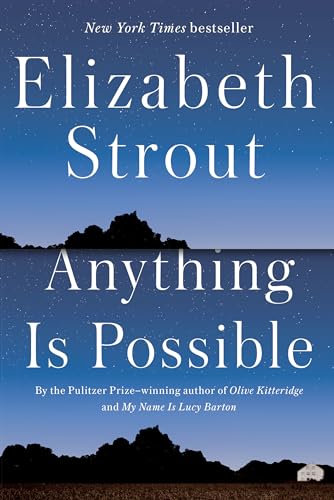
Inhaltsangabe
NEW YORK TIMES BESTSELLER • An unforgettable cast of small-town characters copes with love and loss in this “compulsively readable” (San Francisco Chronicle) novel from #1 bestselling author and Pulitzer Prize winner Elizabeth Strout
“This book, this writer, are magnificent.”—Ann Patchett
Winner of The Story Prize • A Washington Post and New York Times Notable Book • One of USA Today’s top 10 books of the year
Recalling Olive Kitteridge in its richness, structure, and complexity, Anything Is Possible explores the whole range of human emotion through the intimate dramas of people struggling to understand themselves and others.
Here are two sisters: One trades self-respect for a wealthy husband while the other finds in the pages of a book a kindred spirit who changes her life. The janitor at the local school has his faith tested in an encounter with an isolated man he has come to help; a grown daughter longs for mother love even as she comes to accept her mother’s happiness in a foreign country; and the adult Lucy Barton (the heroine of My Name Is Lucy Barton, the author’s celebrated New York Times bestseller) returns to visit her siblings after seventeen years of absence.
Reverberating with the deep bonds of family, and the hope that comes with reconciliation, Anything Is Possible again underscores Elizabeth Strout’s place as one of America’s most respected and cherished authors.
Die Inhaltsangabe kann sich auf eine andere Ausgabe dieses Titels beziehen.
Über die Autorin bzw. den Autor
Elizabeth Strout is the #1 New York Times bestselling author of Olive Kitteridge, winner of the Pulitzer Prize; Olive, Again, an Oprah’s Book Club pick; Anything Is Possible, winner of the Story Prize; My Name is Lucy Barton, longlisted for the Man Booker Prize; The Burgess Boys, named one of the best books of the year by The Washington Post and NPR; Abide with Me, a national bestseller; and Amy and Isabelle, winner of the Los Angeles Times Art Seidenbaum Award for First Fiction and the Chicago Tribune Heartland Prize. She has also been a finalist for the National Book Critics Circle Award, the PEN/Faulkner Award for Fiction, the International Dublin Literary Award, and the Orange Prize. Her short stories have been published in a number of magazines, including The New Yorker and O: The Oprah Magazine. Elizabeth Strout lives in New York City.
Auszug. © Genehmigter Nachdruck. Alle Rechte vorbehalten.
The Sign
Tommy Guptill had once owned a dairy farm, which he’d inherited from his father, and which was about two miles from the town of Amgash, Illinois. This was many years ago now, but at night Tommy still sometimes woke with the fear he had felt the night his dairy farm burned to the ground. The house had burned to the ground as well; the wind had sent sparks onto the house, which was not far from the barns. It had been his fault—he always thought it was his fault—because he had not checked that night on the milking machines to make sure they had been turned off properly, and this is where the fire started. Once it started, it ripped with a fury over the whole place. They lost everything, except for the brass frame to the living room mirror, which he came upon in the rubble the next day, and he left it where it was. A collection was taken up: For a number of weeks his kids went to school in the clothes of their classmates, until he could gather himself and the little money he had; he sold the land to the neighboring farmer, but it did not bring much money in. Then he and his wife, a short pretty woman named Shirley, bought new clothes, and he bought a house as well, Shirley keeping her spirits up admirably as all this was going on. They’d had to buy a house in Amgash, which was a run-down town, and his kids went to school there instead of in Carlisle, where they had been able to go to school before, his farm being just on the line dividing the two towns. Tommy took a job as the janitor in the Amgash school system; the steadiness of the job appealed to him, and he could never go to work on someone else’s farm, he did not have the stomach for that. He was thirty-five years old at the time.
The kids were grown now, with kids of their own who were also grown, and he and Shirley still lived in their small house; she had planted flowers around it, which was unusual in that town. Tommy had worried a good deal about his children at the time of the fire; they had gone from having their home be a place that class trips came to—each year in spring the fifth-grade class from Carlisle would make a day of it, eating their lunches out beside the barns on the wooden tables there, then tromping through the barns watching the men milking the cows, the white foamy stuff going up and over them in the clear plastic pipes—to having to see their father as the man who pushed the broom over the “magic dust” that got tossed over the throw-up of some kid who had been sick in the hallways, Tommy wearing his gray pants and a white shirt that had Tommy stitched on it in red.
Well. They had all lived through it.
This morning Tommy drove slowly to the town of Carlisle for errands; it was a sunny Saturday in May, and his wife’s eighty-second birthday was just a few days away. All around him were open fields, the corn newly planted, and the soybeans too. A number of fields were still brown, as they’d been plowed under for their planting, but mostly there was the high blue sky, with a few white clouds scattered near the horizon. He drove past the sign on the road that led down to the Barton home; it still said SEWING AND ALTERATIONS, even though the woman, Lydia Barton, who did the sewing and alterations had died many years ago. The Barton family had been outcasts, even in a town like Amgash, their extreme poverty and strangeness making this so. The oldest child, a man named Pete, lived alone there now, the middle child was two towns away, and the youngest, Lucy Barton, had fled many years ago, and had ended up living in New York City. Tommy had spent time thinking of Lucy. All those years she had lingered after school, alone in a classroom, from fourth grade right up to her senior year in high school; it had taken her a few years to even look him in the eye.
But now Tommy was driving past the area where his farm had been—these days it was all fields, not a sign of the farm was left—and he thought, as he often thought, about his life back then. It had been a good life, but he did not regret the things that had happened. It was not Tommy’s nature to regret things, and on the night of the fire—in the midst of his galloping fear—he understood that all that mattered in this world were his wife and his children, and he thought that people lived their whole lives not knowing this as sharply and constantly as he did. Privately, he thought of the fire as a sign from God to keep this gift tightly to him. Privately, because he did not want to be thought of as a man who made up excuses for a tragedy; and he did not want anyone—not even his dearly beloved wife—to think he would do this. But he had felt that night, while his wife kept the children over by the road—he had rushed them from the house when he saw that the barn was on fire—as he watched the enormous flames flying into the nighttime sky, then heard the terrible screaming sounds of the cows as they died, he had felt many things, but it was just as the roof of his house crashed in, fell into the house itself, right into their bedrooms and the living room below with all the photos of the children and his parents, as he saw this happen he had felt—undeniably—what he could only think was the presence of God, and he understood why angels had always been portrayed as having wings, because there had been a sensation of that—of a rushing sound, or not even a sound, and then it was as though God, who had no face, but was God, pressed up against him and conveyed to him without words—so briefly, so fleetingly—some message that Tommy understood to be: It’s all right, Tommy. And then Tommy had understood that it was all right. It was beyond his understanding, but it was all right. And it had been. He often thought that his children had become more compassionate as a result of having to go to school with kids who were poor, and not from homes like the one they had first known. He had felt the presence of God since, at times, as though a golden color was very near to him, but he never again felt visited by God as he had felt that night, and he knew too well what people would make of it, and this is why he would keep it to himself until his dying day—the sign from God.
Still, on a spring morning as this one was, the smell of the soil brought back to him the smells of the cows, the moisture of their nostrils, the warmth of their bellies, and his barns—he had had two barns—and he let his mind roll over pieces of scenes that came to him. Perhaps because he had just passed the Barton place he thought of the man, Ken Barton, who had been the father of those poor, sad children, and who had worked on and off for Tommy, and then he thought—as he more often did—of Lucy, who had left for college and then ended up in New York City. She had become a writer.
Lucy Barton.
Driving, Tommy shook his head slightly. Tommy knew many things as a result of being the janitor in that school more than thirty years; he knew of girls’ pregnancies and drunken mothers and cheating spouses, for he overheard these things talked about by the students in their small huddles by the bathrooms, or near the cafeteria; in many ways he was invisible, he understood that. But Lucy Barton had troubled him the most. She and her sister, Vicky, and her brother, Pete, had been viciously scorned by the other kids, and by some of the teachers too. Yet because Lucy stayed after school so often for so many years he felt—though she seldom spoke—that he knew her the best. One time when she was in the fourth grade, it was his first year working there, he had opened the door to a classroom and found...
„Über diesen Titel“ kann sich auf eine andere Ausgabe dieses Titels beziehen.
Suchergebnisse für Anything Is Possible: A Novel

Beispielbild für diese ISBN
Anything Is Possible
Anbieter: World of Books (was SecondSale), Montgomery, IL, USA
Verkäuferbewertung 5 von 5 Sternen

Zustand: Good. Item in good condition. Textbooks may not include supplemental items i.e. CDs, access codes etc. Artikel-Nr. 00105386461
Gebraucht kaufen
EUR 3,71
Versand gratis
Versand innerhalb von USA
Versand innerhalb von USA
Anzahl: Mehr als 20 verfügbar
Foto des Verkäufers
Anything Is Possible: A Novel
Anbieter: Dream Books Co., Denver, CO, USA
Verkäuferbewertung 5 von 5 Sternen
Zustand: acceptable. This copy has clearly been enjoyedâ"expect noticeable shelf wear and some minor creases to the cover. Binding is strong, and all pages are legible. May contain previous library markings or stamps. Artikel-Nr. DBV.0812989406.A
Gebraucht kaufen
EUR 3,72
Versand gratis
Versand innerhalb von USA
Versand innerhalb von USA
Anzahl: 1 verfügbar
Foto des Verkäufers
Anything Is Possible: A Novel
Anbieter: Dream Books Co., Denver, CO, USA
Verkäuferbewertung 5 von 5 Sternen
Zustand: good. Gently used with minimal wear on the corners and cover. A few pages may contain light highlighting or writing, but the text remains fully legible. Dust jacket may be missing, and supplemental materials like CDs or codes may not be included. May be ex-library with library markings. Ships promptly! Artikel-Nr. DBV.0812989406.G
Gebraucht kaufen
EUR 4,71
Versand gratis
Versand innerhalb von USA
Versand innerhalb von USA
Anzahl: 5 verfügbar
Beispielbild für diese ISBN
Anything Is Possible : A Novel
Verlag:
Random House Publishing Group, 2017
ISBN 10: 0812989406
ISBN 13: 9780812989403
Gebraucht
Hardcover
Erstausgabe
Anbieter: Better World Books, Mishawaka, IN, USA
Verkäuferbewertung 5 von 5 Sternen
Zustand: Good. First Edition. Pages intact with minimal writing/highlighting. The binding may be loose and creased. Dust jackets/supplements are not included. Stock photo provided. Product includes identifying sticker. Better World Books: Buy Books. Do Good. Artikel-Nr. GRP102762346
Gebraucht kaufen
EUR 6,05
Versand gratis
Versand innerhalb von USA
Versand innerhalb von USA
Anzahl: 1 verfügbar
Beispielbild für diese ISBN
Anything Is Possible : A Novel
Verlag:
Random House Publishing Group, 2017
ISBN 10: 0812989406
ISBN 13: 9780812989403
Gebraucht
Hardcover
Erstausgabe
Anbieter: Better World Books, Mishawaka, IN, USA
Verkäuferbewertung 5 von 5 Sternen
Zustand: Good. First Edition. Former library copy. Pages intact with minimal writing/highlighting. The binding may be loose and creased. Dust jackets/supplements are not included. Includes library markings. Stock photo provided. Product includes identifying sticker. Better World Books: Buy Books. Do Good. Artikel-Nr. 13099700-6
Gebraucht kaufen
EUR 6,05
Versand gratis
Versand innerhalb von USA
Versand innerhalb von USA
Anzahl: 4 verfügbar
Beispielbild für diese ISBN
Anything Is Possible : A Novel
Verlag:
Random House Publishing Group, 2017
ISBN 10: 0812989406
ISBN 13: 9780812989403
Gebraucht
Hardcover
Erstausgabe
Anbieter: Better World Books: West, Reno, NV, USA
Verkäuferbewertung 5 von 5 Sternen
Zustand: Very Good. First Edition. Former library copy. Pages intact with possible writing/highlighting. Binding strong with minor wear. Dust jackets/supplements may not be included. Includes library markings. Stock photo provided. Product includes identifying sticker. Better World Books: Buy Books. Do Good. Artikel-Nr. 12912523-75
Gebraucht kaufen
EUR 6,05
Versand gratis
Versand innerhalb von USA
Versand innerhalb von USA
Anzahl: 1 verfügbar
Beispielbild für diese ISBN
Anything Is Possible : A Novel
Verlag:
Random House Publishing Group, 2017
ISBN 10: 0812989406
ISBN 13: 9780812989403
Gebraucht
Hardcover
Erstausgabe
Anbieter: Better World Books: West, Reno, NV, USA
Verkäuferbewertung 5 von 5 Sternen
Zustand: Good. First Edition. Former library copy. Pages intact with minimal writing/highlighting. The binding may be loose and creased. Dust jackets/supplements are not included. Includes library markings. Stock photo provided. Product includes identifying sticker. Better World Books: Buy Books. Do Good. Artikel-Nr. 13099700-6
Gebraucht kaufen
EUR 6,05
Versand gratis
Versand innerhalb von USA
Versand innerhalb von USA
Anzahl: 1 verfügbar
Beispielbild für diese ISBN
Anything Is Possible: A Novel
Anbieter: Wonder Book, Frederick, MD, USA
Verkäuferbewertung 5 von 5 Sternen
Zustand: Good. Good condition. Very Good dust jacket. With remainder mark. A copy that has been read but remains intact. May contain markings such as bookplates, stamps, limited notes and highlighting, or a few light stains. Artikel-Nr. U03O-01442
Gebraucht kaufen
EUR 6,28
Versand gratis
Versand innerhalb von USA
Versand innerhalb von USA
Anzahl: 1 verfügbar
Beispielbild für diese ISBN
Anything Is Possible: A Novel
Anbieter: Wonder Book, Frederick, MD, USA
Verkäuferbewertung 5 von 5 Sternen
Zustand: Very Good. Very Good condition. Very Good dust jacket. A copy that may have a few cosmetic defects. May also contain light spine creasing or a few markings such as an owner's name, short gifter's inscription or light stamp. Artikel-Nr. J10A-03510
Gebraucht kaufen
EUR 6,28
Versand gratis
Versand innerhalb von USA
Versand innerhalb von USA
Anzahl: 5 verfügbar
Foto des Verkäufers
Anything Is Possible
Anbieter: WeBuyBooks, Rossendale, LANCS, Vereinigtes Königreich
Verkäuferbewertung 5 von 5 Sternen
hardcover. Zustand: Like New. Most items will be dispatched the same or the next working day. An apparently unread copy in perfect condition. Dust cover is intact with no nicks or tears. Spine has no signs of creasing. Pages are clean and not marred by notes or folds of any kind. Artikel-Nr. rev6886929248
Gebraucht kaufen
EUR 10,83
EUR 7,53 Versand
Versand von Vereinigtes Königreich nach USA
Versand von Vereinigtes Königreich nach USA
Anzahl: 1 verfügbar