
Verwandte Artikel zu Pilgrimage: My Search for the Real Pope Francis
Inhaltsangabe
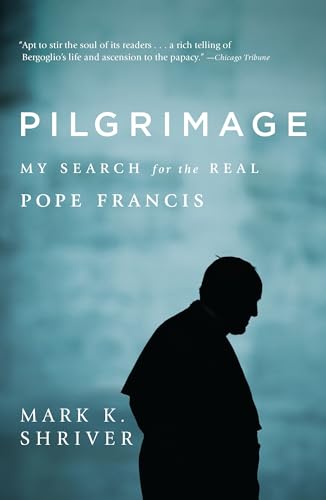
A down-to-earth and deeply intimate portrait of Pope Francis and his faith, based on interviews with the men and women who knew him simply as Jorge Mario Bergoglio
Early on the evening of March 13, 2013, the newly elected Pope Francis stepped out onto the balcony of St. Peter’s Basilica and did something remarkable: Before he imparted his blessing to the crowd, he asked the crowd to bless him, then bowed low to receive this grace. In the days that followed, Mark K. Shriver—along with the rest of the world—was astonished to see a pope who paid his own hotel bill, eschewed limousines, and made his home in a suite of austere rooms in a Vatican guesthouse rather than the grand papal apartment in the Apostolic Palace. By setting an example of humility and accessibility, Francis breathed new life into the Catholic Church, attracting the admiration of Catholics and non-Catholics alike.
In Pilgrimage, Shriver retraces Francis’s personal journey, revealing the origins of his open, unpretentious style and explaining how it revitalized Shriver’s own faith and renewed his commitment to the Church. To help us understand how Jorge Mario Bergoglio became Pope Francis, Shriver travels to Bergoglio’s native Argentina to meet with the people who knew him as a child, as a young Jesuit priest, and as a reformist bishop. Shriver visits the confessional where Bergoglio first felt called to a faith-based life and takes us to the humble parish where the future pontiff’s pastoral career began: in a church created from a converted vegetable shed in an area just outside the city of Buenos Aires. In these impoverished surroundings, Bergoglio answered Christ’s call to feed the hungry, clothe the naked, and shelter the homeless, following the example set by his papal namesake, St. Francis of Assisi.
In this deeply reported yet highly personal book, Mark K. Shriver explores how Francis's commitment has struck a chord in the hearts of millions who long to make faith, love, humility, and mercy part of their lives as they go out into the world to serve and learn from the most marginalized.
Praise for Pilgrimage
“Well-researched . . . Pilgrimage shines a light on [Pope Francis’s] unexplored aspects. . . . A very timely and important addition to the literature on the life and person and thinking of Pope Francis. Everybody interested in Pope Francis will enjoy reading this biography.”—The Washington BookReview
“Apt to stir the soul of readers . . . While this is a rich telling of Bergoglio’s life and ascension to the papacy, it is more movingly a spiritual memoir that draws us deep into a knowing of this at once humble and soul-stirring rekindler of faith.”—Chicago Tribune
“A fascinating portrait of a man and a nourishing account of spiritual yearning.”—Booklist
“This fast-paced and fascinating tale takes us on Jorge Mario Bergoglio’s pilgrimage from his grandmother’s knee in the Italian-Argentine community, through years of success and sorrow in the tumultuous country that he loved, to his surprise election as Pope Francis.”—Cokie Roberts, New York Times bestselling author of Capital Dames: The Civil War and the Women of Washington, 1848–1868
“All people of good faith, including those whose lives are not guided by religious beliefs, will be inspired and enlightened by the compelling manner in which Pilgrimage brings us closer to the heart and mind of Jorge Mario Bergoglio, Pope Francis. I highly recommend this book; it will make a difference in your life.”—Cardinal Seán O’Malley, OFM Cap.
Die Inhaltsangabe kann sich auf eine andere Ausgabe dieses Titels beziehen.
Über die Autorin bzw. den Autor
Mark K. Shriver is president of Save the Children Action Network in Washington, D.C. Shriver created the Choice Program and is a former Maryland state legislator. His New York Times and Washington Post bestselling memoir, A Good Man: Rediscovering My Father, Sargent Shriver, was published in June 2012 and received a 2013 Christopher Award. Shriver lives with his wife, Jeanne, and their three children, Molly, Tommy and Emma, in Maryland.
Auszug. © Genehmigter Nachdruck. Alle Rechte vorbehalten.
1 Rosa
Many of us who have an interest in our families’ immigrant pasts have visited the port or the town where our forebears arrived, lived, worked, and struggled. We try to imagine the day of their arrival, the weather, the smell, the crowds, the anxiety. I have wandered the streets of Boston looking at the same sights my Irish maternal relatives must have seen; I have wondered what they must have felt when they read signs that said irish need not apply.
I have also walked through the rambling homestead of my German-Irish paternal forebears, a place nested in the rolling hills of Union Mills, Maryland, alongside a rushing creek that powered a gristmill employing generations of Shrivers. I wondered how they came to such a site, and how they survived the Battle of Gettysburg just a few miles up the road—how Shrivers fought on both sides of that bloody conflict yet somehow remained a united family for generations to come.
Argentina has a great deal in common with the United States of America in this way—millions upon millions of Europeans made the long, stormy voyage there in search of a better life. In the case of Pope Francis, his paternal grandparents, Rosa and Giovanni, came accompanied by their only child, Mario.
Like most families whose ancestors immigrated to the country where we live now, the Bergoglio family has its myths and amazing stories. Indeed, the Bergoglios almost didn’t live to see Argentina. The family had purchased steerage tickets on a ship, the Principessa Mafalda, which sank off the coast of Brazil, killing three hundred fourteen people. They exchanged those tickets only because there was a delay in selling their coffee shop in Turin, Italy.
The ship on which they did embark, the Giulio Cesare, docked in Buenos Aires on January 25, 1929, in the thick of the South American summer. Rosa and her family disembarked alongside hundreds of other Italians seeking a better life in America, albeit not the North America of Ellis Island fame. The heat and humidity did not daunt this mythic grandmother, however, and she kept her fox-fur coat tightly wrapped about her ample flesh while she waited in line. The family’s entire net worth, generated from the sale of the coffee shop, was stitched into the lining of that winter coat.
Rosa was born into a peasant family in Val Bormida in northern Italy in 1884. On August 20, 1907, she married Giovanni, and they settled in Asti, in the Piedmont region of northwestern Italy. Their son, Mario, was born in 1908. Giovanni fought in World War I before they moved to Turin in 1920, where they ran the coffee shop that helped put Mario through school so he could become an accountant at the Bank of Italy.
During the 1920s, Rosa protested against Benito Mussolini as a member of Acción Católica, or Catholic Action. In a letter written while he was in exile in Córdoba in 1990, Bergoglio wrote that his grandmother “would give talks everywhere.” He also recalled that his “grandmother said things that did not sit well with the politics of her time. Once they closed the hall where she was to give her talk so she gave it in the street standing on a table.”
With unrest at home, with Italy’s economy in ruins, and with Argentina’s economy booming—and the very real feeling that another world war was fast approaching—Rosa and Giovanni traveled across the Atlantic Ocean with Mario.
Despite its distance from home, Rosa must have found Argentina familiar, for it was swarming with Italian immigrants. The economy was based on the export of raw materials, agricultural products, wool, and, of course, beef, and Jorge’s grandparents had come not out of desperation, the way many Irish and Italians came to America, but rather to get in on the boom. Giovanni already had three brothers living in Paraná, where they had set up a successful paving company, so the family headed there immediately.
Another reason it must have felt familiar was the strong presence of an order of Catholic priests called the Salesians of Don Bosco. Saint John Bosco, often referred to as Don Bosco, was born in the Piedmont region in 1815. Fr. Joseph Boenzi, a Salesian of Don Bosco and professor of theology at the Dominican School of Philosophy and Theology, told me:
Don Bosco chose Francis de Sales—a late sixteenth / early seventeenth century saint known for patience and gentleness—as a model for his work among the poorest and most marginalized immigrant young people who were otherwise neglected at best, and exploited at worst, in Turin during the middle of the 1800s. The Salesian Society, also called the Salesians of Don Bosco, continues his work in one hundred and thirty-three countries. Argentina has a long Salesian tradition, as Don Bosco sent his spiritual sons and daughters there in 1875.
In that letter he wrote from Córdoba in 1990, Bergoglio recalled that his father had befriended many Salesian priests while he lived in Italy and was a “part of the ‘Salesian family.’ ” When Mario arrived in Paraná, he went to work for his uncles as the company accountant. According to Bergoglio, his dad “moved between Paraná, Santa Fe, and Buenos Aires. When he arrived in Buenos Aires he stayed with the Salesians on Solis Street, and it was while he was there that he met Father [Enrico] Pozzoli, who immediately became his confessor. He joined the group of young men that were close to Father Pozzoli and it was there that he met my mother’s brothers and, as a result, my mother.”
Mario met Regina Maria Sivori, an Argentine whose family was originally from Italy, at mass. They were married twelve months later, on December 12, 1935, and just twelve months after that, Jorge Mario Bergoglio was born, on December 17, 1936. He was baptized eight days later, on December 25, 1936, by Pozzoli. Jorge was followed by a brother, Oscar, a sister, Marta, another brother, Alberto, and finally another sister, Maria Elena.
Bergoglio recalls being raised in such a devout Catholic family that not only did the family say the rosary before dinner, but they also had their priest as a frequent guest for meals. Pozzoli was not only responsible for introducing Mario and Regina but also played a critical role in the family’s financial, educational, and spiritual histories. Bergoglio called him “the spiritual father of the family.”
When Jorge’s great-uncle, the president of the company in Paraná, died and the family lost everything, Pozzoli rescued them by introducing Jorge’s grandparents to “a person who loaned them two thousand pesos with which my grandparents bought a store in the Flores neighborhood and Dad—who had been the [manager] of the Bank of Italy . . . and the accountant of the company—had to go around with the basket doing the delivery for the store.”
Rosa was Jorge’s godmother as well as his grandmother. Almost every morning, Rosa picked up Jorge and took him around the corner to her home, where he stayed until late in the day. She took him to church and taught him to pray. As Bergoglio said in a 2012 radio interview, “She had a big influence on my faith. . . . She’d tell me stories about the saints. She left a deep spiritual imprint on me.”
The family also abided by the Church’s teachings on divorce and on other religions. Bergoglio told his longtime friend Rabbi Abraham Skorka in their book On Heaven and Earth, “If someone close to the family divorced or separated, they could not enter your house; and they believed all Protestants were going to hell.” Rosa, however, left a different...
„Über diesen Titel“ kann sich auf eine andere Ausgabe dieses Titels beziehen.
Suchergebnisse für Pilgrimage: My Search for the Real Pope Francis

Beispielbild für diese ISBN
Pilgrimage: My Search for the Real Pope Francis
Verlag:
Random House Publishing Group, 2017
ISBN 10: 0812987551
ISBN 13: 9780812987553
Gebraucht
Softcover
Anbieter: World of Books (was SecondSale), Montgomery, IL, USA
Verkäuferbewertung 5 von 5 Sternen

Zustand: Very Good. Item in very good condition! Textbooks may not include supplemental items i.e. CDs, access codes etc. Artikel-Nr. 00105307590
Gebraucht kaufen
EUR 4,41
Versand gratis
Versand innerhalb von USA
Versand innerhalb von USA
Anzahl: 1 verfügbar
Beispielbild für diese ISBN
Pilgrimage: My Search for the Real Pope Francis
Verlag:
Random House Publishing Group, 2017
ISBN 10: 0812987551
ISBN 13: 9780812987553
Gebraucht
Softcover
Anbieter: World of Books (was SecondSale), Montgomery, IL, USA
Verkäuferbewertung 5 von 5 Sternen
Zustand: Good. Item in good condition. Textbooks may not include supplemental items i.e. CDs, access codes etc. Artikel-Nr. 00089554527
Gebraucht kaufen
EUR 4,41
Versand gratis
Versand innerhalb von USA
Versand innerhalb von USA
Anzahl: 2 verfügbar
Beispielbild für diese ISBN
Pilgrimage: My Search for the Real Pope Francis
Verlag:
Random House Publishing Group (edition Reprint), 2017
ISBN 10: 0812987551
ISBN 13: 9780812987553
Gebraucht
Paperback
Anbieter: BooksRun, Philadelphia, PA, USA
Verkäuferbewertung 5 von 5 Sternen
Paperback. Zustand: Very Good. Reprint. It's a well-cared-for item that has seen limited use. The item may show minor signs of wear. All the text is legible, with all pages included. It may have slight markings and/or highlighting. Artikel-Nr. 0812987551-11-22
Gebraucht kaufen
EUR 4,81
Versand gratis
Versand innerhalb von USA
Versand innerhalb von USA
Anzahl: 1 verfügbar
Beispielbild für diese ISBN
Pilgrimage: My Search for the Real Pope Francis
Verlag:
Random House Publishing Group, 2017
ISBN 10: 0812987551
ISBN 13: 9780812987553
Gebraucht
Paperback
Anbieter: ThriftBooks-Reno, Reno, NV, USA
Verkäuferbewertung 5 von 5 Sternen
Paperback. Zustand: Very Good. No Jacket. May have limited writing in cover pages. Pages are unmarked. ~ ThriftBooks: Read More, Spend Less. Artikel-Nr. G0812987551I4N00
Gebraucht kaufen
EUR 5,98
Versand gratis
Versand innerhalb von USA
Versand innerhalb von USA
Anzahl: 1 verfügbar
Beispielbild für diese ISBN
Pilgrimage: My Search for the Real Pope Francis
Verlag:
Random House Publishing Group, 2017
ISBN 10: 0812987551
ISBN 13: 9780812987553
Gebraucht
Paperback
Anbieter: ThriftBooks-Dallas, Dallas, TX, USA
Verkäuferbewertung 5 von 5 Sternen
Paperback. Zustand: Very Good. No Jacket. May have limited writing in cover pages. Pages are unmarked. ~ ThriftBooks: Read More, Spend Less. Artikel-Nr. G0812987551I4N00
Gebraucht kaufen
EUR 6,00
Versand gratis
Versand innerhalb von USA
Versand innerhalb von USA
Anzahl: 1 verfügbar
Beispielbild für diese ISBN
Pilgrimage: My Search for the Real Pope Francis
Verlag:
Random House Publishing Group, 2017
ISBN 10: 0812987551
ISBN 13: 9780812987553
Gebraucht
Paperback
Anbieter: ThriftBooks-Atlanta, AUSTELL, GA, USA
Verkäuferbewertung 5 von 5 Sternen
Paperback. Zustand: Good. No Jacket. Pages can have notes/highlighting. Spine may show signs of wear. ~ ThriftBooks: Read More, Spend Less. Artikel-Nr. G0812987551I3N00
Gebraucht kaufen
EUR 6,00
Versand gratis
Versand innerhalb von USA
Versand innerhalb von USA
Anzahl: 1 verfügbar
Beispielbild für diese ISBN
Pilgrimage: My Search for the Real Pope Francis
Verlag:
Random House Trade Paperbacks, 2017
ISBN 10: 0812987551
ISBN 13: 9780812987553
Gebraucht
Paperback
Erstausgabe
Anbieter: Night Heron Books, Laramie, WY, USA
Verkäuferbewertung 5 von 5 Sternen
Paperback. Zustand: Very Good. 1st. Looks almost new. Cover clean and in v.g. condition: inventory labels. No writing, highlighting, or marks in text. 16 pp. color photos. Artikel-Nr. 752227
Gebraucht kaufen
EUR 7,19
EUR 3,71 Versand
Versand innerhalb von USA
Versand innerhalb von USA
Anzahl: 1 verfügbar
Beispielbild für diese ISBN
Pilgrimage
Anbieter: PBShop.store US, Wood Dale, IL, USA
Verkäuferbewertung 5 von 5 Sternen
PAP. Zustand: New. New Book. Shipped from UK. Established seller since 2000. Artikel-Nr. L2-9780812987553
Neu kaufen
EUR 20,09
Versand gratis
Versand innerhalb von USA
Versand innerhalb von USA
Anzahl: Mehr als 20 verfügbar
Beispielbild für diese ISBN
Pilgrimage
Anbieter: PBShop.store UK, Fairford, GLOS, Vereinigtes Königreich
Verkäuferbewertung 5 von 5 Sternen
PAP. Zustand: New. New Book. Shipped from UK. Established seller since 2000. Artikel-Nr. L2-9780812987553
Neu kaufen
EUR 18,29
EUR 4,85 Versand
Versand von Vereinigtes Königreich nach USA
Versand von Vereinigtes Königreich nach USA
Anzahl: Mehr als 20 verfügbar
Beispielbild für diese ISBN
Pilgrimage: My Search for the Real Pope Francis
Verlag:
Random House Publishing Group, 2017
ISBN 10: 0812987551
ISBN 13: 9780812987553
Neu
Softcover
Anbieter: Ria Christie Collections, Uxbridge, Vereinigtes Königreich
Verkäuferbewertung 5 von 5 Sternen
Zustand: New. In English. Artikel-Nr. ria9780812987553_new
Neu kaufen
EUR 19,14
EUR 13,17 Versand
Versand von Vereinigtes Königreich nach USA
Versand von Vereinigtes Königreich nach USA
Anzahl: Mehr als 20 verfügbar