
Verwandte Artikel zu Reading with Patrick: A Teacher, a Student, and a Life-Chang...
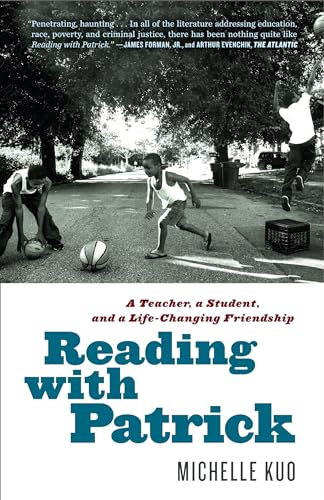
Inhaltsangabe
“In all of the literature addressing education, race, poverty, and criminal justice, there has been nothing quite like Reading with Patrick.”—The Atlantic
A memoir of the life-changing friendship between an idealistic young teacher and her gifted student, jailed for murder in the Mississippi Delta
FINALIST FOR THE DAYTON LITERARY PEACE PRIZE
Recently graduated from Harvard University, Michelle Kuo arrived in the rural town of Helena, Arkansas, as a Teach for America volunteer, bursting with optimism and drive. But she soon encountered the jarring realities of life in one of the poorest counties in America, still disabled by the legacy of slavery and Jim Crow. In this stirring memoir, Kuo, the child of Taiwanese immigrants, shares the story of her complicated but rewarding mentorship of one student, Patrick Browning, and his remarkable literary and personal awakening.
Convinced she can make a difference in the lives of her teenaged students, Michelle Kuo puts her heart into her work, using quiet reading time and guided writing to foster a sense of self in students left behind by a broken school system. Though Michelle loses some students to truancy and even gun violence, she is inspired by some such as Patrick. Fifteen and in the eighth grade, Patrick begins to thrive under Michelle’s exacting attention. However, after two years of teaching, Michelle feels pressure from her parents and the draw of opportunities outside the Delta and leaves Arkansas to attend law school.
Then, on the eve of her law-school graduation, Michelle learns that Patrick has been jailed for murder. Feeling that she left the Delta prematurely and determined to fix her mistake, Michelle returns to Helena and resumes Patrick’s education—even as he sits in a jail cell awaiting trial. Every day for the next seven months they pore over classic novels, poems, and works of history. Little by little, Patrick grows into a confident, expressive writer and a dedicated reader galvanized by the works of Frederick Douglass, James Baldwin, Walt Whitman, W. S. Merwin, and others. In her time reading with Patrick, Michelle is herself transformed, contending with the legacy of racism and the questions of what constitutes a “good” life and what the privileged owe to those with bleaker prospects.
“A powerful meditation on how one person can affect the life of another . . . One of the great strengths of Reading with Patrick is its portrayal of the risk inherent to teaching.”—The Seattle Times
“[A] tender memoir.”—O: The Oprah Magazine
Die Inhaltsangabe kann sich auf eine andere Ausgabe dieses Titels beziehen.
Über die Autorin bzw. den Autor
Michelle Kuo taught English at an alternative school in the Arkansas Delta for two years. After teaching, she attended Harvard Law School as a Paul and Daisy Soros Fellow, and worked legal aid at a nonprofit for Spanish-speaking immigrants in the Fruitvale district of Oakland, California, on a Skadden Fellowship, with a focus on tenants’ and workers’ rights. She has volunteered as a teacher at the Prison University Project and clerked for a federal appeals court judge in the Ninth Circuit. Currently she teaches courses on race, law, and society at the American University in Paris.
Auszug. © Genehmigter Nachdruck. Alle Rechte vorbehalten.
***This excerpt is from an advance uncorrected copy proof***
Copyright © 2017 Michelle Kuo
Chapter 1
A Raisin in the Sun
Where Helena sits on the banks of the Mississippi, the river is quiet, peaceable. Summer songbirds talk with frogs, with a tsee tsee tew tew cheer cheer. Wild dewberries bloom on the bluffs, where they dangle, ripe but unplucked. In the water below, catfish form shadows, ready to gorge on what the wind shakes in. For thousands of years the river routinely flooded these banks, building the most fertile soil in the world. In the mid-nineteenth century, plantation owners yielded from this soil a single crop—cotton—and cotton made it slave country.
Slave owners in the Delta were the richest moguls in the nation, and the wealthiest 10 percent of Arkansas’s population owned 70 percent of its land. Steamboats competed with railroads to transport cotton from Helena. After the Civil War, the lumber industry took off, and the swampy hardwoods in the Delta offered yet another source of wealth. People flocked here for wages at the twenty-four sawmills and the docks, the fish fries and the juke joints, the opera house and the saloons. Toss dice, haul wood, make moonshine, repeat. Helena was, as Twain wrote in 1883, the prettiest situation on the river and the commercial center of a broad and prosperous region.
In 2004, the year I arrived in Helena, Twain’s city was hard to imagine. On Cherry Street, the town’s main drag, wooden planks covered windows. There was a No Loitering sign on an abandoned storefront even though the actual loiterers were across the street, hovering around the town’s only liquor store. The marquee of a long-shuttered store had become the canvas of a prankster: Starbucks Coming Soon. Sincerity was more likely to be found on the marquees of churches, which abounded. No such thing as rehab without Jesus, said one. There was no coffee shop, no bookstore, no movie theater, and no more than a handful of restaurants. When I asked where to get good coffee, people recommended McDonald’s. (It wasn’t bad.)
Helena had begun an effort to market an enchanting part of its history, the blues, at the old train depot, which was converted to a museum. The museum shares stories and photos of black musicians who sang in Helena, lived in Helena, visited Helena, used Helena as a stepping-stone to Chicago, or retired in Helena when Chicago didn’t work out. Their names are evocative, often involving infirmity or animals: Blind Lemon Jefferson, Howlin’ Wolf, Super Chikan. Exhibits here have hopeful titles—A Heritage of Determination, reads one, or Struggle in a Bountiful Land—but few visitors.
People say Helena’s decline truly began with the closing of Mohawk Rubber and Tire Company. When it shut down in 1979, the middle class, both black and white, fled. Then Arkla Chemical, a fertilizer company, was shuttered. The bowling alley, the movie theaters, the shops, and the nicer restaurants followed suit. Those who grew up here left, trying to find jobs in Little Rock, Memphis, Fayetteville, or Texas; families stopped coming here to live. When I first arrived in Helena, I worried what locals would think of teachers who left the community after Teach For America’s standard two years. But soon I realized my question presumed that leaving was novel to the experience of living in Helena. What was novel was that young teachers would travel here at all. “The saddest day is high school graduation,” one grandparent would later tell me, referring to the kids who had found opportunities elsewhere, “because those kids won’t come back.”
People here got what jobs they could. Old men knocked on doors, asking to pick up sticks in the yard for money. The guard at the county jail also worked part-time at McDonald’s. A big employer was the casino, technically in Mississippi, just across the river. Funerals provided a steady stream of business. If you drove down Plaza Avenue, on a block no longer than half a mile, there were three funeral homes, a tombstone store, and a flower shop. On a lawn in front of a store, large blank headstones lay flat, reflecting the light. Walmart also did well. On any given school day, teenage girls could be found browsing the many aisles of its baby section. (Outside—on weekends—the high school church group peddled abstinence pamphlets.) Phillips County, of which Helena is the seat, was one of the poorest counties in the country, and ranked last in the state of Arkansas in public health. Its teenage birthrate was higher than that of ninety-four developing countries. There were regular shoot-outs in town. Drugs were a problem, and police officers were busted by the feds for trafficking.
White people did live, eat, and work here, but their children were hard to spot in daylight. They attended DeSoto School, one of many private schools in the Delta established to circumvent integration. When DeSoto was opened in 1970, a dedicated cohort of white families deliberately sent their children to the newly integrated public schools, which flourished in their early years: Helena’s basketball team, a pretty picture of black and white players, became one of the best in the state. But as the economy tanked, property values plummeted, and everybody fled Helena, DeSoto—at first a minority bastion of racists—transformed into an evacuation site for the remaining white families. Helena’s public schools, Central High School and Eliza Miller, are 99 percent black. As of this writing, DeSoto has yet to matriculate a single black student. Thus, in a city so small that the combined graduating class of its high schools is fewer than two hundred students and so remote that one must drive a hundred miles to see a movie, two groups of kids grow up, one white and one black, rarely interacting.
My first months in the Stars classroom had a surreal aspect. Most students had never encountered an Asian person before, and they stared. “What you is?” they’d say, and then, with a serious expression, ask if I was related to Jackie Chan. (Others, less polite, said, “Fuck you, Chinese bitch.”) Once, a sixteen-year-old student took a piss in a classroom, on a dare. Another kid came to school with his legs covered with welts from a switch. “Should I call child services?” I asked other teachers. No, no; that was just how you kept discipline around here. When kids got in trouble at school, it was universally known, they preferred paddling to suspension. “They’re used to that,” the secretary explained to me. “And they don’t want to go home.”
I was shocked by all of this, but I was shocked, primarily, by myself. I yelled. I got mean. At first I tried to appear strict, in a bid to be taken seriously, but this contortion took on a life of its own. To the twelfth grader who called me a Chinese bitch, I said he’d be lucky if he got a job at McDonald’s. To a boy who told a girl she was fat, I snapped, “So are you.” I tore up a student’s drawing, which I’d thought of as a doodle, in order to jolt him into paying attention; he never forgave me, and I will regret it forever. I bribed a mother to sign a permission slip for a field trip. The mother, an absentee drug addict, was angry at her daughter, my student, for calling child services on behalf of her younger siblings. I went to the house. The mother said she’d sign the form if I got her a color TV. We compromised: I’d go to Walmart and get her a kiddie pool. (“Your children are gonna love this,” said the cashier at Walmart, shoving my purchase into a huge plastic bag. “Days get hot here.”) Another time a kid grabbed my butt, and I sent him to...
„Über diesen Titel“ kann sich auf eine andere Ausgabe dieses Titels beziehen.
Suchergebnisse für Reading with Patrick: A Teacher, a Student, and a Life-Chang...

Beispielbild für diese ISBN
Reading with Patrick: A Teacher, a Student, and a Life-Changing Friendship
Anbieter: World of Books (was SecondSale), Montgomery, IL, USA
Verkäuferbewertung 5 von 5 Sternen

Paperback. Zustand: Very Good. "In all of the literature addressing education, race, poverty, and criminal justice, there has been nothing quite like Reading with Patrick."--The Atlantic A memoir of the life-changing friendship between an idealistic young teacher and her gifted student, jailed for murder in the Mississippi Delta FINALIST FOR THE DAYTON LITERARY PEACE PRIZE Recently graduated from Harvard University, Michelle Kuo arrived in the rural town of Helena, Arkansas, as a Teach for America volunteer, bursting with optimism and drive. But she soon encountered the jarring realities of life in one of the poorest counties in America, still disabled by the legacy of slavery and Jim Crow. In this stirring memoir, Kuo, the child of Taiwanese immigrants, shares the story of her complicated but rewarding mentorship of one student, Patrick Browning, and his remarkable literary and personal awakening. Convinced she can make a difference in the lives of her teenaged students, Michelle Kuo puts her heart into her work, using quiet reading time and guided writing to foster a sense of self in students left behind by a broken school system. Though Michelle loses some students to truancy and even gun violence, she is inspired by some such as Patrick. Fifteen and in the eighth grade, Patrick begins to thrive under Michelle's exacting attention. However, after two years of teaching, Michelle feels pressure from her parents and the draw of opportunities outside the Delta and leaves Arkansas to attend law school. Then, on the eve of her law-school graduation, Michelle learns that Patrick has been jailed for murder. Feeling that she left the Delta prematurely and determined to fix her mistake, Michelle returns to Helena and resumes Patrick's education--even as he sits in a jail cell awaiting trial. Every day for the next seven months they pore over classic novels, poems, and works of history. Little by little, Patrick grows into a confident, expressive writer and a dedicated reader galvanized by the works of Frederick Douglass, James Baldwin, Walt Whitman, W. S. Merwin, and others. In her time reading with Patrick, Michelle is herself transformed, contending with the legacy of racism and the questions of what constitutes a "good" life and what the privileged owe to those with bleaker prospects. "A powerful meditation on how one person can affect the life of another . . . One of the great strengths of Reading with Patrick is its portrayal of the risk inherent to teaching."--The Seattle Times "[A] tender memoir."--O: The Oprah Magazine. Artikel-Nr. 00104665113
Gebraucht kaufen
EUR 3,92
Versand gratis
Versand innerhalb von USA
Versand innerhalb von USA
Anzahl: 3 verfügbar
Beispielbild für diese ISBN
Reading with Patrick: A Teacher, a Student, and a Life-Changing Friendship
Anbieter: World of Books (was SecondSale), Montgomery, IL, USA
Verkäuferbewertung 5 von 5 Sternen
Paperback. Zustand: Good. "In all of the literature addressing education, race, poverty, and criminal justice, there has been nothing quite like Reading with Patrick."--The Atlantic A memoir of the life-changing friendship between an idealistic young teacher and her gifted student, jailed for murder in the Mississippi Delta FINALIST FOR THE DAYTON LITERARY PEACE PRIZE Recently graduated from Harvard University, Michelle Kuo arrived in the rural town of Helena, Arkansas, as a Teach for America volunteer, bursting with optimism and drive. But she soon encountered the jarring realities of life in one of the poorest counties in America, still disabled by the legacy of slavery and Jim Crow. In this stirring memoir, Kuo, the child of Taiwanese immigrants, shares the story of her complicated but rewarding mentorship of one student, Patrick Browning, and his remarkable literary and personal awakening. Convinced she can make a difference in the lives of her teenaged students, Michelle Kuo puts her heart into her work, using quiet reading time and guided writing to foster a sense of self in students left behind by a broken school system. Though Michelle loses some students to truancy and even gun violence, she is inspired by some such as Patrick. Fifteen and in the eighth grade, Patrick begins to thrive under Michelle's exacting attention. However, after two years of teaching, Michelle feels pressure from her parents and the draw of opportunities outside the Delta and leaves Arkansas to attend law school. Then, on the eve of her law-school graduation, Michelle learns that Patrick has been jailed for murder. Feeling that she left the Delta prematurely and determined to fix her mistake, Michelle returns to Helena and resumes Patrick's education--even as he sits in a jail cell awaiting trial. Every day for the next seven months they pore over classic novels, poems, and works of history. Little by little, Patrick grows into a confident, expressive writer and a dedicated reader galvanized by the works of Frederick Douglass, James Baldwin, Walt Whitman, W. S. Merwin, and others. In her time reading with Patrick, Michelle is herself transformed, contending with the legacy of racism and the questions of what constitutes a "good" life and what the privileged owe to those with bleaker prospects. "A powerful meditation on how one person can affect the life of another . . . One of the great strengths of Reading with Patrick is its portrayal of the risk inherent to teaching."--The Seattle Times "[A] tender memoir."--O: The Oprah Magazine. Artikel-Nr. 00104536133
Gebraucht kaufen
EUR 3,92
Versand gratis
Versand innerhalb von USA
Versand innerhalb von USA
Anzahl: 11 verfügbar
Beispielbild für diese ISBN
Reading with Patrick: A Teacher, a Student, and a Life-Changing Friendship
Anbieter: World of Books (was SecondSale), Montgomery, IL, USA
Verkäuferbewertung 5 von 5 Sternen
Paperback. Zustand: Fair. "In all of the literature addressing education, race, poverty, and criminal justice, there has been nothing quite like Reading with Patrick."--The Atlantic A memoir of the life-changing friendship between an idealistic young teacher and her gifted student, jailed for murder in the Mississippi Delta FINALIST FOR THE DAYTON LITERARY PEACE PRIZE Recently graduated from Harvard University, Michelle Kuo arrived in the rural town of Helena, Arkansas, as a Teach for America volunteer, bursting with optimism and drive. But she soon encountered the jarring realities of life in one of the poorest counties in America, still disabled by the legacy of slavery and Jim Crow. In this stirring memoir, Kuo, the child of Taiwanese immigrants, shares the story of her complicated but rewarding mentorship of one student, Patrick Browning, and his remarkable literary and personal awakening. Convinced she can make a difference in the lives of her teenaged students, Michelle Kuo puts her heart into her work, using quiet reading time and guided writing to foster a sense of self in students left behind by a broken school system. Though Michelle loses some students to truancy and even gun violence, she is inspired by some such as Patrick. Fifteen and in the eighth grade, Patrick begins to thrive under Michelle's exacting attention. However, after two years of teaching, Michelle feels pressure from her parents and the draw of opportunities outside the Delta and leaves Arkansas to attend law school. Then, on the eve of her law-school graduation, Michelle learns that Patrick has been jailed for murder. Feeling that she left the Delta prematurely and determined to fix her mistake, Michelle returns to Helena and resumes Patrick's education--even as he sits in a jail cell awaiting trial. Every day for the next seven months they pore over classic novels, poems, and works of history. Little by little, Patrick grows into a confident, expressive writer and a dedicated reader galvanized by the works of Frederick Douglass, James Baldwin, Walt Whitman, W. S. Merwin, and others. In her time reading with Patrick, Michelle is herself transformed, contending with the legacy of racism and the questions of what constitutes a "good" life and what the privileged owe to those with bleaker prospects. "A powerful meditation on how one person can affect the life of another . . . One of the great strengths of Reading with Patrick is its portrayal of the risk inherent to teaching."--The Seattle Times "[A] tender memoir."--O: The Oprah Magazine. Artikel-Nr. 00105325024
Gebraucht kaufen
EUR 3,92
Versand gratis
Versand innerhalb von USA
Versand innerhalb von USA
Anzahl: 2 verfügbar
Foto des Verkäufers
Reading with Patrick: A Teacher, a Student, and a Life-Changing Friendship
Verlag:
Random House Trade Paperbacks, 2018
ISBN 10: 0812987144
ISBN 13: 9780812987140
Gebraucht
Softcover
Anbieter: Dream Books Co., Denver, CO, USA
Verkäuferbewertung 5 von 5 Sternen
Zustand: acceptable. This copy has clearly been enjoyedâ"expect noticeable shelf wear and some minor creases to the cover. Binding is strong, and all pages are legible. May contain previous library markings or stamps. Artikel-Nr. DBV.0812987144.A
Gebraucht kaufen
EUR 4,54
Versand gratis
Versand innerhalb von USA
Versand innerhalb von USA
Anzahl: 1 verfügbar
Beispielbild für diese ISBN
Reading with Patrick : A Teacher, a Student, and a Life-Changing Friendship
Verlag:
Random House Publishing Group, 2018
ISBN 10: 0812987144
ISBN 13: 9780812987140
Gebraucht
Softcover
Anbieter: Better World Books, Mishawaka, IN, USA
Verkäuferbewertung 5 von 5 Sternen
Zustand: Very Good. Former library copy. Pages intact with possible writing/highlighting. Binding strong with minor wear. Dust jackets/supplements may not be included. Includes library markings. Stock photo provided. Product includes identifying sticker. Better World Books: Buy Books. Do Good. Artikel-Nr. 14962350-6
Gebraucht kaufen
EUR 6,18
Versand gratis
Versand innerhalb von USA
Versand innerhalb von USA
Anzahl: 1 verfügbar
Beispielbild für diese ISBN
Reading with Patrick : A Teacher, a Student, and a Life-Changing Friendship
Verlag:
Random House Publishing Group, 2018
ISBN 10: 0812987144
ISBN 13: 9780812987140
Gebraucht
Softcover
Anbieter: Better World Books, Mishawaka, IN, USA
Verkäuferbewertung 5 von 5 Sternen
Zustand: Very Good. Pages intact with possible writing/highlighting. Binding strong with minor wear. Dust jackets/supplements may not be included. Stock photo provided. Product includes identifying sticker. Better World Books: Buy Books. Do Good. Artikel-Nr. 15487713-75
Gebraucht kaufen
EUR 6,18
Versand gratis
Versand innerhalb von USA
Versand innerhalb von USA
Anzahl: 1 verfügbar
Beispielbild für diese ISBN
Reading with Patrick: A Teacher, a Student, and a Life-Changing Friendship
Anbieter: ThriftBooks-Phoenix, Phoenix, AZ, USA
Verkäuferbewertung 5 von 5 Sternen
Paperback. Zustand: Very Good. No Jacket. May have limited writing in cover pages. Pages are unmarked. ~ ThriftBooks: Read More, Spend Less. Artikel-Nr. G0812987144I4N00
Gebraucht kaufen
EUR 6,30
Versand gratis
Versand innerhalb von USA
Versand innerhalb von USA
Anzahl: 1 verfügbar
Beispielbild für diese ISBN
Reading with Patrick: A Teacher, a Student, and a Life-Changing Friendship
Anbieter: ThriftBooks-Reno, Reno, NV, USA
Verkäuferbewertung 5 von 5 Sternen
Paperback. Zustand: Very Good. No Jacket. May have limited writing in cover pages. Pages are unmarked. ~ ThriftBooks: Read More, Spend Less. Artikel-Nr. G0812987144I4N00
Gebraucht kaufen
EUR 6,30
Versand gratis
Versand innerhalb von USA
Versand innerhalb von USA
Anzahl: 1 verfügbar
Beispielbild für diese ISBN
Reading with Patrick: A Teacher, a Student, and a Life-Changing Friendship
Anbieter: ThriftBooks-Dallas, Dallas, TX, USA
Verkäuferbewertung 5 von 5 Sternen
Paperback. Zustand: Good. No Jacket. Pages can have notes/highlighting. Spine may show signs of wear. ~ ThriftBooks: Read More, Spend Less. Artikel-Nr. G0812987144I3N00
Gebraucht kaufen
EUR 6,31
Versand gratis
Versand innerhalb von USA
Versand innerhalb von USA
Anzahl: 1 verfügbar
Beispielbild für diese ISBN
Reading with Patrick: A Teacher, a Student, and a Life-Changing Friendship
Anbieter: ThriftBooks-Dallas, Dallas, TX, USA
Verkäuferbewertung 5 von 5 Sternen
Paperback. Zustand: Very Good. No Jacket. May have limited writing in cover pages. Pages are unmarked. ~ ThriftBooks: Read More, Spend Less. Artikel-Nr. G0812987144I4N00
Gebraucht kaufen
EUR 6,31
Versand gratis
Versand innerhalb von USA
Versand innerhalb von USA
Anzahl: 1 verfügbar