
Verwandte Artikel zu I Know Why the Caged Bird Sings
Inhaltsangabe
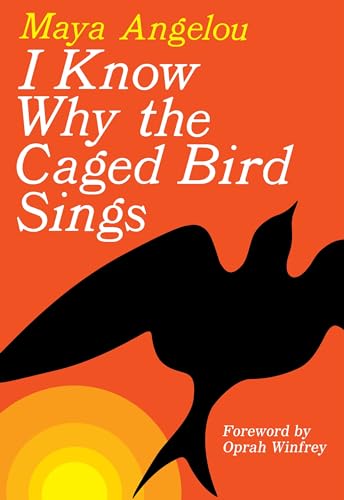
Maya Angelou’s debut memoir is a modern American classic beloved worldwide. Her life story is told in the documentary film And Still I Rise, as seen on PBS’s American Masters.
Here is a book as joyous and painful, as mysterious and memorable, as childhood itself. I Know Why the Caged Bird Sings captures the longing of lonely children, the brute insult of bigotry, and the wonder of words that can make the world right. Maya Angelou’s debut memoir is a modern American classic beloved worldwide.
Sent by their mother to live with their devout, self-sufficient grandmother in a small Southern town, Maya and her brother, Bailey, endure the ache of abandonment and the prejudice of the local “powhitetrash.” At eight years old and back at her mother’s side in St. Louis, Maya is attacked by a man many times her age—and has to live with the consequences for a lifetime. Years later, in San Francisco, Maya learns that love for herself, the kindness of others, her own strong spirit, and the ideas of great authors (“I met and fell in love with William Shakespeare”) will allow her to be free instead of imprisoned.
Poetic and powerful, I Know Why the Caged Bird Sings will touch hearts and change minds for as long as people read.
“I Know Why the Caged Bird Sings liberates the reader into life simply because Maya Angelou confronts her own life with such a moving wonder, such a luminous dignity.”—James Baldwin
Die Inhaltsangabe kann sich auf eine andere Ausgabe dieses Titels beziehen.
Über die Autorin bzw. den Autor
Maya Angelou was raised in Stamps, Arkansas. In addition to her bestselling autobiographies, including I Know Why the Caged Bird Sings and The Heart of a Woman, she wrote numerous volumes of poetry, among them Phenomenal Woman, And Still I Rise, On the Pulse of Morning, and Mother. Maya Angelou died in 2014.
Auszug. © Genehmigter Nachdruck. Alle Rechte vorbehalten.
Prologue
"What you looking at me for?
I didn't come to stay . . ."
I hadn't so much forgot as I couldn't bring myself to remember. Other things were more important.
"What you looking at me for?
I didn't come to stay . . ."
Whether I could remember the rest of the poem or not was immaterial. The truth of the statement was like a wadded-up handkerchief, sopping wet in my fists, and the sooner they accepted it the quicker I could let my hands open and the air would cool my palms.
"What you looking at me for . . . ?"
The children's section of the Colored Methodist Episcopal Church was wiggling and giggling over my well-known forgetfulness.
The dress I wore was lavender taffeta, and each time I breathed it rustled, and now that I was sucking in air to breathe out shame it sounded like crepe paper on the back of hearses.
As I'd watched Momma put ruffles on the hem and cute little tucks around the waist, I knew that once I put it on I'd look like a movie star. (It was silk and that made up for the awful color.) I was going to look like one of the sweet little white girls who were everybody's dream of what was right with the world. Hanging softly over the black Singer sewing machine, it looked like magic, and when people saw me wearing it they were going to run up to me and say, "Marguerite [sometimes it was 'dear Marguerite'], forgive us, please, we didn't know who you were," and I would answer generously, "No, you couldn't have known. Of course I forgive you."
Just thinking about it made me go around with angel's dust sprinkled over my face for days. But Easter's early morning sun had shown the dress to be a plain ugly cut-down from a white woman's once-was-purple throwaway. It was old-lady-long too, but it didn't hide my skinny legs, which had been greased with Blue Seal Vaseline and powdered with the Arkansas red clay. The age-faded color made my skin look dirty like mud, and everyone in church was looking at my skinny legs.
Wouldn't they be surprised when one day I woke out of my black ugly dream, and my real hair, which was long and blond, would take the place of the kinky mass that Momma wouldn't let me straighten? My light-blue eyes were going to hypnotize them, after all the things they said about "my daddy must of been a Chinaman" (I thought they meant made out of china, like a cup) because my eyes were so small and squinty. Then they would understand why I had never picked up a Southern accent, or spoke the common slang, and why I had to be forced to eat pigs' tails and snouts. Because I was really white and because a cruel fairy stepmother, who was understandably jealous of my beauty, had turned me into a too-big Negro girl, with nappy black hair, broad feet and a space between her teeth that would hold a number-two pencil.
"What you looking ..." The minister's wife leaned toward me, her long yellow face full of sorry. She whispered, "I just come to tell you, it's Easter Day." I repeated, jamming the words together, "Ijustcometotellyouit'sEasterDay," as low as possible. The giggles hung in the air like melting clouds that were waiting to rain on me. I held up two fingers, close to my chest, which meant that I had to go to the toilet, and tiptoed toward the rear of the church. Dimly, somewhere over my head, I heard ladies saying, "Lord bless the child," and "Praise God." My head was up and my eyes were open, but I didn't see anything. Halfway down the aisle, the church exploded with "Were you there when they crucified my Lord?" and I tripped over a foot stuck out from the children's pew. I stumbled and started to say something, or maybe to scream, but a green persimmon, or it could have been a lemon, caught me between the legs and squeezed. I tasted the sour on my tongue and felt it in the back of my mouth. Then before I reached the door, the sting was burning down my legs and into my Sunday socks. I tried to hold, to squeeze it back, to keep it from speeding, but when I reached the church porch I knew I'd have to let it go, or it would probably run right back up to my head and my poor head would burst like a dropped watermelon, and all the brains and spit and tongue and eyes would roll all over the place. So I ran down into the yard and let it go. I ran, peeing and crying, not toward the toilet out back but to our house. I'd get a whipping for it, to be sure, and the nasty children would have something new to tease me about. I laughed anyway, partially for the sweet release; still, the greater joy came not only from being liberated from the silly church but from the knowledge that I wouldn't die from a busted head.
If growing up is painful for the Southern Black girl, being aware of her displacement is the rust on the razor that threatens the throat.
It is an unnecessary insult.
Chapter 1
When I was three and Bailey four, we had arrived in the musty little town, wearing tags on our wrists which instructed--"To Whom It May Concern"--that we were Marguerite and Bailey Johnson Jr., from Long Beach, California, en route to Stamps, Arkansas, c/o Mrs. Annie Henderson.
Our parents had decided to put an end to their calamitous marriage, and Father shipped us home to his mother. A porter had been charged with our welfare--he got off the train the next day in Arizona--and our tickets were pinned to my brother's inside coat pocket.
I don't remember much of the trip, but after we reached the segregated southern part of the journey, things must have looked up. Negro passengers, who always traveled with loaded lunch boxes, felt sorry for "the poor little motherless darlings" and plied us with cold fried chicken and potato salad.
Years later I discovered that the United States had been crossed thousands of times by frightened Black children traveling alone to their newly affluent parents in Northern cities, or back to grandmothers in Southern towns when the urban North reneged on its economic promises.
The town reacted to us as its inhabitants had reacted to all things new before our coming. It regarded us a while without curiosity but with caution, and after we were seen to be harmless (and children) it closed in around us, as a real mother embraces a stranger's child. Warmly, but not too familiarly.
We lived with our grandmother and uncle in the rear of the Store (it was always spoken of with a capital s), which she had owned some twenty-five years.
Early in the century, Momma (we soon stopped calling her Grandmother) sold lunches to the sawmen in the lumberyard (east Stamps) and the seedmen at the cotton gin (west Stamps). Her crisp meat pies and cool lemonade, when joined to her miraculous ability to be in two places at the same time, assured her business success. From being a mobile lunch counter, she set up a stand between the two points of fiscal interest and supplied the workers' needs for a few years. Then she had the Store built in the heart of the Negro area. Over the years it became the lay center of activities in town. On Saturdays, barbers sat their customers in the shade on the porch of the Store, and troubadours on their ceaseless crawlings through the South leaned across its benches and sang their sad songs of The Brazos while they played juice harps and cigarbox guitars.
The formal name of the Store was the Wm. Johnson General Merchandise Store. Customers could find food staples, a good variety of colored thread, mash for hogs, corn for chickens, coal oil for lamps, light bulbs for the wealthy, shoestrings, hair dressing, balloons, and flower seeds. Anything not visible had only to be ordered.
Until we became familiar enough to belong to the Store and it to us, we were locked up in a Fun House of Things where the...
„Über diesen Titel“ kann sich auf eine andere Ausgabe dieses Titels beziehen.
Suchergebnisse für I Know Why the Caged Bird Sings

Beispielbild für diese ISBN
I Know Why the Caged Bird Sings
Verlag:
Random House Trade Paperbacks (edition ), 2009
ISBN 10: 0812980026
ISBN 13: 9780812980028
Gebraucht
Paperback
Anbieter: BooksRun, Philadelphia, PA, USA
Verkäuferbewertung 5 von 5 Sternen

Paperback. Zustand: Very Good. It's a well-cared-for item that has seen limited use. The item may show minor signs of wear. All the text is legible, with all pages included. It may have slight markings and/or highlighting. Artikel-Nr. 0812980026-11-1
Gebraucht kaufen
EUR 5,25
Versand gratis
Versand innerhalb von USA
Versand innerhalb von USA
Anzahl: 1 verfügbar
Beispielbild für diese ISBN
I Know Why the Caged Bird Sing
Verlag:
Random House Trade Paperbacks, 2009
ISBN 10: 0812980026
ISBN 13: 9780812980028
Gebraucht
Softcover
Anbieter: World of Books (was SecondSale), Montgomery, IL, USA
Verkäuferbewertung 5 von 5 Sternen
Zustand: Good. Item in good condition and has highlighting/writing on text. Used texts may not contain supplemental items such as CDs, info-trac etc. Artikel-Nr. 00104562361
Gebraucht kaufen
EUR 5,47
Versand gratis
Versand innerhalb von USA
Versand innerhalb von USA
Anzahl: 1 verfügbar
Beispielbild für diese ISBN
I Know Why the Caged Bird Sings
Verlag:
Random House Trade Paperbacks (edition ), 2009
ISBN 10: 0812980026
ISBN 13: 9780812980028
Gebraucht
Paperback
Anbieter: BooksRun, Philadelphia, PA, USA
Verkäuferbewertung 5 von 5 Sternen
Paperback. Zustand: Fair. The item might be beaten up but readable. May contain markings or highlighting, as well as stains, bent corners, or any other major defect, but the text is not obscured in any way. Artikel-Nr. 0812980026-7-1
Gebraucht kaufen
EUR 6,02
Versand gratis
Versand innerhalb von USA
Versand innerhalb von USA
Anzahl: 1 verfügbar
Beispielbild für diese ISBN
I Know Why the Caged Bird Sing
Verlag:
Random House Trade Paperbacks, 2009
ISBN 10: 0812980026
ISBN 13: 9780812980028
Gebraucht
Softcover
Anbieter: World of Books (was SecondSale), Montgomery, IL, USA
Verkäuferbewertung 5 von 5 Sternen
Zustand: Good. Item in good condition. Textbooks may not include supplemental items i.e. CDs, access codes etc. Artikel-Nr. 00108434022
Gebraucht kaufen
EUR 7,36
Versand gratis
Versand innerhalb von USA
Versand innerhalb von USA
Anzahl: 9 verfügbar
Beispielbild für diese ISBN
I Know Why the Caged Bird Sings
Verlag:
Random House Publishing Group, 2009
ISBN 10: 0812980026
ISBN 13: 9780812980028
Gebraucht
Softcover
Anbieter: Better World Books: West, Reno, NV, USA
Verkäuferbewertung 5 von 5 Sternen
Zustand: Very Good. Pages intact with possible writing/highlighting. Binding strong with minor wear. Dust jackets/supplements may not be included. Stock photo provided. Product includes identifying sticker. Better World Books: Buy Books. Do Good. Artikel-Nr. 4477119-6
Gebraucht kaufen
EUR 8,85
Versand gratis
Versand innerhalb von USA
Versand innerhalb von USA
Anzahl: 1 verfügbar
Beispielbild für diese ISBN
I Know Why the Caged Bird Sings
Verlag:
Random House Publishing Group, 2009
ISBN 10: 0812980026
ISBN 13: 9780812980028
Gebraucht
Softcover
Anbieter: Better World Books, Mishawaka, IN, USA
Verkäuferbewertung 5 von 5 Sternen
Zustand: Good. Pages intact with minimal writing/highlighting. The binding may be loose and creased. Dust jackets/supplements are not included. Stock photo provided. Product includes identifying sticker. Better World Books: Buy Books. Do Good. Artikel-Nr. 4056125-6
Gebraucht kaufen
EUR 9,70
Versand gratis
Versand innerhalb von USA
Versand innerhalb von USA
Anzahl: 2 verfügbar
Beispielbild für diese ISBN
I Know Why the Caged Bird Sings
Verlag:
Random House Trade April 2009, 2009
ISBN 10: 0812980026
ISBN 13: 9780812980028
Gebraucht
Trade Paperback
Anbieter: Books End Bookshop, Syracuse, NY, USA
Verkäuferbewertung 4 von 5 Sternen

Trade Paperback. Zustand: Very Good. Artikel-Nr. 1060368
Gebraucht kaufen
EUR 5,74
EUR 5,14 Versand
Versand innerhalb von USA
Versand innerhalb von USA
Anzahl: 1 verfügbar
Beispielbild für diese ISBN
I Know Why the Caged Bird Sings
Anbieter: PBShop.store US, Wood Dale, IL, USA
Verkäuferbewertung 5 von 5 Sternen
PAP. Zustand: New. New Book. Shipped from UK. Established seller since 2000. Artikel-Nr. WB-9780812980028
Beispielbild für diese ISBN
I Know Why the Caged Bird Sings
Anbieter: Robinson Street Books, IOBA, Binghamton, NY, USA
Verkäuferbewertung 4 von 5 Sternen
Paperback. Zustand: Used: Very good. Prompt Shipment, shipped in Boxes, Tracking PROVIDEDBiography: GeneralVery Good condition. Some creasing and stickers. Artikel-Nr. Ware707bjp066
Gebraucht kaufen
EUR 11,91
EUR 8,13 Versand
Versand innerhalb von USA
Versand innerhalb von USA
Anzahl: 1 verfügbar
Beispielbild für diese ISBN
I Know Why the Caged Bird Sings
Verlag:
Random House Trade Paperbacks April 2009, 2009
ISBN 10: 0812980026
ISBN 13: 9780812980028
Neu
Paper Back
Anbieter: Eagle Eye Books, Decatur, GA, USA
Verkäuferbewertung 4 von 5 Sternen
Paper Back. Zustand: New. Artikel-Nr. 657772
Neu kaufen
EUR 16,75
EUR 3,42 Versand
Versand innerhalb von USA
Versand innerhalb von USA
Anzahl: 2 verfügbar