
Verwandte Artikel zu Shadow Man: A Novel
Inhaltsangabe
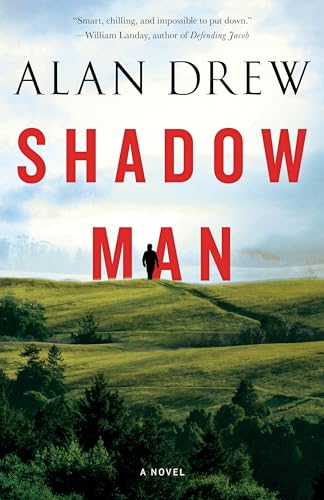
A novel of psychological suspense about an idyllic community rocked by a serial killer—and a dark secret.
“A stellar achievement, a book that unspools like a dark-toned movie in the reader’s mind.”—The Wall Street Journal (One of the Best Mysteries of the Year)
Detective Ben Wade has returned to his hometown of Rancho Santa Elena in search of a quieter life and to try to save his marriage. Suddenly the community, with its peaceful streets and excellent public schools, finds itself at the mercy of a serial killer who slips through windows and screen doors at night, shattering illusions of safety. As Ben and forensic specialist Natasha Betencourt struggle to stay one step ahead of the killer—and deal with painful episodes in the past—Ben’s own world is rocked again by violence. He must decide how far he is willing to go, and Natasha how much she is willing to risk, to protect their friendship and themselves, to rescue the town from a psychotic murderer and a long-buried secret.
Written in fine, chilling prose, Shadow Man reveals the treacherous underbelly of suburban life, as a man, a woman, a family, and a community are confronted with the heart of human darkness.
Finalist for the SCIBA T. Jefferson Parker Award • Named One of the Best Crime Novels of the Year by The Booklist Reader
Die Inhaltsangabe kann sich auf eine andere Ausgabe dieses Titels beziehen.
Über die Autorin bzw. den Autor
Alan Drew is the author of the critically acclaimed debut novel Gardens of Water. He is a graduate of the Iowa Writers’ Workshop. An associate professor of English at Villanova University, where he directs the creative writing program, he lives near Philadelphia with his wife and two children.
Auszug. © Genehmigter Nachdruck. Alle Rechte vorbehalten.
1
Emma was already up in the saddle. She sidestepped Gus across the gravel driveway, the horse’s hooves kicking up dust that blew across the yard.
“C’mon, Dad,” Emma said. “It’s getting late.”
Detective Benjamin Wade was hammering the latch back onto the barn door. When they came up the driveway in his cruiser fifteen minutes earlier, the door was slung wide open, the latch ripped out of the wood by the gusting Santa Ana winds. The winds had burst into the coastal basin midmorning, dry gusts billowing off the desert in the east that electrified the air. The morning had been heavy with gritty smog, the taste of leaded gas on the tongue. By early afternoon, though, the basin was cleared out, the smog pushed out over the Pacific. A brown haze camouflaged Catalina Island, but here the sky was topaz, the needle grass in the hills undulating green from early-fall storms.
“I’ll meet you up there,” Emma said, spinning Gus around and cantering him up the trail.
“Hold on,” Ben said. But she was already gone. He dropped the hammer, the latch swinging loose on a single nail. He pulled himself up onto Tin Man, raced the horse after her, and finally caught up to her on Bommer Ridge.
“You’re getting slow, old man,” Emma said, turning to smile at him.
“You’re getting impatient.”
“You want to be here as much as I do,” she said.
That was true. This was exactly where he wanted to be—in the hills, riding a horse, with his daughter. They rode side by side now, Emma rocking back and forth on Gus’s swayback. Tin Man snorted a protest, shaking his head to rattle the reins; the horse was getting too old for that kind of running, his cattle-rustling days well behind him. Gus and Tin Man were the last of the cutters. Four years ago, in 1982, when the cattle ranch officially shuttered the Hereford operations, they were set to be shipped off as dog-food canners. Ben wasn’t having any of that, so he bought them for the price of their meat and taught his daughter to ride.
The horses guided themselves along the fading cow path past the old cowboy camp, hooves flushing jackrabbits out of sagebrush clumps. He smiled and watched Emma, her thin back and wiry legs in perfect control of Gus. He wished his father could have met her; she was a natural on a horse, a cowboy in a place that didn’t need them anymore. They rode through a tangle of manzanita, the branches scratching their calves, and sidled through the shade of gasoline trees until they were in the open again, trailing the backbone of Quail Hill. A slope of poppies spread beneath them, blossoming orange into El Moro Canyon and down to the blue crescent of Crystal Cove.
One of the advantages of being a detective was the flexible hours, and when things were slow, as they mostly were in Rancho Santa Elena, Ben could pick up his daughter from school. He had done this for four years now, a reliable pleasure that continued even after the divorce was finalized a year and six days ago and he and his wife—his “ex-wife”—negotiated joint custody. Picking up was not a part of the settlement, but Rachel had stacks of papers to grade and when he proposed it to her she was thankful for the extra time. The added benefit of the gesture, too, was that sometimes Rachel gave him an extra night with Emma or let him take their daughter for horseback rides on weekday afternoons that weren’t supposed to be his. He savored every moment with Emma; he figured he had another year or two of these afternoons together, and then it would be all boys and cruising South Coast Plaza mall with her girlfriends.
“How was the algebra test?” he said, taking advantage of the moment.
“Irrational.”
He smiled.
“Shoot anyone today?” she said.
“Was in a gunfight over at Alta Plaza shopping center,” he said. “You didn’t hear about it?”
“I missed the breaking news.”
It was her daily joke; in the four years since Ben had left the LAPD and moved south to join the Rancho Santa Elena police force, he hadn’t discharged his weapon, except into the hearts of paper bad guys on the firing range out by the Marine base.
“How are you and Mrs. Ross getting along?” he said, hoping Emma hadn’t gotten in another argument with her ninth-grade English teacher.
“Equitably,” she said, another witty evasion. “Arrest anyone today?”
“Nope,” he said. “But there’s always tomorrow.” He’d driven down to the Wedge in Newport Beach at sunrise, bodysurfed a few windblown waves, and rolled back into town by 8:00 a.m. for his shift. He’d awoken a man sleeping in his car on a new construction site in El Cazador, checked his tags, given the man his fresh coffee, and sent him on his way. He’d run IDs on a psychologist he suspected of selling psychotropics on the side. He’d been called to a skateboard shop off Via Rancho Parkway to hunt down two eleven-year-old boys who’d absconded with new Santa Cruz boards. “Just borrowing them, dude,” one of the kids said, when he found them kick-flipping the boards at the local skate park. In master-planned Rancho Santa Elena, he was mostly a glorified security guard, paid to make residents feel safer in a place already numbingly safe—and both he and Emma knew it.
“How’s your mother?” he asked, hoping for a tidbit.
“Domineering.”
And there she went, standing in the stirrups, cantering Gus down the hill ahead of him. Rachel said it was normal, this pulling away from them—she was fourteen, after all—and he guessed it was, but it didn’t make him feel any better about it.
“Take it easy,” Ben called out to her. “It’s steep here.”
“Geez, Mr. Overprotective,” she said, reining the horse in and plopping back in the saddle.
He could feel her rolling her eyes at him, a condition that had worsened in the last year.
Emma kept her distance now, trotting Gus along the ridgeline, the two of them disappearing behind an escarpment of rock before coming back into view. Down into Laguna Canyon, Ben could see the stitching of pink surveying flags waving in the wind—the “cut here” line for the new toll road, if the environmentalists couldn’t fend it off. The flags followed an old cattle trail that led to the beach. On full moons, Ben and his father would ride the trail together in the shadows of the canyon, the hillsides rising milky white above them. This was the 1960s, before the developers had started bulldozing the hills, and the land was silently alive with owl and raccoon, with the illuminated eyes of bobcat. It was so wild back then that when a grizzly bear escaped a local wild-animal park, it took game wardens two weeks to hunt the animal down and shoot it in the darkness of a limestone cave. For thirteen days it was the last wild grizzly in California, making an honest symbol out of the state’s flag.
After two hours of riding one moonlit night, Ben and his father had reached Route 1, recently renamed the Pacific Coast Highway, a four-lane expressway zipping cars up and down the coast. They had to sit perched on their horses for five minutes, waiting for the blur of headlights to pass. “In ten years,” his father had said, bitterness in his voice, “everything will be goddamned concrete.” His father had lived out here since the Dust Bowl days, he and his family escaping a bone-dry Kansas in ’34, stepping off a coast-to-coast Greyhound into irrigated fields of orange...
„Über diesen Titel“ kann sich auf eine andere Ausgabe dieses Titels beziehen.
Suchergebnisse für Shadow Man: A Novel

Beispielbild für diese ISBN
Shadow Man: A Novel
Verlag:
Random House Trade Paperbacks, 2018
ISBN 10: 0812979664
ISBN 13: 9780812979664
Gebraucht
Softcover
Anbieter: World of Books (was SecondSale), Montgomery, IL, USA
Verkäuferbewertung 5 von 5 Sternen

Zustand: Acceptable. Item in good condition. Textbooks may not include supplemental items i.e. CDs, access codes etc. Artikel-Nr. 00071027048
Gebraucht kaufen
EUR 7,38
Versand gratis
Versand innerhalb von USA
Versand innerhalb von USA
Anzahl: 1 verfügbar
Beispielbild für diese ISBN
Shadow Man : A Novel
Verlag:
Random House Publishing Group, 2018
ISBN 10: 0812979664
ISBN 13: 9780812979664
Gebraucht
Softcover
Anbieter: Better World Books, Mishawaka, IN, USA
Verkäuferbewertung 5 von 5 Sternen
Zustand: Very Good. Reprint. Former library copy. Pages intact with possible writing/highlighting. Binding strong with minor wear. Dust jackets/supplements may not be included. Includes library markings. Stock photo provided. Product includes identifying sticker. Better World Books: Buy Books. Do Good. Artikel-Nr. 18083151-6
Gebraucht kaufen
EUR 8,01
Versand gratis
Versand innerhalb von USA
Versand innerhalb von USA
Anzahl: 1 verfügbar
Beispielbild für diese ISBN
Shadow Man
Anbieter: Revaluation Books, Exeter, Vereinigtes Königreich
Verkäuferbewertung 5 von 5 Sternen
Paperback. Zustand: Brand New. reprint edition. 346 pages. 8.00x5.25x0.75 inches. In Stock. Artikel-Nr. x-0812979664
Neu kaufen
EUR 24,71
EUR 11,69 Versand
Versand von Vereinigtes Königreich nach USA
Versand von Vereinigtes Königreich nach USA
Anzahl: 2 verfügbar