
Inhaltsangabe
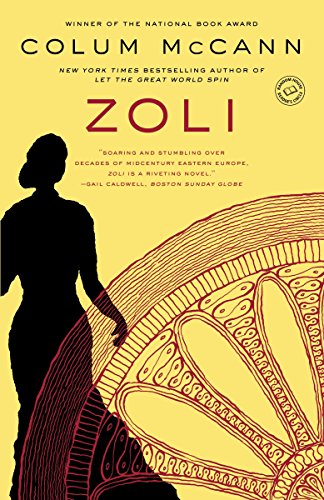
From the National Book Award–winning author of Let the Great World Spin, this haunting novel is an examination of intimacy and betrayal in a community rarely captured so vibrantly in contemporary literature.
NAMED ONE OF THE BEST BOOKS OF THE YEAR BY THE WASHINGTON POST AND THE CHRISTIAN SCIENCE MONITOR
Zoli Novotna, a young woman raised in the traveling Gypsy tradition, is a poet by accident as much as desire. As 1930s fascism spreads over Czechoslovakia, Zoli and her grandfather flee to join a clan of fellow Romani harpists. Sharpened by the world of books, which is often frowned upon in the Romani tradition, Zoli becomes the poster girl for a brave new world. As she shapes the ancient songs to her times, she finds her gift embraced by the Gypsy people and savored by a young English expatriate, Stephen Swann.
But Zoli soon finds that when she falls she cannot fall halfway–neither in love nor in politics. While Zoli’s fame and poetic skills deepen, the ruling Communists begin to use her for their own favor. Cast out from her family, Zoli abandons her past to journey to the West, in a novel that spans the 20th century and travels the breadth of Europe.
Colum McCann has created a sensuous novel about exile, belonging and survival, based loosely on the true story of the Romani poet Papusza. It spans the twentieth century and travels the breadth of Europe. In the tradition of Steinbeck, Coetzee, and Ondaatje, McCann finds the art inherent in social and political history, while vividly depicting how far one gifted woman must journey to find where she belongs.
Praise for Zoli
“Very powerful . . . rich in vivid detail . . . the prose is just plain gorgeous. . . . McCann allows us to enter a world few of us know anything about.”—San Francisco Chronicle
“[A] beautifully written [novel] loosely based on the life of the Polish Gypsy poet ‘Papusza,’ who lived throughout most of the twentieth century. . . . Beautifully conceived, wonderfully told, the story is proof of an indomitable spirit. The elusive character of Zoli, the brilliang artist, is unforgettable.”—The Washington Post Book World
“McCann is a writer of large and driving vision. . . . [Zoli] contains passages of stunning lyricism and sharp ironic force.”—The New York Times
“Rich and sensuous . . . McCann’s research and lustrous prose bring Zoli vibrantly alive.”—Entertainment Weekly
Die Inhaltsangabe kann sich auf eine andere Ausgabe dieses Titels beziehen.
Über die Autorin bzw. den Autor
Colum McCann is the internationally bestselling author of the novels TransAtlantic, Let the Great World Spin, Zoli, Dancer, This Side of Brightness, and Songdogs, as well as three critically acclaimed story collections. His fiction has been published in thirty-five languages. He has received many honors, including the National Book Award, the International IMPAC Dublin Literary Award, a Chevalier des Arts et des Lettres award from the French government, and the Ireland Fund of Monaco Literary Award in Memory of Princess Grace. He has been named one of Esquire’s “Best and Brightest,” and his short film Everything in This Country Must was nominated for an Oscar in 2005. A contributor to The New Yorker, The New York Times Magazine, The Atlantic, and The Paris Review, he teaches in the Hunter College MFA Creative Writing program. He lives in New York City with his wife and their three children, and he is the cofounder of the global nonprofit story exchange organization Narrative 4.
Auszug. © Genehmigter Nachdruck. Alle Rechte vorbehalten.
He drives alongside the small streambed, and the terrible shitscape looms up by increments—upturned buckets by the bend in the river, a broken baby carriage in the weeds, a petrol drum leaking out a dried tongue of rust, the carcass of a fridge in the brambles.
A dog, all bones and scars, noses out in front of the car, and within moments the dog has brought children, crowding up against the car windows. He tries nonchalance as he snaps down the locks with his elbow. One boy is agile enough to jump onto the hood with hardly a noise—he grabs the windshield wipers and spreads himself out. A cheer goes up as two other kids take hold of the bumper and skate behind on the bare soles of their feet. Teenage girls jog alongside in their low-slung jeans. One of them points and laughs, but then stops, still, silent. The boy slides off the hood and the skating kids let go of the bumper, and suddenly the river is in front of him, swirling, fast, brown, unexpected. He yanks the steering wheel hard. Brambles scrape the windows. Tall grass crunches under the wheels. The car swerves back towards the mudtrack, and the children run alongside again in uproar.
On the far bank two old women stand up from where they’re washing bedsheets using riverrock and lye. They shake their heads, half-smile, and stoop once more to their work.
He steers around another tight corner, towards a blind line of trees, past the remains of a shattered lettuce crate in the long grass, and there, across a rickety little joke of a bridge, is the gray Gypsy settlement, marooned on an island in the middle of the river, as if the water itself has changed its mind and flowed either side. Shanty houses. Windowless huts. Jagged pipes and mismatched wood. Thin scarves of smoke rising up from the chimneys. Each roof pockmarked with a satellite dish and patched with scraps of corrugated iron. Far off in the distance a single blue coat flaps in the branches of a tree.
He guides the car into the long weeds, stops, pulls the handbrake, takes a second to pretend that he’s looking for something in the glovebox, searches deep, though there’s nothing there, not a thing, just a chance to get a small respite. The children crowd the windows. He pushes open the car door, and all he can hear from the settlement across the water is a dozen radios blaring all at once, songs Slovakian and American and Czech.
Instantly the children thumb his sleeve, knuckle his ribcage, pat his jacket pockets. It’s as if he has become a dozen hands all at once. “Quit!” he shouts, swatting them away. One boy hops on the front bumper so that the whole car bows to the rhythm. “Okay,” he shouts, “enough!” The older teenagers in dark leather jackets shrug. The girls in unbuttoned blouses step back and giggle. How immaculate their teeth. How quick the silver of their pupils. The tallest of the boys steps forward in a muscle-shirt. “Robo,” the boy says, puffing out his chest. They shake hands and he pulls the boy aside, has a word, face close to his ear. He tries to block the deep smell of the boy, wet wool and raw smoke, and within seconds a deal is struck—fifty krowns—to bring him to the elders and to keep the car safe.
Robo shouts out a warning to the others, backhands the child who is tiptoe on the rear bumper. They make their way towards the bridge. More children arrive from along the river, some naked, some in diapers, one in a torn pink dress and flip-flops, and the same girl seems to appear from all angles, but in different shoes each time; beautiful, coal-eyed, hair uncombed.
He watches the kids cross the bridge like a strange line of herons, one foot heavy on the solid planks, high-toed and light on the rest. The metal sheets vibrate under their weight. He totters a moment on a piece of plyboard, sways, reaches for a hold, but there is none. The children put their hands to their mouths and snigger—he is, he thinks, every idiot who has ever walked this way. He feels the weight of what he carries: two bottles, notepad, pencil, cigarettes, camera, and tiny recorder, all hidden away deep in his clothes. He pulls the jacket tight and leaps the final hole in the bridge, lands in the soft mud on the far side, just twenty yards from the shanties. He looks up, takes a deep breath, but it’s as if a thousand chords have been struck all at once, his ribcage is thumping, he shouldn’t have come here alone, a Slovakian journalist, forty-four years old, comfortably fat, a husband, a father, about to step into the heart of a Gypsy camp. He takes a step forward through a puddle, thinking how stupid it was to wear soft leather shoes for this trip, not even good for a quick retreat.
At the edge of the shacks he becomes aware of the brooding men leaning against woodpole doorways. Women stand with hands folded across their stomachs. He tries to catch their gaze, but they look beyond him and away with thousand-yard stares. Strange, he thinks, that they do not question him; maybe they’ve mistaken him for a policeman or a social worker or a parole officer or some other government fuckwad here on an official visit.
He feels briefly powerful as Robo leads him deeper into the warren of mudroutes.
Doorframes used as tables. Sackcloth for curtains. Empty ?cu?cu bottles strung up as windchimes. At his feet, bits of wood and porridge containers, lollipop sticks and shattered glass, the ground-down bones of some dead animal. He catches glimpses of babies hammocked from ceilings, flies buzzing around them as they sleep. He reaches for his camera but is pushed on in the swell of children. Open doorways are quickly closed. Bare bulbs switched off. He notices carpets on the walls, and pictures of Christ, and pictures of Lenin, and pictures of Mary Magdalene, and pictures of Saint Jude lit by small red candles high above empty shelves. From everywhere comes the swell of music, no accordions, no harps, no violins, but every shack with a TV or a radio on full volume, an endless thump.
Robo leans over and shouts in his ear, “Over here, Uncle, follow me,” and it strikes him how foreign this boy, how distant, how dark-skinned.
He is led around a sharp corner to the largest shanty of all. A satellite dish sits new and shiny on the roof. He knocks on the plywood door. It swings open a little further with each knuckle rap. Inside there is a contingent of eight, nine, maybe ten men. They raise their heads like a parliament of ravens. A few of them nod, but they continue their hand, and he knows the game is nonchalance—he has played it himself in other parts of the country, the flats of Bratislava, the ghettos of Pre?sov, the slums of Letanovce.
In the far corner of the room he notices two women watching him, wide-eyed. A hand pushes him at the small of his back. “I’ll wait for you here, mister,” says Robo, and the door creaks behind him.
He looks around the room, the immaculate floor, the ordered cupboards, the whiteness of the one shirt hanging on a nail from the ceiling.
“Nice house,” he says, and knows immediately how foolish it sounds. He flushes red-cheeked, then draws himself tall. In the corner sits a broad-shouldered man, tough, hard-jawed, gray hair tousled after a bad night’s sleep. He steps across and announces quite softly that he’s a journalist, he’s here on a story, he’d like to talk to some of the old folk.
“We’re the old folk,” says the man.
“Right,” he says, and pats his jacket. He fumbles in his pocket and breaks open a pack of Marlboros. Stupid, he knows, not to have broken the seal already. In the silence the others watch him. His hands shake. A bead of sweat runs down his brow. He can almost hear the chest hair rustle...
„Über diesen Titel“ kann sich auf eine andere Ausgabe dieses Titels beziehen.
Weitere beliebte Ausgaben desselben Titels

Suchergebnisse für Zoli: A Novel

Beispielbild für diese ISBN
Zoli: A Novel
Verlag:
Random House Trade Paperbacks, 2008
ISBN 10: 0812973984
ISBN 13: 9780812973983
Gebraucht
Softcover
Anbieter: World of Books (was SecondSale), Montgomery, IL, USA
Verkäuferbewertung 5 von 5 Sternen

Zustand: Good. Item in good condition. Textbooks may not include supplemental items i.e. CDs, access codes etc. Artikel-Nr. 00093590075
Gebraucht kaufen
EUR 4,36
Versand gratis
Versand innerhalb von USA
Versand innerhalb von USA
Anzahl: 6 verfügbar
Beispielbild für diese ISBN
Zoli: A Novel
Verlag:
Random House Trade Paperbacks, 2008
ISBN 10: 0812973984
ISBN 13: 9780812973983
Gebraucht
Softcover
Anbieter: World of Books (was SecondSale), Montgomery, IL, USA
Verkäuferbewertung 5 von 5 Sternen
Zustand: Acceptable. Item in acceptable condition! Textbooks may not include supplemental items i.e. CDs, access codes etc. Artikel-Nr. 00104766862
Gebraucht kaufen
EUR 4,36
Versand gratis
Versand innerhalb von USA
Versand innerhalb von USA
Anzahl: 1 verfügbar
Beispielbild für diese ISBN
Zoli: A Novel
Verlag:
Random House Trade Paperbacks (edition Reprint), 2008
ISBN 10: 0812973984
ISBN 13: 9780812973983
Gebraucht
Paperback
Anbieter: BooksRun, Philadelphia, PA, USA
Verkäuferbewertung 5 von 5 Sternen
Paperback. Zustand: Fair. Reprint. The item might be beaten up but readable. May contain markings or highlighting, as well as stains, bent corners, or any other major defect, but the text is not obscured in any way. Artikel-Nr. 0812973984-7-1
Gebraucht kaufen
EUR 4,37
Versand gratis
Versand innerhalb von USA
Versand innerhalb von USA
Anzahl: 1 verfügbar
Beispielbild für diese ISBN
Zoli
Anbieter: ThriftBooks-Dallas, Dallas, TX, USA
Verkäuferbewertung 5 von 5 Sternen
Paperback. Zustand: Good. No Jacket. Pages can have notes/highlighting. Spine may show signs of wear. ~ ThriftBooks: Read More, Spend Less. Artikel-Nr. G0812973984I3N00
Gebraucht kaufen
EUR 6,16
Versand gratis
Versand innerhalb von USA
Versand innerhalb von USA
Anzahl: 1 verfügbar
Beispielbild für diese ISBN
Zoli
Anbieter: ThriftBooks-Dallas, Dallas, TX, USA
Verkäuferbewertung 5 von 5 Sternen
Paperback. Zustand: Good. No Jacket. Former library book; Pages can have notes/highlighting. Spine may show signs of wear. ~ ThriftBooks: Read More, Spend Less. Artikel-Nr. G0812973984I3N10
Gebraucht kaufen
EUR 6,16
Versand gratis
Versand innerhalb von USA
Versand innerhalb von USA
Anzahl: 1 verfügbar
Beispielbild für diese ISBN
Zoli
Anbieter: ThriftBooks-Reno, Reno, NV, USA
Verkäuferbewertung 5 von 5 Sternen
Paperback. Zustand: Good. No Jacket. Pages can have notes/highlighting. Spine may show signs of wear. ~ ThriftBooks: Read More, Spend Less. Artikel-Nr. G0812973984I3N00
Gebraucht kaufen
EUR 6,16
Versand gratis
Versand innerhalb von USA
Versand innerhalb von USA
Anzahl: 1 verfügbar
Beispielbild für diese ISBN
Zoli
Anbieter: ThriftBooks-Dallas, Dallas, TX, USA
Verkäuferbewertung 5 von 5 Sternen
Paperback. Zustand: Very Good. No Jacket. May have limited writing in cover pages. Pages are unmarked. ~ ThriftBooks: Read More, Spend Less. Artikel-Nr. G0812973984I4N00
Gebraucht kaufen
EUR 6,16
Versand gratis
Versand innerhalb von USA
Versand innerhalb von USA
Anzahl: 1 verfügbar
Beispielbild für diese ISBN
Zoli
Anbieter: ThriftBooks-Atlanta, AUSTELL, GA, USA
Verkäuferbewertung 5 von 5 Sternen
Paperback. Zustand: Good. No Jacket. Former library book; Pages can have notes/highlighting. Spine may show signs of wear. ~ ThriftBooks: Read More, Spend Less. Artikel-Nr. G0812973984I3N10
Gebraucht kaufen
EUR 6,16
Versand gratis
Versand innerhalb von USA
Versand innerhalb von USA
Anzahl: 1 verfügbar
Beispielbild für diese ISBN
Zoli
Anbieter: ThriftBooks-Atlanta, AUSTELL, GA, USA
Verkäuferbewertung 5 von 5 Sternen
Paperback. Zustand: Good. No Jacket. Pages can have notes/highlighting. Spine may show signs of wear. ~ ThriftBooks: Read More, Spend Less. Artikel-Nr. G0812973984I3N00
Gebraucht kaufen
EUR 6,16
Versand gratis
Versand innerhalb von USA
Versand innerhalb von USA
Anzahl: 1 verfügbar
Beispielbild für diese ISBN
Zoli
Anbieter: ThriftBooks-Atlanta, AUSTELL, GA, USA
Verkäuferbewertung 5 von 5 Sternen
Paperback. Zustand: Very Good. No Jacket. May have limited writing in cover pages. Pages are unmarked. ~ ThriftBooks: Read More, Spend Less. Artikel-Nr. G0812973984I4N00
Gebraucht kaufen
EUR 6,16
Versand gratis
Versand innerhalb von USA
Versand innerhalb von USA
Anzahl: 1 verfügbar