
Inhaltsangabe
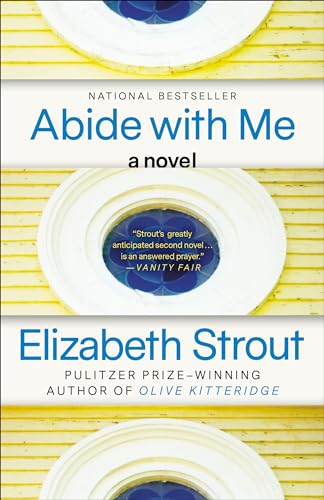
NATIONAL BESTSELLER • From the Pulitzer Prize–winning author of Olive Kitteridge and My Name is Lucy Barton comes a “deeply moving” (The Washington Post) novel that “confirms Strout as the possessor of an irresistibly companionable, peculiarly American voice” (The Atlantic Monthly).
“Superb . . . a shimmering tale of loss, faith, and human fallibility.”—O: The Oprah Magazine
In the late 1950s, in a small New England town, Reverend Tyler Caskey has suffered a terrible loss and finds it hard to be the person he once was. He struggles to find the right words in his sermons and in his conversations with those facing crises of their own, and to bring his five-year-old daughter, Katherine, out of the silence she has observed in the wake of the family’s tragedy. Tyler’s usually patient and kind congregation now questions his leadership and propriety, and accusations are born out of anger and gossip. Then, in Tyler’s darkest hour, a startling discovery will test his parish’s humanity—and his own will to endure the trials that sooner or later test us all.
Die Inhaltsangabe kann sich auf eine andere Ausgabe dieses Titels beziehen.
Über die Autorin bzw. den Autor
Elizabeth Strout is the #1 New York Times bestselling author of Olive Kitteridge, winner of the Pulitzer Prize; Olive, Again, an Oprah’s Book Club pick; Anything Is Possible, winner of the Story Prize; My Name is Lucy Barton, longlisted for the Man Booker Prize; The Burgess Boys, named one of the best books of the year by The Washington Post and NPR; Abide with Me, a national bestseller; and Amy and Isabelle, winner of the Los Angeles Times Art Seidenbaum Award for First Fiction and the Chicago Tribune Heartland Prize. She has also been a finalist for the National Book Critics Circle Award, the PEN/Faulkner Award for Fiction, the International Dublin Literary Award, and the Orange Prize. Her short stories have been published in a number of magazines, including The New Yorker and O: The Oprah Magazine. Elizabeth Strout lives in New York City.
Auszug. © Genehmigter Nachdruck. Alle Rechte vorbehalten.
Chapter 1
ONE
Oh, it would be years ago now, but at one time a minister lived with his small daughter in a town up north near the Sabbanock River, up where the river is narrow and the winters used to be especially long. The minister’s name was Tyler Caskey, and for quite some while his story was told in towns up and down the river, and as far over as the coast, until it emerged with enough variations so as to lose its original punch, and just the passing of time, of course, will affect the vigor of these things. But there are a few people still living in the town of West Annett who are said to remember quite clearly the events that took place during the wintry, final months of 1959. And if you inquire with enough patience and restraint of curiosity, you can probably get them to tell you what it is they claim to know, although its accuracy might be something you’d have to sort out on your own.
We do know the Reverend Tyler Caskey had two daughters at the time, but the littler one, really just a toddler then, lived with Tyler’s mother a few hours away, farther down the river in a town called Shirley Falls, where the river got wide and the roadways and buildings more frequent and substantial, things taking on a more serious tone than what you might find up near the town of West Annett. Up there, you could drive for miles—and still can—on twisting back roads, not passing by anything more than the occasional farmhouse, acres of fields and woods all around. In one of these farmhouses, the minister and his little girl Katherine lived.
The place was at least a hundred years old, built and farmed for decades by the family of Joshua Locke. But by the end of the Depression, when the farmers had no money to pay for hired hands, the farm had fallen into disrepair. Their blacksmith business, started before the First World War, also dwindled away to nothing. Eventually the house was occupied, and remained so for years, by the sole inheritor, Carl Locke, a man who seldom came into town, and who, when called upon to pull open his door, did so holding a rifle. But in the end he had left the entire place—house, barn, and a few acres of fields—to the Congregational church, even though no one seemed to remember him being inside the church more than twice in his life.
At any rate, West Annett, even containing as it did the three white buildings of Annett Academy, was a fairly small town; its church coffers were small as well. When Reverend Smith, the minister who had been there for years and years, finally got around to retiring, hauling his deaf wife with him off to South Carolina, where apparently some nephew waited to look after their needs, the church board waved them good-bye with a tepid farewell, then turned around enthusiastically and made a very nice real estate deal. The parsonage on Main Street was sold to the local dentist, and the new minister would be housed at the Locke place, out there on Stepping Stone Road.
The Pulpit Committee had made their recommendation of Tyler Caskey with this in mind, counting on his youth, his big-boned, agreeable nature, and the discomfort he had shown right away in discussing matters of money, to prevent him from complaining about being housed in a field two miles from town; and on all these points they were right. The minister, in the six years he had lived there now, had never once complained, and except for permission to paint the living room and dining room pink, had never asked the church for anything.
Which is partly why the house remained a bit ramshackle, inside and out. It had a broken porch railing and tilting front steps. But it offered those pleasing lines you find in old houses sometimes; a tall two-story, with generous windows and a nice slope to the roof. And if you studied the place for a moment—the southern exposure it got on the side, the way the mudroom faced north—you realized the people who built it years before had possessed a fine sense of what they were doing; there was a symmetry here that was unadorned, kind to the eye.
So begin with a day in early October, when it’s easy to think of the sun shining hard, the fields surrounding the minister’s house brown and gold, the trees on the hills sparkling a yellowy-red. There was—there always is—plenty to worry about. The Russians had sent up their Sputnik satellites two years before—one whirling around right now with that poor dead dog inside—and were said to be spying on us from outer space, as well as right here in our own country. Nikita Khrushchev, squatty and remarkably unattractive, had even arrived a couple of weeks before for a visit to America, whether people liked it or not—and many did not; they were afraid he’d be killed before getting home, and then what horrors might ensue! Experts, whoever they were, and however they did it, had determined that a guided missile from Moscow to New York would fall within 7.3 miles of its target, and while it was a comfort to live outside this radius, there were three families in West Annett who had bomb shelters in their backyards anyway, because after all, you never knew.
Still: This happened to be the first year in many where countrywide church membership had not increased at a greater rate than the general population, and that, if you thought about it, had to mean something. Possibly it meant people were not panicking. Possibly it meant people wanted to believe, and were apparently believing—particularly here in the northern reaches of New England, where the same people had lived for years, not many communists among them (although there were a few)—that after half a century of colossal human horror, the world really could perhaps be finally decent, and safe, and good.
And today—the one we’ve chosen to start with—was lovely in its sunny brightness, the tops of those distant trees a brave and brilliant yellowy-red. Even keeping in mind how this kind of autumn day can be an awful thing, harsh and sharp as broken glass, the sky so blue it could break down the middle, the day was perfectly beautiful, too. The kind of day where you could easily imagine the tall minister out for a walk, thinking, I will lift up mine eyes unto the hills. It had, in fact, been Reverend Caskey’s habit that fall to take a morning walk down Stepping Stone Road, then turn back up around Ringrose Pond, and there were some mornings when he continued on into town, headed to his study in the basement of the church, waving to people along the way who tapped their horns, or stopping to talk to a car that pulled over, leaning his large body down to peer into the window, smiling, nodding, his hand lingering on the car door until the window was rolled up, a wave good-bye.
But not this morning.
This morning the man was sitting in his study at home, tapping a pen against the top of his desk. Right after breakfast, he had received a telephone call from his daughter’s school. His daughter’s teacher was a young woman named Mrs. Ingersoll, and she had asked the minister in a remarkably clear voice—though it was somewhat too high-pitched for his taste—if he would come to school in the late afternoon to discuss Katherine’s behavior.
“Is there a problem?” the minister had said. And during the pause that followed, he said, “I’ll come in, of course,” standing up, holding the black telephone while he looked around the room as though something had been misplaced. “Thank you for calling,” he added. “If...
„Über diesen Titel“ kann sich auf eine andere Ausgabe dieses Titels beziehen.
Weitere beliebte Ausgaben desselben Titels

Suchergebnisse für Abide with Me: A Novel

Beispielbild für diese ISBN
Abide with Me: A Novel
Verlag:
Random House Trade Paperbacks, 2007
ISBN 10: 0812971825
ISBN 13: 9780812971828
Gebraucht
Softcover
Anbieter: World of Books (was SecondSale), Montgomery, IL, USA
Verkäuferbewertung 5 von 5 Sternen

Zustand: Very Good. Item in very good condition! Textbooks may not include supplemental items i.e. CDs, access codes etc. Artikel-Nr. 00104931099
Gebraucht kaufen
EUR 3,98
Versand gratis
Versand innerhalb von USA
Versand innerhalb von USA
Anzahl: 1 verfügbar
Beispielbild für diese ISBN
Abide with Me: A Novel
Verlag:
Random House Trade Paperbacks, 2007
ISBN 10: 0812971825
ISBN 13: 9780812971828
Gebraucht
Softcover
Anbieter: World of Books (was SecondSale), Montgomery, IL, USA
Verkäuferbewertung 5 von 5 Sternen
Zustand: Acceptable. Item in acceptable condition! Textbooks may not include supplemental items i.e. CDs, access codes etc. Artikel-Nr. 00096456747
Gebraucht kaufen
EUR 3,98
Versand gratis
Versand innerhalb von USA
Versand innerhalb von USA
Anzahl: 4 verfügbar
Beispielbild für diese ISBN
Abide with Me: A Novel
Verlag:
Random House Trade Paperbacks, 2007
ISBN 10: 0812971825
ISBN 13: 9780812971828
Gebraucht
Softcover
Anbieter: World of Books (was SecondSale), Montgomery, IL, USA
Verkäuferbewertung 5 von 5 Sternen
Zustand: Good. Item in good condition. Textbooks may not include supplemental items i.e. CDs, access codes etc. Artikel-Nr. 00104889106
Gebraucht kaufen
EUR 3,98
Versand gratis
Versand innerhalb von USA
Versand innerhalb von USA
Anzahl: 2 verfügbar
Foto des Verkäufers
Abide with Me: A Novel
Verlag:
Random House Trade Paperbacks, 2007
ISBN 10: 0812971825
ISBN 13: 9780812971828
Gebraucht
Softcover
Anbieter: Dream Books Co., Denver, CO, USA
Verkäuferbewertung 5 von 5 Sternen
Zustand: acceptable. This copy has clearly been enjoyedâ"expect noticeable shelf wear and some minor creases to the cover. Binding is strong, and all pages are legible. May contain previous library markings or stamps. Artikel-Nr. DBV.0812971825.A
Gebraucht kaufen
EUR 5,54
Versand gratis
Versand innerhalb von USA
Versand innerhalb von USA
Anzahl: 3 verfügbar
Foto des Verkäufers
Abide with Me: A Novel
Verlag:
Random House Trade Paperbacks, 2007
ISBN 10: 0812971825
ISBN 13: 9780812971828
Gebraucht
Softcover
Anbieter: Dream Books Co., Denver, CO, USA
Verkäuferbewertung 5 von 5 Sternen
Zustand: good. Gently used with minimal wear on the corners and cover. A few pages may contain light highlighting or writing, but the text remains fully legible. Dust jacket may be missing, and supplemental materials like CDs or codes may not be included. May be ex-library with library markings. Ships promptly! Artikel-Nr. DBV.0812971825.G
Gebraucht kaufen
EUR 5,54
Versand gratis
Versand innerhalb von USA
Versand innerhalb von USA
Anzahl: 1 verfügbar
Beispielbild für diese ISBN
Abide with Me
Anbieter: ThriftBooks-Atlanta, AUSTELL, GA, USA
Verkäuferbewertung 5 von 5 Sternen
Paperback. Zustand: Fair. No Jacket. Readable copy. Pages may have considerable notes/highlighting. ~ ThriftBooks: Read More, Spend Less. Artikel-Nr. G0812971825I5N00
Gebraucht kaufen
EUR 5,77
Versand gratis
Versand innerhalb von USA
Versand innerhalb von USA
Anzahl: 4 verfügbar
Beispielbild für diese ISBN
Abide with Me
Anbieter: ThriftBooks-Phoenix, Phoenix, AZ, USA
Verkäuferbewertung 5 von 5 Sternen
Paperback. Zustand: Good. No Jacket. Pages can have notes/highlighting. Spine may show signs of wear. ~ ThriftBooks: Read More, Spend Less. Artikel-Nr. G0812971825I3N00
Gebraucht kaufen
EUR 5,77
Versand gratis
Versand innerhalb von USA
Versand innerhalb von USA
Anzahl: 2 verfügbar
Beispielbild für diese ISBN
Abide with Me
Anbieter: ThriftBooks-Dallas, Dallas, TX, USA
Verkäuferbewertung 5 von 5 Sternen
Paperback. Zustand: Good. No Jacket. Former library book; Pages can have notes/highlighting. Spine may show signs of wear. ~ ThriftBooks: Read More, Spend Less. Artikel-Nr. G0812971825I3N10
Gebraucht kaufen
EUR 5,77
Versand gratis
Versand innerhalb von USA
Versand innerhalb von USA
Anzahl: 1 verfügbar
Beispielbild für diese ISBN
Abide with Me
Anbieter: ThriftBooks-Dallas, Dallas, TX, USA
Verkäuferbewertung 5 von 5 Sternen
Paperback. Zustand: Fair. No Jacket. Readable copy. Pages may have considerable notes/highlighting. ~ ThriftBooks: Read More, Spend Less. Artikel-Nr. G0812971825I5N00
Gebraucht kaufen
EUR 5,77
Versand gratis
Versand innerhalb von USA
Versand innerhalb von USA
Anzahl: 3 verfügbar
Beispielbild für diese ISBN
Abide with Me
Anbieter: ThriftBooks-Phoenix, Phoenix, AZ, USA
Verkäuferbewertung 5 von 5 Sternen
Paperback. Zustand: Good. No Jacket. Former library book; Pages can have notes/highlighting. Spine may show signs of wear. ~ ThriftBooks: Read More, Spend Less. Artikel-Nr. G0812971825I3N10
Gebraucht kaufen
EUR 5,77
Versand gratis
Versand innerhalb von USA
Versand innerhalb von USA
Anzahl: 1 verfügbar