
Verwandte Artikel zu The Return
Inhaltsangabe
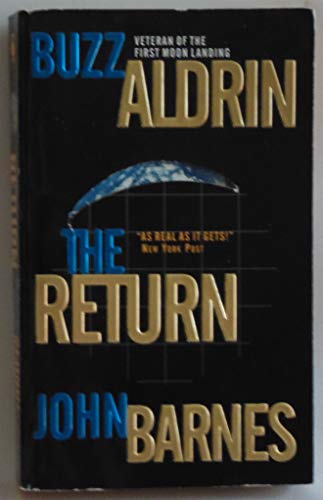
Former astronaut Scott Blackstone's dream of opening outer space to visits from everyday people is under attack. His pilot programme has been marred by a fatal accident, he is out of a job, and he is being sued for a billion dollars. And it's beginning to seem that the "accident" wasn't at all accidental. Then the endless conflict between India and Pakistan heats up...and Pakistan explodes a nuclear device in the upper atmosphere, frying electronics on earth and in space, and putting the crew of the International Space Station at risk. With the Shuttle fleet grounded, only a secret skunkworks project known to scott and his old friends can save the space station's stranded crew.
Die Inhaltsangabe kann sich auf eine andere Ausgabe dieses Titels beziehen.
Über die Autorin bzw. den Autor
Dr. Buzz Aldrin was watched by the largest televi-sion audience in history as he and Neil Armstrong be-came the first humans to walk on the Moon. He is a graduate of the Massachusetts Institute of Technology, a recipient of the Presidential Medal of Freedom, and one of the world's best-known advocates for the exploration of outer space. He lives in Los Angeles.
John Barnes is the acclaimed author of Mother of Storms, A Million Open Doors, Finity, and many other novels. He lives in Gunnison, Colorado. Aldrin and Barnes have written one other novel together, Encounter with Tiber.
John Barnes is the acclaimed author of Mother of Storms, A Million Open Doors, Finity, and many other novels. He lives in Gunnison, Colorado. Aldrin and Barnes have written one other novel together, Encounter with Tiber.
Auszug. © Genehmigter Nachdruck. Alle Rechte vorbehalten.
CHAPTER ONE
SCOTT:
"So how are you planning to top this mission? Are you sending the Pope next time?"
All the reporters laughed. Of course the question wasn't serious, but it did give me a chance to work in a sound bite that my PR coach had suggested. "Eventually, we'll send everybody. But one step at a time, please."
Outside, it was seven in the morning on the kind of pleasant, clear Wednesday in October that makes you think of football, or a long drive someplace where the leaves are turning-the sort of day that whispers "too good to waste." Inside, the press conference room was just like its equivalent at any Washington hotel-plastic "crystalware," stiffbacked chairs, lots of room down front for cameras, a long table on folding platforms with all the legs concealed by fabric velcroed to the edges. I sat at one end of the long table, answering questions before die person die reporters wanted to talk to got here.
"Mr. Blackstone," die man from CBS asked, "we all know that you originally hoped to fly civilian tourist flights yourself, as pilot. Is there any chance that you'll be doing mat any time in die next few Citizen Observer flights?"
"Of course I'd like to go," I said. "But it took some pretty generous offers to get ASU to let us put people into empty seats. My next spaceflight, pilot or passenger, is a few years away, I'm sure."
"Would you fly a shuttle again if ASU invited you to?" This reporter, for some reason, didn't seem to want to give die question up. "You've been very careful about keeping your qualification to fly a shuttle."
"I keep my pilot's license, too," I pointed out. "You really shouldn't read any more into it man that."
After that, the questions were less personal. I didn't mind die attention, particularly, but as CEO of ShareSpace, I'd rather it went to my company.
Then we went into the usual ritual questions--the reporters in die room already knew die answers, but their editors might need footage of someone saying those things.
"What kind of mission is this?"
"Like most of die ones Columbia flies nowadays. A general, mixed-bag deal--a little science, a little tech, a little business, a little promotion. You all know I can't talk about anything classified, but sometimes they do classified work, as well, for a defense or intelligence agency."
"Do you know what factors influenced Pegasus Corporation's decision about who to send?" It was die same guy from NBC who had needled me before.
"They wanted maximum publicity, I'd guess. Hard to find a more famous person who would get more attention and be better identified with their shoes. Or maybe the Pope wasn't available." That got a laugh; I had just time to wonder if I'd crossed over one of those invisible boundaries that my PR people were always warning me about, before the next question. The reporter from the Times had me explain that the seats ShareSpace was selling were available because the International Space Station (ISS) was behind schedule, and so some shuttle flights had been released to other projects.
Then the tall woman from MSNBC walked me through a detailed review of who the first two Citizen Observers had been, in case somehow anyone watching the news now, in October, had managed to miss all die news in die previous May, or October a year ago. That seemed especially silly because "well, die first one is in die room," I said. "Why don't you tell us all about it, Fred?"
Fred Gernsback had been anchor for die Federal Broadcasting Network for almost two decades, and due to his enthusiasm for die space program, his voice had become more identified with spaceflight than that of any broadcaster since Walter Cronkite. He looked around die room, smiling broadly, and I wondered if anyone ever gets tired of being made the center of attention. "Well, it's not complicated and it's not all that interesting. The way it works is mat ShareSpace is a private business, like a travel agency, except that Scott Blackstone only sells two or three tickets a year. ASU operates spacecraft, like an airline operates airplanes, because NASA got out of direct operation, for die most part, a few years ago. ASU bought Columbia from die government, and most of die time they lease the other three shuttles. So what happened was that FBN bought my ticket from ShareSpace, which got me onto a flight on the Columbia, operated by ASU. No different from what happens when they buy me an airline ticket from Amex Travel Services to get me onto a 747 operated by United. Dull as dishwater."
Everyone groaned and laughed; Fred's irony was even more heavy-handed than usual. For ten days in October last year, millions of people had hurried home to catch Gernsback's evening broadcast from orbit. The American public's jaundiced perception of space travel--routine as airplanes and ancient as railroads--had been flipped right back over into wide-eyed wonder by Gernsback's babbling joy about everything connected with the mission.
Gernsback went on. "And so it's the same deal with this next Citizen Observer. Pegasus wanted publicity for their shoes, so they had to get publicity for their guy, so they went to Scott, Scott sold them a ticket, ASU is honoring the ticket, and tonight we're going to witness a new space record-the tallest man ever sent into orbit. Just an ordinary business deal."
"What does a company have to do to get someone on the shuttle, Mr. Blackstone?" a tall, slim black woman asked. "Officially for the record, and also because for all I know Pacific States Network might want to do that for me."
It took me a moment to realize who it was- Nikki Earl, radio correspondent for a little shoestring net-work that mostly ran very liberal commentary and covered social welfare issues. Normally they weren't big fans of the space program, so if she was here at all, it meant either they were gunning for us, or it was a slow news day. I answered, carefully, "I hope they can afford to send you, but for die moment it's pretty expensive. It starts with a corporation becoming one of ShareSpace's corporate partners, for one million dollars--or more, if you want to be near the top of the list.
"For your million you get a nice-looking plaque inside the shuttle, plus a turn at buying a ticket. When your turn comes up, we ask you for a five-million-dollar seat charge. Once you pay that, you can send anyone who can pass a medical exam and a security clearance. Your five million dollars does include meals and clothes for the trip." There were a few chuckles at that. "There's also a required commitment to devote at least eight million dollars to publicity--primarily about the sponsor itself, of course, but it also has to be clearly tied to ShareSpace and the orbital flight. So the real price of the cheapest ticket is about fourteen million, at the moment. We hope that within a decade we can be down under a million."
Nikki Earl nodded. "So why does any corporation buy a ticket? I can understand why it was worthwhile for Fred--someone else bought his ticket, and he had a good time, and I'd go, myself, in a minute, if PSN would pick up the tab--but how can that fourteen-million-dollar ticket be worthwhile for any of the corporate sponsors?"
Her tone was reasonable and friendly, so I thought chances were that she was just here because it was a slow news day, and not because PSN was out to do a hatchet job on ShareSpace. She had asked a question I'd have loved to devote a whole interview to, but she needed something a minute long at most.
I started off with the obvious. "Well, it is private money, and they have to answer to their stockholders, so mostly I can just assume they want it and let it go at that. After all, the baker doesn't care what you want his bread for, only that you'll buy it, and so far we've got eighteen buyers lined up, so we must be selling what they want.
"But if I...
SCOTT:
"So how are you planning to top this mission? Are you sending the Pope next time?"
All the reporters laughed. Of course the question wasn't serious, but it did give me a chance to work in a sound bite that my PR coach had suggested. "Eventually, we'll send everybody. But one step at a time, please."
Outside, it was seven in the morning on the kind of pleasant, clear Wednesday in October that makes you think of football, or a long drive someplace where the leaves are turning-the sort of day that whispers "too good to waste." Inside, the press conference room was just like its equivalent at any Washington hotel-plastic "crystalware," stiffbacked chairs, lots of room down front for cameras, a long table on folding platforms with all the legs concealed by fabric velcroed to the edges. I sat at one end of the long table, answering questions before die person die reporters wanted to talk to got here.
"Mr. Blackstone," die man from CBS asked, "we all know that you originally hoped to fly civilian tourist flights yourself, as pilot. Is there any chance that you'll be doing mat any time in die next few Citizen Observer flights?"
"Of course I'd like to go," I said. "But it took some pretty generous offers to get ASU to let us put people into empty seats. My next spaceflight, pilot or passenger, is a few years away, I'm sure."
"Would you fly a shuttle again if ASU invited you to?" This reporter, for some reason, didn't seem to want to give die question up. "You've been very careful about keeping your qualification to fly a shuttle."
"I keep my pilot's license, too," I pointed out. "You really shouldn't read any more into it man that."
After that, the questions were less personal. I didn't mind die attention, particularly, but as CEO of ShareSpace, I'd rather it went to my company.
Then we went into the usual ritual questions--the reporters in die room already knew die answers, but their editors might need footage of someone saying those things.
"What kind of mission is this?"
"Like most of die ones Columbia flies nowadays. A general, mixed-bag deal--a little science, a little tech, a little business, a little promotion. You all know I can't talk about anything classified, but sometimes they do classified work, as well, for a defense or intelligence agency."
"Do you know what factors influenced Pegasus Corporation's decision about who to send?" It was die same guy from NBC who had needled me before.
"They wanted maximum publicity, I'd guess. Hard to find a more famous person who would get more attention and be better identified with their shoes. Or maybe the Pope wasn't available." That got a laugh; I had just time to wonder if I'd crossed over one of those invisible boundaries that my PR people were always warning me about, before the next question. The reporter from the Times had me explain that the seats ShareSpace was selling were available because the International Space Station (ISS) was behind schedule, and so some shuttle flights had been released to other projects.
Then the tall woman from MSNBC walked me through a detailed review of who the first two Citizen Observers had been, in case somehow anyone watching the news now, in October, had managed to miss all die news in die previous May, or October a year ago. That seemed especially silly because "well, die first one is in die room," I said. "Why don't you tell us all about it, Fred?"
Fred Gernsback had been anchor for die Federal Broadcasting Network for almost two decades, and due to his enthusiasm for die space program, his voice had become more identified with spaceflight than that of any broadcaster since Walter Cronkite. He looked around die room, smiling broadly, and I wondered if anyone ever gets tired of being made the center of attention. "Well, it's not complicated and it's not all that interesting. The way it works is mat ShareSpace is a private business, like a travel agency, except that Scott Blackstone only sells two or three tickets a year. ASU operates spacecraft, like an airline operates airplanes, because NASA got out of direct operation, for die most part, a few years ago. ASU bought Columbia from die government, and most of die time they lease the other three shuttles. So what happened was that FBN bought my ticket from ShareSpace, which got me onto a flight on the Columbia, operated by ASU. No different from what happens when they buy me an airline ticket from Amex Travel Services to get me onto a 747 operated by United. Dull as dishwater."
Everyone groaned and laughed; Fred's irony was even more heavy-handed than usual. For ten days in October last year, millions of people had hurried home to catch Gernsback's evening broadcast from orbit. The American public's jaundiced perception of space travel--routine as airplanes and ancient as railroads--had been flipped right back over into wide-eyed wonder by Gernsback's babbling joy about everything connected with the mission.
Gernsback went on. "And so it's the same deal with this next Citizen Observer. Pegasus wanted publicity for their shoes, so they had to get publicity for their guy, so they went to Scott, Scott sold them a ticket, ASU is honoring the ticket, and tonight we're going to witness a new space record-the tallest man ever sent into orbit. Just an ordinary business deal."
"What does a company have to do to get someone on the shuttle, Mr. Blackstone?" a tall, slim black woman asked. "Officially for the record, and also because for all I know Pacific States Network might want to do that for me."
It took me a moment to realize who it was- Nikki Earl, radio correspondent for a little shoestring net-work that mostly ran very liberal commentary and covered social welfare issues. Normally they weren't big fans of the space program, so if she was here at all, it meant either they were gunning for us, or it was a slow news day. I answered, carefully, "I hope they can afford to send you, but for die moment it's pretty expensive. It starts with a corporation becoming one of ShareSpace's corporate partners, for one million dollars--or more, if you want to be near the top of the list.
"For your million you get a nice-looking plaque inside the shuttle, plus a turn at buying a ticket. When your turn comes up, we ask you for a five-million-dollar seat charge. Once you pay that, you can send anyone who can pass a medical exam and a security clearance. Your five million dollars does include meals and clothes for the trip." There were a few chuckles at that. "There's also a required commitment to devote at least eight million dollars to publicity--primarily about the sponsor itself, of course, but it also has to be clearly tied to ShareSpace and the orbital flight. So the real price of the cheapest ticket is about fourteen million, at the moment. We hope that within a decade we can be down under a million."
Nikki Earl nodded. "So why does any corporation buy a ticket? I can understand why it was worthwhile for Fred--someone else bought his ticket, and he had a good time, and I'd go, myself, in a minute, if PSN would pick up the tab--but how can that fourteen-million-dollar ticket be worthwhile for any of the corporate sponsors?"
Her tone was reasonable and friendly, so I thought chances were that she was just here because it was a slow news day, and not because PSN was out to do a hatchet job on ShareSpace. She had asked a question I'd have loved to devote a whole interview to, but she needed something a minute long at most.
I started off with the obvious. "Well, it is private money, and they have to answer to their stockholders, so mostly I can just assume they want it and let it go at that. After all, the baker doesn't care what you want his bread for, only that you'll buy it, and so far we've got eighteen buyers lined up, so we must be selling what they want.
"But if I...
„Über diesen Titel“ kann sich auf eine andere Ausgabe dieses Titels beziehen.
Suchergebnisse für The Return

Beispielbild für diese ISBN
The Return
Anbieter: World of Books (was SecondSale), Montgomery, IL, USA
Verkäuferbewertung 5 von 5 Sternen

Zustand: Acceptable. Item in good condition. Textbooks may not include supplemental items i.e. CDs, access codes etc. Artikel-Nr. 00043988880
Gebraucht kaufen
EUR 4,55
Versand gratis
Versand innerhalb von USA
Versand innerhalb von USA
Anzahl: 1 verfügbar
Beispielbild für diese ISBN
The Return
Anbieter: ThriftBooks-Dallas, Dallas, TX, USA
Verkäuferbewertung 5 von 5 Sternen
Unknown. Zustand: Fair. No Jacket. Readable copy. Pages may have considerable notes/highlighting. ~ ThriftBooks: Read More, Spend Less. Artikel-Nr. G081257060XI5N00
Gebraucht kaufen
EUR 5,82
Versand gratis
Versand innerhalb von USA
Versand innerhalb von USA
Anzahl: 1 verfügbar
Beispielbild für diese ISBN
The Return
Verlag:
Doherty Associates, LLC, Tom, 2001
ISBN 10: 081257060X
ISBN 13: 9780812570601
Gebraucht
Softcover
Erstausgabe
Anbieter: Better World Books, Mishawaka, IN, USA
Verkäuferbewertung 5 von 5 Sternen
Zustand: Good. 1st. Pages intact with minimal writing/highlighting. The binding may be loose and creased. Dust jackets/supplements are not included. Stock photo provided. Product includes identifying sticker. Better World Books: Buy Books. Do Good. Artikel-Nr. 14671321-75
Gebraucht kaufen
EUR 6,03
Versand gratis
Versand innerhalb von USA
Versand innerhalb von USA
Anzahl: 2 verfügbar
Beispielbild für diese ISBN
The Return
Anbieter: Wonder Book, Frederick, MD, USA
Verkäuferbewertung 5 von 5 Sternen
Zustand: Very Good. Very Good condition. A copy that may have a few cosmetic defects. May also contain light spine creasing or a few markings such as an owner's name, short gifter's inscription or light stamp. Artikel-Nr. E22N-00722
Gebraucht kaufen
EUR 6,27
Versand gratis
Versand innerhalb von USA
Versand innerhalb von USA
Anzahl: 1 verfügbar
Beispielbild für diese ISBN
The Return
Verlag:
Tor Publishing Group, 2001
ISBN 10: 081257060X
ISBN 13: 9780812570601
Gebraucht
Softcover
Erstausgabe
Anbieter: Better World Books Ltd, Dunfermline, Vereinigtes Königreich
Verkäuferbewertung 5 von 5 Sternen
Zustand: Good. 1st. Pages intact with minimal writing/highlighting. The binding may be loose and creased. Dust jackets/supplements are not included. Stock photo provided. Product includes identifying sticker. Better World Books: Buy Books. Do Good. Artikel-Nr. 14671321-75
Gebraucht kaufen
EUR 7,97
EUR 5,83 Versand
Versand von Vereinigtes Königreich nach USA
Versand von Vereinigtes Königreich nach USA
Anzahl: 1 verfügbar
Foto des Verkäufers
The Return
Anbieter: Southampton Books, Sag Harbor, NY, USA
Verkäuferbewertung 5 von 5 Sternen
Paperback. Zustand: Like New. FIRST THUS. First Edition Thus, First Printing. Not price-clipped. Published by Tor Books, 2001. 12mo. Paperback. Book is like new. 100% positive feedback. 30 day money back guarantee. NEXT DAY SHIPPING! Excellent customer service. Please email with any questions. All books packed carefully and ship with free delivery confirmation/tracking. All books come with free bookmarks. Ships from Sag Harbor, New York. Artikel-Nr. 388483
Gebraucht kaufen
EUR 17,93
EUR 4,34 Versand
Versand innerhalb von USA
Versand innerhalb von USA
Anzahl: 1 verfügbar
Beispielbild für diese ISBN
The Return
Anbieter: SZ Global, Toronto, ON, Kanada
Verkäuferbewertung 5 von 5 Sternen
Paperback. Zustand: Collectible-Good. Former astronaut Scott Blackstone's dream of opening outer space to visits from everyday people is under attack. His pilot program has been marred by a fatal accident, he's out of a job, and he's being sued for a billions dollars. And it's beginning to seem that the 'accident' wasn't at all accidental.Then the endless conflict between India and Pakistan heats up.and Pakistan explodes a nuclear device in the upper atmosphere, frying electronics on earth and in space, and putting the crew of the international Space Station at risk. With the Shuttle fleet grounded, only a secret skunkworks project known to Scott and his old friends can save the space station's stranded crew.The Return is a tale about the kind of space adventure that could happen today--and that will happen tomorrow. As told by Buzz Aldrin, who's been there.and who's already helped change the world. Artikel-Nr. 9780812570601
Gebraucht kaufen
EUR 18,92
EUR 32,40 Versand
Versand von Kanada nach USA
Versand von Kanada nach USA
Anzahl: 1 verfügbar