
Verwandte Artikel zu A Collection of Stories (Tor Classics)
Inhaltsangabe
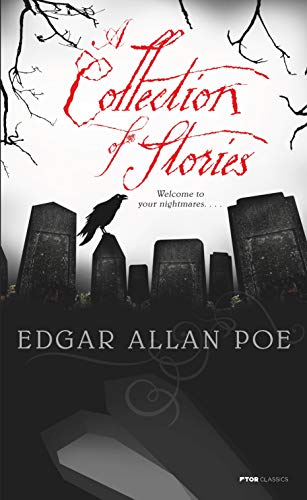
This edition of Edgar Allan Poe's A Collection of Stories includes a Foreword, Biographical Note, and Afterword by S. T. Joshi.
Tor Classics are affordably-priced editions designed to attract the young reader. Original dynamic cover art enthusiastically represents the excitement of each story. Appropriate "reader friendly" type sizes have been chosen for each title--offering clear, accurate, and readable text. All editions are complete and unabridged, and feature Introductions and Afterwords.Die Inhaltsangabe kann sich auf eine andere Ausgabe dieses Titels beziehen.
Über die Autorin bzw. den Autor
Edgar Allan Poe was an American poet, short-story writer, editor and literary critic. Best known for his tales of mystery and the macabre, Poe was one of the earliest American practitioners of the short story and is considered the inventor of the detective-fiction genre. Born Edgar Poe in Boston, Massachusetts in 1809; he was informally adopted by the Allans of Richmond after his parents' death. He attended the University of Virginia and briefly attempted a military career, before embarking on a literary career. After publishing an anonymous collection of poems in 1827, Poe switched his focus to prose and spent the next several years working for literary journals and periodicals. He married his cousin, Virginia Clemm, in 1835, who died in 1842 not long after publishing his famous poem 'The Raven'. He began planning to produce his own journal, The Penn (later renamed The Stylus), but died in 1849 before being able to see it produced.
Auszug. © Genehmigter Nachdruck. Alle Rechte vorbehalten.
A Collection of Stories
By Edgar Allan PoeAerie
Copyright © 1994 Edgar Allan PoeAll right reserved.
ISBN: 9780812504552
A Collection of Stories
Metzengerstein
A Tale in Imitation of the German
Pestis eram vivus--moriens tua mors ero.
--MARTIN LUTHER
HORROR AND FATALITY have been stalking aboard in all ages. Why then give a date to the story I have to tell? I will not. Besides, I have other reasons for concealment. Let it suffice to say, that at the period of which I speak, there existed, in the interior of Hungary, a settled although hidden belief in the doctrines of Metempsychosis. Of the doctrines themselves--that is, of their falsity, or of their probability--I say nothing. I assert, however, that much of our incredulity--as La Bruyére says of all our unhappiness--"vient de ne pouvoir etre seuls."
But there were some points in the Hungarian superstition which were fast verging to absurdity. They--the Hungarians--differed very essentially from their Eastern authorities. For example. "The soul," said the former--I give the words of an acute and intelligent Parisian--ne demeure qu'un seul fois dans un corps sensible: au reste--un cheval, un chien, un homme meme n' est que la ressemblance peu tangible de ces animaux."
The families of Berlifitzing and Metzengerstein had been at variance for centuries. Never before were two houses so illustrious mutually embittered by hostility so deadly. Indeed, at the era of this history, it was observedby an old crone of haggard and sinister appearance, that "fire and water might sooner mingle than a Berlifitzing clasp the hand of a Metzengerstein." The origin of this enmity seems to be found in the words of an ancient prophecy--"A lofty name shall have a fearful fall when, like the rider over his horse, the mortality of Metzengerstein shall triumph over the immortality of Berlifitzing."
To be sure the words themselves had little or no meaning. But more trivial causes have given rise--and that no long while ago--to consequences equally eventful. Besides, the estates, which were contiguous, had long exercised a rival influence in the affairs of a busy government. Moreover, near neighbors are seldom friends --and the inhabitants of the Castle Berlifitzing might look, from their lofty buttresses, into the very windows of the Chateau Metzengerstein. Least of all was the more than feudal magnificence thus discovered calculated to allay the irritable feelings of the less ancient and less wealthy Berlifitzings. What wonder, then, that the words, however silly, of that prediction, should have succeeded in setting and keeping at variance two families already predisposed to quarrel by every instigation of hereditary jealousy? The prophecy seemed to imply--if it implied any thing--a final triumph on the part of the already more powerful house; and was of course remembered with the more bitter animosity on the side of the weaker and less influential.
Wilhelm, Count Berlifitzing, although honorably and loftily descended, was, at the epoch of this narrative, an infirm and doting old man, remarkable for nothing but an inordinate and inveterate personal antipathy to the family of his rival, and so passionate a love of horses, and of hunting, that neither bodily infirmity, great age, nor mental incapacity, prevented his daily participation in the dangers of the chase.
Frederick, Baron Metzengerstein, was, on the other hand, not yet of age. His father, the Minister G----, died young. His mother, the Lady Mary, followed quicklyafter. Frederick was, at that time, in his fifteenth year. In a city fifteen years are no long period--a child may be still a child in his third lustrum: but in a wilderness--in so magnificent a wilderness as that old principality, fifteen years have a far deeper meaning.
The beautiful Lady Mary! How could she die?--and of consumption! But it is a path I have prayed to follow. I would wish all I love to perish of that gentle disease. How glorious! to depart in the hey-day of the young blood--the heart all passion--the imagination all fire--amid the remembrances of happier days--in the fall of the year--and so be buried up forever in the gorgeous autumnal leaves!
Thus died the Lady Mary. The young Baron Frederick stood without a living relative by the coffin of his dead mother. He placed his hand upon her placid forehead. No shudder came over his delicate frame--no sigh from his flinty bosom. Heartless, self-willed, and impetuous from his childhood, he had reached the age of which I speak through a career of unfeeling, wanton, and reckless dissipation; and a barrier had long since arisen the channel of all holy thoughts and gentle recollections.
From some peculiar circumstances attending the administration of his father, the young Baron, at the decease of the former, entered immediately upon his vast possessions. Such estates were seldom held before by a nobleman of Hungary. His castles were without number--of these the chief in point of splendor and extent was the "Chateau Metzengerstein." The boundary line of his dominions was never clearly defined--but his principal park embraced a circuit of fifty miles.
Upon the succession of a proprietor so young--with a character so well known--to a fortune so unparalleled--little speculation was afloat in regard to his probable course of conduct. And, indeed, for the space of three days the behavior of the heir out-heroded Herod, and fairly surpassed the expectations of his most enthusiastic admirers. Shameful debaucheries--flagrant treacheries--unheard-of atrocities--gave his trembling vassals quickly to understand that no servile submission on their part--no punctilios of conscience on his own--were thenceforward to prove any security against the remorseless and bloody fangs of a petty Caligula. On the night of the fourth day, the stables of the Castle Berlifitzing were discovered to be on fire: and the unanimous opinion of the neighborhood instantaneously added the crime of the incendiary to that already hideous list of the Baron's misdemeanors and enormities.
But during the tumult occasioned by this occurrence, the young nobleman himself sat, apparently buried in meditation, in a vast and desolate upper apartment of the family palace of Metzengerstein. The rich although faded tapestry-hangings which swung gloomily upon the walls, represented the shadowy and majestic forms of a thousand illustrious ancestors. Here, rich-ermined priests, and pontifical dignitaries, familiarly seated with the autocrat and the sovereign, put a veto on the wishes of a temporal king--or restrained with the fiat of papal supremacy the rebellious sceptre of the Arch-Enemy. There, the dark, tall statures of the Princes Metzengerstein--their muscular war-courses plunging over the carcass of a fallen foe-startled the steadiest nerves with their vigorous expression: and here, again, the voluptuous and swan-like figures of the dames of days gone by, floated away in the mazes of an unreal dance to the strains of imaginary melody.
But as the Baron listened, or affected to listen to the gradually increasing uproar in the stables of Berlifitzing--or perhaps pondered upon some more novel--some more decided act of audacity--his eyes became unwittingly rivetted to the figure of an enormous, and unnaturally colored horse, represented in the tapestry...
„Über diesen Titel“ kann sich auf eine andere Ausgabe dieses Titels beziehen.
Suchergebnisse für A Collection of Stories (Tor Classics)

Beispielbild für diese ISBN
Edgar Allan Poe: A Collection of Short Stories
Anbieter: World of Books (was SecondSale), Montgomery, IL, USA
Verkäuferbewertung 5 von 5 Sternen

Zustand: Good. This edition of Edgar Allan Poe's A Collection of Stories includes a Foreword, Biographical Note, and Afterword by S. T. Joshi. Tor Classics are affordably-priced editions designed to attract the young reader. Original dynamic cover art enthusiastically represents the excitement of each story. Appropriate "reader friendly" type sizes have been chosen for each title--offering clear, accurate, and readable text. All editions are complete and unabridged, and feature Introductions and Afterwords. Artikel-Nr. 00107854742
Gebraucht kaufen
EUR 5,10
Versand gratis
Versand innerhalb von USA
Versand innerhalb von USA
Anzahl: 4 verfügbar
Beispielbild für diese ISBN
Edgar Allan Poe: A Collection of Short Stories
Anbieter: World of Books (was SecondSale), Montgomery, IL, USA
Verkäuferbewertung 5 von 5 Sternen
Zustand: Very Good. This edition of Edgar Allan Poe's A Collection of Stories includes a Foreword, Biographical Note, and Afterword by S. T. Joshi. Tor Classics are affordably-priced editions designed to attract the young reader. Original dynamic cover art enthusiastically represents the excitement of each story. Appropriate "reader friendly" type sizes have been chosen for each title--offering clear, accurate, and readable text. All editions are complete and unabridged, and feature Introductions and Afterwords. Artikel-Nr. 00107854873
Gebraucht kaufen
EUR 5,10
Versand gratis
Versand innerhalb von USA
Versand innerhalb von USA
Anzahl: 1 verfügbar
Beispielbild für diese ISBN
Edgar Allan Poe: A Collection of Short Stories
Anbieter: World of Books (was SecondSale), Montgomery, IL, USA
Verkäuferbewertung 5 von 5 Sternen
Zustand: Fair. This edition of Edgar Allan Poe's A Collection of Stories includes a Foreword, Biographical Note, and Afterword by S. T. Joshi. Tor Classics are affordably-priced editions designed to attract the young reader. Original dynamic cover art enthusiastically represents the excitement of each story. Appropriate "reader friendly" type sizes have been chosen for each title--offering clear, accurate, and readable text. All editions are complete and unabridged, and feature Introductions and Afterwords. Artikel-Nr. 00110755281
Gebraucht kaufen
EUR 5,10
Versand gratis
Versand innerhalb von USA
Versand innerhalb von USA
Anzahl: 1 verfügbar
Beispielbild für diese ISBN
A Collection of Stories (Tor Classics)
Verlag:
Aerie (edition ), 1994
ISBN 10: 0812504550
ISBN 13: 9780812504552
Gebraucht
Mass Market Paperback
Anbieter: BooksRun, Philadelphia, PA, USA
Verkäuferbewertung 5 von 5 Sternen
Mass Market Paperback. Zustand: Fair. The item might be beaten up but readable. May contain markings or highlighting, as well as stains, bent corners, or any other major defect, but the text is not obscured in any way. Artikel-Nr. 0812504550-7-1-13
Gebraucht kaufen
EUR 5,11
Versand gratis
Versand innerhalb von USA
Versand innerhalb von USA
Anzahl: 1 verfügbar
Beispielbild für diese ISBN
A Collection of Stories (Tor Classics)
Verlag:
Aerie (edition ), 1994
ISBN 10: 0812504550
ISBN 13: 9780812504552
Gebraucht
Mass Market Paperback
Anbieter: BooksRun, Philadelphia, PA, USA
Verkäuferbewertung 5 von 5 Sternen
Mass Market Paperback. Zustand: Fair. The item might be beaten up but readable. May contain markings or highlighting, as well as stains, bent corners, or any other major defect, but the text is not obscured in any way. Artikel-Nr. 0812504550-7-1
Gebraucht kaufen
EUR 5,83
Versand gratis
Versand innerhalb von USA
Versand innerhalb von USA
Anzahl: 2 verfügbar
Beispielbild für diese ISBN
A Collection of Stories
Anbieter: ThriftBooks-Reno, Reno, NV, USA
Verkäuferbewertung 5 von 5 Sternen
Mass Market Paperback. Zustand: Very Good. No Jacket. May have limited writing in cover pages. Pages are unmarked. ~ ThriftBooks: Read More, Spend Less. Artikel-Nr. G0812504550I4N00
Gebraucht kaufen
EUR 5,96
Versand gratis
Versand innerhalb von USA
Versand innerhalb von USA
Anzahl: 1 verfügbar
Beispielbild für diese ISBN
A Collection of Stories
Anbieter: ThriftBooks-Dallas, Dallas, TX, USA
Verkäuferbewertung 5 von 5 Sternen
Mass Market Paperback. Zustand: Very Good. No Jacket. May have limited writing in cover pages. Pages are unmarked. ~ ThriftBooks: Read More, Spend Less. Artikel-Nr. G0812504550I4N00
Gebraucht kaufen
EUR 5,97
Versand gratis
Versand innerhalb von USA
Versand innerhalb von USA
Anzahl: 1 verfügbar
Beispielbild für diese ISBN
A Collection of Stories
Anbieter: ThriftBooks-Atlanta, AUSTELL, GA, USA
Verkäuferbewertung 5 von 5 Sternen
Mass Market Paperback. Zustand: Very Good. No Jacket. May have limited writing in cover pages. Pages are unmarked. ~ ThriftBooks: Read More, Spend Less. Artikel-Nr. G0812504550I4N00
Gebraucht kaufen
EUR 5,97
Versand gratis
Versand innerhalb von USA
Versand innerhalb von USA
Anzahl: 1 verfügbar
Beispielbild für diese ISBN
A Collection of Stories
Anbieter: Better World Books, Mishawaka, IN, USA
Verkäuferbewertung 5 von 5 Sternen
Zustand: Very Good. Reissue. Pages intact with possible writing/highlighting. Binding strong with minor wear. Dust jackets/supplements may not be included. Stock photo provided. Product includes identifying sticker. Better World Books: Buy Books. Do Good. Artikel-Nr. 14662937-75
Gebraucht kaufen
EUR 6,18
Versand gratis
Versand innerhalb von USA
Versand innerhalb von USA
Anzahl: 2 verfügbar
Beispielbild für diese ISBN
A Collection of Stories
Anbieter: Better World Books, Mishawaka, IN, USA
Verkäuferbewertung 5 von 5 Sternen
Zustand: Good. Reissue. Former library copy. Pages intact with minimal writing/highlighting. The binding may be loose and creased. Dust jackets/supplements are not included. Includes library markings. Stock photo provided. Product includes identifying sticker. Better World Books: Buy Books. Do Good. Artikel-Nr. GRP94229830
Gebraucht kaufen
EUR 6,18
Versand gratis
Versand innerhalb von USA
Versand innerhalb von USA
Anzahl: 1 verfügbar