
Verwandte Artikel zu Do Museums Still Need Objects? (The Arts and Intellectual...
Inhaltsangabe
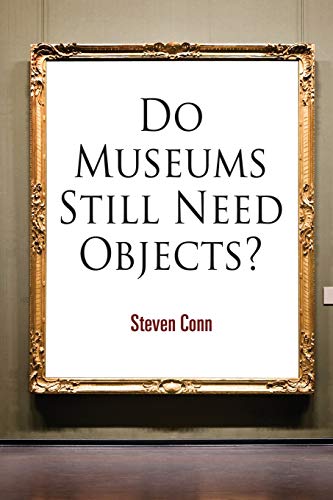
"We live in a museum age," writes Steven Conn in Do Museums Still Need Objects? And indeed, at the turn of the twenty-first century, more people are visiting museums than ever before. There are now over 17,500 accredited museums in the United States, averaging approximately 865 million visits a year, more than two million visits a day. New museums have proliferated across the cultural landscape even as older ones have undergone transformational additions: from the Museum of Modern Art and the Morgan in New York to the High in Atlanta and the Getty in Los Angeles. If the golden age of museum-building came a century ago, when the Metropolitan Museum of Art, the American Museum of Natural History, the Philadelphia Museum of Art, the Field Museum of Natural History, and others were created, then it is fair to say that in the last generation we have witnessed a second golden age.
By closely observing the cultural, intellectual, and political roles that museums play in contemporary society, while also delving deeply into their institutional histories, historian Steven Conn demonstrates that museums are no longer seen simply as houses for collections of objects. Conn ranges across a wide variety of museum types—from art and anthropology to science and commercial museums—asking questions about the relationship between museums and knowledge, about the connection between culture and politics, about the role of museums in representing non-Western societies, and about public institutions and the changing nature of their constituencies. Elegantly written and deeply researched, Do Museums Still Need Objects? is essential reading for historians, museum professionals, and those who love to visit museums.
Die Inhaltsangabe kann sich auf eine andere Ausgabe dieses Titels beziehen.
Über die Autorin bzw. den Autor
Steven Conn is the author of Metropolitan Philadelphia: Living with the Presence of the Past, also available from the University of Pennsylvania Press.
Auszug. © Genehmigter Nachdruck. Alle Rechte vorbehalten.
Introduction
Thinking about Museums
We live in a museum age.
At the turn of the twenty-first century more people are going to more museums than at any time in the past, and simultaneously more scholars, critics, and others are writing and talking about museums. The two phenomena are almost certainly related, but it does not seem to be a happy relationship. Even as museums enjoy more and more success—measured at the gate, in philanthropic giving, and in the cultural influence they command—many who write about them express varying degrees of foreboding.
On the one hand, I think the New York Times was right when it proclaimed in 2002 that all over the world we are enjoying a "Golden Age of Museums." From Berlin to Beijing, from the United States to the Gulf States, the last quarter of the twentieth century saw the creation of whole new museum institutions, some modest and some quite audacious. Major cities have added significant new museums to their already crowded cultural landscapes, while more modest metropolises like Kansas City and Denver have recently opened museums big enough and ambitious enough to have garnered national attention. Indeed, all this new museum building, often showcasing the work of a fashionable architect, or "starchitect," hasn't simply added to the inventory of museums. The openings of many of these new museums have been treated as major cultural, geopolitical, or economic events, an enthusiasm captured by the oft-used phrase the "Bilbao effect."
In fact, we are witnessing a second "golden age" of museum building in the United States (and, really, around the world). The first came one hundred years ago during the last quarter of the nineteenth century and the first quarter of the twentieth, and included the construction of the Metropolitan Museum of Art, the American Museum of Natural History, the Philadelphia Museum of Art, and the Field Museum of Natural History, to name just a few. Many of these older institutions have participated in this second golden age by undergoing transformational additions or renovations, such as the Museum of Modern Art (MoMA), the Morgan Library in New York, and the Tate in London. According to one report, $4 to $5 billion has been spent on construction in American museums over a ten-year period, and that report came out in 1998. Nothing in the first decade of the twenty-first century suggests that the pace of building has slackened.
At the beginning of the new century, according to the American Association of Museums, there were more than 17,500 accredited museums in the United States, although the association acknowledges that the count is probably incomplete. And while some in the cultural world fret that this number is probably unsustainable, the turnstiles continue to turn: according to a 1999 study by Lake, Snell and Perry, "American museums average approximately 865 million visits per year or 2.3 million visits per day." It is not exaggerating to say that there have never been as many museums doing as many things and attracting as many people as is the case right now. The best of times indeed. But you wouldn't know it by reading much of the writing produced about museums by historians, sociologists, anthropologists, "media critics," and others.
Causally or coincidentally, the building boom in the museum world has corresponded with an equally large boom in the writing about them. Late into the 1980s, the museum remained largely unvisited by scholars, covered, as sociologist Eilean Hooper-Greenhill wrote, in a "blanket of critical silence." Almost all of the writing about museums had been done by and for those professionals who worked there. My own reading suggests that as far back as the 1930s such a literature began to develop about museum education designed for those who were museum educators or schoolteachers who wanted to use museums for schoolchildren and for adult education programs. Individual museums might have their own hagiographies, but those tended to substitute celebration for critical attention.
By the 1990s, however, scholars were no longer silent on the subject of museums. By 2006, Sharon Macdonald, a leading figure in the field, could announce, "Museum Studies has come of age. . . . It has moved from being an unusual and minority subject into the mainstream." Certainly over the last two decades, books, articles, anthologies, conference proceedings, and symposia on museums have proliferated to daunting quantities for anyone who would try to keep up with it.
Happily, for our purposes, I don't have to repeat it all here. In 2005, Renaissance historian Randolph Starn, playing the role of an academic Roger Tory Peterson, provided historians with an indispensable field guide to museum studies scholarship. Offering to navigate historians through what he calls the "tidal wave of museum studies," Starn divides his historiographic survey into four broad sections: "the genealogy of museums; the shifting status of the museum object; the politics of museum culture from the ideal of universality to 'museum wars' over cultural difference; the past and future of the 'museum experience.'"
These seem perfectly sensible groupings to me, encompassing virtually all of the important work that has been done in the last two decades. Rather than summarize Starn's essay, however, let me add some additional thoughts about museum scholarship to help clarify the way I have approached the history of museums in the chapters that follow. I will keep my scholarly squabbles to a minimum, but my approach to the history of museums differs in important ways from much of what is now current in museum criticism.
Any casual perusal of the literature reveals that French historian and critic Michel Foucault stands as the patron saint of the new museum studies, and much of what his disciples have produced is pretty bleak, filled with what Ivan Gaskell calls "naïve outrage" and "museophobia." Eilean Hooper-Greenhill and Tony Bennett stand among the first and certainly most influential of those who brought Foucault to the museum. Bennett's work is nuanced, thoughtful, and provocative. Many who have followed in his path have been less so. They have seen museums crudely as part of an apparatus of cultural and political hegemony, to borrow from some of their language, as instruments of the nation-state reifying itself and naturalizing its behavior—insidious places, or, as Douglas Crimp has called the modern art museum, places of "confinement." As far as I am aware Foucault wrote about museums only in the posthumously published essay "Of Other Spaces," but his work on other institutions—prisons, asylums, and hospitals—became the model for analyzing them. No wonder, then, that in some of this literature museums resemble penitentiaries, but with better interior decorating.
There is, of course, an obvious problem in a critical stance that posits museums as places where people go to get disciplined and punished. Treating museums as part of the same institutional constellation as prisons, asylums, and hospitals simply begs the question of why people would ever go, because, of course, only schoolchildren are forced to. We can acknowledge that there may have been social pressures of bourgeois emulation at work in the nineteenth century—and in the twenty-first—that directed people through the doors of museums. But to write, as Timothy Luke does of the entertainment role of museums, that there are "powerful carceral implications that suggest a practice of containment and confinement" is simply absurd. As any resident of the former Soviet Union will happily tell you, a day at the Hermitage is not the same thing as a day in the Gulag. To conflate the two insults the intelligence of those who come to museums and the dignity of those who have suffered real imprisonment.
In a similar vein, a...
„Über diesen Titel“ kann sich auf eine andere Ausgabe dieses Titels beziehen.
Suchergebnisse für Do Museums Still Need Objects? (The Arts and Intellectual...

Foto des Verkäufers
Do Museums Still Need Objects? (The Arts and Intellectual Life in Modern America)
Verlag:
University of Pennsylvania Press, 2010
ISBN 10: 0812221559
ISBN 13: 9780812221558
Gebraucht
Softcover
Anbieter: WeBuyBooks, Rossendale, LANCS, Vereinigtes Königreich
Verkäuferbewertung 5 von 5 Sternen

Zustand: Good. Most items will be dispatched the same or the next working day. A copy that has been read but remains in clean condition. All of the pages are intact and the cover is intact and the spine may show signs of wear. The book may have minor markings which are not specifically mentioned. Artikel-Nr. rev9518024966
Gebraucht kaufen
EUR 4,13
EUR 7,37 Versand
Versand von Vereinigtes Königreich nach USA
Versand von Vereinigtes Königreich nach USA
Anzahl: 1 verfügbar
Beispielbild für diese ISBN
Do Museums Still Need Objects?
Verlag:
University of Pennsylvania Press, 2010
ISBN 10: 0812221559
ISBN 13: 9780812221558
Gebraucht
Softcover
Anbieter: Better World Books, Mishawaka, IN, USA
Verkäuferbewertung 5 von 5 Sternen
Zustand: Good. Pages intact with minimal writing/highlighting. The binding may be loose and creased. Dust jackets/supplements are not included. Stock photo provided. Product includes identifying sticker. Better World Books: Buy Books. Do Good. Artikel-Nr. 56640590-6
Gebraucht kaufen
EUR 12,02
Versand gratis
Versand innerhalb von USA
Versand innerhalb von USA
Anzahl: 1 verfügbar
Beispielbild für diese ISBN
Do Museums Still Need Objects? (The Arts and Intellectual Life in Modern America)
Verlag:
University of Pennsylvania Press, 2010
ISBN 10: 0812221559
ISBN 13: 9780812221558
Gebraucht
Paperback
Anbieter: WorldofBooks, Goring-By-Sea, WS, Vereinigtes Königreich
Verkäuferbewertung 5 von 5 Sternen
Paperback. Zustand: Very Good. The book has been read, but is in excellent condition. Pages are intact and not marred by notes or highlighting. The spine remains undamaged. Artikel-Nr. GOR007501926
Gebraucht kaufen
EUR 5,88
EUR 6,52 Versand
Versand von Vereinigtes Königreich nach USA
Versand von Vereinigtes Königreich nach USA
Anzahl: 1 verfügbar
Beispielbild für diese ISBN
Do Museums Still Need Objects?
Anbieter: PBShop.store UK, Fairford, GLOS, Vereinigtes Königreich
Verkäuferbewertung 5 von 5 Sternen
PAP. Zustand: New. New Book. Shipped from UK. Established seller since 2000. Artikel-Nr. FW-9780812221558
Neu kaufen
EUR 30,96
EUR 4,84 Versand
Versand von Vereinigtes Königreich nach USA
Versand von Vereinigtes Königreich nach USA
Anzahl: 1 verfügbar
Beispielbild für diese ISBN
Do Museums Still Need Objects? (The Arts and Intellectual Life in Modern America)
Verlag:
University of Pennsylvania Press, 2010
ISBN 10: 0812221559
ISBN 13: 9780812221558
Neu
Softcover
Anbieter: Ria Christie Collections, Uxbridge, Vereinigtes Königreich
Verkäuferbewertung 5 von 5 Sternen
Zustand: New. In English. Artikel-Nr. ria9780812221558_new
Neu kaufen
EUR 30,37
EUR 13,14 Versand
Versand von Vereinigtes Königreich nach USA
Versand von Vereinigtes Königreich nach USA
Anzahl: 1 verfügbar
Beispielbild für diese ISBN
Do Museums Still Need Objects?
Verlag:
University of Pennsylvania Press, 2010
ISBN 10: 0812221559
ISBN 13: 9780812221558
Neu
Softcover
Anbieter: Kennys Bookstore, Olney, MD, USA
Verkäuferbewertung 5 von 5 Sternen
Zustand: New. In this broadly conceived study Steven Conn examines the development of American museums across the twentieth century with a historian's attention and a critic's eye. He focuses on an array of museum types and asks illuminating questions about the relationship between museums and American cultural life. Series: Arts and Intellectual Life in Modern America S. Num Pages: 272 pages, 34 illus. BIC Classification: GM. Category: (U) Tertiary Education (US: College). Dimension: 153 x 229 x 20. Weight in Grams: 452. . 2010. Paperback. . . . . Books ship from the US and Ireland. Artikel-Nr. V9780812221558
Neu kaufen
EUR 40,17
EUR 9,15 Versand
Versand innerhalb von USA
Versand innerhalb von USA
Anzahl: 1 verfügbar
Beispielbild für diese ISBN
Do Museums Still Need Objects?
Anbieter: Revaluation Books, Exeter, Vereinigtes Königreich
Verkäuferbewertung 5 von 5 Sternen
Paperback. Zustand: Brand New. 272 pages. 9.00x5.50x0.90 inches. In Stock. Artikel-Nr. x-0812221559
Neu kaufen
EUR 43,78
EUR 11,64 Versand
Versand von Vereinigtes Königreich nach USA
Versand von Vereinigtes Königreich nach USA
Anzahl: 2 verfügbar
Foto des Verkäufers
Do Museums Still Need Objects?
Anbieter: moluna, Greven, Deutschland
Verkäuferbewertung 5 von 5 Sternen
Zustand: New. In this broadly conceived study Steven Conn examines the development of American museums across the twentieth century with a historian s attention and a critic s eye. He focuses on an array of museum types and asks illuminating questions about the relations. Artikel-Nr. 595035610
Neu kaufen
EUR 36,03
EUR 48,99 Versand
Versand von Deutschland nach USA
Versand von Deutschland nach USA
Anzahl: Mehr als 20 verfügbar
Foto des Verkäufers
Do Museums Still Need Objects?
Verlag:
University Of Pennsylvania Press Dez 2010, 2010
ISBN 10: 0812221559
ISBN 13: 9780812221558
Neu
Taschenbuch
Anbieter: AHA-BUCH GmbH, Einbeck, Deutschland
Verkäuferbewertung 5 von 5 Sternen
Taschenbuch. Zustand: Neu. Neuware - 'We live in a museum age,' writes Steven Conn in Do Museums Still Need Objects And indeed, at the turn of the twenty-first century, more people are visiting museums than ever before. There are now over 17,500 accredited museums in the United States, averaging approximately 865 million visits a year, more than two million visits a day. New museums have proliferated across the cultural landscape even as older ones have undergone transformational additions: from the Museum of Modern Art and the Morgan in New York to the High in Atlanta and the Getty in Los Angeles. If the golden age of museum-building came a century ago, when the Metropolitan Museum of Art, the American Museum of Natural History, the Philadelphia Museum of Art, the Field Museum of Natural History, and others were created, then it is fair to say that in the last generation we have witnessed a second golden age. By closely observing the cultural, intellectual, and political roles that museums play in contemporary society, while also delving deeply into their institutional histories, historian Steven Conn demonstrates that museums are no longer seen simply as houses for collections of objects. Conn ranges across a wide variety of museum types-from art and anthropology to science and commercial museums-asking questions about the relationship between museums and knowledge, about the connection between culture and politics, about the role of museums in representing non-Western societies, and about public institutions and the changing nature of their constituencies. Elegantly written and deeply researched, Do Museums Still Need Objects is essential reading for historians, museum professionals, and those who love to visit museums. Artikel-Nr. 9780812221558
Neu kaufen
EUR 67,18
EUR 30,50 Versand
Versand von Deutschland nach USA
Versand von Deutschland nach USA
Anzahl: 1 verfügbar