
Verwandte Artikel zu Female Circumcision: Multicultural Perspectives (Pennsylvani...
Female Circumcision: Multicultural Perspectives (Pennsylvania Studies in Human Rights) - Softcover
Buch 25 von 111: Pennsylvania Studies in Human Rights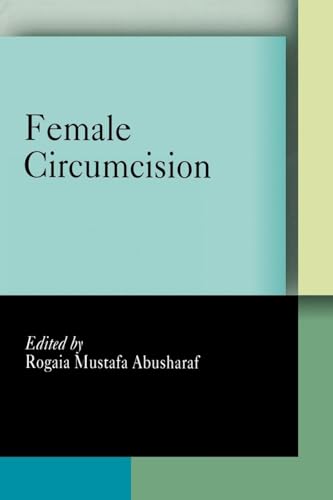
Inhaltsangabe
Bolokoli, khifad, tahara, tahoor, qudiin, irua, bondo, kuruna, negekorsigin, and kene-kene are a few of the terms used in local African languages to denote a set of cultural practices collectively known as female circumcision. Practiced in many countries across Africa and Asia, this ritual is hotly debated. Supporters regard it as a central coming-of-age ritual that ensures chastity and promotes fertility. Human rights groups denounce the procedure as barbaric. It is estimated that between 100 million and 130 million girls and women today have undergone forms of this genital surgery.
Female Circumcision gathers together African activists to examine the issue within its various cultural and historical contexts, the debates on circumcision regarding African refugee and immigrant populations in the United States, and the human rights efforts to eradicate the practice. This work brings African women's voices into the discussion, foregrounds indigenous processes of social and cultural change, and demonstrates the manifold linkages between respect for women's bodily integrity, the empowerment of women, and democratic modes of economic development.
This volume does not focus narrowly on female circumcision as a set of ritualized surgeries sanctioned by society. Instead, the contributors explore a chain of connecting issues and processes through which the practice is being transformed in local and transnational contexts. The authors document shifts in local views to highlight processes of change and chronicle the efforts of diverse communities as agents in the process of cultural and social transformation.
Die Inhaltsangabe kann sich auf eine andere Ausgabe dieses Titels beziehen.
Über die Autorin bzw. den Autor
Rogaia Mustafa Abusharaf is Senior Research Associate at the Pembroke Center for Teaching and Research on Women at Brown University. She is the author of Wanderings: Sudanese Migrants and Exiles in North America.
Auszug. © Genehmigter Nachdruck. Alle Rechte vorbehalten.
Introduction: The Custom in Question
—Rogaia Mustafa Abusharaf"I do not wish them to have power over men; but over themselves."
—Mary Wollstonecraft, A Vindication of the Rights of Woman, 1792
"When the sign heralding the promising waters arrives-the sighting of flying fish beyond the prow of the boat-the crewman facing forward ought to be the first to see them."
—Toni Morrison, Playing in the Dark, 1992
"Changing traditions and behaviors that have such long histories is not easy. When one does not understand a problem it is not easy to appreciate it. If you do not understand your health, you cannot appreciate the problems of female genital cutting, and if you do not continue to educate people they will not understand. All we are seeking is knowledge. Knowledge will change people's attitudes."
—Mansata, former female circumciser in the Gambia, 2000Bolokoli, khifad, tahara, tahoor, qodiin, irua, bondo, kuruna, negekorsigin, and kene kene are a few of the terms used in local African languages to denote a set of cultural practices collectively known as female circumcision. These practices, which are fervently adhered to by some ethnic and national groups, "are differentially embedded in specific institutional and social structures" (Kratz 1994: 346). In each context, there is marked variation in prevalence, in the type of surgery performed, and in the rituals associated with it. Even within the same geographic locality, the nature of the practice, its justifications, and the age at which it is performed differ vastly by ethnicity and class. For instance, among the Yoruba of southwestern Nigeria, 90 percent of adults remain determinedly committed to the perpetuation of female circumcision, whereas in another section of the same ethnic group, the Ijebus, this tradition, which was formerly widespread in the community, has been unreservedly rejected (WHO 1996).
Generations of supporters of these contested practices espouse a wide range of ideas about why female circumcision constitutes an important part of their cosmology and worldview. These practices, which others often contemplate with horror and trepidation, are exalted and sanctified through the very language used to refer to them. Most of the local terms translate as ritual purification. To followers, these operations are, first and foremost, important events constituting "a domain of cosmological fixity: the changes they encompass are a recalibration of local detail to the grand order of things" (Herzfeld 2001: 209).
No one has been able to identify the origin of female circumcision with any accuracy, and explanations of its genesis and growth remain highly speculative. One prevalent belief, which was widely held by some European travelers, saw the practice as an ancient Egyptian invention and explained its adoption in other localities as a product of cultural diffusion. For example, Karim and Ammar showed how "Aetius (A.D. 502-575) quoted with approval the Egyptian custom of the amputation of the clitoris before it grows large chiefly about the time when the girl is marriageable" (Karim and Ammar 1965: 3). However, the ascription of the practice to ancient Egypt remains highly controversial in historical scholarship.
An alternative, yet equally ubiquitous supposition on the question of origin has identified Islam as the incontestable source of the practice. This assumption is clear in David Gollaher's argument that "In the world of Islam, female circumcision has long been acknowledged as a rightful counterpart to male circumcision" (Gollaher 2000: 191). Linking female circumcision to Islamic philosophy and instruction has proven quite dubious. If Islam is indeed the foundation of female circumcision, how can we explain the persistence of the tradition among non Muslim peoples who embrace it with equal ardor and enthusiasm? Conversely, how can we account for the fact that the great majority of adherents in some Muslim societies do not carry out any form of female genital excision? Contrary to the facile correlation of Islam and female circumcision evidenced in Esther K. Hicks's Infibulation: Female Mutilation in Islamic Northeast Africa (1996), extensive ethnographic studies and demographic reports have demonstrated that people across religious affiliations share the notion that female circumcision is an act of cleanliness and self control. When the Islamic jurist Jamal Badawi was asked about the existence of authentic texts in the primary sources of Islam which require female circumcision for religious reasons, his reply was unequivocal: "no mention of female circumcision is to be found in the Qur'an either directly or indirectly. There is no known Hadith which requires female circumcision" (Badawi 2000: 2). Since the Qur'an (the scripture believed to be revealed to the Prophet Muhammad) and the Hadith (the teachings of the Prophet) are the two most important sources for all aspects of jurisprudence and social regulation, the absence of female circumcision from these texts and teachings demonstrates that the various views surrounding the practice are matters of interpretation. These competing interpretations are not to be equated with incontrovertible religious edicts. Several leading Muslim jurists have confirmed that there should be no conjecture or speculation about the fact that these practices preceded Christianity and Islam, and that, whatever their origin may be, the call for ending these harmful operations should be loud and clear. The Religious Leaders' Symposium, held in Gambia in 1998, was a step in the direction of a public repudiation of the practice; the Arusha Declaration on Harmful Traditional Practices urged religious leaders to take concrete steps to strengthen their commitment to educating, sensitizing, and convincing their followers to end female circumcision by forming coalitions for this purpose (see IAC Newsletter 28, December 2000: 16).
While female circumcision is, for the most part, carried out in Africa, it exists among other ethnic communities in India, Malaysia, the Arabian Peninsula, and Indonesia (Aldeeb 2001). It is estimated that over 130 million girls and women have undergone genital excision and at least two million per year are expected to go through the practice (WHO 1999). Rising tides of migration have altered the geographical distribution of female circumcision dramatically and prompted momentous debates on tolerance, asylum seeking and refugee determination systems, and multiculturalism. Tom Hundley of the Chicago Tribune commented that until a few years ago, female circumcision was thought to be a Third World problem, but now, because of shifting immigration flows, the practice has appeared in Europe, especially in Italy, France, Britain, and the Scandinavian countries. Health authorities in Italy estimated that 40,000 women of African origin, mostly Somalis, have undergone the practice and 5000 young girls are currently at risk. The Centers for Disease Control and Prevention estimated that, in the United States alone, more than 150,000 women and girls of African origin have already been cut or might have the operation performed on them (Hundley 2002). On the medical front, health care providers are starting to learn about circumcised female bodies. An article featured in the Philadelphia Inquirer reported: "After years of unprecedented African immigration North American health professionals are seeing growing numbers of women who have undergone the controversial practice of female genital mutilation. Doctors have been confronting difficult births, unusual gynecologic problems and ethical quandaries, complicated by their own emotions as they try to relate to patients who consider ritual mutilation normal and proper" (McCullough 1999: 1). The rise of immigration...
„Über diesen Titel“ kann sich auf eine andere Ausgabe dieses Titels beziehen.
Suchergebnisse für Female Circumcision: Multicultural Perspectives (Pennsylvani...

Beispielbild für diese ISBN
Female Circumcision: Multicult
Verlag:
University of Pennsylvania Press, 2007
ISBN 10: 0812219414
ISBN 13: 9780812219418
Gebraucht
Softcover
Anbieter: World of Books (was SecondSale), Montgomery, IL, USA
Verkäuferbewertung 5 von 5 Sternen

Zustand: Good. Item in good condition. Textbooks may not include supplemental items i.e. CDs, access codes etc. Artikel-Nr. 00101855563
Gebraucht kaufen
EUR 5,49
Versand gratis
Versand innerhalb von USA
Versand innerhalb von USA
Anzahl: 1 verfügbar
Beispielbild für diese ISBN
Female Circumcision : Multicultural Perspectives
Verlag:
University of Pennsylvania Press, 2007
ISBN 10: 0812219414
ISBN 13: 9780812219418
Gebraucht
Softcover
Anbieter: Better World Books, Mishawaka, IN, USA
Verkäuferbewertung 5 von 5 Sternen
Zustand: Very Good. Former library copy. Pages intact with possible writing/highlighting. Binding strong with minor wear. Dust jackets/supplements may not be included. Includes library markings. Stock photo provided. Product includes identifying sticker. Better World Books: Buy Books. Do Good. Artikel-Nr. 970513-6
Gebraucht kaufen
EUR 6,04
Versand gratis
Versand innerhalb von USA
Versand innerhalb von USA
Anzahl: 1 verfügbar
Beispielbild für diese ISBN
Female Circumcision
Anbieter: Powell's Bookstores Chicago, ABAA, Chicago, IL, USA
Verkäuferbewertung 5 von 5 Sternen
Paperback. Zustand: Used-Very Good. Pap. Minor shelf-wear. Artikel-Nr. 1795447
Gebraucht kaufen
EUR 8,54
EUR 6,54 Versand
Versand innerhalb von USA
Versand innerhalb von USA
Anzahl: 1 verfügbar
Beispielbild für diese ISBN
Female Circumcision: Multicultural Perspectives (Pennsylvania Studies in Human Rights)
Verlag:
University of Pennsylvania Press, 2007
ISBN 10: 0812219414
ISBN 13: 9780812219418
Gebraucht
Paperback
Anbieter: AwesomeBooks, Wallingford, Vereinigtes Königreich
Verkäuferbewertung 5 von 5 Sternen
Paperback. Zustand: Very Good. Female Circumcision: Multicultural Perspectives (Pennsylvania Studies in Human Rights) This book is in very good condition and will be shipped within 24 hours of ordering. The cover may have some limited signs of wear but the pages are clean, intact and the spine remains undamaged. This book has clearly been well maintained and looked after thus far. Money back guarantee if you are not satisfied. See all our books here, order more than 1 book and get discounted shipping. . Artikel-Nr. 7719-9780812219418
Gebraucht kaufen
EUR 21,39
EUR 4,81 Versand
Versand von Vereinigtes Königreich nach USA
Versand von Vereinigtes Königreich nach USA
Anzahl: 1 verfügbar
Beispielbild für diese ISBN
Female Circumcision: Multicultural Perspectives (Pennsylvania Studies in Human Rights)
Verlag:
University of Pennsylvania Press 22/01/2007, 2007
ISBN 10: 0812219414
ISBN 13: 9780812219418
Gebraucht
Paperback
Anbieter: Bahamut Media, Reading, Vereinigtes Königreich
Verkäuferbewertung 5 von 5 Sternen
Paperback. Zustand: Very Good. Shipped within 24 hours from our UK warehouse. Clean, undamaged book with no damage to pages and minimal wear to the cover. Spine still tight, in very good condition. Remember if you are not happy, you are covered by our 100% money back guarantee. Artikel-Nr. 6545-9780812219418
Gebraucht kaufen
EUR 21,39
EUR 8,14 Versand
Versand von Vereinigtes Königreich nach USA
Versand von Vereinigtes Königreich nach USA
Anzahl: 1 verfügbar
Beispielbild für diese ISBN
Female Circumcision: Multicultural Perspectives
Verlag:
University of Pennsylvania Press, 2006
ISBN 10: 0812219414
ISBN 13: 9780812219418
Gebraucht
Softcover
Anbieter: Anybook.com, Lincoln, Vereinigtes Königreich
Verkäuferbewertung 5 von 5 Sternen
Zustand: Poor. This is an ex-library book and may have the usual library/used-book markings inside.This book has soft covers. Book contains pen & pencil markings. In poor condition, suitable as a reading copy. Please note the Image in this listing is a stock photo and may not match the covers of the actual item,550grams, ISBN:9780812219418. Artikel-Nr. 8626463
Gebraucht kaufen
EUR 16,86
EUR 15,87 Versand
Versand von Vereinigtes Königreich nach USA
Versand von Vereinigtes Königreich nach USA
Anzahl: 1 verfügbar
Beispielbild für diese ISBN
Female Circumcision
Verlag:
MT - University of Pennsylvania Press, 2007
ISBN 10: 0812219414
ISBN 13: 9780812219418
Neu
PAP
Anbieter: PBShop.store UK, Fairford, GLOS, Vereinigtes Königreich
Verkäuferbewertung 5 von 5 Sternen
PAP. Zustand: New. New Book. Shipped from UK. Established seller since 2000. Artikel-Nr. FW-9780812219418
Neu kaufen
EUR 31,04
EUR 4,85 Versand
Versand von Vereinigtes Königreich nach USA
Versand von Vereinigtes Königreich nach USA
Anzahl: 1 verfügbar
Beispielbild für diese ISBN
Female Circumcision: Multicultural Perspectives (Pennsylvania Studies in Human Rights)
Verlag:
University of Pennsylvania Press, 2007
ISBN 10: 0812219414
ISBN 13: 9780812219418
Neu
Softcover
Anbieter: Ria Christie Collections, Uxbridge, Vereinigtes Königreich
Verkäuferbewertung 5 von 5 Sternen
Zustand: New. In English. Artikel-Nr. ria9780812219418_new
Neu kaufen
EUR 30,44
EUR 13,17 Versand
Versand von Vereinigtes Königreich nach USA
Versand von Vereinigtes Königreich nach USA
Anzahl: 1 verfügbar
Beispielbild für diese ISBN
Female Circumcision: Multicultural Perspectives (Pennsylvania Studies in Human Rights)
Verlag:
University of Pennsylvania Press, 2007
ISBN 10: 0812219414
ISBN 13: 9780812219418
Neu
Softcover
Anbieter: Kennys Bookstore, Olney, MD, USA
Verkäuferbewertung 5 von 5 Sternen
Zustand: New. Female Circumcision brings together African activists to examine the issue within its various cultural and historical contexts, the debates on circumcision regarding African refugee and immigrant populations in the U.S. and the human rights efforts to eradicate the practice. Editor(s): Abusharaf, Rogaia Mustafa. Series: Pennsylvania Studies in Human Rights. Num Pages: 296 pages, 2 illus. BIC Classification: JPVH. Category: (U) Tertiary Education (US: College). Dimension: 226 x 152 x 24. Weight in Grams: 436. . 2007. Paperback. . . . . Books ship from the US and Ireland. Artikel-Nr. V9780812219418
Neu kaufen
EUR 41,55
EUR 9,16 Versand
Versand innerhalb von USA
Versand innerhalb von USA
Anzahl: 1 verfügbar
Beispielbild für diese ISBN
Female Circumcision Multicultural Perspectives
Anbieter: Revaluation Books, Exeter, Vereinigtes Königreich
Verkäuferbewertung 5 von 5 Sternen
Paperback. Zustand: Brand New. 287 pages. 8.75x5.75x1.00 inches. In Stock. Artikel-Nr. x-0812219414
Neu kaufen
EUR 44,36
EUR 11,67 Versand
Versand von Vereinigtes Königreich nach USA
Versand von Vereinigtes Königreich nach USA
Anzahl: 2 verfügbar