
Verwandte Artikel zu The Cattle Car: Including Letter to a Little Girl
Inhaltsangabe
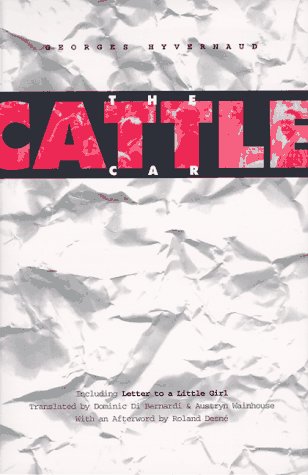
In this first English translation of Hyvernaud's novel, the narrator, who has come back to France after imprisonment in Germany, is preoccupied with the near impossibility of writing a novel about his experiences; at the same time, he attempts to function normally in a world that seems to have changed radically.
The Cattle Car is devoid of heroics, portraying the protagonist as a man without a future, "the ordinary guy who moves quietly among objects, without making any sort of commotion," a man who daydreams other people's lives.
In "Letter to a Little Girl," which precedes The Cattle Car, Hyvernaud writes openly to his daughter of his own five years of wartime imprisonment. "It is proper that at least once in his life each [man] really experience the world's cruelty. That he touch bottom," he writes, refusing pity. "It is a right that one has, the right to know how hard it is, how difficult and dangerous, to conduct the human adventure. Those who must be pitied are those who are protected from everything, who elude everything - the men with gloved hands." As he tries to explain what happened in wartime Europe, he concludes, "Human beings are like that, a mixture of good and bad.... Believe in man and believe in life."
Die Inhaltsangabe kann sich auf eine andere Ausgabe dieses Titels beziehen.
Über die Autorin bzw. den Autor
Georges Hyvernaud (1902-83) was a professor of literature at the Ecole Normale in Arras, France.
„Über diesen Titel“ kann sich auf eine andere Ausgabe dieses Titels beziehen.
Suchergebnisse für The Cattle Car: Including Letter to a Little Girl

Beispielbild für diese ISBN
The Cattle Car: Including "Letter to a Little Girl
Anbieter: Kennys Bookstore, Olney, MD, USA
Verkäuferbewertung 5 von 5 Sternen

Zustand: New. Num Pages: 156 pages. BIC Classification: FA. Category: (G) General (US: Trade). Dimension: 222 x 146 x 14. Weight in Grams: 249. . 1997. Translated. Paperback. . . . . Books ship from the US and Ireland. Artikel-Nr. V9780810160316
Neu kaufen
EUR 32,82
EUR 9,37 Versand
Versand innerhalb von USA
Versand innerhalb von USA
Anzahl: 15 verfügbar