
Verwandte Artikel zu Civil War Infantry Tactics: Training, Combat, and Small-unit...
Inhaltsangabe
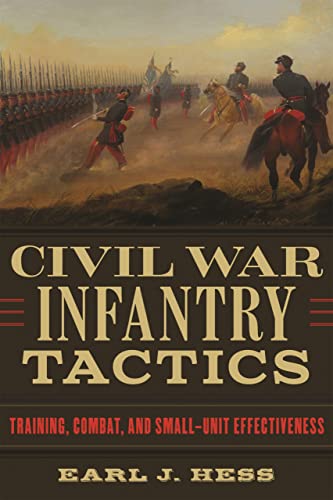
For decades, military historians have argued that the introduction of the rifle musket-with a range five times longer than that of the smoothbore musket-made the shoulder-to-shoulder formations of linear tactics obsolete. Author Earl J. Hess challenges this deeply entrenched assumption. He contends that long-range rifle fire did not dominate Civil War battlefields or dramatically alter the course of the conflict because soldiers had neither the training nor the desire to take advantage of the musket rifle's increased range. Drawing on the drill manuals available to officers and a close reading of battle reports, Civil War Infantry Tactics demonstrates that linear tactics provided the best formations and maneuvers to use with the single-shot musket, whether rifle or smoothbore.
The linear system was far from an outdated relic that led to higher casualties and prolonged the war. Indeed, regimental officers on both sides of the conflict found the formations and maneuvers in use since the era of the French Revolution to be indispensable to the survival of their units on the battlefield. The training soldiers received in this system, combined with their extensive experience in combat, allowed small units a high level of articulation and effectiveness.
Unlike much military history that focuses on grand strategies, Hess zeroes in on formations and maneuvers (or primary tactics), describing their purpose and usefulness in regimental case studies, and pinpointing which of them were favorites of unit commanders in the field. The Civil War was the last conflict in North America to see widespread use of the linear tactical system, and Hess convincingly argues that the war also saw the most effective tactical performance yet in America's short history.
Die Inhaltsangabe kann sich auf eine andere Ausgabe dieses Titels beziehen.
Über die Autorin bzw. den Autor
EARL J. HESS is Stewart W. McClelland Chair in History at Lincoln Memorial University and the author of fifteen books on the Civil War, including Kennesaw Mountain: Sherman, Johnston, and the Atlanta Campaign; The Knoxville Campaign: Burnside and Longstreet in East Tennessee; and The Civil War in the West: Victory and Defeat from the Appalachians to the Mississippi.
„Über diesen Titel“ kann sich auf eine andere Ausgabe dieses Titels beziehen.
Weitere beliebte Ausgaben desselben Titels

Suchergebnisse für Civil War Infantry Tactics: Training, Combat, and Small-unit...

Beispielbild für diese ISBN
Civil War Infantry Tactics
Anbieter: PBShop.store UK, Fairford, GLOS, Vereinigtes Königreich
Verkäuferbewertung 5 von 5 Sternen

PAP. Zustand: New. New Book. Shipped from UK. Established seller since 2000. Artikel-Nr. FW-9780807179581
Neu kaufen
EUR 33,97
EUR 5,86 Versand
Versand von Vereinigtes Königreich nach USA
Versand von Vereinigtes Königreich nach USA
Anzahl: 4 verfügbar
Beispielbild für diese ISBN
Civil War Infantry Tactics: Training, Combat, and Small-Unit Effectiveness
Anbieter: Majestic Books, Hounslow, Vereinigtes Königreich
Verkäuferbewertung 4 von 5 Sternen

Zustand: New. Artikel-Nr. 401493409
Neu kaufen
EUR 47,23
EUR 7,58 Versand
Versand von Vereinigtes Königreich nach USA
Versand von Vereinigtes Königreich nach USA
Anzahl: 3 verfügbar
Beispielbild für diese ISBN
Civil War Infantry Tactics: Training, Combat, and Small-Unit Effectiveness
Anbieter: Kennys Bookstore, Olney, MD, USA
Verkäuferbewertung 5 von 5 Sternen
Zustand: New. 2023. paperback. . . . . . Books ship from the US and Ireland. Artikel-Nr. V9780807179581
Neu kaufen
EUR 52,02
EUR 9,12 Versand
Versand innerhalb von USA
Versand innerhalb von USA
Anzahl: 1 verfügbar
Beispielbild für diese ISBN
Civil War Infantry Tactics: Training, Combat, and Small-Unit Effectiveness
Anbieter: Ria Christie Collections, Uxbridge, Vereinigtes Königreich
Verkäuferbewertung 5 von 5 Sternen
Zustand: New. In. Artikel-Nr. ria9780807179581_new
Neu kaufen
EUR 54,91
EUR 13,98 Versand
Versand von Vereinigtes Königreich nach USA
Versand von Vereinigtes Königreich nach USA
Anzahl: Mehr als 20 verfügbar
Beispielbild für diese ISBN
Civil War Infantry Tactics Training, Combat, and SmallUnit Effectiveness
Anbieter: Revaluation Books, Exeter, Vereinigtes Königreich
Verkäuferbewertung 5 von 5 Sternen
Paperback. Zustand: Brand New. 328 pages. 9.00x6.00x0.79 inches. In Stock. Artikel-Nr. x-0807179582
Neu kaufen
EUR 59,65
EUR 11,67 Versand
Versand von Vereinigtes Königreich nach USA
Versand von Vereinigtes Königreich nach USA
Anzahl: 2 verfügbar
Foto des Verkäufers
Civil War Infantry Tactics: Training, Combat, and Small-Unit Effectiveness
Anbieter: moluna, Greven, Deutschland
Verkäuferbewertung 5 von 5 Sternen
Zustand: New. Über den AutorEARL J. HESS is Stewart W. McClelland Chair in History at Lincoln Memorial University and the author of fifteen books on the Civil War, including Kennesaw Mountain: Sherman, Johnston, and the Atlanta Campaign The Knox. Artikel-Nr. 898756790
Neu kaufen
EUR 48,09
EUR 48,99 Versand
Versand von Deutschland nach USA
Versand von Deutschland nach USA
Anzahl: Mehr als 20 verfügbar
Foto des Verkäufers
Civil War Infantry Tactics : Training, Combat, and Small-Unit Effectiveness
Anbieter: AHA-BUCH GmbH, Einbeck, Deutschland
Verkäuferbewertung 5 von 5 Sternen
Taschenbuch. Zustand: Neu. Neuware - For decades, military historians have argued that the introduction of the rifle musket-with a range five times longer than that of the smoothbore musket-made the shoulder-to-shoulder formations of linear tactics obsolete. Author Earl J. Hess challenges this deeply entrenched assumption. He contends that long-range rifle fire did not dominate Civil War battlefields or dramatically alter the course of the conflict because soldiers had neither the training nor the desire to take advantage of the musket rifle's increased range. Drawing on the drill manuals available to officers and a close reading of battle reports, Civil War Infantry Tactics demonstrates that linear tactics provided the best formations and maneuvers to use with the single-shot musket, whether rifle or smoothbore. The linear system was far from an outdated relic that led to higher casualties and prolonged the war. Indeed, regimental officers on both sides of the conflict found the formations and maneuvers in use since the era of the French Revolution to be indispensable to the survival of their units on the battlefield. The training soldiers received in this system, combined with their extensive experience in combat, allowed small units a high level of articulation and effectiveness. Unlike much military history that focuses on grand strategies, Hess zeroes in on formations and maneuvers (or primary tactics), describing their purpose and usefulness in regimental case studies, and pinpointing which of them were favorites of unit commanders in the field. The Civil War was the last conflict in North America to see widespread use of the linear tactical system, and Hess convincingly argues that the war also saw the most effective tactical performance yet in America's short history. Artikel-Nr. 9780807179581
Neu kaufen
EUR 62,00
EUR 62,29 Versand
Versand von Deutschland nach USA
Versand von Deutschland nach USA
Anzahl: 1 verfügbar