
Verwandte Artikel zu Closing the Food Gap: Resetting the Table in the Land...
Inhaltsangabe
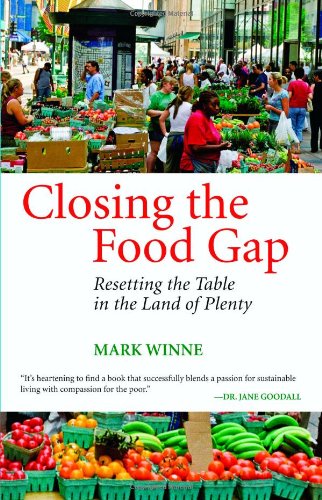
In Closing the Food Gap, food activist and journalist Mark Winne poses questions too often overlooked in our current conversations around food: What about those people who are not financially able to make conscientious choices about where and how to get food? And in a time of rising rates of both diabetes and obesity, what can we do to make healthier foods available for everyone?
To address these questions, Winne tells the story of how America's food gap has widened since the 1960s, when domestic poverty was “rediscovered,” and how communities have responded with a slew of strategies and methods to narrow the gap, including community gardens, food banks, and farmers' markets. The story, however, is not only about hunger in the land of plenty and the organized efforts to reduce it; it is also about doing that work against a backdrop of ever-growing American food affluence and gastronomical expectations. With the popularity of Whole Foods and increasingly common community-supported agriculture (CSA), wherein subscribers pay a farm so they can have fresh produce regularly, the demand for fresh food is rising in one population as fast as rates of obesity and diabetes are rising in another.
Over the last three decades, Winne has found a way to connect impoverished communities experiencing these health problems with the benefits of CSAs and farmers' markets; in Closing the Food Gap, he explains how he came to his conclusions. With tragically comic stories from his many years running a model food organization, the Hartford Food System in Connecticut, alongside fascinating profiles of activists and organizations in communities across the country, Winne addresses head-on the struggles to improve food access for all of us, regardless of income level.
Using anecdotal evidence and a smart look at both local and national policies, Winne offers a realistic vision for getting locally produced, healthy food onto everyone's table.
“Closing the Food Gap is a deeply moving account of Mark Winne's long career as an advocate for policies that will ensure adequate nutrition for the poor. Reading this book should make everyone want to advocate for food systems that will feed the hungry, support local farmers, and promote community democracy—all at the same time. I want all my students to read this beautifully written and important book.” —Marion Nestle, Paulette Goddard professor of nutrition, food studies, and public health at New York University, and author of Food Politics and What to Eat
“Mark Winne tackles the world of food deserts, hunger relief and the disparities of the 'haves' and 'have-nots' from both a personal and professional viewpoint that at once educates on and illuminates these very complicated issues. Winne makes these issues and their interrelationships not only understandable but also compelling for all those who care about social justice in our country.” —Chef Ann Cooper, author of Lunch Lessons: Changing the Way We Feed Our Children
“An engaging, candid, and sometimes funny look at how ordinary people—and extraordinary ones like the author—have struggled over three plus decades to create a fair food system, in the absence of public sector compassion. Winne has done it all—food coops, emergency feeding, farmers' markets, community gardening, Community Supported Agriculture, public policy. He tells us why and how, weaving into his own experiences stories from other cities across the country to create an essential picture of how people like him are struggling to reset the country's table for everyone.” —Joan Dye Gussow, author of This Organic Life: Confessions of a Suburban Homesteader
“Closing the Food Gap reveals the chasm between the two food systems of America—the one for the poor and the one for everyone else. Speaking from his decades of political activism, Mark Winne offers compelling solutions for making local, organic, and highly nutritious food available to everyone. It's heartening to finnd a book that successfully blends a passion for sustainable living with compassion for the poor.” —Dr. Jane Goodall, DBE, Founder – the Jane Goodall Institute and UN Messenger of Peace
“By combining stories of his deep personal experience as an activist with keen insight into strategies for addressing food injustice, Winne himself fills a gap in the growing literature on good food, why it matters, and how to ensure everyone everywhere has access to it. Plus, the book is a fun read. Winne's stories made me want to meet him down at the local farmer's market, and then join him afterward for a cold beer.” —Anna Lappé, co-founder of the Small Planet Institute and author of Grub: Ideas for an Urban Organic Kitchen
"Winne's passion for justice and commitment to sustainability make this book essential reading for those who want to help make the vision of healthy abundance for all an American dream come true." —Janet Poppendieck, authhor of Sweet Charity? Emergency Food and the End offfff Entitlement
To address these questions, Winne tells the story of how America's food gap has widened since the 1960s, when domestic poverty was “rediscovered,” and how communities have responded with a slew of strategies and methods to narrow the gap, including community gardens, food banks, and farmers' markets. The story, however, is not only about hunger in the land of plenty and the organized efforts to reduce it; it is also about doing that work against a backdrop of ever-growing American food affluence and gastronomical expectations. With the popularity of Whole Foods and increasingly common community-supported agriculture (CSA), wherein subscribers pay a farm so they can have fresh produce regularly, the demand for fresh food is rising in one population as fast as rates of obesity and diabetes are rising in another.
Over the last three decades, Winne has found a way to connect impoverished communities experiencing these health problems with the benefits of CSAs and farmers' markets; in Closing the Food Gap, he explains how he came to his conclusions. With tragically comic stories from his many years running a model food organization, the Hartford Food System in Connecticut, alongside fascinating profiles of activists and organizations in communities across the country, Winne addresses head-on the struggles to improve food access for all of us, regardless of income level.
Using anecdotal evidence and a smart look at both local and national policies, Winne offers a realistic vision for getting locally produced, healthy food onto everyone's table.
“Closing the Food Gap is a deeply moving account of Mark Winne's long career as an advocate for policies that will ensure adequate nutrition for the poor. Reading this book should make everyone want to advocate for food systems that will feed the hungry, support local farmers, and promote community democracy—all at the same time. I want all my students to read this beautifully written and important book.” —Marion Nestle, Paulette Goddard professor of nutrition, food studies, and public health at New York University, and author of Food Politics and What to Eat
“Mark Winne tackles the world of food deserts, hunger relief and the disparities of the 'haves' and 'have-nots' from both a personal and professional viewpoint that at once educates on and illuminates these very complicated issues. Winne makes these issues and their interrelationships not only understandable but also compelling for all those who care about social justice in our country.” —Chef Ann Cooper, author of Lunch Lessons: Changing the Way We Feed Our Children
“An engaging, candid, and sometimes funny look at how ordinary people—and extraordinary ones like the author—have struggled over three plus decades to create a fair food system, in the absence of public sector compassion. Winne has done it all—food coops, emergency feeding, farmers' markets, community gardening, Community Supported Agriculture, public policy. He tells us why and how, weaving into his own experiences stories from other cities across the country to create an essential picture of how people like him are struggling to reset the country's table for everyone.” —Joan Dye Gussow, author of This Organic Life: Confessions of a Suburban Homesteader
“Closing the Food Gap reveals the chasm between the two food systems of America—the one for the poor and the one for everyone else. Speaking from his decades of political activism, Mark Winne offers compelling solutions for making local, organic, and highly nutritious food available to everyone. It's heartening to finnd a book that successfully blends a passion for sustainable living with compassion for the poor.” —Dr. Jane Goodall, DBE, Founder – the Jane Goodall Institute and UN Messenger of Peace
“By combining stories of his deep personal experience as an activist with keen insight into strategies for addressing food injustice, Winne himself fills a gap in the growing literature on good food, why it matters, and how to ensure everyone everywhere has access to it. Plus, the book is a fun read. Winne's stories made me want to meet him down at the local farmer's market, and then join him afterward for a cold beer.” —Anna Lappé, co-founder of the Small Planet Institute and author of Grub: Ideas for an Urban Organic Kitchen
"Winne's passion for justice and commitment to sustainability make this book essential reading for those who want to help make the vision of healthy abundance for all an American dream come true." —Janet Poppendieck, authhor of Sweet Charity? Emergency Food and the End offfff Entitlement
Die Inhaltsangabe kann sich auf eine andere Ausgabe dieses Titels beziehen.
Über die Autorin bzw. den Autor
For 25 years Mark Winne was the Executive Director of the Hartford Food System, a private non-profit agency that works on food and hunger issues in the Hartford, Connecticut area. During his tenure with HFS, Mark organized community self-help food projects that assisted the city's lower income and elderly residents. Mark's work with the Food System included the development of a commercial hydroponic greenhouse, Connecticut's Farmers' Market Nutrition Program, several farmers' markets, a 20-acre community supported agriculture farm, food and nutrition education programs, and a neighborhood supermarket.
Winne now writes, speaks, and consults extensively on community food system topics including hunger and food insecurity, local and regional agriculture, community assessment, and food policy. He also does policy communication work for the Community Food Security Coalition. His essays and opinion pieces have appeared in The Nation, Hartford Courant, Boston Globe, In These Times, Sierra, Orion, Successful Farming and numerous organizational and professional newsletters and journals across the country. He lives in Santa Fe, New Mexico.
Winne now writes, speaks, and consults extensively on community food system topics including hunger and food insecurity, local and regional agriculture, community assessment, and food policy. He also does policy communication work for the Community Food Security Coalition. His essays and opinion pieces have appeared in The Nation, Hartford Courant, Boston Globe, In These Times, Sierra, Orion, Successful Farming and numerous organizational and professional newsletters and journals across the country. He lives in Santa Fe, New Mexico.
Auszug. © Genehmigter Nachdruck. Alle Rechte vorbehalten.
Introduction
I’ve Come to . . . Shop?
To enter the parking lot of any Hartford, Connecticut, supermarket in 1979 required a sharp, reckless turn into a poorly marked curb cut. If you came at it too fast to avoid a collision with the suicidal driver heading right at you, you would bottom out your car’s undercarriage on the lot’s steeply graded entrance. Once in the lot, Hollywood car-chase skills were essential to maneuver across a parking area that was strewn with broken glass, overturned shopping carts, and potholes deep enough to conceal a bushel basket. Since the white lines marking parking spaces were faded or nonexistent, you left your car wherever it suited you.
Once you got inside the store, the first thing you noticed was the smell. It wasn’t so much that “something has died” odor, but more the scent of something that rotted and was never fully cleaned up. When seasoned with a pinch of filth, marinated in gallons of heavily chlorinated disinfectant, and allowed to ferment over many years, the store released a heady aroma that brought tears to the eyes of men stronger than I.
Crunchy sounds emanated from the floor as your shoes crushed imperceptible bits of grit and unswept residue whose origins had long since been forgotten. The black and white floor tiles were discolored, unwaxed, and marred at irregular intervals by jagged brown stains that were forever one with the tiles.
Granted, these were pre–Whole Foods Market days. The supermarket industry did not yet have the technology that gives today’s stores the soft, warm glow of a tastefully decorated living room. Instead, the humming neon bulbs, shielded by yellowed plastic coverings, cast a sickly pallor over the shoppers, the staff, and, worst of all, the food. The iceberg lettuce, already suffering from a 3,000-mile journey by truck, looked like the victims of a mass beheading. The rest of the produce case, from mushy apples to brown bananas, displayed a similar lack of life. A stroll down the meat aisle was as appealing as a slaughterhouse tour at the end of a busy day. Small pools of blood that had leaked from hamburger and chicken packages dotted the surfaces of the white enamel meat cases, the blood at times indistinguishable from the rust that discolored the chipped veneer. The atmosphere did not encourage a leisurely appreciation of food, nor did you feel like engaging in more intimate acts of product selection such as touching, squeezing, or sniffing. The fear of prolonging the unpleasantness made “grab and go” the prevailing modus operandi.
It didn’t take too many trips to this sort of market before I was suffciently motivated to go to a suburban grocery store. I was lucky; I owned a working automobile. Up to 60 percent of the residents in Hartford’s lowincome neighborhoods did not. Nor, as I would find out later, did the city’s public transportation routes go to the suburban supermarkets.
My journey to the nearest full-size chain supermarket was six miles roundtrip. The store had easy vehicular access and a large, wellmaintained parking lot, as well as shiny, clean aisles, floors, and food cases. The floor space available for product display was at least twice that of the largest remaining Hartford store, and the products were pleasantly arrayed. The produce section, though not brimming with abundance by today’s standards, was quite ample and free of wilt, anemia, and other symptoms of imminent death. The store’s staff was reasonably friendly, albeit prone to the lassitude common among those who must do repetitive, low-paying work. At least they would help me locate hard-to-find items; those requests were usually greeted with hostile stares by workers at the city stores.
Besides offering a generally more inspiring shopping environment, the suburban store had another point in its favor: it was cheaper. While not every item in the suburban store was priced lower than in the city stores, I soon found that I was probably spending 10 to 15 percent less for my weekly grocery shopping than I had been in Hartford. This proved to be true even for chains that still operated stores in both the city and the suburbs: the suburban unit had lower prices than its city cousin. How could this be? I wondered. The chain bought from the same wholesale suppliers, the stores had roughly the same pay and staffing structures, and they were only a few miles apart.
As it turned out, my revelations as a new resident of Hartford elicited not much more than a knowing sigh from colleagues and neighbors. The fact that city stores were inferior to suburban ones was nothing new to them. They had been watching the slow but steady abandonment of the city by supermarkets for ten years. “Yes,” I was told on many occasions during my first year in the city, “the supermarkets have abandoned Hartford, and the poor, who can’t get to the suburbs, pay more.” “Supermarket abandonment” and “the poor pay more” became part of the lexicon of the organization I had come to lead, the Hartford Food System, and for many years to come, this prevailing understanding defined the food gap.
Welcome to Hartford, Connecticut
I knew little of Hartford prior to my decision to take a job as the executive director of the Hartford Food System in 1979. Trips from my home in New Jersey to attend college in Maine a few years earlier had taken me along newly opened stretches of interstate highway that bypassed the city so efficiently that any thought of a stopover was strongly discouraged. I knew I had crossed a second river that wasn’t the Hudson. The Tappan Zee Bridge’s broad reach left no doubt that you had crossed that renowned waterway. But the highway bridge that led from Hartford to East Hartford over the Connecticut River had been designed to keep the river’s existence a secret. Views of its gentle, tree-lined banks appeared to have been officially denied. After all, road engineers back then were not rewarded for their ability to incorporate natural features into highway designs but for their ability to pave the most territory for the least cost.
My first day of work in Hartford brought me into intimate contact with a city that had previously been placed off limits to the casual traveler. A car tour took me down long, wide boulevards intersected by neighborhood side streets that, on that chilly February day, were empty of all human activity except the occasional homeless man drawing life from a brown paper bag. Three-story brick buildings of late-nineteenth-century vintage gave many of the streets a graceful symmetry, although I noticed that several buildings had broken windows or plywood nailed over all the openings. Known as “perfect sixes,” these buildings were evenly divided into six apartment units and were common both just north and just south of the city’s downtown.
Crossing over I-84 from Hartford’s Northend, I entered the city’s downtown business district, still a fairly vital place in 1979. It was filled with bustling pedestrian traffic headed to and from corporate office buildings and signature sandstone department stores. The world famous insurance industry was a driving force, with buildings sporting the companies’ tastefully understated logos: the Travelers’ red umbrella, the Hartford’s twelve-point stag (or hart, as in hart ford, the place along the river where the deer crossed), and Aetna’s mountain.
Among the many things I would learn about the city’s corporate culture was that Aetna was deferentially referred to as “Mother Aetna” for its oversized nurturing...
„Über diesen Titel“ kann sich auf eine andere Ausgabe dieses Titels beziehen.
Suchergebnisse für Closing the Food Gap: Resetting the Table in the Land...

Beispielbild für diese ISBN
Closing the Food Gap: Resetting the Table in the Land of Plenty
Anbieter: World of Books (was SecondSale), Montgomery, IL, USA
Verkäuferbewertung 5 von 5 Sternen

Zustand: Very Good. Item in very good condition! Textbooks may not include supplemental items i.e. CDs, access codes etc. Artikel-Nr. 00087991737
Gebraucht kaufen
EUR 4,47
Versand gratis
Versand innerhalb von USA
Versand innerhalb von USA
Anzahl: 2 verfügbar
Beispielbild für diese ISBN
Closing the Food Gap: Resetting the Table in the Land of Plenty
Anbieter: World of Books (was SecondSale), Montgomery, IL, USA
Verkäuferbewertung 5 von 5 Sternen
Zustand: Good. Good condition ex-library book with usual library markings and stickers. Artikel-Nr. 00105211391
Gebraucht kaufen
EUR 4,47
Versand gratis
Versand innerhalb von USA
Versand innerhalb von USA
Anzahl: 1 verfügbar
Beispielbild für diese ISBN
Closing the Food Gap: Resetting the Table in the Land of Plenty
Anbieter: ThriftBooks-Atlanta, AUSTELL, GA, USA
Verkäuferbewertung 5 von 5 Sternen
Hardcover. Zustand: Very Good. No Jacket. Former library book; May have limited writing in cover pages. Pages are unmarked. ~ ThriftBooks: Read More, Spend Less. Artikel-Nr. G0807047309I4N10
Gebraucht kaufen
EUR 6,77
Versand gratis
Versand innerhalb von USA
Versand innerhalb von USA
Anzahl: 1 verfügbar
Beispielbild für diese ISBN
Closing the Food Gap: Resetting the Table in the Land of Plenty
Anbieter: ThriftBooks-Dallas, Dallas, TX, USA
Verkäuferbewertung 5 von 5 Sternen
Hardcover. Zustand: As New. No Jacket. Pages are clean and are not marred by notes or folds of any kind. ~ ThriftBooks: Read More, Spend Less. Artikel-Nr. G0807047309I2N00
Gebraucht kaufen
EUR 6,77
Versand gratis
Versand innerhalb von USA
Versand innerhalb von USA
Anzahl: 1 verfügbar
Beispielbild für diese ISBN
Closing the Food Gap: Resetting the Table in the Land of Plenty
Anbieter: ThriftBooks-Dallas, Dallas, TX, USA
Verkäuferbewertung 5 von 5 Sternen
Hardcover. Zustand: Very Good. No Jacket. Missing dust jacket; May have limited writing in cover pages. Pages are unmarked. ~ ThriftBooks: Read More, Spend Less. Artikel-Nr. G0807047309I4N01
Gebraucht kaufen
EUR 6,77
Versand gratis
Versand innerhalb von USA
Versand innerhalb von USA
Anzahl: 1 verfügbar
Beispielbild für diese ISBN
Closing the Food Gap: Resetting the Table in the Land of Plenty
Anbieter: ThriftBooks-Atlanta, AUSTELL, GA, USA
Verkäuferbewertung 5 von 5 Sternen
Hardcover. Zustand: As New. No Jacket. Pages are clean and are not marred by notes or folds of any kind. ~ ThriftBooks: Read More, Spend Less. Artikel-Nr. G0807047309I2N00
Gebraucht kaufen
EUR 6,77
Versand gratis
Versand innerhalb von USA
Versand innerhalb von USA
Anzahl: 1 verfügbar
Beispielbild für diese ISBN
Closing the Food Gap : Resetting the Table in the Land of Plenty
Verlag:
Beacon Press, 2008
ISBN 10: 0807047309
ISBN 13: 9780807047309
Gebraucht
Hardcover
Erstausgabe
Anbieter: Better World Books, Mishawaka, IN, USA
Verkäuferbewertung 5 von 5 Sternen
Zustand: Good. 1st Edition. Pages intact with minimal writing/highlighting. The binding may be loose and creased. Dust jackets/supplements are not included. Stock photo provided. Product includes identifying sticker. Better World Books: Buy Books. Do Good. Artikel-Nr. 8587132-6
Gebraucht kaufen
EUR 8,15
Versand gratis
Versand innerhalb von USA
Versand innerhalb von USA
Anzahl: 1 verfügbar
Beispielbild für diese ISBN
Closing the Food Gap : Resetting the Table in the Land of Plenty
Verlag:
Beacon Press, 2008
ISBN 10: 0807047309
ISBN 13: 9780807047309
Gebraucht
Hardcover
Erstausgabe
Anbieter: Better World Books: West, Reno, NV, USA
Verkäuferbewertung 5 von 5 Sternen
Zustand: Very Good. 1st Edition. Pages intact with possible writing/highlighting. Binding strong with minor wear. Dust jackets/supplements may not be included. Stock photo provided. Product includes identifying sticker. Better World Books: Buy Books. Do Good. Artikel-Nr. 949585-6
Gebraucht kaufen
EUR 8,15
Versand gratis
Versand innerhalb von USA
Versand innerhalb von USA
Anzahl: 2 verfügbar
Beispielbild für diese ISBN
Closing the Food Gap: Resetting the Table in the Land of Plenty
Anbieter: Bahamut Media, Reading, Vereinigtes Königreich
Verkäuferbewertung 5 von 5 Sternen
hardcover. Zustand: Very Good. Shipped within 24 hours from our UK warehouse. Clean, undamaged book with no damage to pages and minimal wear to the cover. Spine still tight, in very good condition. Remember if you are not happy, you are covered by our 100% money back guarantee. Artikel-Nr. 6545-9780807047309
Gebraucht kaufen
EUR 13,92
EUR 8,14 Versand
Versand von Vereinigtes Königreich nach USA
Versand von Vereinigtes Königreich nach USA
Anzahl: 1 verfügbar
Beispielbild für diese ISBN
Closing the Food Gap: Resetting the Table in the Land of Plenty
Anbieter: AwesomeBooks, Wallingford, Vereinigtes Königreich
Verkäuferbewertung 5 von 5 Sternen
hardcover. Zustand: Very Good. Closing the Food Gap: Resetting the Table in the Land of Plenty This book is in very good condition and will be shipped within 24 hours of ordering. The cover may have some limited signs of wear but the pages are clean, intact and the spine remains undamaged. This book has clearly been well maintained and looked after thus far. Money back guarantee if you are not satisfied. See all our books here, order more than 1 book and get discounted shipping. Artikel-Nr. 7719-9780807047309
Gebraucht kaufen
EUR 17,47
EUR 4,81 Versand
Versand von Vereinigtes Königreich nach USA
Versand von Vereinigtes Königreich nach USA
Anzahl: 2 verfügbar