
Verwandte Artikel zu The Place of Tolerance in Islam
Inhaltsangabe
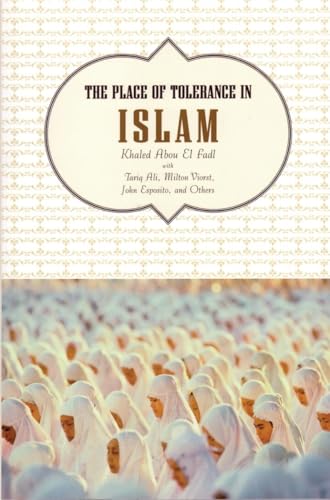
Khaled Abou El Fadl, a prominent critic of Islamic puritanism, leads off this lively debate by arguing that Islam is a deeply tolerant religion. Injunctions to violence against nonbelievers stem from misreadings of the Qur'an, he claims, and even jihad, or so-called holy war, has no basis in Qur'anic text or Muslim theology but instead grew out of social and political conflict.
Many of Abou El Fadl's respondents think differently. Some contend that his brand of Islam will only appeal to Westerners and students in "liberal divinity schools" and that serious religious dialogue in the Muslim world requires dramatic political reforms. Other respondents argue that theological debates are irrelevant and that our focus should be on Western sabotage of such reforms. Still others argue that calls for Islamic "tolerance" betray the Qur'anic injunction for Muslims to struggle against their oppressors.
The debate underscores an enduring challenge posed by religious morality in a pluralistic age: how can we preserve deep religious conviction while participating in what Abou El Fadl calls "a collective enterprise of goodness" that cuts across confessional differences?
With contributions from Tariq Ali, Milton Viorst, and John Esposito, and others.
Die Inhaltsangabe kann sich auf eine andere Ausgabe dieses Titels beziehen.
Über die Autorin bzw. den Autor
Khaled Abou El Fadl is the Omar and Azmeralda Alfi Distinguished Fellow in Islamic Law at UCLA and author of Rebellion and Violence in Islamic Law.
Auszug. © Genehmigter Nachdruck. Alle Rechte vorbehalten.
Editor's Preface
Joshua Cohen and Ian Lague
Since September 11, Western discussions of Islam have typically been
conducted through a contest of caricatures. Some analysts present Islamic
extremism as a product of a "clash of civilizations" that pits Eastern
despotism against Western individualism. Others see such extremism as a
grim "blowback" of America's cold-war foreign policy. Engagement with
Muslim faith commonly takes the form of simplistic pronouncements
about "essence" of Islam: Osama bin Laden either represents the true
message of the Prophet or corrupts a "religion of peace."
As Khaled Abou El Fadl points out, these discussions are driven more by
Western concerns—"are Muslims dangerous or not?"—than by a serious
effort to understand Islam and the place of toleration and moral decency in its
conception of a proper human life. In his lead essay for this volume, Abou El
Fadl opens such a conversation. A professor at UCLA, theorist of Islamic
law, and prominent critic of Islamic puritanism, Abou El Fadl works to reclaim
the "moral trust" of Islam by recovering the Qur'an's universal principles from
the historical and social context in which the text was received. He interprets
Qur'anic verses about the treatment of women and non-Muslims in light of
scriptural passages that call for mercy, kindness, and justice, and that
emphasize the essentially plural nature of the human community.
Abou El Fadl's engagement with these theological issues is enriched by
a broad historical perspective. He points out that intolerant sects have
traditionally been marginalized by Islamic civilization. But Islam, he argues,
currently faces a crisis of religious authority owing to the political exploitation
of Islamic symbols and the stagnation of civic and economic life in Muslim
societies. That crisis has facilitated the rise of puritanical sects who interpret
the Qur'an literally and ahistorically. Abou El Fadl acknowledges that the
Qur'an itself, like other ancient religious texts, cannot forestall such
interpretations: interpretation is an act for which readers must take moral
responsibility. In the end, religious texts provide rich "possibilities for
meaning, not inevitabilities," so "the text will morally enrich the reader, but
only if the reader will morally enrich the text."
While a majority of respondents accept Abou El Fadl's critique of Islamic
puritanism, they take issue with this general conception of the debate and
with his specific arguments. Some respondents contend that Abou El Fadl's
brand of Islam will only appeal to Westerners and students in "liberal divinity
schools" and that religious dialogue in the Muslim world will be useless
unless it is accompanied by dramatic social and political reform. Other
respondents argue that theological debates are irrelevant and that the focus
should be on the Western sabotage of such reforms. A different group of
respondents criticizes these same policies as part of an exploitative program
of Western secularization, and argues that calls for Islamic "tolerance" betray
the Qur'anic injunction for Muslims to struggle against their oppressors.
These disagreements demonstrate that a discussion of tolerance in Islam
cannot take place in isolation from debates about the distribution of political
power and economic resources. But they also underscore the enduring
challenge posed by religious morality in a pluralistic age: how can we retain
the richness and intensity of conviction provided by a religious outlook while
participating in what Abou El Fadl calls "a collective enterprise of goodness"
that cuts across confessional differences?
1
The Place of Tolerance in Islam
Khaled Abou El Fadl
The terrorist attacks on New York City and the Pentagon have focused public
attention on the state of Muslim theology. For most Americans, the utter
indifference to the value of human life and the unmitigated hostility to the
United States shown by some Muslims came as a great shock. Others were
confirmed in their belief that we face a great struggle between civilizations.
Islamic values, they say, are fundamentally at odds with Western liberal
values. The terrorist attacks are symptomatic of a clash between Judeo-
Christian civilization, with its values of individual freedom, pluralism, and
secularism, and an amoral, un-Westernized, so-called "authentic Islam."
Indeed, Islamic civilization is associated with the ideas of collective rights,
individual duties, legalism, despotism, and intolerance that we associated
with our former civilizational rival, the Soviet bloc. We seem to project onto
the other everything we like to think that we are not.
This intellectual trap is easy to fall into when we deal with the theology of
Osama bin Laden, the Taliban, the Wahhabis of Saudi Arabia, and the Jihad
organization. The theologically based attitudes of these Muslim puritans are
fundamentally at odds not only with a Western way of life but also with the
very idea of an international society or the notion of universal human values.
They display an intolerant exclusiveness and a belligerent supremacy vis-à-
vis the other. According to their theologies, Islam is the only way of life, and
must be pursued regardless of its impact on the rights and well-being of
others. The straight path (al-sirat al-mustaqim) is fixed, they say, by a
system of divine laws (shari'a) that trump any moral considerations or ethical
values that are not fully codified in the law. God is manifested through a set
of determinate legal commands that specify the right way to act in virtually all
circumstances. The sole purpose of human life on earth is to realize the
divine manifestation by dutifully and faithfully implementing God's law.
Morality itself begins and ends in the mechanics and technicalities of Islamic
law (though different schools of Islamic law understand the content of those
laws differently).
A life devoted to compliance with this legal code is considered inherently
superior to all others, and the followers of any other way are considered
either infidels (kuffar), hypocrites (munafiqun), or iniquitous (fasiqun).
Anchored in the security and assuredness of a determinable law, it becomes
fairly easy to differentiate between the rightly-guided and the misguided. The
rightly-guided obey the law; the misguided either deny, attempt to dilute, or
argue about the law. Naturally, the rightly-guided are superior because they
have God on their side. The Muslim puritans imagine that God's perfection
and immutability are fully attainable on earth—as if God's perfection had
been deposited in the divine law, and, by giving effect to this law, we could
create a social order that mirrors divine truth. By attaching themselves to the
Supreme Being, puritan groups are able to claim a self-righteous
perfectionism that easily slips into a pretense of supremacy.
Extremism in Islamic History
Perhaps all firmly held systems of belief, especially those founded on
religious conviction, are in some way supremacist: believers are understood
to have some special virtue that distinguishes them from adherents of other
faiths. But the supremacist creed of the puritan groups is distinctive and
uniquely dangerous. The supremacist thinking of Muslim puritans has a
powerful nationalist component, which is strongly oriented toward cultural and
political dominance. These groups are not satisfied with living according to
their own dictates, but are actively dissatisfied with all alternative ways of life....
„Über diesen Titel“ kann sich auf eine andere Ausgabe dieses Titels beziehen.
Suchergebnisse für The Place of Tolerance in Islam

Beispielbild für diese ISBN
The Place of Tolerance in Islam
Anbieter: World of Books (was SecondSale), Montgomery, IL, USA
Verkäuferbewertung 5 von 5 Sternen

Paperback. Zustand: Very Good. Khaled Abou El Fadl, a prominent critic of Islamic puritanism, leads off this lively debate by arguing that Islam is a deeply tolerant religion. Injunctions to violence against nonbelievers stem from misreadings of the Qur'an, he claims, and even jihad, or so-called holy war, has no basis in Qur'anic text or Muslim theology but instead grew out of social and political conflict. Many of Abou El Fadl's respondents think differently. Some contend that his brand of Islam will only appeal to Westerners and students in "liberal divinity schools" and that serious religious dialogue in the Muslim world requires dramatic political reforms. Other respondents argue that theological debates are irrelevant and that our focus should be on Western sabotage of such reforms. Still others argue that calls for Islamic "tolerance" betray the Qur'anic injunction for Muslims to struggle against their oppressors. The debate underscores an enduring challenge posed by religious morality in a pluralistic age: how can we preserve deep religious conviction while participating in what Abou El Fadl calls "a collective enterprise of goodness" that cuts across confessional differences? With contributions from Tariq Ali, Milton Viorst, and John Esposito, and others. Artikel-Nr. 00101475611
Gebraucht kaufen
EUR 4,38
Versand gratis
Versand innerhalb von USA
Versand innerhalb von USA
Anzahl: 2 verfügbar
Beispielbild für diese ISBN
The Place of Tolerance in Islam
Anbieter: World of Books (was SecondSale), Montgomery, IL, USA
Verkäuferbewertung 5 von 5 Sternen
Paperback. Zustand: Good. Khaled Abou El Fadl, a prominent critic of Islamic puritanism, leads off this lively debate by arguing that Islam is a deeply tolerant religion. Injunctions to violence against nonbelievers stem from misreadings of the Qur'an, he claims, and even jihad, or so-called holy war, has no basis in Qur'anic text or Muslim theology but instead grew out of social and political conflict. Many of Abou El Fadl's respondents think differently. Some contend that his brand of Islam will only appeal to Westerners and students in "liberal divinity schools" and that serious religious dialogue in the Muslim world requires dramatic political reforms. Other respondents argue that theological debates are irrelevant and that our focus should be on Western sabotage of such reforms. Still others argue that calls for Islamic "tolerance" betray the Qur'anic injunction for Muslims to struggle against their oppressors. The debate underscores an enduring challenge posed by religious morality in a pluralistic age: how can we preserve deep religious conviction while participating in what Abou El Fadl calls "a collective enterprise of goodness" that cuts across confessional differences? With contributions from Tariq Ali, Milton Viorst, and John Esposito, and others. Artikel-Nr. 00106936701
Gebraucht kaufen
EUR 4,38
Versand gratis
Versand innerhalb von USA
Versand innerhalb von USA
Anzahl: 1 verfügbar
Beispielbild für diese ISBN
The Place of Tolerance in Islam
Verlag:
Beacon Press (edition First Edition), 2002
ISBN 10: 0807002291
ISBN 13: 9780807002292
Gebraucht
Paperback
Erstausgabe
Anbieter: BooksRun, Philadelphia, PA, USA
Verkäuferbewertung 5 von 5 Sternen
Paperback. Zustand: Very Good. First Edition. It's a well-cared-for item that has seen limited use. The item may show minor signs of wear. All the text is legible, with all pages included. It may have slight markings and/or highlighting. Artikel-Nr. 0807002291-8-1
Gebraucht kaufen
EUR 4,40
Versand gratis
Versand innerhalb von USA
Versand innerhalb von USA
Anzahl: 1 verfügbar
Beispielbild für diese ISBN
The Place of Tolerance in Islam
Anbieter: ThriftBooks-Atlanta, AUSTELL, GA, USA
Verkäuferbewertung 5 von 5 Sternen
Paperback. Zustand: Good. No Jacket. Pages can have notes/highlighting. Spine may show signs of wear. ~ ThriftBooks: Read More, Spend Less. Artikel-Nr. G0807002291I3N00
Gebraucht kaufen
EUR 5,95
Versand gratis
Versand innerhalb von USA
Versand innerhalb von USA
Anzahl: 1 verfügbar
Beispielbild für diese ISBN
The Place of Tolerance in Islam
Anbieter: ThriftBooks-Atlanta, AUSTELL, GA, USA
Verkäuferbewertung 5 von 5 Sternen
Paperback. Zustand: Very Good. No Jacket. May have limited writing in cover pages. Pages are unmarked. ~ ThriftBooks: Read More, Spend Less. Artikel-Nr. G0807002291I4N00
Gebraucht kaufen
EUR 5,95
Versand gratis
Versand innerhalb von USA
Versand innerhalb von USA
Anzahl: 1 verfügbar
Beispielbild für diese ISBN
The Place of Tolerance in Islam
Anbieter: ThriftBooks-Atlanta, AUSTELL, GA, USA
Verkäuferbewertung 5 von 5 Sternen
Paperback. Zustand: Very Good. No Jacket. Former library book; May have limited writing in cover pages. Pages are unmarked. ~ ThriftBooks: Read More, Spend Less. Artikel-Nr. G0807002291I4N10
Gebraucht kaufen
EUR 5,95
Versand gratis
Versand innerhalb von USA
Versand innerhalb von USA
Anzahl: 1 verfügbar
Beispielbild für diese ISBN
The Place of Tolerance in Islam
Anbieter: ThriftBooks-Dallas, Dallas, TX, USA
Verkäuferbewertung 5 von 5 Sternen
Paperback. Zustand: Very Good. No Jacket. May have limited writing in cover pages. Pages are unmarked. ~ ThriftBooks: Read More, Spend Less. Artikel-Nr. G0807002291I4N00
Gebraucht kaufen
EUR 5,95
Versand gratis
Versand innerhalb von USA
Versand innerhalb von USA
Anzahl: 1 verfügbar
Beispielbild für diese ISBN
The Place of Tolerance in Islam
Anbieter: Better World Books, Mishawaka, IN, USA
Verkäuferbewertung 5 von 5 Sternen
Zustand: Good. Pages intact with minimal writing/highlighting. The binding may be loose and creased. Dust jackets/supplements are not included. Stock photo provided. Product includes identifying sticker. Better World Books: Buy Books. Do Good. Artikel-Nr. 3510185-6
Gebraucht kaufen
EUR 6,18
Versand gratis
Versand innerhalb von USA
Versand innerhalb von USA
Anzahl: 1 verfügbar
Beispielbild für diese ISBN
The Place of Tolerance in Islam
Anbieter: Better World Books, Mishawaka, IN, USA
Verkäuferbewertung 5 von 5 Sternen
Zustand: Good. Former library copy. Pages intact with minimal writing/highlighting. The binding may be loose and creased. Dust jackets/supplements are not included. Includes library markings. Stock photo provided. Product includes identifying sticker. Better World Books: Buy Books. Do Good. Artikel-Nr. 3510186-6
Gebraucht kaufen
EUR 6,18
Versand gratis
Versand innerhalb von USA
Versand innerhalb von USA
Anzahl: 2 verfügbar
Beispielbild für diese ISBN
The Place of Tolerance in Islam
Anbieter: Wonder Book, Frederick, MD, USA
Verkäuferbewertung 5 von 5 Sternen
Zustand: Good. Good condition. A copy that has been read but remains intact. May contain markings such as bookplates, stamps, limited notes and highlighting, or a few light stains. Artikel-Nr. A10A-02839
Gebraucht kaufen
EUR 6,42
Versand gratis
Versand innerhalb von USA
Versand innerhalb von USA
Anzahl: 2 verfügbar