
Verwandte Artikel zu The Northern Cheyenne Exodus in History and Memory
Inhaltsangabe
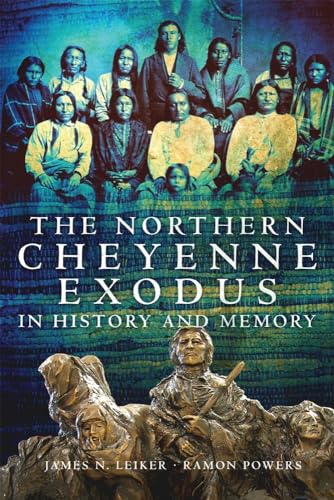
The exodus of the Northern Cheyennes in 1878 and 1879, an attempt to flee from Indian Territory to their Montana homeland, is an important event in American Indian history. It is equally important in the history of towns like Oberlin, Kansas, where Cheyenne warriors killed more than forty settlers. The Cheyennes, in turn, suffered losses through violent encounters with the U.S. Army. More than a century later, the story remains familiar because it has been told by historians and novelists, and on film. In The Northern Cheyenne Exodus in History and Memory, James N. Leiker and Ramon Powers explore how the event has been remembered, told, and retold. They examine the recollections of Indians and settlers and their descendants, and they consider local history, mass-media treatments, and literature to draw thought-provoking conclusions about how this story has changed over time.
The Cheyennes&; journey has always been recounted in melodramatic stereotypes, and for the last fifty years most versions have featured &;noble savages&; trying to reclaim their birthright. Here, Leiker and Powers deconstruct those stereotypes and transcend them, pointing out that history is never so simple. &;The Cheyennes&; flight,&; they write, &;had left white and Indian bones alike scattered along its route from Oklahoma to Montana.&; In this view, the descendants of the Cheyennes and the settlers they encountered are all westerners who need history as a &;way of explaining the bones and arrowheads&; that littered the plains.
Leiker and Powers depict a rural West whose diverse peoples&;Euro-American and Native American alike&;seek to preserve their heritage through memory and history. Anyone who lives in the contemporary Great Plains or who wants to understand the West as a whole will find this book compelling.
Die Inhaltsangabe kann sich auf eine andere Ausgabe dieses Titels beziehen.
Über die Autorinnen und Autoren
James N. Leiker is author of Racial Borders: Black Soldiers along the Rio Grande and Associate Professor of History at Johnson County Community College in Overland Park, Kansas.
Ramon Powers, formerly Executive Director of the Kansas State Historical Society, is author of articles on Plains Indians history.
„Über diesen Titel“ kann sich auf eine andere Ausgabe dieses Titels beziehen.
Suchergebnisse für The Northern Cheyenne Exodus in History and Memory

Beispielbild für diese ISBN
The Northern Cheyenne Exodus in History and Memory
Anbieter: Kennys Bookstore, Olney, MD, USA
Verkäuferbewertung 5 von 5 Sternen

Zustand: New. 2011. Illustrated. paperback. . . . . . Books ship from the US and Ireland. Artikel-Nr. V9780806143705
Neu kaufen
EUR 31,54
EUR 9,23 Versand
Versand innerhalb von USA
Versand innerhalb von USA
Anzahl: 1 verfügbar
Beispielbild für diese ISBN
The Northern Cheyenne Exodus in History and Memory
Anbieter: Ria Christie Collections, Uxbridge, Vereinigtes Königreich
Verkäuferbewertung 5 von 5 Sternen
Zustand: New. In English. Artikel-Nr. ria9780806143705_new
Neu kaufen
EUR 31,96
EUR 13,11 Versand
Versand von Vereinigtes Königreich nach USA
Versand von Vereinigtes Königreich nach USA
Anzahl: Mehr als 20 verfügbar
Beispielbild für diese ISBN
The Northern Cheyenne Exodus in History and Memory
Anbieter: Revaluation Books, Exeter, Vereinigtes Königreich
Verkäuferbewertung 5 von 5 Sternen
Paperback. Zustand: Brand New. 276 pages. 9.10x0.70x7.30 inches. In Stock. Artikel-Nr. x-0806143703
Neu kaufen
EUR 37,93
EUR 11,61 Versand
Versand von Vereinigtes Königreich nach USA
Versand von Vereinigtes Königreich nach USA
Anzahl: 2 verfügbar
Foto des Verkäufers
The Northern Cheyenne Exodus in History and Memory
Verlag:
University Of Oklahoma Press Okt 2011, 2011
ISBN 10: 0806143703
ISBN 13: 9780806143705
Neu
Taschenbuch
Anbieter: AHA-BUCH GmbH, Einbeck, Deutschland
Verkäuferbewertung 5 von 5 Sternen
Taschenbuch. Zustand: Neu. Neuware - The exodus of the Northern Cheyennes in 1878 and 1879, an attempt to flee from Indian Territory to their Montana homeland, is an important event in American Indian history. It is equally important in the history of towns like Oberlin, Kansas, where Cheyenne warriors killed more than forty settlers. The Cheyennes, in turn, suffered losses through violent encounters with the U.S. Army. More than a century later, the story remains familiar because it has been told by historians and novelists, and on film. In The Northern Cheyenne Exodus in History and Memory, James N. Leiker and Ramon Powers explore how the event has been remembered, told, and retold. They examine the recollections of Indians and settlers and their descendants, and they consider local history, mass-media treatments, and literature to draw thought-provoking conclusions about how this story has changed over time.The Cheyennes' journey has always been recounted in melodramatic stereotypes, and for the last fifty years most versions have featured ''noble savages'' trying to reclaim their birthright. Here, Leiker and Powers deconstruct those stereotypes and transcend them, pointing out that history is never so simple. ''The Cheyennes' flight,'' they write, ''had left white and Indian bones alike scattered along its route from Oklahoma to Montana.'' In this view, the descendants of the Cheyennes and the settlers they encountered are all westerners who need history as a ''way of explaining the bones and arrowheads'' that littered the plains.Leiker and Powers depict a rural West whose diverse peoples - Euro-American and Native American alike - seek to preserve their heritage through memory and history. Anyone who lives in the contemporary Great Plains or who wants to understand the West as a whole will find this book compelling. Artikel-Nr. 9780806143705
Neu kaufen
EUR 39,26
EUR 35,00 Versand
Versand von Deutschland nach USA
Versand von Deutschland nach USA
Anzahl: 1 verfügbar
Foto des Verkäufers
The Northern Cheyenne Exodus in History and Memory
Anbieter: moluna, Greven, Deutschland
Verkäuferbewertung 5 von 5 Sternen
Zustand: New. KlappentextrnrnWinner of the Great Plains Distinguished Book Prize, Center for Great Plains StudiesA Kansas Notable BookThe exodus of the Northern Cheyennes in 1878 and 1879, an attempt to flee from Indian Territory to their Montana . Artikel-Nr. 447075660
Neu kaufen
EUR 31,22
EUR 48,99 Versand
Versand von Deutschland nach USA
Versand von Deutschland nach USA
Anzahl: Mehr als 20 verfügbar