
Inhaltsangabe
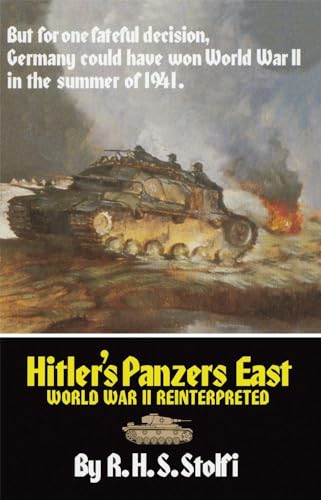
How close did Germany come to winning World War II? Did Hitler throw away victory in Europe after his troops had crushed the Soviet field armies defending Moscow by August 1941? R.H.S. Stolfi offers a dramatic new picture of Hitler’s conduct in World War II and a fundamental reinterpretation of the course of the war.
Adolf Hitler generally is thought to have been driven by a blitzkrieg mentality in the years 1939 to 1941. In fact, Stolfi argues, he had no such outlook on the war. From the day Britain and France declared war, Hitler reacted with a profoundly conservative cast of mind and pursued a circumscribed strategy, pushing out siege lines set around Germany by the Allies. Interpreting Hitler as a siege Führer explain his apparent aberrations in connection with Dunkirk, his fixation on the seizure of Leningrad, and his fateful decision in the summer of 1941 to deflect Army Group Center into the Ukraine when both Moscow and victory in World War II were within its reach.
Unaware of Hitler’s siege orientation, the German Army planned blitz campaigns. Through daring operational concepts and bold tactics, the army won victories over several Allied powers in World War II, and these led to the great campaign against the Soviet Union in summer of 1941. Stolfi postulates that in August 1941, German Army Group Center had the strength both to destroy the Red field armies defending the Soviet capital and to advance to Moscow and beyond. The defeat of the Soviet Union would have assured victory in World War II. Nevertheless, Hitler ordered the army group south to secure the resources of the Ukraine against a potential siege. And a virtually assured German victory slipped away.
This radical reinterpretation of Hitler and the capabilities of the German Army leads to a reevaluation of World War II, in which the lesson to be learned is not how the Allies won the war, but how close the Germans came to a quick and decisive victory?long before the United States was drawn into the battle.
Die Inhaltsangabe kann sich auf eine andere Ausgabe dieses Titels beziehen.
Über die Autorin bzw. den Autor
By R.H.S. Stolfi was Professor of Modern European History at the Naval Postgraduate School in Monterey, California. With the distinguished German military writer, Frederick William von Mellenthin, he co-authored NATO Under Attack.
Von der hinteren Coverseite
How close did Germany come to winning World War II? Did Hitler throw away victory in Europe after his troops had crushed the Soviet field armies defending Moscow by August 1941? R. H. S. Stolfi offers a dramatic new picture of Hitler's conduct in World War II and a fundamental reinterpretation of the course of the war. Adolf Hitler generally is thought to have been driven by a blitzkrieg mentality in the years 1939 to 1941. In fact, Stolfi argues, he had no such outlook on the war. From the day Britain and France declared war, Hitler reacted with a profoundly conservative cast of mind and pursued a circumscribed strategy, pushing out siege lines set around Germany by the Allies. Interpreting Hitler as a siege Fuhrer explains his apparent aberrations in connection with Dunkirk, his fixation on the seizure of Leningrad, and his fateful decision in the summer of 1941 to deflect Army Group Center into the Ukraine when both Moscow and victory in World War II were within its reach. Unaware of Hitler's siege orientation, the German Army planned blitz campaigns. Through daring operational concepts and bold tactics, the army won victories over several Allied powers in World War II, and these led to the great campaign against the Soviet Union in the summer of 1941. Stolfi postulates that in August 1941, German Army Group Center had the strength both to destroy the Red field armies defending the Soviet capital and to advance to Moscow and beyond. The defeat of the Soviet Union would have assured victory in World War II. Nevertheless, Hitler ordered the army group south to secure the resources of the Ukraine against a potential siege. And a virtually assured German victory slipped away. Thisradical reinterpretation of Hitler and the capabilities of the German Army leads to a reevaluation of World War II, in which the lesson to be learned is not how the Allies won the war, but how close the Germans came to a quick and decisive victory--long before the United States was drawn into the battle.
„Über diesen Titel“ kann sich auf eine andere Ausgabe dieses Titels beziehen.
Weitere beliebte Ausgaben desselben Titels

Suchergebnisse für Hitler's Panzers East: World War II Reinterpreted

Foto des Verkäufers
Hitler's Panzers East: World War II Reinterpreted
Verlag:
University of Oklahoma Press, 1993
ISBN 10: 0806125810
ISBN 13: 9780806125817
Gebraucht
Softcover
Anbieter: WeBuyBooks, Rossendale, LANCS, Vereinigtes Königreich
Verkäuferbewertung 5 von 5 Sternen

Zustand: Good. Most items will be dispatched the same or the next working day. A copy that has been read but remains in clean condition. All of the pages are intact and the cover is intact and the spine may show signs of wear. The book may have minor markings which are not specifically mentioned. Artikel-Nr. rev1865446047
Gebraucht kaufen
EUR 9,83
EUR 7,14 Versand
Versand von Vereinigtes Königreich nach USA
Versand von Vereinigtes Königreich nach USA
Anzahl: 1 verfügbar
Foto des Verkäufers
Hitler's Panzers East: World War II Reinterpreted
Verlag:
University of Oklahoma Press, 1993
ISBN 10: 0806125810
ISBN 13: 9780806125817
Gebraucht
Softcover
Anbieter: WeBuyBooks, Rossendale, LANCS, Vereinigtes Königreich
Verkäuferbewertung 5 von 5 Sternen
Zustand: Very Good. Most items will be dispatched the same or the next working day. A copy that has been read, but is in excellent condition. Pages are intact and not marred by notes or highlighting. The spine remains undamaged. Artikel-Nr. rev3864601039
Gebraucht kaufen
EUR 9,83
EUR 7,14 Versand
Versand von Vereinigtes Königreich nach USA
Versand von Vereinigtes Königreich nach USA
Anzahl: 1 verfügbar
Beispielbild für diese ISBN
Hitler s Panzers East: World War II Reinterpreted
Verlag:
University of Oklahoma Press, 1993
ISBN 10: 0806125810
ISBN 13: 9780806125817
Gebraucht
Softcover
Anbieter: medimops, Berlin, Deutschland
Verkäuferbewertung 5 von 5 Sternen
Zustand: very good. Gut/Very good: Buch bzw. Schutzumschlag mit wenigen Gebrauchsspuren an Einband, Schutzumschlag oder Seiten. / Describes a book or dust jacket that does show some signs of wear on either the binding, dust jacket or pages. Artikel-Nr. M00806125810-V
Gebraucht kaufen
EUR 12,82
EUR 10,00 Versand
Versand von Deutschland nach USA
Versand von Deutschland nach USA
Anzahl: 1 verfügbar
Beispielbild für diese ISBN
Hitler's Panzers East: World War II Reinterpreted
Verlag:
University of Oklahoma Press, Place_Pub: Norman, OK, 1993
ISBN 10: 0806125810
ISBN 13: 9780806125817
Gebraucht
Softcover
Erstausgabe
Anbieter: Ground Zero Books, Ltd., Silver Spring, MD, USA
Verkäuferbewertung 5 von 5 Sternen
Zustand: very good. 1st Paperbk Printing. 272, wraps, illus., maps, tables, chart, notes, bibliography, index. Stolfi argues that the turning point of World War II in Europe was not the battle of Stalingrad, but rather the turning point was the first phase of Operation Barbarossa, Hitler's invasion of Russia. Artikel-Nr. 52170
Gebraucht kaufen
EUR 20,10
EUR 4,33 Versand
Versand innerhalb von USA
Versand innerhalb von USA
Anzahl: 1 verfügbar
Beispielbild für diese ISBN
Hitler's Panzers East
Anbieter: PBShop.store UK, Fairford, GLOS, Vereinigtes Königreich
Verkäuferbewertung 5 von 5 Sternen
PAP. Zustand: Used - Very Good. Used - Like New Book. Shipped from UK. Established seller since 2000. Artikel-Nr. P1-9780806125817
Gebraucht kaufen
EUR 20,68
EUR 4,82 Versand
Versand von Vereinigtes Königreich nach USA
Versand von Vereinigtes Königreich nach USA
Anzahl: 1 verfügbar
Beispielbild für diese ISBN
Hitler`s Panzers East - World War II Reinterpreted
Anbieter: PBShop.store UK, Fairford, GLOS, Vereinigtes Königreich
Verkäuferbewertung 5 von 5 Sternen
PAP. Zustand: New. New Book. Shipped from UK. Established seller since 2000. Artikel-Nr. FW-9780806125817
Neu kaufen
EUR 22,65
EUR 4,82 Versand
Versand von Vereinigtes Königreich nach USA
Versand von Vereinigtes Königreich nach USA
Anzahl: 2 verfügbar
Beispielbild für diese ISBN
Hitler's Panzers East: World War II Reinterpreted
Anbieter: Ria Christie Collections, Uxbridge, Vereinigtes Königreich
Verkäuferbewertung 5 von 5 Sternen
Zustand: New. In. Artikel-Nr. ria9780806125817_new
Neu kaufen
EUR 23,79
EUR 13,89 Versand
Versand von Vereinigtes Königreich nach USA
Versand von Vereinigtes Königreich nach USA
Anzahl: Mehr als 20 verfügbar
Beispielbild für diese ISBN
Hitler's Panzers East: World War II Reinterpreted
Anbieter: Kennys Bookstore, Olney, MD, USA
Verkäuferbewertung 5 von 5 Sternen
Zustand: New. 1993. Revised ed. paperback. . . . . . Books ship from the US and Ireland. Artikel-Nr. V9780806125817
Neu kaufen
EUR 30,89
EUR 9,10 Versand
Versand innerhalb von USA
Versand innerhalb von USA
Anzahl: 1 verfügbar
Beispielbild für diese ISBN
Hitler`s Panzers East World War II Reinterpreted
Anbieter: Revaluation Books, Exeter, Vereinigtes Königreich
Verkäuferbewertung 5 von 5 Sternen
Paperback. Zustand: Brand New. reprint edition. 272 pages. 5.25x5.00x0.75 inches. In Stock. Artikel-Nr. x-0806125810
Neu kaufen
EUR 34,35
EUR 11,59 Versand
Versand von Vereinigtes Königreich nach USA
Versand von Vereinigtes Königreich nach USA
Anzahl: 2 verfügbar
Foto des Verkäufers
Hitler\ s Panzers East: World War II Reinterpreted
Anbieter: moluna, Greven, Deutschland
Verkäuferbewertung 5 von 5 Sternen
Zustand: New. Klappentextrnrn According to received wisdom, the turning point of WW II in Europe was the battle of Stalingrad, but Stolfi argues persuasively that the first phase of Operation Barbarossa, Hitler s invasion of Russia, was the decisive event. Ba. Artikel-Nr. 464937752
Neu kaufen
EUR 16,30
EUR 48,99 Versand
Versand von Deutschland nach USA
Versand von Deutschland nach USA
Anzahl: 1 verfügbar