
Verwandte Artikel zu Black on White: Black Writers on What It Means to Be...
Inhaltsangabe
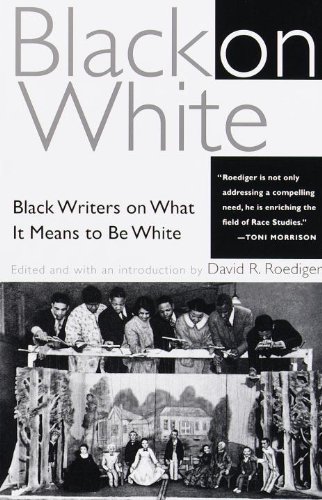
In this thought-provoking volume, David R. Roediger has brought together some of the most important black writers throughout history to explore the question: What does it really mean to be white in America?
From folktales and slave narratives to contemporary essays, poetry, and fiction, black writers have long been among America's keenest students of white consciousness and white behavior, but until now much of this writing has been ignored. Black on White reverses this trend by presenting the work of more than fifty major figures, including James Baldwin, Derrick Bell, Ralph Ellison, W.E.B. Du Bois, bell hooks, Toni Morrison, and Alice Walker to take a closer look at the many meanings of whiteness in our society.
Rich in irony, artistry, passion, and common sense, these reflections on what Langston Hughes called "the ways of white folks" illustrate how whiteness as a racial identity derives its meaning not as a biological category but as a social construct designed to uphold racial inequality. Powerful and compelling, Black on White provides a much-needed perspective that is sure to have a major impact on the study of race and race relations in America.
Die Inhaltsangabe kann sich auf eine andere Ausgabe dieses Titels beziehen.
Über die Autorin bzw. den Autor
David R. Roediger is professor of history and chair of American studies at the University of Minnesota. He is the author of The Wages of Whiteness: Race and the Making of the American Working Class and Towards the Abolition of Whiteness. Roediger lives in St. Paul, Minnesota.
Auszug. © Genehmigter Nachdruck. Alle Rechte vorbehalten.
White people have not always been "white," nor will they always be "white." It is a political alliance. Things will change.
AMOJA THREE RIVERS
Consider a slave on the auction block, awaiting sale. Imagine the slave being seen, indeed examined, by the potential bidders. Imagine what she felt. Think of her trembling and crying, breaking down, even fighting back. Such attempts to imagine looking in on the auction block and to empathize with those for sale have found a hard-won place in the mainstream of American culture. But little prepares us to see her as looking out, as studying the bidders. And yet, as recent and imaginative research has shown, slaves on the block often searched out every clue in sizing up the whites who would own them.1 Did that scar represent a history of violence? What did that leer suggest? Was that accent familiar, or did it point to the possibility of being transported great distances, away from family and to the master's home? Did those clothes mean great wealth, declining fortunes, or poor whiteness? What could be learned of the buyers from other slaves? What strategies of self-presentation would discourage the attention of the bidder most feared, or encourage the potential buyer judged to be the best of terrible options?
When Langston Hughes published The Ways of White Folks some sixty years after the end of slavery, he featured the short story "Slave on the Block" near the book's outset. Set in early-twentieth-century New York City, not the antebellum South, and describing the experiences of a black servant rather than a slave, Hughes's story nonetheless claimed the angle of vision from the auction block as indispensable in describing how African Americans have learned about white ways.2 In fact, the drama of the auction block highlights many of the major themes included in this volume regarding how African Americans have thought about and studied whiteness. The deep associations of whiteness with terror and with property were sharply posed at the point of sale. The auction block gave flesh to questions of sexual exploitation and of gender. Its stark realities laid bare the urgent imperative for slaves to penetrate the psychologies of whites and their necessity to make distinctions even among white slave buyers. All of these themes and more figure prominently in African-American thought concerning whiteness, and deserve our attention here.
But few Americans have ever considered the idea that African- Americans are extremely knowledgeable about whites and whiteness. In the mainstream of American culture, and certainly in intellectual circles, a rough and unproductive division of labor exists where the claiming of expert knowledge and commonsense wisdom on race are concerned. White writers have long been positioned as the leading and most dispassionate investigators of the lives, values, and abilities of people of color. White writing about whiteness is rarer, with discussions of what it means to be human standing in for considerations of how racial identity influences white lives. Writers of color, and most notably African-American writers, are cast as providing insight, often presumed to be highly subjective, of what it is like to be "a minority." Lost in this destructive shuffle is the fact that from folktales onward African Americans have been among the nation's keenest students of white consciousness and white behavior.
A story about each of the two greatest modern writers on whiteness in the United States, Toni Morrison and James Baldwin, allows us to see how African-American knowledge of whites is created and suppressed. In 1993, the journalist Bill Moyers asked Morrison when she would start writing about white people. Morrison wanted no part of Moyers's invitation to move into the white center of literary culture. She pledged to "stay out here at the margin and let the center come looking for me." Morrison had, however, already written considerably about whites, both in fictional work like "Recitatif" and in the brilliant 1990 volume Playing in the Dark: Whiteness and the Literary Imagination.3 That challenging book was so little appreciated that Moyers could still ask when the writing on whites was to come. The fact that she had written the most important volume on whiteness published in this decade did not so much as establish Morrison's interest in the subject in the eyes of a relatively sophisticated observer of race in the United States like Moyers.
At nineteen, James Baldwin's visits to the Apollo Theatre, an art film house on 42nd Street in New York City, left him paralyzed by a terror born of looking into the faces of the white, gay male clientele there. The gay men he saw seemed "so far from being or resembling faggots." Indeed he thought that they "looked and sounded like vigilantes who banded together on weekends to beat faggots up." After much suffering, he found that it was often true that the men alternated between gay sexuality and homophobic violence. Baldwin situated his knowledge in the position from which he observed the men. He had "seen them in the men's room, sometimes on their knees, peering up into the stalls." But his racial position also mattered. "I might not have learned this had I been a white boy," he later wrote, regarding his knowledge of the coexistence of sex and violence, "but sometimes a white man will tell a black boy anything, everything, weeping briny tears. He knows that a black boy can never betray him, for no one will believe his testimony."4 Baldwin's reminiscences complicate our tasks. They suggest that Moyers's dismissal of Morrison's work on whiteness might typify a larger pattern of the ways in which whites disbelieve and/or disregard how much African Americans know about them. Indeed, for Baldwin, the wholesale dismissal by whites of African-American expertise regarding whiteness was one critical condition under which such knowledge could be obtained.
At times African Americans have boldly claimed their expertise on whiteness. In the World War One era, James Weldon Johnson would assert as a "fact" that "colored people of this country know and understand the white people better than the white people know and understand them." A decade later, the African-American journalist and novelist George S. Schuyler held, "While the average Nordic knows nothing of how Negroes actually live and what they think, the Negroes know the Nordic intimately." The claims advanced by Johnson and Schuyler are serious and well-grounded, despite the fact that they would seem very unfamiliar and counterintuitive to most whites. Schuyler explained the insights of Black thinkers into "white lives" by observing that "blacks haven't been working with or for white folks all these years for nothing." W.E.B. Du Bois in Darkwater and bell hooks in Black Looks similarly emphasize the servants' ability to know the families for whom they work.5 The contemporary mystery writer Barbara Neely captures this point wonderfully as her domestic worker/detective hero, Blanche White, solves murders by deploying her intimate knowledge of whites. Long experience with violence and sexual exploitation, Ida B. Wells-Barnett and Frederick Douglass argued, perfectly situated African-American Southerners to deflate the claims to chivalry, restraint, and civilization made by white males of that region. The drama and tragedy of passing as white, which is the subject of a large literature usually seen as portraying an exotic part of Black life, also turned on the close observation of white lives. Thus it should be no surprise that the legal theorist Cheryl Harris has recently used histories of passing by a family member to open discussions of the dynamics of white society.6
What bell...
„Über diesen Titel“ kann sich auf eine andere Ausgabe dieses Titels beziehen.
Weitere beliebte Ausgaben desselben Titels

Suchergebnisse für Black on White: Black Writers on What It Means to Be...

Beispielbild für diese ISBN
Black on White
Anbieter: World of Books (was SecondSale), Montgomery, IL, USA
Verkäuferbewertung 5 von 5 Sternen

Zustand: Good. Item in good condition. Textbooks may not include supplemental items i.e. CDs, access codes etc. Artikel-Nr. 00101327648
Gebraucht kaufen
EUR 5,07
Versand gratis
Versand innerhalb von USA
Versand innerhalb von USA
Anzahl: 1 verfügbar
Beispielbild für diese ISBN
Black on White: Black Writers on What It Means to Be White
Verlag:
Schocken (edition 1st Pbk. Ed), 1999
ISBN 10: 0805211144
ISBN 13: 9780805211146
Gebraucht
Paperback
Anbieter: BooksRun, Philadelphia, PA, USA
Verkäuferbewertung 5 von 5 Sternen
Paperback. Zustand: Fair. 1st Pbk. Ed. The item might be beaten up but readable. May contain markings or highlighting, as well as stains, bent corners, or any other major defect, but the text is not obscured in any way. Artikel-Nr. 0805211144-7-1
Gebraucht kaufen
EUR 5,08
Versand gratis
Versand innerhalb von USA
Versand innerhalb von USA
Anzahl: 1 verfügbar
Beispielbild für diese ISBN
Black on White : Black Writers on What It Means to Be White
Verlag:
Knopf Doubleday Publishing Group, 1999
ISBN 10: 0805211144
ISBN 13: 9780805211146
Gebraucht
Softcover
Anbieter: Better World Books, Mishawaka, IN, USA
Verkäuferbewertung 5 von 5 Sternen
Zustand: Good. Pages intact with minimal writing/highlighting. The binding may be loose and creased. Dust jackets/supplements are not included. Stock photo provided. Product includes identifying sticker. Better World Books: Buy Books. Do Good. Artikel-Nr. 3505692-6
Gebraucht kaufen
EUR 6,38
Versand gratis
Versand innerhalb von USA
Versand innerhalb von USA
Anzahl: 1 verfügbar
Beispielbild für diese ISBN
Black on White : Black Writers on What It Means to Be White
Verlag:
Knopf Doubleday Publishing Group, 1999
ISBN 10: 0805211144
ISBN 13: 9780805211146
Gebraucht
Softcover
Anbieter: Better World Books, Mishawaka, IN, USA
Verkäuferbewertung 5 von 5 Sternen
Zustand: Good. Former library copy. Pages intact with minimal writing/highlighting. The binding may be loose and creased. Dust jackets/supplements are not included. Includes library markings. Stock photo provided. Product includes identifying sticker. Better World Books: Buy Books. Do Good. Artikel-Nr. GRP94632458
Gebraucht kaufen
EUR 6,38
Versand gratis
Versand innerhalb von USA
Versand innerhalb von USA
Anzahl: 2 verfügbar
Beispielbild für diese ISBN
Black on White: Black Writers on What It Means to Be White
Anbieter: ThriftBooks-Phoenix, Phoenix, AZ, USA
Verkäuferbewertung 5 von 5 Sternen
Paperback. Zustand: Fair. No Jacket. Readable copy. Pages may have considerable notes/highlighting. ~ ThriftBooks: Read More, Spend Less. Artikel-Nr. G0805211144I5N00
Gebraucht kaufen
EUR 6,80
Versand gratis
Versand innerhalb von USA
Versand innerhalb von USA
Anzahl: 1 verfügbar
Beispielbild für diese ISBN
Black on White: Black Writers on What It Means to Be White
Anbieter: ThriftBooks-Atlanta, AUSTELL, GA, USA
Verkäuferbewertung 5 von 5 Sternen
Paperback. Zustand: Good. No Jacket. Pages can have notes/highlighting. Spine may show signs of wear. ~ ThriftBooks: Read More, Spend Less. Artikel-Nr. G0805211144I3N00
Gebraucht kaufen
EUR 6,80
Versand gratis
Versand innerhalb von USA
Versand innerhalb von USA
Anzahl: 1 verfügbar
Beispielbild für diese ISBN
Black on White: Black Writers on What It Means to Be White
Anbieter: ThriftBooks-Atlanta, AUSTELL, GA, USA
Verkäuferbewertung 5 von 5 Sternen
Paperback. Zustand: Fair. No Jacket. Readable copy. Pages may have considerable notes/highlighting. ~ ThriftBooks: Read More, Spend Less. Artikel-Nr. G0805211144I5N00
Gebraucht kaufen
EUR 6,80
Versand gratis
Versand innerhalb von USA
Versand innerhalb von USA
Anzahl: 1 verfügbar
Beispielbild für diese ISBN
Black on White: Black Writers on What It Means to Be White
Anbieter: ThriftBooks-Dallas, Dallas, TX, USA
Verkäuferbewertung 5 von 5 Sternen
Paperback. Zustand: Fair. No Jacket. Readable copy. Pages may have considerable notes/highlighting. ~ ThriftBooks: Read More, Spend Less. Artikel-Nr. G0805211144I5N00
Gebraucht kaufen
EUR 6,80
Versand gratis
Versand innerhalb von USA
Versand innerhalb von USA
Anzahl: 1 verfügbar
Beispielbild für diese ISBN
Black on White
Anbieter: Hamelyn, Madrid, M, Spanien
Verkäuferbewertung 5 von 5 Sternen
Zustand: Bueno. : En este volumen provocador, David R. Roediger ha reunido a algunos de los escritores negros más importantes de la historia para explorar la pregunta: ¿Qué significa realmente ser blanco en Estados Unidos? Desde cuentos populares y narraciones de esclavos hasta ensayos, poesía y ficción contemporáneos, los escritores negros han sido durante mucho tiempo algunos de los estudiantes más perspicaces de Estados Unidos sobre la conciencia y el comportamiento de los blancos, pero hasta ahora gran parte de esta escritura ha sido ignorada. Black on White invierte esta tendencia al presentar el trabajo de más de cincuenta figuras importantes, incluyendo a James Baldwin, Derrick Bell, Ralph Ellison, W.E.B. Du Bois, bell hooks, Toni Morrison y Alice Walker para observar más de cerca los muchos significados de la blancura en nuestra sociedad. Rica en ironía, arte, pasión y sentido común, estas reflexiones sobre lo que Langston Hughes llamó "las costumbres de la gente blanca" ilustran cómo la blancura como identidad racial deriva su significado no como una categoría biológica sino como una construcción social diseñada para mantener la desigualdad racial. Poderoso y convincente, Black on White proporciona una perspectiva muy necesaria que seguramente tendrá un gran impacto en el estudio de la raza y las relaciones raciales en Estados Unidos. EAN: 9780805211146 Tipo: Libros Categoría: Historia Título: Black on White Autor: David R. Roediger Editorial: Random House Digital, Inc. Idioma: en Páginas: 368 Formato: tapa blanda. Artikel-Nr. Happ-2026-06-11-453eb835
Gebraucht kaufen
EUR 11,46
EUR 12,99 Versand
Versand von Spanien nach USA
Versand von Spanien nach USA
Anzahl: 1 verfügbar
Beispielbild für diese ISBN
Black on White: Black Writers on What It Means to Be White
Anbieter: Lady BookHouse, Belmont, MA, USA
Verkäuferbewertung 5 von 5 Sternen
paperback. Zustand: As New. This book is in near-perfect condition, showing minimal signs of use. It has clean, crisp pages with no markings or highlighting, and the spine and cover are intact without any creases or wear. This book appears as if it has been barely touched and is virtually indistinguishable from a brand new book. This book may be an ex-library item. Textbooks may not include supplemental items i.e. CDs, access codes etc. Artikel-Nr. SS03057
Gebraucht kaufen
EUR 28,18
EUR 3,90 Versand
Versand innerhalb von USA
Versand innerhalb von USA
Anzahl: 1 verfügbar