
Verwandte Artikel zu Dr. Montessori's Own Handbook: A Short Guide to...
Inhaltsangabe
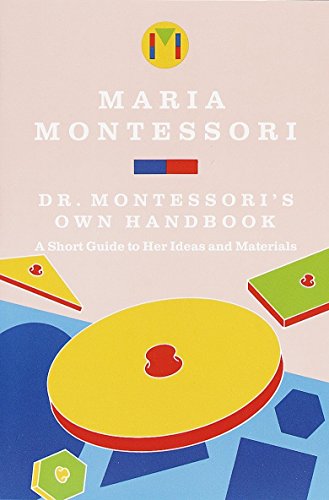
This is the book that Maria Montesorri wrote in response to requests from thousands of American parents and teachers. A short, illustrated guide to the use of the Montessori classroom materials, it shows how to set up a “children’s house”—an environment for learning where children can be their own masters, free to learn at their own pace.
Frames for lacing and buttoning, geometrical wooden inserts, sound cylinders, sandpapers letters, colored numerical rods: these are familiar features of any Montesorri classroom, whether in the pioneering days or today. Dr. Montesorri explains how to use these materials with preschool children to stimulate their powers of observation, recognition, judgment, and classification.
These self-correcting learning tools are the original “teaching machines” for young children. Inherently logical and aesthetically pleasing, they were designed to hone the child’s visual, auditory, and tactile perceptions. Dr. Montesorri stresses that each child approaches the apparatus differently. The role of the adult, whether teacher or parent, is to let the child experiment, perceive his own mistakes, and run his own risks in learning.
(With black-and white illustrations throughout.)
Die Inhaltsangabe kann sich auf eine andere Ausgabe dieses Titels beziehen.
Über die Autorin bzw. den Autor
Dr. MARIA MONTESSORI was an Italian physician, educator, and innovator, acclaimed for her educational method that builds on the way children naturally learn.
Von der hinteren Coverseite
ustrated guide to the use of Montessori classroom materials. Describes how to set up a "children's house" - an environment for learning where children can be their own masters.
„Über diesen Titel“ kann sich auf eine andere Ausgabe dieses Titels beziehen.
Ihre gesetzlichen Garantierechte: Alle Verbraucher:innen in der EU profitieren von mindestens 2 Jahren gesetzlichem Garantieschutz für alle in der EU verkauften Konsumgüter. Mehr erfahren
Suchergebnisse für Dr. Montessori's Own Handbook: A Short Guide to...

Beispielbild für diese ISBN
Dr. Montessori's Own Handbook: A Short Guide to Her Ideas and Materials
Anbieter: World of Books (was SecondSale), Montgomery, IL, USA
Verkäuferbewertung 5 von 5 Sternen

Paperback. Zustand: Very Good. This is the book that Maria Montesorri wrote in response to requests from thousands of American parents and teachers. A short, illustrated guide to the use of the Montessori classroom materials, it shows how to set up a "children's house"-an environment for learning where children can be their own masters, free to learn at their own pace. Frames for lacing and buttoning, geometrical wooden inserts, sound cylinders, sandpapers letters, colored numerical rods: these are familiar features of any Montesorri classroom, whether in the pioneering days or today. Dr. Montesorri explains how to use these materials with preschool children to stimulate their powers of observation, recognition, judgment, and classification. These self-correcting learning tools are the original "teaching machines" for young children. Inherently logical and aesthetically pleasing, they were designed to hone the child's visual, auditory, and tactile perceptions. Dr. Montesorri stresses that each child approaches the apparatus differently. The role of the adult, whether teacher or parent, is to let the child experiment, perceive his own mistakes, and run his own risks in learning. (With black-and white illustrations throughout.). Artikel-Nr. CIN0805209212VG
Gebraucht kaufen
EUR 4,67
Versand gratis
Versand innerhalb von USA
Versand innerhalb von USA
Anzahl: 2 verfügbar
Beispielbild für diese ISBN
Dr. Montessori's Own Handbook: A Short Guide to Her Ideas and Materials
Anbieter: World of Books (was SecondSale), Montgomery, IL, USA
Verkäuferbewertung 5 von 5 Sternen
Paperback. Zustand: Fair. This is the book that Maria Montesorri wrote in response to requests from thousands of American parents and teachers. A short, illustrated guide to the use of the Montessori classroom materials, it shows how to set up a "children's house"-an environment for learning where children can be their own masters, free to learn at their own pace. Frames for lacing and buttoning, geometrical wooden inserts, sound cylinders, sandpapers letters, colored numerical rods: these are familiar features of any Montesorri classroom, whether in the pioneering days or today. Dr. Montesorri explains how to use these materials with preschool children to stimulate their powers of observation, recognition, judgment, and classification. These self-correcting learning tools are the original "teaching machines" for young children. Inherently logical and aesthetically pleasing, they were designed to hone the child's visual, auditory, and tactile perceptions. Dr. Montesorri stresses that each child approaches the apparatus differently. The role of the adult, whether teacher or parent, is to let the child experiment, perceive his own mistakes, and run his own risks in learning. (With black-and white illustrations throughout.). Artikel-Nr. CIN0805209212A
Gebraucht kaufen
EUR 4,67
Versand gratis
Versand innerhalb von USA
Versand innerhalb von USA
Anzahl: 2 verfügbar
Beispielbild für diese ISBN
Dr. Montessori's Own Handbook: A Short Guide to Her Ideas and Materials
Anbieter: World of Books (was SecondSale), Montgomery, IL, USA
Verkäuferbewertung 5 von 5 Sternen
Paperback. Zustand: Good. This is the book that Maria Montesorri wrote in response to requests from thousands of American parents and teachers. A short, illustrated guide to the use of the Montessori classroom materials, it shows how to set up a "children's house"-an environment for learning where children can be their own masters, free to learn at their own pace. Frames for lacing and buttoning, geometrical wooden inserts, sound cylinders, sandpapers letters, colored numerical rods: these are familiar features of any Montesorri classroom, whether in the pioneering days or today. Dr. Montesorri explains how to use these materials with preschool children to stimulate their powers of observation, recognition, judgment, and classification. These self-correcting learning tools are the original "teaching machines" for young children. Inherently logical and aesthetically pleasing, they were designed to hone the child's visual, auditory, and tactile perceptions. Dr. Montesorri stresses that each child approaches the apparatus differently. The role of the adult, whether teacher or parent, is to let the child experiment, perceive his own mistakes, and run his own risks in learning. (With black-and white illustrations throughout.). Artikel-Nr. 00105910521
Gebraucht kaufen
EUR 4,67
Versand gratis
Versand innerhalb von USA
Versand innerhalb von USA
Anzahl: 3 verfügbar
Beispielbild für diese ISBN
Dr. Montessori's Own Handbook: A Short Guide to Her Ideas and Materials
Verlag:
Schocken Books (edition First Edition), 1988
ISBN 10: 0805209212
ISBN 13: 9780805209211
Gebraucht
Paperback
Erstausgabe
Anbieter: BooksRun, Philadelphia, PA, USA
Verkäuferbewertung 5 von 5 Sternen
Paperback. Zustand: Very Good. First Edition. It's a well-cared-for item that has seen limited use. The item may show minor signs of wear. All the text is legible, with all pages included. It may have slight markings and/or highlighting. Artikel-Nr. 0805209212-11-1
Gebraucht kaufen
EUR 4,68
Versand gratis
Versand innerhalb von USA
Versand innerhalb von USA
Anzahl: 1 verfügbar
Beispielbild für diese ISBN
Dr. Montessori's Own Handbook
Anbieter: ThriftBooks-Reno, Reno, NV, USA
Verkäuferbewertung 5 von 5 Sternen
Paperback. Zustand: Good. No Jacket. Former library book; Pages can have notes/highlighting. Spine may show signs of wear. ~ ThriftBooks: Read More, Spend Less. Artikel-Nr. G0805209212I3N10
Gebraucht kaufen
EUR 6,09
Versand gratis
Versand innerhalb von USA
Versand innerhalb von USA
Anzahl: 1 verfügbar
Beispielbild für diese ISBN
Dr. Montessori's Own Handbook
Anbieter: ThriftBooks-Dallas, Dallas, TX, USA
Verkäuferbewertung 5 von 5 Sternen
Paperback. Zustand: Fair. No Jacket. Readable copy. Pages may have considerable notes/highlighting. ~ ThriftBooks: Read More, Spend Less. Artikel-Nr. G0805209212I5N00
Gebraucht kaufen
EUR 6,09
Versand gratis
Versand innerhalb von USA
Versand innerhalb von USA
Anzahl: 2 verfügbar
Beispielbild für diese ISBN
Dr. Montessori's Own Handbook
Anbieter: ThriftBooks-Atlanta, AUSTELL, GA, USA
Verkäuferbewertung 5 von 5 Sternen
Paperback. Zustand: Fair. No Jacket. Readable copy. Pages may have considerable notes/highlighting. ~ ThriftBooks: Read More, Spend Less. Artikel-Nr. G0805209212I5N00
Gebraucht kaufen
EUR 6,09
Versand gratis
Versand innerhalb von USA
Versand innerhalb von USA
Anzahl: 2 verfügbar
Beispielbild für diese ISBN
Dr. Montessori's Own Handbook
Anbieter: ThriftBooks-Phoenix, Phoenix, AZ, USA
Verkäuferbewertung 5 von 5 Sternen
Paperback. Zustand: Fair. No Jacket. Readable copy. Pages may have considerable notes/highlighting. ~ ThriftBooks: Read More, Spend Less. Artikel-Nr. G0805209212I5N00
Gebraucht kaufen
EUR 6,09
Versand gratis
Versand innerhalb von USA
Versand innerhalb von USA
Anzahl: 1 verfügbar
Beispielbild für diese ISBN
Dr. Montessori's Own Handbook
Anbieter: ThriftBooks-Reno, Reno, NV, USA
Verkäuferbewertung 5 von 5 Sternen
Paperback. Zustand: Good. No Jacket. Pages can have notes/highlighting. Spine may show signs of wear. ~ ThriftBooks: Read More, Spend Less. Artikel-Nr. G0805209212I3N00
Gebraucht kaufen
EUR 6,09
Versand gratis
Versand innerhalb von USA
Versand innerhalb von USA
Anzahl: 2 verfügbar
Beispielbild für diese ISBN
Dr. Montessori's Own Handbook
Anbieter: ThriftBooks-Atlanta, AUSTELL, GA, USA
Verkäuferbewertung 5 von 5 Sternen
Paperback. Zustand: Very Good. No Jacket. May have limited writing in cover pages. Pages are unmarked. ~ ThriftBooks: Read More, Spend Less. Artikel-Nr. G0805209212I4N00
Gebraucht kaufen
EUR 6,09
Versand gratis
Versand innerhalb von USA
Versand innerhalb von USA
Anzahl: 1 verfügbar