
Verwandte Artikel zu Dragnet Nation: A Quest for Privacy, Security, and...
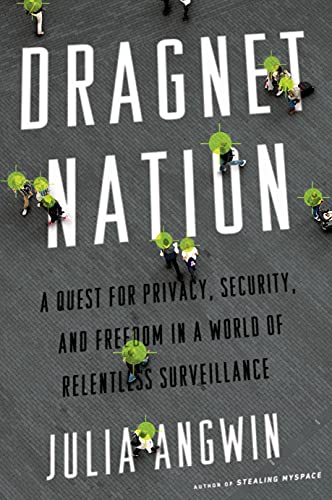
Dragnet Nation: A Quest for Privacy, Security, and Freedom in a World of Relentless Surveillance - Hardcover
Inhaltsangabe
An investigative journalist offers a revealing look at how the government, private companies, and criminals use technology to indiscriminately sweep up vast amounts of our personal data, and discusses results from a number of experiments she conducted totry and protect herself.
Die Inhaltsangabe kann sich auf eine andere Ausgabe dieses Titels beziehen.
Über die Autorin bzw. den Autor
Julia Angwin is the author of Stealing MySpace and an award-winning investigative journalist for the independent news organization ProPublica. From 2000 to 2013 she was a staff reporter for The Wall Street Journal, where she was on the team of reporters awarded the 2003 Pulitzer Prize for coverage of corporate corruption and led a team covering online privacy that was a finalist for a 2012 Pulitzer Prize. She lives in New York City with her husband and two children.
Auszug. © Genehmigter Nachdruck. Alle Rechte vorbehalten.
1
HackedWho is watching you?This was once a question asked only by kings, presidents, and public figures trying to dodge the paparazzi and criminals trying to evade the law. The rest of us had few occasions to worry about being tracked.But today the anxious question—"who’s watching?"—is relevant to everyone regardless of his or her fame or criminal persuasion. Any of us can be watched at almost any time, whether it is by a Google Street View car taking a picture of our house, or an advertiser following us as we browse the Web, or the National Security Agency logging our phone calls.Dragnets that scoop up information indiscriminately about everyone in their path used to be rare; police had to set up roadblocks, or retailers had to install and monitor video cameras. But technology has enabled a new era of supercharged dragnets that can gather vast amounts of personal data with little human effort. These dragnets are extending into ever more private corners of the world.Consider the relationship of Sharon Gill and Bilal Ahmed, close friends who met on a private online social network called PatientLikeMe.com.Sharon and Bilal couldn’t be more different. Sharon is a forty-two-year-old single mother who lives in a small town in southern Arkansas. She ekes out a living trolling for treasures at yard sales and selling them at a flea market. Bilal Ahmed, thirty-six years old, is a single, Rutgers-educated man who lives in a penthouse in Sydney, Australia. He runs a chain of convenience stores.Although they have never met in person, they became close friends on a password-protected online forum for patients struggling with mental health issues. Sharon was trying to wean herself from antidepressant medications. Bilal had just lost his mother and was suffering from anxiety and depression.From their far corners of the world, they were able to cheer each other up in their darkest hours. Sharon turned to Bilal because she felt she couldn’t confide in her closest relatives and neighbors. "I live in a small town," Sharon told me. "I don’t want to be judged on this mental illness."But in 2010, Sharon and Bilal were horrified to discover they were being watched on their private social network.It started with a break-in. On May 7, 2010, PatientsLikeMe noticed unusual activity on the "mood" forum where Sharon and Bilal hung out. A new member of the site, using sophisticated software, was attempting to "scrape," or copy, every single message off PatientsLikeMe’s private online "Mood" and "Multiple Sclerosis" forums.PatientsLikeMe managed to block and identify the intruder: it was the Nielsen Company, the New York media-research firm. Nielsen monitors online "buzz" for its clients, including major drug makers. On May 18, PatientsLikeMe sent a cease-and-desist letter to Nielsen and notified its members of the break-in. (Nielsen later said it would no longer break into private forums. "It’s something that we decided is not acceptable," said Dave Hudson, the head of the Nielsen unit involved.)But there was a twist. PatientsLikeMe used the opportunity to inform members of the fine print they may not have noticed when they signed up. The website was also selling data about its members to pharmaceutical and other companies.The news was a double betrayal for Sharon and Bilal. Not only had an intruder been monitoring them, but so was the very place that they considered to be a safe space. It was as if someone filmed an Alcoholics Anonymous meeting and AA was mad because that film competed with its own business of videotaping meetings and selling the tapes. "I felt totally violated," Bilal said.Even worse, none of it was necessarily illegal. Nielsen was operating in a gray area of the law even as it violated the terms of service at PatientsLikeMe, but those terms are not always legally enforceable. And it was entirely legal for PatientsLikeMe to disclose to its members in its fine print that it would sweep up all their information and sell it.This is the tragic flaw of "privacy" in the digital age. Privacy is often defined as freedom from unauthorized intrusion. But many of the things thatfeel like privacy violations are "authorized" in some fine print somewhere.And yet, in many ways, we have not yet fully consented to these authorized intrusions. Even if it is legal for companies to scoop up information about people’s mental health, is it socially acceptable?Eavesdropping on Sharon and Bilal’s conversations might be socially acceptable if they were drug dealers under court-approved surveillance. But is sweeping up their conversations as part of a huge dragnet to monitor online "buzz" socially acceptable?Dragnets that indiscriminately sweep up personal data fall squarely into the gray area between what is legal and what is socially acceptable.
?We are living in a Dragnet Nation—a world of indiscriminate tracking where institutions are stockpiling data about individuals at an unprecedented pace. The rise of indiscriminate tracking is powered by the same forces that have brought us the technology we love so much—powerful computing on our desktops, laptops, tablets, and smartphones.Before computers were commonplace, it was expensive and difficult to track individuals. Governments kept records only of occasions, such as birth, marriage, property ownership, and death. Companies kept records when a customer bought something and filled out a warranty card or joined a loyalty club. But technology has made it cheap and easy for institutions of all kinds to keep records about almost every moment of our lives.Consider just a few facts that have enabled the transformation. Computer processing power has doubled roughly every two years since the 1970s, enabling computers that were once the size of entire rooms to fit into a pants pocket. And recently, the cost to store data has plummeted from $18.95 for one gigabyte in 2005 to $1.68 in 2012. It is expected to cost under a dollar in a few years.The combination of massive computing power, smaller and smaller devices, and cheap storage has enabled a huge increase in indiscriminate tracking of personal data. The trackers are not all intruders, like Nielsen. The trackers also include many of the institutions that are supposed to be on our side, such as the government and the companies with which we do business.Of course, the largest of the dragnets appear to be those operated by the U.S. government. In addition to its scooping up vast amounts of foreign communications, the National Security Agency is also scooping up Americans’ phone calling records and Internet traffic, according to documents revealed in 2013 by the former NSA contractor Edward Snowden.But the NSA is not alone (although it may be the most effective) in operating dragnets. Governments around the world—from Afghanistan to Zimbabwe—are snapping up surveillance technology, ranging from "massive intercept" equipment to tools that let them remotely hack into people’s phones and computers. Even local and state governments in the United States are snapping up surveillance technology ranging from drones to automated license plate readers that allow them to keep tabs on citizens’ movements in ways never before possible. Local police are increasingly tracking people using signals emitted by their cell phones.Meanwhile, commercial dragnets are blossoming. AT&T and Verizon are selling information about the location of their cell phone customers, albeit without identifying them by name. Mall owners have started using technology to track shoppers...„Über diesen Titel“ kann sich auf eine andere Ausgabe dieses Titels beziehen.
Suchergebnisse für Dragnet Nation: A Quest for Privacy, Security, and...

Beispielbild für diese ISBN
Dragnet Nation: A Quest for Privacy, Security, and Freedom in a World of Relentless Surveillance
Anbieter: World of Books (was SecondSale), Montgomery, IL, USA
Verkäuferbewertung 5 von 5 Sternen

Zustand: Good. Good condition ex-library book with usual library markings and stickers. Artikel-Nr. 00107581044
Gebraucht kaufen
EUR 3,72
Versand gratis
Versand innerhalb von USA
Versand innerhalb von USA
Anzahl: 1 verfügbar
Beispielbild für diese ISBN
Dragnet Nation: A Quest for Privacy, Security, and Freedom in a World of Relentless Surveillance
Verlag:
Times Books (edition First Edition), 2014
ISBN 10: 0805098070
ISBN 13: 9780805098075
Gebraucht
Hardcover
Erstausgabe
Anbieter: BooksRun, Philadelphia, PA, USA
Verkäuferbewertung 5 von 5 Sternen
Hardcover. Zustand: Very Good. First Edition. With dust jacket. It's a well-cared-for item that has seen limited use. The item may show minor signs of wear. All the text is legible, with all pages included. It may have slight markings and/or highlighting. Artikel-Nr. 0805098070-11-1-29
Gebraucht kaufen
EUR 5,24
Versand gratis
Versand innerhalb von USA
Versand innerhalb von USA
Anzahl: 1 verfügbar
Beispielbild für diese ISBN
Dragnet Nation: A Quest for Privacy, Security, and Freedom in a World of Relentless Surveillance
Anbieter: ThriftBooks-Atlanta, AUSTELL, GA, USA
Verkäuferbewertung 5 von 5 Sternen
Hardcover. Zustand: Very Good. No Jacket. May have limited writing in cover pages. Pages are unmarked. ~ ThriftBooks: Read More, Spend Less. Artikel-Nr. G0805098070I4N00
Gebraucht kaufen
EUR 5,81
Versand gratis
Versand innerhalb von USA
Versand innerhalb von USA
Anzahl: 2 verfügbar
Beispielbild für diese ISBN
Dragnet Nation: A Quest for Privacy, Security, and Freedom in a World of Relentless Surveillance
Anbieter: ThriftBooks-Atlanta, AUSTELL, GA, USA
Verkäuferbewertung 5 von 5 Sternen
Hardcover. Zustand: Very Good. No Jacket. Former library book; May have limited writing in cover pages. Pages are unmarked. ~ ThriftBooks: Read More, Spend Less. Artikel-Nr. G0805098070I4N10
Gebraucht kaufen
EUR 5,81
Versand gratis
Versand innerhalb von USA
Versand innerhalb von USA
Anzahl: 1 verfügbar
Beispielbild für diese ISBN
Dragnet Nation: A Quest for Privacy, Security, and Freedom in a World of Relentless Surveillance
Anbieter: ThriftBooks-Dallas, Dallas, TX, USA
Verkäuferbewertung 5 von 5 Sternen
Hardcover. Zustand: Very Good. No Jacket. Missing dust jacket; May have limited writing in cover pages. Pages are unmarked. ~ ThriftBooks: Read More, Spend Less. Artikel-Nr. G0805098070I4N01
Gebraucht kaufen
EUR 5,81
Versand gratis
Versand innerhalb von USA
Versand innerhalb von USA
Anzahl: 1 verfügbar
Beispielbild für diese ISBN
Dragnet Nation: A Quest for Privacy, Security, and Freedom in a World of Relentless Surveillance
Anbieter: ThriftBooks-Reno, Reno, NV, USA
Verkäuferbewertung 5 von 5 Sternen
Hardcover. Zustand: Good. No Jacket. Pages can have notes/highlighting. Spine may show signs of wear. ~ ThriftBooks: Read More, Spend Less. Artikel-Nr. G0805098070I3N00
Gebraucht kaufen
EUR 5,81
Versand gratis
Versand innerhalb von USA
Versand innerhalb von USA
Anzahl: 1 verfügbar
Beispielbild für diese ISBN
Dragnet Nation: A Quest for Privacy, Security, and Freedom in a World of Relentless Surveillance
Anbieter: ThriftBooks-Dallas, Dallas, TX, USA
Verkäuferbewertung 5 von 5 Sternen
Hardcover. Zustand: Very Good. No Jacket. May have limited writing in cover pages. Pages are unmarked. ~ ThriftBooks: Read More, Spend Less. Artikel-Nr. G0805098070I4N00
Gebraucht kaufen
EUR 5,81
Versand gratis
Versand innerhalb von USA
Versand innerhalb von USA
Anzahl: 2 verfügbar
Beispielbild für diese ISBN
Dragnet Nation: A Quest for Privacy, Security, and Freedom in a World of Relentless Surveillance
Anbieter: ThriftBooks-Reno, Reno, NV, USA
Verkäuferbewertung 5 von 5 Sternen
Hardcover. Zustand: Very Good. No Jacket. May have limited writing in cover pages. Pages are unmarked. ~ ThriftBooks: Read More, Spend Less. Artikel-Nr. G0805098070I4N00
Gebraucht kaufen
EUR 5,81
Versand gratis
Versand innerhalb von USA
Versand innerhalb von USA
Anzahl: 2 verfügbar
Beispielbild für diese ISBN
Dragnet Nation: A Quest for Privacy, Security, and Freedom in a World of Relentless Surveillance
Anbieter: ThriftBooks-Phoenix, Phoenix, AZ, USA
Verkäuferbewertung 5 von 5 Sternen
Hardcover. Zustand: Very Good. No Jacket. May have limited writing in cover pages. Pages are unmarked. ~ ThriftBooks: Read More, Spend Less. Artikel-Nr. G0805098070I4N00
Gebraucht kaufen
EUR 5,81
Versand gratis
Versand innerhalb von USA
Versand innerhalb von USA
Anzahl: 2 verfügbar
Beispielbild für diese ISBN
Dragnet Nation: A Quest for Privacy, Security, and Freedom in a World of Relentless Surveillance
Anbieter: ThriftBooks-Phoenix, Phoenix, AZ, USA
Verkäuferbewertung 5 von 5 Sternen
Hardcover. Zustand: Good. No Jacket. Pages can have notes/highlighting. Spine may show signs of wear. ~ ThriftBooks: Read More, Spend Less. Artikel-Nr. G0805098070I3N00
Gebraucht kaufen
EUR 5,81
Versand gratis
Versand innerhalb von USA
Versand innerhalb von USA
Anzahl: 1 verfügbar