
Verwandte Artikel zu Mockingbird: A Portrait of Harper Lee
Inhaltsangabe
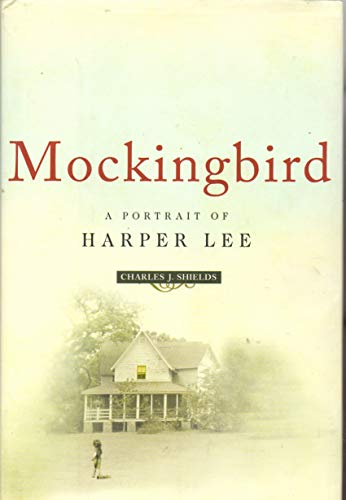
The colorful life of the remarkable woman who created To Kill a Mockingbird—the classic that became a touchstone for generations of Americans
To Kill a Mockingbird, the twentieth-century’s most widely read American novel, has sold thirty million copies and still sells a million yearly. Yet despite the book’s perennial popularity, its creator, Harper Lee has become a somewhat mysterious figure. Now, after years of research, Charles J. Shields has brought to life the warmhearted, high-spirited, and occasionally hardheaded woman who gave us two of American literature’s most unforgettable characters—Atticus Finch and his daughter, Scout—and who contributed to the success of her lifelong friend Truman Capote’s masterpiece, In Cold Blood.
At the center of Shields’s lively book is the story of Lee’s struggle to create her famous novel. But her life contains many other highlights as well: her girlhood as a tomboy in overalls in tiny Monroeville, Alabama; the murder trial that made her beloved father’s reputation and inspired her great work; her journey to Kansas as Capote’s ally and research assistant to help report the story of the Clutter murders; the surrogate family she found in New York City.
Drawing on six hundred interviews and much new information, Mockingbird is the first book ever written about Harper Lee. Highly entertaining, filled with humor and heart, this is an evocative portrait of a writer, her dream, and the place and people whom she made immortal.
To Kill a Mockingbird, the twentieth-century’s most widely read American novel, has sold thirty million copies and still sells a million yearly. Yet despite the book’s perennial popularity, its creator, Harper Lee has become a somewhat mysterious figure. Now, after years of research, Charles J. Shields has brought to life the warmhearted, high-spirited, and occasionally hardheaded woman who gave us two of American literature’s most unforgettable characters—Atticus Finch and his daughter, Scout—and who contributed to the success of her lifelong friend Truman Capote’s masterpiece, In Cold Blood.
At the center of Shields’s lively book is the story of Lee’s struggle to create her famous novel. But her life contains many other highlights as well: her girlhood as a tomboy in overalls in tiny Monroeville, Alabama; the murder trial that made her beloved father’s reputation and inspired her great work; her journey to Kansas as Capote’s ally and research assistant to help report the story of the Clutter murders; the surrogate family she found in New York City.
Drawing on six hundred interviews and much new information, Mockingbird is the first book ever written about Harper Lee. Highly entertaining, filled with humor and heart, this is an evocative portrait of a writer, her dream, and the place and people whom she made immortal.
Die Inhaltsangabe kann sich auf eine andere Ausgabe dieses Titels beziehen.
Über die Autorinnen und Autoren
A former English teacher who taught Harper Lee’s novel for years, Charles J. Shields has a BA in English and an MA in American history from the University of Illinois, where he was a James Scholar. The author of many widely praised books for young people, he spent four years researching Mockingbird in Alabama, New York, and Kansas, speaking to hundreds of Lee’s neighbors, friends, classmates, and culling facts from the archives of Truman Capote and other collections, as well as papers from the Monroe County (Alabama) courthouse and historical museum. He lives in central Virginia with his wife.
Charles J. Shields is the author of And So It Goes: Kurt Vonnegut: A Life, Mockingbird: A Portrait of Harper Lee, the highly acclaimed, bestselling biography of Harper Lee, and I Am Scout: The Biography of Harper Lee (Henry Holt Books for Young Readers). He grew up in the Midwest and taught in a rural school in central Illinois for several years. He has been a reporter for public radio, a journalist, and the author of nonfiction books for young people. He and his wife live near Charlottesville, Virginia.
Auszug. © Genehmigter Nachdruck. Alle Rechte vorbehalten.
Introduction
"As a reader I loathe Introductions," Nelle Harper Lee once wrote. But, with apologies to the subject, I must say that one is necessary for this book, the first ever about the woman who gave the world To Kill a Mockingbird, one of the most influential pieces of fiction produced in the United States. In a "Survey of Lifetime Reading Habits" conducted by the Book-of-the-Month Club in 1991, researchers found that To Kill a Mockingbird ranked second only to the Bible "as making a difference in people's lives." Forty-six years after its publication, the novel still draws almost a million readers annually. Maybe that is because its lessons of human dignity and respect for others remain fundamental and universal.
This book aims to capture a life but is not a conventional biography, because--despite her novel's huge impact--Lee's writing life has been brief, and her personal life has been intensely private. She wrote only one book, her Pulitzer Prize-winning perennial bestseller, and then, after a brief moment in the spotlight, disappeared from the public eye. She has not sought fame, then or since, although around the time of To Kill a Mockingbird's publication she did grant interviews.
Unlike her lifelong friend Truman Capote (perhaps even because of his example and experience), Harper Lee has never appeared comfortable in the limelight. In fact, not only does she not solicit attention, she also actively discourages it, refusing to speak in public and turning down all requests for interviews and all forms of cooperation with writers and reporters. In our era of relentless and often prurient self-exposure by some approval-hungry personalities, Lee prefers silence and self-respect. That is not to say she is furtively reclusive; though she enjoys her solitude, she is not some modern-day Emily Dickinson. She lives a normal life, replete with community activities, many related to her church. Lee is "like someone you'd meet in any small town," as Professor William Smart of Sweet Briar College, in Virginia, expressed it. And Smart has known Lee for forty years.
Consequently, this book has been produced without Lee's help, although I have repeatedly solicited it. She has declined with vigor, even to the extent of refusing to respond to my attempts to check facts by mail. Despite her desire for privacy, I believe it is important to record Lee's story while there are still a few people alive who were part of it and can remember. I have tried to balance her desire for privacy with the desire of her millions of readers who have long hoped for a respectful, informative view of this rarely seen writer.
This book is based on six hundred interviews and other sorts of communication with Harper Lee's friends, associates, and former classmates. It's also the product of four years of research into the papers of her friend Truman Capote, which include Lee's notes for his book In Cold Blood (for which she served as research assistant); the papers of Lee's literary agent; the archives of national and local libraries; and hundreds of newspaper and magazine articles. Until the mid-1960s, Lee was generous about granting interviews. I had to "put on my reporter's hat," as my late father, a journalist, liked to say, in order to trace this life, and I have tried to be as careful and as scrupulous as possible. I have sometimes made the decision to overlook topics that may have interested some, rather than to rely on psychologizing that I am not qualified to do or to risk producing errors that might find their way into future accounts of Lee.
I want readers to be introduced to the author and get a sense of what makes her tick: the things that influenced her when she was growing up during the Depression in Monroeville, Alabama, for example; the reasons why classmates regarded her with awe; the traits of nonconformity and almost ferocious independence that distinguished her in college; the steps that led to her dropping out of law school and moving to New York to write; the sense of loyalty that drew her to Truman Capote's side when he was researching his "nonfiction novel," In Cold Blood; the sense of humor that sustained her while she was scrutinized by the media because of the success of To Kill a Mockingbird and the film based on it; and, finally, the reasons why she never wrote another novel.
As I was researching this book, I tended to be asked the same questions by interested friends. The first was "Is Harper Lee still alive?" Yes. "Nail Har-puh," as her name is pronounced in her hometown, spends most of the year in Monroeville, and a few months in New York in the apartment she has maintained for the past forty-five years. Her eldest sister, Alice, ninety-four, who is one of the most highly regarded attorneys in Alabama, shares a house with Nelle in Monroeville. Residents are accustomed to seeing the two ladies puttering around the First United Methodist Church, where they have been members all their lives; at the country club where they enjoy the lunch buffet and the opportunity to see friends; and at various favorite diners around town. Nelle refuses to talk about To Kill a Mockingbird in social situations, and friends warn strangers not to bring it up. She has been known to leave the room if pestered about the novel.
The second question I was asked was "Is she married?" The answer is no. That question was almost always followed by "Is she gay?" I do not necessarily make a connection between being unmarried and being gay. I cannot say if she is homosexual (she was friends with Capote and other openly gay people), heterosexual (she and her literary agent, Maurice Crain, were devoted to each other), or just not open to long-term romantic relationships. I do know, on the other hand, of her ability to charm others and cultivate friends--though she also has a temper, and as a child, had a reputation for bullying. I am not sure what labels Lee would apply to herself, except "woman," "Southerner," and perhaps "writer."
The final question I was continually asked was "Why didn't she write another novel?" This was the big question I had asked myself in the first place, and which led to the adventure of writing this book. After reading it, I hope you will come away with at least some idea of why she never published another novel after To Kill a Mockingbird.
Years ago, when I was an English teacher in a large high school near Chicago, I taught To Kill a Mockingbird to freshmen. That's a good time to be introduced to it, because students at that age are crossing the bridge from childhood to young adulthood, as the young characters in Lee's novel are. In-class discussions of the novel tend to be lively, and assigned essays are weighty with insights and opinions. It's a very rich text to teach.
If you don't remember much about the novel, here's a summary:
To Kill a Mockingbird is really two stories. One is a coming-of-age tale told from the point of view of Scout Finch, a girl of about nine, and her slightly older brother, Jem. The second story concerns their father, attorney Atticus Finch, who has been appointed to defend a black man, Tom Robinson, falsely accused of raping a white woman.
There are also two broad themes: tolerance and justice. The first is treated through the children's interactions with Arthur "Boo" Radley, their mysterious and maligned neighbor; the second is illustrated by Atticus's courageous moral stance in defending Tom Robinson to the best of his ability, despite the racial prejudices of the town. Tying the themes together is a homespun piece of advice that Atticus gives Scout: "If you just learn a single trick, Scout, you'll get along a lot better with all kinds of folks. You never really understand a person until you consider things from his point of view. . . . Until you...
„Über diesen Titel“ kann sich auf eine andere Ausgabe dieses Titels beziehen.
Suchergebnisse für Mockingbird: A Portrait of Harper Lee

Beispielbild für diese ISBN
Mockingbird: A Portrait of Harper Lee
Verlag:
Henry Holt and Co. (edition First Edition), 2006
ISBN 10: 080507919X
ISBN 13: 9780805079197
Gebraucht
Hardcover
Erstausgabe
Anbieter: BooksRun, Philadelphia, PA, USA
Verkäuferbewertung 5 von 5 Sternen

Hardcover. Zustand: Very Good. First Edition. It's a well-cared-for item that has seen limited use. The item may show minor signs of wear. All the text is legible, with all pages included. It may have slight markings and/or highlighting. Artikel-Nr. 080507919X-11-1
Gebraucht kaufen
EUR 5,46
Versand gratis
Versand innerhalb von USA
Versand innerhalb von USA
Anzahl: 1 verfügbar
Beispielbild für diese ISBN
Mockingbird: A Portrait of Harper Lee
Verlag:
Henry Holt and Co. (edition First Edition), 2006
ISBN 10: 080507919X
ISBN 13: 9780805079197
Gebraucht
Hardcover
Erstausgabe
Anbieter: BooksRun, Philadelphia, PA, USA
Verkäuferbewertung 5 von 5 Sternen
Hardcover. Zustand: Very Good. First Edition. With dust jacket. It's a well-cared-for item that has seen limited use. The item may show minor signs of wear. All the text is legible, with all pages included. It may have slight markings and/or highlighting. Artikel-Nr. 080507919X-11-6-29
Gebraucht kaufen
EUR 5,70
Versand gratis
Versand innerhalb von USA
Versand innerhalb von USA
Anzahl: 1 verfügbar
Beispielbild für diese ISBN
Mockingbird A Portrait of Harp
Anbieter: World of Books (was SecondSale), Montgomery, IL, USA
Verkäuferbewertung 5 von 5 Sternen
Zustand: Good. Item in good condition. Textbooks may not include supplemental items i.e. CDs, access codes etc. Artikel-Nr. 00103346118
Gebraucht kaufen
EUR 5,86
Versand gratis
Versand innerhalb von USA
Versand innerhalb von USA
Anzahl: 5 verfügbar
Beispielbild für diese ISBN
Mockingbird A Portrait of Harp
Anbieter: World of Books (was SecondSale), Montgomery, IL, USA
Verkäuferbewertung 5 von 5 Sternen
Zustand: Acceptable. Item in acceptable condition! Textbooks may not include supplemental items i.e. CDs, access codes etc. Artikel-Nr. 00068621867
Gebraucht kaufen
EUR 5,86
Versand gratis
Versand innerhalb von USA
Versand innerhalb von USA
Anzahl: 2 verfügbar
Beispielbild für diese ISBN
Mockingbird A Portrait of Harp
Anbieter: World of Books (was SecondSale), Montgomery, IL, USA
Verkäuferbewertung 5 von 5 Sternen
Zustand: Very Good. Item in very good condition! Textbooks may not include supplemental items i.e. CDs, access codes etc. Artikel-Nr. 00109116255
Gebraucht kaufen
EUR 5,86
Versand gratis
Versand innerhalb von USA
Versand innerhalb von USA
Anzahl: 1 verfügbar
Beispielbild für diese ISBN
Mockingbird : A Portrait of Harper Lee
Verlag:
Holt & Company, Henry, 2006
ISBN 10: 080507919X
ISBN 13: 9780805079197
Gebraucht
Hardcover
Erstausgabe
Anbieter: Better World Books, Mishawaka, IN, USA
Verkäuferbewertung 5 von 5 Sternen
Zustand: Good. First Edition. Former library copy. Pages intact with minimal writing/highlighting. The binding may be loose and creased. Dust jackets/supplements are not included. Includes library markings. Stock photo provided. Product includes identifying sticker. Better World Books: Buy Books. Do Good. Artikel-Nr. GRP46674978
Gebraucht kaufen
EUR 6,26
Versand gratis
Versand innerhalb von USA
Versand innerhalb von USA
Anzahl: 3 verfügbar
Beispielbild für diese ISBN
Mockingbird : A Portrait of Harper Lee
Verlag:
Holt & Company, Henry, 2006
ISBN 10: 080507919X
ISBN 13: 9780805079197
Gebraucht
Hardcover
Erstausgabe
Anbieter: Better World Books: West, Reno, NV, USA
Verkäuferbewertung 5 von 5 Sternen
Zustand: Good. First Edition. Former library copy. Pages intact with minimal writing/highlighting. The binding may be loose and creased. Dust jackets/supplements are not included. Includes library markings. Stock photo provided. Product includes identifying sticker. Better World Books: Buy Books. Do Good. Artikel-Nr. GRP46674978
Gebraucht kaufen
EUR 6,26
Versand gratis
Versand innerhalb von USA
Versand innerhalb von USA
Anzahl: 1 verfügbar
Beispielbild für diese ISBN
Mockingbird: A Portrait of Harper Lee
Anbieter: Wonder Book, Frederick, MD, USA
Verkäuferbewertung 5 von 5 Sternen
Zustand: Very Good. Very Good condition. Very Good dust jacket. A copy that may have a few cosmetic defects. May also contain light spine creasing or a few markings such as an owner's name, short gifter's inscription or light stamp. Artikel-Nr. U10R-00872
Gebraucht kaufen
EUR 6,33
Versand gratis
Versand innerhalb von USA
Versand innerhalb von USA
Anzahl: 2 verfügbar
Beispielbild für diese ISBN
Mockingbird: A Portrait of Harper Lee
Anbieter: Wonder Book, Frederick, MD, USA
Verkäuferbewertung 5 von 5 Sternen
Zustand: Good. Good condition. Good dust jacket. A copy that has been read but remains intact. May contain markings such as bookplates, stamps, limited notes and highlighting, or a few light stains. Artikel-Nr. D08P-00477
Gebraucht kaufen
EUR 6,33
Versand gratis
Versand innerhalb von USA
Versand innerhalb von USA
Anzahl: 2 verfügbar
Beispielbild für diese ISBN
Mockingbird: A Portrait of Harper Lee
Anbieter: ThriftBooks-Reno, Reno, NV, USA
Verkäuferbewertung 5 von 5 Sternen
Hardcover. Zustand: Very Good. No Jacket. Missing dust jacket; May have limited writing in cover pages. Pages are unmarked. ~ ThriftBooks: Read More, Spend Less. Artikel-Nr. G080507919XI4N01
Gebraucht kaufen
EUR 6,34
Versand gratis
Versand innerhalb von USA
Versand innerhalb von USA
Anzahl: 1 verfügbar