
Verwandte Artikel zu The Pink Triangle: The Nazi War Against Homosexuals
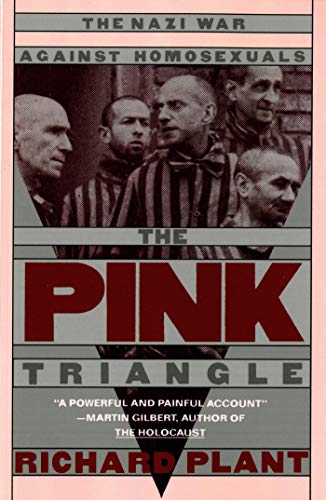
Inhaltsangabe
"A strong book, not easy to put down . . . Mr. Plant writes convincingly, keeps clear of sentiment, and lays bare a particularly fearful corner of mid-twentieth century inhumanity."
-The Economist
This is the first comprehensive book in English on the fate of the homosexuals in Nazi Germany. The author, a German refugee, examines the climate and conditions that gave rise to a vicious campaign against Germany's gays, as directed by Himmler and his SS-persecution that resulted in tens of thousands of arrests and thousands of deaths.
In this Nazi crusade, homosexual prisoners were confined to death camps where, forced to wear pink triangles, they constituted the lowest rung in the camp hierarchy. The horror of camp life is described through diaries, previously untranslated documents, and interviews with and letters from survivors, revealing how the anti-homosexual campaign was conducted, the crackpot homophobic fantasies that fueled it, the men who made it possible, and those who were its victims. This chilling book sheds light on a corner of twentieth-century history that has been hidden in the shadows much too long.
Die Inhaltsangabe kann sich auf eine andere Ausgabe dieses Titels beziehen.
Über die Autorin bzw. den Autor
Richard Plant (1910-1998) was born in Frankfurt and was a graduate of the University of Basel, where he earned his Ph.D. After emigrating to the United States in 1938, he contributed numerous articles to many publications, and taught at the New School for Social Research in New York City.
Auszug. © Genehmigter Nachdruck. Alle Rechte vorbehalten.
The Pink Triangle
The Nazi War Against Homosexuals
By Richard PlantHenry Holt and Company
Copyright © 1986 Richard Plant
All rights reserved.
ISBN: 978-0-8050-0600-1All rights reserved.
Contents
Title Page,
PROLOGUE,
INTRODUCTION,
CHAPTER 1 - BEFORE THE STORM,
CHAPTER 2 - THE ROEHM AFFAIR,
CHAPTER 3 - THE GRAND INQUISITOR,
CHAPTER 4 - PERSECUTION,
CHAPTER 5 - IN CAMP,
CONCLUSION,
EPILOGUE,
ACKNOWLEDGMENTS,
Praise,
APPENDIX 1 - TEXT OF PARAGRAPH 175,
APPENDIX 2 - CHRONOLOGY,
NOTES,
SELECTED BIBLIOGRAPHY,
INDEX,
ABOUT THE AUTHOR,
Notes,
Copyright Page,
CHAPTER 1
BEFORE THE STORM
THE NAZI WAR AGAINST GERMANY'S HOMOSEXUALS, to be properly understood, must be seen against the backdrop of the terrible tensions and social traumas that ultimately were to cause the collapse of the Weimar Republic. For the severe economic depression, widespread unemployment, galloping inflation, and bitter civil strife that were to engulf Germany in the wake of World War I also consigned the country's small but vigorous homosexual-rights movement to oblivion. That movement, which began around the turn of the century, would reach its peak in the early 1920s, under the remarkable leadership of Dr. Magnus Hirschfeld. It would enjoy its greatest influence at precisely the moment that the larger society whose prejudices it sought to change began to spin out of control. To understand the fate of Germany's homosexuals it is necessary to grasp not only the specific events and warring ideologies that destroyed the Weimar Republic and created the conditions that permitted the rise of the Nazis, but also the general atmosphere of Germany between 1919 and 1933.
The anxiety and insecurity that would come to grip all social classes by 1933 began with the shock of military defeat at the end of World War I. It was a war that had left 1.7 million German soldiers dead and another four million wounded. The returning veterans, convinced that they had been betrayed, claimed to have been "stabbed in the back." Most Germans agreed. How was it possible for the Kaiser's mighty army to have been defeated? Only days before the end, hadn't the army's own press releases promised the certain victory of the "sacred German cause"? What the man in the street suspected, what the popular press trumpeted, was that traitors at home had caused the great catastrophe. War profiteers, foreigners from the East, Communists and Socialists, the Jews — all were to blame for Germany's humiliation.
A tidal wave of shame and resentment, experienced even by younger men who had not seen military service, swept the nation. Many people tried to digest the bitter defeat by searching furiously for scapegoats. The belief that internal enemies had brought down the Empire, the Kaiser, and the "Golden Age of German Power" was widespread. Enraged ex-soldiers and younger men formed violent bands that roamed Germany. A palpable yearning could be felt on all levels of society, from farm and factory workers to middle-class businessmen and big-city intellectuals, for security and vengeance. The old guard of the Empire had never given up their positions of privilege and power, and no truly democratic government ever really grew strong enough to dislodge them. Arch-conservatives still held most of the leading positions in the army and navy, the universities, the civil service, and especially the courts. Long before Adolf Hitler entered politics, long before anti-Semitism and antiliberalism had become battle cries for the Nazis, the Weimar Republic's experiment in democracy and social tolerance was steadily undermined by distrust, injustice, and violence. One is almost tempted to say that Hitler did not bring the Republic down; he merely saved it from suicide by murdering it himself. It was bankrupt long before he appointed himself as Germany's savior.
The social hurricane at the heart of the Weimar Republic was prompted and complicated by five factors: (1) fear of revolution; (2) racist and xenophobic paramilitary groups; (3) unprecedented inflation; (4) extreme unemployment; and (5) the Nazi Party.
First, directly after World War I, many older people were frightened by the specter of revolution. The Bolsheviks had accomplished it in Russia, and they had counted on the spreading of revolution in Europe to ensure their survival. The revolt in Munich in 1918 seemed to many to be but the opening shot in a class war. German newspapers were soon filled with hysterical reports of famine in the Ukraine. Many people feared that a Socialist triumph in Germany would doom the country to Russia's plight.
Second, dozens of racist and virulently nationalistic groups began to flourish in this climate, each more fanatical than the other. Many participated in the civil strife that began to break out sporadically all over the country. These guerrilla skirmishes especially alienated those Germans (the majority, it is safe to say) who wanted an orderly society in which to live and work.
A third factor cracked open the thin walls of stability and did more than any other to destroy trust and hope: the mammoth inflation of 1922-23. In just sixteen months the German mark soared from 192 marks to the American dollar to a staggering 4.2 trillion marks to the dollar. The financial faith of the country was shattered beyond repair. The middle class lost its savings and its confidence in government. Persons on fixed incomes, such as pensions, war bonds, and annuities, found their dreams drowned in monetary quicksand. An incomprehensible economic sickness infected everyone, diminishing all salaries and gobbling up savings. Everywhere, pawnshops were packed, and relief rolls lengthened. The labor unions, too, in which many had put their trust, failed. Since the unions' funds were gone, they could no longer resist the demands of employers: the ten-hour day returned to many industries. Unions began to lose members. Death and suicide rates rose; many children suffered from malnutrition. Those who had left the unions — and there were hundreds upon hundreds of thousands — found themselves politically adrift. Neither the left-wing Social Democratic Party (to which most labor unions belonged) nor the liberal or right-wing parties offered any prescriptions to cure this epidemic.
That the middle classes and the workers lost faith in both the state and the economy is not surprising. When money loses its value, then government is robbed of its authority. As Alan Bullock, the distinguished British historian and biographer of Hitler, has observed, the "result of the inflation was to undermine the foundations of German society in a way that neither the war nor the revolution of 1918 nor the Treaty of Versailles had ever done. The real revolution in Germany was the inflation." Berlin, the capital of the country, became the object of hatred for many Germans. A wave of anti-Berlin sentiment, always dormant on many levels of German society, swept through the provinces. Berlin, it was said, was different; it was evil, dominated by Jews, homosexuals, Communists.
A fourth factor compounding the deepening crisis was the rapid rise in unemployment, especially after the 1929 New York Stock Exchange crash, which toppled half of the financial institutions of Central Europe. Austrian banks collapsed first, then a number of leading German banks. In January 1930, the number of unemployed workers rose from 1.5 million to 3.2 million. Some economists estimate the actual number to have been more than six million by...
„Über diesen Titel“ kann sich auf eine andere Ausgabe dieses Titels beziehen.
Suchergebnisse für The Pink Triangle: The Nazi War Against Homosexuals

Beispielbild für diese ISBN
The Pink Triangle: The Nazi War Against Homosexuals
Anbieter: ThriftBooks-Reno, Reno, NV, USA
Verkäuferbewertung 5 von 5 Sternen

Paperback. Zustand: Good. No Jacket. Pages can have notes/highlighting. Spine may show signs of wear. ~ ThriftBooks: Read More, Spend Less. Artikel-Nr. G0805006001I3N00
Gebraucht kaufen
EUR 6,17
Versand gratis
Versand innerhalb von USA
Versand innerhalb von USA
Anzahl: 1 verfügbar
Beispielbild für diese ISBN
The Pink Triangle: The Nazi War Against Homosexuals
Anbieter: ThriftBooks-Phoenix, Phoenix, AZ, USA
Verkäuferbewertung 5 von 5 Sternen
Paperback. Zustand: Good. No Jacket. Pages can have notes/highlighting. Spine may show signs of wear. ~ ThriftBooks: Read More, Spend Less. Artikel-Nr. G0805006001I3N00
Gebraucht kaufen
EUR 6,17
Versand gratis
Versand innerhalb von USA
Versand innerhalb von USA
Anzahl: 1 verfügbar
Beispielbild für diese ISBN
The Pink Triangle: The Nazi War Against Homosexuals
Anbieter: ThriftBooks-Reno, Reno, NV, USA
Verkäuferbewertung 5 von 5 Sternen
Paperback. Zustand: Good. No Jacket. Missing dust jacket; Pages can have notes/highlighting. Spine may show signs of wear. ~ ThriftBooks: Read More, Spend Less. Artikel-Nr. G0805006001I3N01
Gebraucht kaufen
EUR 6,17
Versand gratis
Versand innerhalb von USA
Versand innerhalb von USA
Anzahl: 1 verfügbar
Beispielbild für diese ISBN
The Pink Triangle: The Nazi War Against Homosexuals
Anbieter: ThriftBooks-Dallas, Dallas, TX, USA
Verkäuferbewertung 5 von 5 Sternen
Paperback. Zustand: Good. No Jacket. Pages can have notes/highlighting. Spine may show signs of wear. ~ ThriftBooks: Read More, Spend Less. Artikel-Nr. G0805006001I3N00
Gebraucht kaufen
EUR 6,20
Versand gratis
Versand innerhalb von USA
Versand innerhalb von USA
Anzahl: 2 verfügbar
Beispielbild für diese ISBN
The Pink Triangle: The Nazi War Against Homosexuals
Anbieter: ThriftBooks-Dallas, Dallas, TX, USA
Verkäuferbewertung 5 von 5 Sternen
Paperback. Zustand: Fair. No Jacket. Readable copy. Pages may have considerable notes/highlighting. ~ ThriftBooks: Read More, Spend Less. Artikel-Nr. G0805006001I5N00
Gebraucht kaufen
EUR 6,20
Versand gratis
Versand innerhalb von USA
Versand innerhalb von USA
Anzahl: 1 verfügbar
Beispielbild für diese ISBN
The Pink Triangle: The Nazi War Against Homosexuals
Anbieter: ThriftBooks-Atlanta, AUSTELL, GA, USA
Verkäuferbewertung 5 von 5 Sternen
Paperback. Zustand: Fair. No Jacket. Readable copy. Pages may have considerable notes/highlighting. ~ ThriftBooks: Read More, Spend Less. Artikel-Nr. G0805006001I5N00
Gebraucht kaufen
EUR 6,20
Versand gratis
Versand innerhalb von USA
Versand innerhalb von USA
Anzahl: 1 verfügbar
Beispielbild für diese ISBN
The Pink Triangle: The Nazi War Against Homosexuals
Anbieter: ThriftBooks-Atlanta, AUSTELL, GA, USA
Verkäuferbewertung 5 von 5 Sternen
Paperback. Zustand: Good. No Jacket. Former library book; Pages can have notes/highlighting. Spine may show signs of wear. ~ ThriftBooks: Read More, Spend Less. Artikel-Nr. G0805006001I3N10
Gebraucht kaufen
EUR 6,20
Versand gratis
Versand innerhalb von USA
Versand innerhalb von USA
Anzahl: 1 verfügbar
Beispielbild für diese ISBN
The Pink Triangle: The Nazi War Against Homosexuals
Anbieter: ThriftBooks-Atlanta, AUSTELL, GA, USA
Verkäuferbewertung 5 von 5 Sternen
Paperback. Zustand: Good. No Jacket. Pages can have notes/highlighting. Spine may show signs of wear. ~ ThriftBooks: Read More, Spend Less. Artikel-Nr. G0805006001I3N00
Gebraucht kaufen
EUR 6,20
Versand gratis
Versand innerhalb von USA
Versand innerhalb von USA
Anzahl: 1 verfügbar
Beispielbild für diese ISBN
The Pink Triangle : The Nazi War Against Homosexuals
Anbieter: Better World Books, Mishawaka, IN, USA
Verkäuferbewertung 5 von 5 Sternen
Zustand: Very Good. Pages intact with possible writing/highlighting. Binding strong with minor wear. Dust jackets/supplements may not be included. Stock photo provided. Product includes identifying sticker. Better World Books: Buy Books. Do Good. Artikel-Nr. 4256467-6
Gebraucht kaufen
EUR 6,91
Versand gratis
Versand innerhalb von USA
Versand innerhalb von USA
Anzahl: 1 verfügbar
Beispielbild für diese ISBN
The Pink Triangle : The Nazi War Against Homosexuals
Anbieter: Better World Books, Mishawaka, IN, USA
Verkäuferbewertung 5 von 5 Sternen
Zustand: Good. Former library copy. Pages intact with minimal writing/highlighting. The binding may be loose and creased. Dust jackets/supplements are not included. Includes library markings. Stock photo provided. Product includes identifying sticker. Better World Books: Buy Books. Do Good. Artikel-Nr. GRP79079111
Gebraucht kaufen
EUR 6,91
Versand gratis
Versand innerhalb von USA
Versand innerhalb von USA
Anzahl: 1 verfügbar