
Verwandte Artikel zu Arms and Influence: U.S. Technology Innovations and...
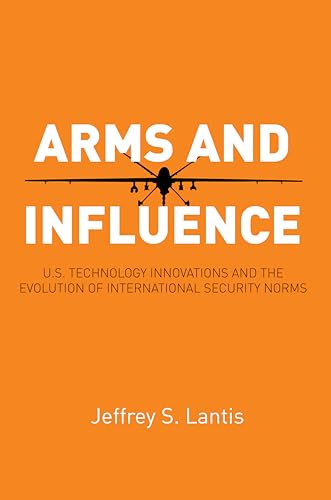
Arms and Influence: U.S. Technology Innovations and the Evolution of International Security Norms - Softcover
Inhaltsangabe
Arms and Influence explores the complex relationship between technology, policymaking, and international norms. Modern technological innovations such as the atomic bomb, armed unmanned aerial vehicles (UAVs), and advanced reconnaissance satellites have fostered debates about the boundaries of international norms and legitimate standards of behavior. These advances allow governments new opportunities for action around the world and have, in turn, prompted a broader effort to redefine international standards in areas such as self-defense, sovereignty, and preemptive strikes.
In this book, Jeffrey S. Lantis develops a new theory of norm change and identifies its stages, including redefinition (involving domestic political deliberations) and constructive norm substitution (in multilateral institutions). He deftly takes some of the most controversial new developments in military technologies and embeds them in international relations theory. The case evidence he presents suggests that periods of change are underway across numerous different issue areas.
Die Inhaltsangabe kann sich auf eine andere Ausgabe dieses Titels beziehen.
Über die Autorin bzw. den Autor
Jeffrey S. Lantis is Professor of Political Science at The College of Wooster.
Auszug. © Genehmigter Nachdruck. Alle Rechte vorbehalten.
Arms and Influence
U.S. Technology Innovation and the Evolution of International Security Norms
By Jeffrey S. LantisSTANFORD UNIVERSITY PRESS
Copyright © 2016 Board of Trustees of the Leland Stanford Junior University
All rights reserved.
ISBN: 978-0-8047-9977-5All rights reserved.
Contents
List of Acronyms,
Acknowledgments,
1. Introduction,
2. Theorizing Norm Change,
3. The Atom Bomb: Constructing a Nuclear Order,
4. Atoms for Peace? New Nuclear Technology Export Controls,
5. Satellites and Sovereignty: Humanitarian Intervention and the "Responsibility to Protect",
6. Armed UAVs and the Norm against Assassination of Foreign Adversaries,
7. The Final Frontier? Weaponizing Space,
8. Conclusion,
Notes,
Bibliography,
Index,
CHAPTER 1
Introduction
America's capabilities are unique. And the power of the new technologies means that there are fewer and fewer technical constraints on what we can do. That places a special obligation on us to ask tough questions about what we should do.
— Barack Obama
Politics will, to the end of history, be an area where conscience and power meet, where the ethical and coercive factors of human life will interpenetrate and work out their tentative and uneasy compromises.
— Reinhold Niebuhr
IN AUGUST 1945, PRESIDENT HARRY TRUMAN announced the United States had developed a revolutionary new weapon, the atomic bomb, through a secret research program known as the Manhattan Project. He said the bomb had been dropped on Hiroshima, effectively destroying "its usefulness to the enemy." Truman hailed the Manhattan Project as "the greatest scientific gamble in history" and expressed optimism that atomic energy could become "a forceful influence toward the maintenance of world peace." However, the heavy responsibilities associated with the ultimate weapon soon generated significant controversy in the halls of power. Some cabinet members and scientists proposed forsaking the bomb and transferring all nuclear technologies to an international regulatory authority, while others argued the United States should seize the advantages provided by the weapons before others acquired them. Two decades later, President Lyndon Johnson pressed for the establishment of a discriminatory international nonproliferation norm and instituted export controls to limit the spread of these technologies. The 1970 Treaty on the Non-Proliferation of Nuclear Weapons (NPT) clearly delineated nuclear haves and have-nots, a distinction that continues to resonate in international politics today.
In the early twenty-first century, technology innovations continued to generate significant leverage in policy-making, but they did not always guarantee success in achievement of preferred normative structures. For example, advances in satellite reconnaissance, communications, and computing technologies provided unprecedented levels of information to U.S. policy-makers about incidents of mass political violence and genocide occurring in other countries. In 2011, President Obama declared preventing ethnic cleansing and genocide "a core national security interest and a core moral responsibility of the United States." To optimists, this suggested an endorsement of the emerging "responsibility to protect" (or R2P) international norm over concerns regarding sovereignty and nonintervention. However, critics charged that even though policy-makers had abundant evidence of human rights abuses in Darfur, the Central African Republic, and Syria, they failed to act to stop mass killings. As a former National Security Council staff director lamented, "at best, we have a rhetorical commitment" to R2P. But, he cautioned, one should not yet assume that "because we know more, we're doing more."
This book explores the complex relationship between technology, policy-making, and international norms. While not designed to establish predictive theory, it sets out to identify stages and processes associated with norm change as well as open theoretical avenues for further exploration. Challenges to traditional norms catalyzed by technology innovations, such as the use of unmanned aerial vehicles (UAVs, or drones) for missile strikes on suspected terrorists that undermines the long-standing norm against assassination of foreign adversaries, have, in turn, prompted a broader effort to redefine international standards on self-defense, sovereignty, and preemptive strikes. These changes fuel significant contestation of international norms. As other governments develop their own drone fleets, Western leaders have scrambled to establish boundaries for a modified norm for targeted killings. In these and other instances, innovations appear to have become potential game changers in global politics.
These developments also suggest contradictions in the dominant historical narrative of U.S. engagement in global politics as a norm leader. The United States has played a critical role in shaping many international security norms — from standards on human rights grounded in the United Nations Universal Declaration on Human Rights (1948) to UN Security Council Resolution 1540, designed to prevent the proliferation of weapons of mass destruction to terrorist groups. First-generation (or what Andrew Cortell and James Davis term "first wave") constructivist international relations theory describes these developments as products of predictable life cycles; ideas for standards of behavior cascade through political systems and take on constitutive and regulatory qualities. However, this book examines the potential fragility of international norms through circumstances of attempted norm change by great powers. It sets out to document how determined leaders may develop strategies intended to change or manipulate normative security architectures for their own utilitarian purposes, and in the process fuel contestation that may or may not lead to successful outcomes.
Specifically, this study explores the fascinating dialectical relationship that emerges between the international normative order and endogenous technology advances. It highlights the ways tensions caused by hegemons have altered the political landscape by catalyzing norm-change processes. This approach stands in contrast to models that make general reference to "external shocks" as catalysts for change, and instead acknowledges the balance of internal and external factors that shape approaches to norms. In fact, technology innovations precede major shocks in many cases, but their implementation and advancement raise complex questions in the policy process. Technology may highlight dissonant strands of norms (e.g., nuclear technology sharing versus preventing weapons proliferation) or dissonance between norms (e.g., absolute sovereignty versus prevention of ethnic cleansing and genocide). New technologies often heighten awareness of problems or a lack of political consensus, increasing the chances that norms will be subject to contestation. In essence, "techno-normative dilemmas" fostered by technology innovations may force a sense of cognitive dissonance on elites, motivating them to solve the problem at hand. Drawing on insights from social psychology perspectives on idea formation and development, this study attends to the power of persuasion in domestic and foreign policy development.
In an era of drone strikes in Yemen, advancements in uranium enrichment, and the potential weaponization of space, research on the interaction between technology, norms, and state behavior has never been more...
„Über diesen Titel“ kann sich auf eine andere Ausgabe dieses Titels beziehen.
Suchergebnisse für Arms and Influence: U.S. Technology Innovations and...

Beispielbild für diese ISBN
Arms and Influence: U.S. Technology Innovations and the Evolution of International Security Norms
Verlag:
Stanford University Press, 2016
ISBN 10: 0804799776
ISBN 13: 9780804799775
Gebraucht
Paperback
Anbieter: World of Books (was SecondSale), Montgomery, IL, USA
Verkäuferbewertung 5 von 5 Sternen

Paperback. Zustand: Good. Arms and Influence explores the complex relationship between technology, policymaking, and international norms. Modern technological innovations such as the atomic bomb, armed unmanned aerial vehicles (UAVs), and advanced reconnaissance satellites have fostered debates about the boundaries of international norms and legitimate standards of behavior. These advances allow governments new opportunities for action around the world and have, in turn, prompted a broader effort to redefine international standards in areas such as self-defense, sovereignty, and preemptive strikes. In this book, Jeffrey S. Lantis develops a new theory of norm change and identifies its stages, including redefinition (involving domestic political deliberations) and constructive norm substitution (in multilateral institutions). He deftly takes some of the most controversial new developments in military technologies and embeds them in international relations theory. The case evidence he presents suggests that periods of change are underway across numerous different issue areas. Artikel-Nr. 00104842102
Gebraucht kaufen
EUR 7,79
Versand gratis
Versand innerhalb von USA
Versand innerhalb von USA
Anzahl: 1 verfügbar
Beispielbild für diese ISBN
Arms and Influence : U. S. Technology Innovations and the Evolution of International Security Norms
Verlag:
Stanford University Press, 2016
ISBN 10: 0804799776
ISBN 13: 9780804799775
Gebraucht
Softcover
Anbieter: Better World Books, Mishawaka, IN, USA
Verkäuferbewertung 5 von 5 Sternen
Zustand: Very Good. Former library copy. Pages intact with possible writing/highlighting. Binding strong with minor wear. Dust jackets/supplements may not be included. Includes library markings. Stock photo provided. Product includes identifying sticker. Better World Books: Buy Books. Do Good. Artikel-Nr. 13156033-75
Gebraucht kaufen
EUR 7,88
Versand gratis
Versand innerhalb von USA
Versand innerhalb von USA
Anzahl: 1 verfügbar
Beispielbild für diese ISBN
Arms and Influence : U. S. Technology Innovations and the Evolution of International Security Norms
Verlag:
Stanford University Press, 2016
ISBN 10: 0804799776
ISBN 13: 9780804799775
Gebraucht
Softcover
Anbieter: Better World Books, Mishawaka, IN, USA
Verkäuferbewertung 5 von 5 Sternen
Zustand: Good. Former library copy. Pages intact with minimal writing/highlighting. The binding may be loose and creased. Dust jackets/supplements are not included. Includes library markings. Stock photo provided. Product includes identifying sticker. Better World Books: Buy Books. Do Good. Artikel-Nr. 55568580-6
Gebraucht kaufen
EUR 7,88
Versand gratis
Versand innerhalb von USA
Versand innerhalb von USA
Anzahl: 1 verfügbar
Beispielbild für diese ISBN
Arms and Influence : U. S. Technology Innovations and the Evolution of International Security Norms
Verlag:
Stanford University Press, 2016
ISBN 10: 0804799776
ISBN 13: 9780804799775
Gebraucht
Softcover
Anbieter: Better World Books, Mishawaka, IN, USA
Verkäuferbewertung 5 von 5 Sternen
Zustand: Very Good. Pages intact with possible writing/highlighting. Binding strong with minor wear. Dust jackets/supplements may not be included. Stock photo provided. Product includes identifying sticker. Better World Books: Buy Books. Do Good. Artikel-Nr. 57329601-6
Gebraucht kaufen
EUR 7,88
Versand gratis
Versand innerhalb von USA
Versand innerhalb von USA
Anzahl: 1 verfügbar
Beispielbild für diese ISBN
Arms and Influence U.S. Technology Innovations and the Evolution of International Security Norms
Anbieter: Revaluation Books, Exeter, Vereinigtes Königreich
Verkäuferbewertung 5 von 5 Sternen
Paperback. Zustand: Brand New. 280 pages. 9.00x6.00x0.75 inches. In Stock. Artikel-Nr. x-0804799776
Neu kaufen
EUR 38,92
EUR 11,66 Versand
Versand von Vereinigtes Königreich nach USA
Versand von Vereinigtes Königreich nach USA
Anzahl: 2 verfügbar
Foto des Verkäufers
Arms and Influence : U.S. Technology Innovations and the Evolution of International Security Norms
Verlag:
Stanford University Press Jul 2016, 2016
ISBN 10: 0804799776
ISBN 13: 9780804799775
Neu
Taschenbuch
Anbieter: AHA-BUCH GmbH, Einbeck, Deutschland
Verkäuferbewertung 5 von 5 Sternen
Taschenbuch. Zustand: Neu. Neuware - Arms and Influence explores the complex relationship between technology, policymaking, and international norms. Modern technological innovations such as the atomic bomb, armed unmanned aerial vehicles (UAVs), and advanced reconnaissance satellites have fostered debates about the boundaries of international norms and legitimate standards of behavior. These advances allow governments new opportunities for action around the world and have, in turn, prompted a broader effort to redefine international standards in areas such as self-defense, sovereignty, and preemptive strikes. In this book, Jeffrey S. Lantis develops a new theory of norm change and identifies its stages, including redefinition (involving domestic political deliberations) and constructive norm substitution (in multilateral institutions). He deftly takes some of the most controversial new developments in military technologies and embeds them in international relations theory. The case evidence he presents suggests that periods of change are underway across numerous different issue areas. Artikel-Nr. 9780804799775
Neu kaufen
EUR 40,17
EUR 35,00 Versand
Versand von Deutschland nach USA
Versand von Deutschland nach USA
Anzahl: 2 verfügbar
Foto des Verkäufers
Arms and Influence
Anbieter: moluna, Greven, Deutschland
Verkäuferbewertung 5 von 5 Sternen
Zustand: New. Über den AutorJeffrey S. Lantis is Professor of Political Science at The College of Wooster.InhaltsverzeichnisContents and Abstracts1Introduction chapter abstra. Artikel-Nr. 898741755
Neu kaufen
EUR 31,94
EUR 48,99 Versand
Versand von Deutschland nach USA
Versand von Deutschland nach USA
Anzahl: Mehr als 20 verfügbar