Inhaltsangabe
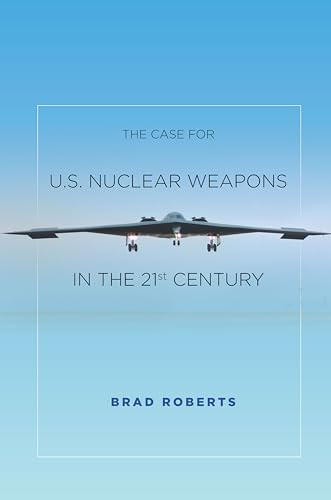
This book is a counter to the conventional wisdom that the United States can and should do more to reduce both the role of nuclear weapons in its security strategies and the number of weapons in its arsenal. The case against nuclear weapons has been made on many grounds-including historical, political, and moral. But, Brad Roberts argues, it has not so far been informed by the experience of the United States since the Cold War in trying to adapt deterrence to a changed world, and to create the conditions that would allow further significant changes to U.S. nuclear policy and posture. Drawing on the author's experience in the making and implementation of U.S. policy in the Obama administration, this book examines that real world experience and finds important lessons for the disarmament enterprise. Central conclusions of the work are that other nuclear-armed states are not prepared to join the United States in making reductions, and that unilateral steps by the United States to disarm further would be harmful to its interests and those of its allies. The book ultimately argues in favor of patience and persistence in the implementation of a balanced approach to nuclear strategy that encompasses political efforts to reduce nuclear dangers along with military efforts to deter them.
Die Inhaltsangabe kann sich auf eine andere Ausgabe dieses Titels beziehen.
Über die Autorin bzw. den Autor
Brad Roberts is Director of the Center for Global Security Research at Lawrence Livermore National Laboratory. From 2013 to 2014 he was a William J. Perry Fellow at Stanford University's Center for International Security and Cooperation. From 2009 to 2013, he served as Deputy Assistant Secretary of Defense for Nuclear and Missile Defense Policy.
Auszug. © Genehmigter Nachdruck. Alle Rechte vorbehalten.
The Case for U.S. Nuclear Weapons in the 21st Century
By Brad RobertsSTANFORD UNIVERSITY PRESS
Copyright © 2016 Board of Trustees of the Leland Stanford Junior University
All rights reserved.
ISBN: 978-0-8047-9713-9All rights reserved.
Contents
Acknowledgments,
Introduction,
1. The Evolution of U.S. Nuclear Policy and Posture since the End of the Cold War,
2. The First New Problem: Nuclear-Armed Regional Challengers,
3. The New Regional Deterrence Strategy,
4. The Second New Problem: Relations with Putin's Russia,
5. The Evolving Relationship with China,
6. Extended Deterrence and Strategic Stability in Europe,
7. Extended Deterrence and Strategic Stability in Northeast Asia,
8. The Broader Nuclear Assurance Agenda,
9. Conclusions,
Epilogue: Implications for Future Strategy, Policy, and Posture Reviews,
Notes,
Index,
CHAPTER 1
The Evolution of U.S. Nuclear Policy and Posture since the End of the Cold War
TO UNDERSTAND THE CURRENT MOMENT IN U.S. NUCLEAR policy and debate, some historical perspective is useful. U.S. nuclear policy used to be at the center of the U.S. national security debate; as it has become marginalized over the last three decades, it has become increasingly difficult to see the elements of continuity and change in U.S. policy and to understand the lessons of past experience for current and future policy.
This chapter begins with a summary of the nuclear inheritance from the Cold War in terms of the policy and posture in place in 1990. It then reviews the evolution of policy and posture with each subsequent presidential administration. This review includes also developments in the nongovernmental expert community that influenced U.S. policy. Following on this chronological overview, the chapter then identifies elements of change and continuity in U.S. nuclear policy and posture over the last twenty- five years. The chapter then pivots to the twenty-five years ahead. It sets out some critical decisions that must be made about the future of U.S. nuclear posture. This analysis highlights the weakness of the intellectual and political foundations on which such decisions will be made.
The Cold War Inheritance
With the collapse of the Soviet Union on Christmas Day 1991, one chapter in U.S. nuclear history ended and another began. At that time, U.S. nuclear policy and posture reflected the long-standing bipolar standoff and decades of technically driven arms competition with the Soviet Union.
Following the modernization of the U.S. nuclear posture in the 1980s, the U.S. nuclear arsenal contained approximately 21,000 weapons in late 1991. The triad of strategic nuclear delivery systems (submarine-launched ballistic missiles [SLBMs], land-based intercontinental-range ballistic missiles [ICBMs], and strategic bombers) was completing a cycle of modernization, along with the associated warheads. U.S. nuclear weapons were also deployed in both Europe and East Asia. This large force was supported by a modern command and control system ensuring presidential control of nuclear operations even under nuclear attack. The overall size and structure of U.S. nuclear forces were a function of the requirements of deterrence of the Soviet Union and Warsaw Pact, with any other contingency deemed a lesser-included problem. The standing force was supported by a robust research, development, and production capacity for both warheads and delivery systems.
In 1990, the United States and Soviet Union were actively pursuing arms control across a broad front, following the thaw in their political relations. The Treaty on Intermediate-range Nu
„Über diesen Titel“ kann sich auf eine andere Ausgabe dieses Titels beziehen.
Weitere beliebte Ausgaben desselben Titels

Suchergebnisse für The Case for U.S. Nuclear Weapons in the 21st Century

Beispielbild für diese ISBN
The Case for U.S. Nuclear Weapons in the 21st Century
Verlag:
Stanford Security Studies, 2015
ISBN 10: 0804797137
ISBN 13: 9780804797139
Gebraucht
Paperback
Anbieter: ThriftBooks-Dallas, Dallas, TX, USA
Verkäuferbewertung 5 von 5 Sternen

Paperback. Zustand: Very Good. No Jacket. May have limited writing in cover pages. Pages are unmarked. ~ ThriftBooks: Read More, Spend Less. Artikel-Nr. G0804797137I4N00
Beispielbild für diese ISBN
The Case for U. S. Nuclear Weapons in the 21st Century
Verlag:
Stanford University Press, 2015
ISBN 10: 0804797137
ISBN 13: 9780804797139
Gebraucht
Softcover
Anbieter: Better World Books, Mishawaka, IN, USA
Verkäuferbewertung 5 von 5 Sternen
Zustand: Very Good. Former library book; may include library markings. Used book that is in excellent condition. May show signs of wear or have minor defects. Artikel-Nr. 13156036-6
Beispielbild für diese ISBN
The Case for U. S. Nuclear Weapons in the 21st Century
Verlag:
Stanford University Press, 2015
ISBN 10: 0804797137
ISBN 13: 9780804797139
Gebraucht
Softcover
Anbieter: Better World Books, Mishawaka, IN, USA
Verkäuferbewertung 5 von 5 Sternen
Zustand: Good. Former library book; may include library markings. Used book that is in clean, average condition without any missing pages. Artikel-Nr. 45175305-6
Beispielbild für diese ISBN
The Case for U.S. Nuclear Weapons in the 21st Century
Anbieter: PBShop.store UK, Fairford, GLOS, Vereinigtes Königreich
Verkäuferbewertung 5 von 5 Sternen
PAP. Zustand: New. New Book. Shipped from UK. Established seller since 2000. Artikel-Nr. FW-9780804797139
Neu kaufen
EUR 29,75
Versand:
EUR 5,75
Von Vereinigtes Königreich nach USA
Anzahl: 15 verfügbar
Beispielbild für diese ISBN
The Case for U.S. Nuclear Weapons in the 21st Century
Anbieter: Majestic Books, Hounslow, Vereinigtes Königreich
Verkäuferbewertung 4 von 5 Sternen

Zustand: New. pp. 336. Artikel-Nr. 373575772
Neu kaufen
EUR 41,97
Versand:
EUR 7,44
Von Vereinigtes Königreich nach USA
Anzahl: 3 verfügbar
Beispielbild für diese ISBN
The Case for U.s. Nuclear Weapons in the 21st Century
Anbieter: Revaluation Books, Exeter, Vereinigtes Königreich
Verkäuferbewertung 5 von 5 Sternen
Paperback. Zustand: Brand New. 340 pages. 9.00x6.25x0.75 inches. In Stock. Artikel-Nr. x-0804797137
Neu kaufen
EUR 42,10
Versand:
EUR 11,45
Von Vereinigtes Königreich nach USA
Anzahl: 2 verfügbar
Beispielbild für diese ISBN
The Case for U.S. Nuclear Weapons in the 21st Century
Anbieter: Kennys Bookstore, Olney, MD, USA
Verkäuferbewertung 5 von 5 Sternen
Zustand: New. Num Pages: 352 pages. BIC Classification: 3JM; JWMN. Category: (G) General (US: Trade). Dimension: 230 x 153 x 27. Weight in Grams: 518. . 2015. Paperback. . . . . Books ship from the US and Ireland. Artikel-Nr. V9780804797139
Neu kaufen
EUR 49,30
Versand:
EUR 9,02
Innerhalb der USA
Anzahl: Mehr als 20 verfügbar
Foto des Verkäufers
The Case for U.S. Nuclear Weapons in the 21st Century
Verlag:
STANFORD SECURITY STUDIES, 2015
ISBN 10: 0804797137
ISBN 13: 9780804797139
Neu
Kartoniert / Broschiert
Anbieter: moluna, Greven, Deutschland
Verkäuferbewertung 4 von 5 Sternen
Kartoniert / Broschiert. Zustand: New. Über den AutorrnrnBrad Roberts is Director of the Center for Global Security Research at Lawrence Livermore National Laboratory. From 2013 to 2014 he was a William J. Perry Fellow at Stanford University s Center for International Security a. Artikel-Nr. 595016805
Neu kaufen
EUR 35,59
Versand:
EUR 48,99
Von Deutschland nach USA
Anzahl: Mehr als 20 verfügbar
Foto des Verkäufers
The Case for U.S. Nuclear Weapons in the 21st Century
Verlag:
Stanford University Press Dez 2015, 2015
ISBN 10: 0804797137
ISBN 13: 9780804797139
Neu
Taschenbuch
Anbieter: AHA-BUCH GmbH, Einbeck, Deutschland
Verkäuferbewertung 5 von 5 Sternen
Taschenbuch. Zustand: Neu. Neuware - This book is a counter to the conventional wisdom that the United States can and should do more to reduce both the role of nuclear weapons in its security strategies and the number of weapons in its arsenal. The case against nuclear weapons has been made on many grounds-including historical, political, and moral. But, Brad Roberts argues, it has not so far been informed by the experience of the United States since the Cold War in trying to adapt deterrence to a changed world, and to create the conditions that would allow further significant changes to U.S. nuclear policy and posture. Artikel-Nr. 9780804797139
Neu kaufen
EUR 44,22
Versand:
EUR 62,33
Von Deutschland nach USA
Anzahl: 2 verfügbar