
Verwandte Artikel zu The Orphan Scandal: Christian Missionaries and the...
Inhaltsangabe
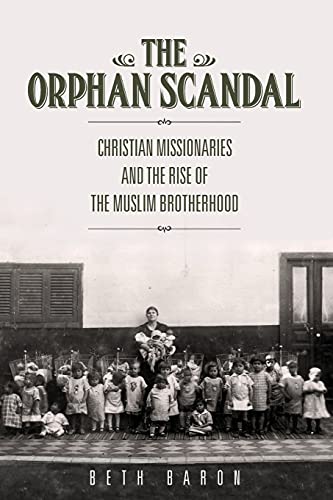
On a sweltering June morning in 1933 a fifteen-year-old Muslim orphan girl refused to rise in a show of respect for her elders at her Christian missionary school in Port Said. Her intransigence led to a beating-and to the end of most foreign missions in Egypt-and contributed to the rise of Islamist organizations.
Turkiyya Hasan left the Swedish Salaam Mission with scratches on her legs and a suitcase of evidence of missionary misdeeds. Her story hit a nerve among Egyptians, and news of the beating quickly spread through the country. Suspicion of missionary schools, hospitals, and homes increased, and a vehement anti-missionary movement swept the country. That missionaries had won few converts was immaterial to Egyptian observers: stories such as Turkiyya's showed that the threat to Muslims and Islam was real. This is a great story of unintended consequences: Christian missionaries came to Egypt to convert and provide social services for children. Their actions ultimately inspired the development of the Muslim Brotherhood and similar Islamist groups.
In The Orphan Scandal, Beth Baron provides a new lens through which to view the rise of Islamic groups in Egypt. This fresh perspective offers a starting point to uncover hidden links between Islamic activists and a broad cadre of Protestant evangelicals. Exploring the historical aims of the Christian missions and the early efforts of the Muslim Brotherhood, Baron shows how the Muslim Brotherhood and like-minded Islamist associations developed alongside and in reaction to the influx of missionaries. Patterning their organization and social welfare projects on the early success of the Christian missions, the Brotherhood launched their own efforts to "save" children and provide for the orphaned, abandoned, and poor. In battling for Egypt's children, Islamic activists created a network of social welfare institutions and a template for social action across the country-the effects of which, we now know, would only gain power and influence across the country in the decades to come.
Die Inhaltsangabe kann sich auf eine andere Ausgabe dieses Titels beziehen.
Über die Autorin bzw. den Autor
Beth Baron is Professor of History at City College and Director of the Middle East and Middle Eastern American Center at The Graduate Center, CUNY. She is the author of Egypt as a Woman: Nationalism, Gender, and Politics (2005) and The Women's Awakening in Egypt: Culture, Society, and the Press (1994).
Auszug. © Genehmigter Nachdruck. Alle Rechte vorbehalten.
The Orphan Scandal
Christian Missionaries and the Rise of the Muslim Brotherhood
By Beth BaronSTANFORD UNIVERSITY PRESS
Copyright © 2014 Board of Trustees of the Leland Stanford Junior University
All rights reserved.
ISBN: 978-0-8047-9138-0All rights reserved.
Contents
Preface,
Acknowledgments,
Cast of Characters,
Prologue: The Turkiyya Hasan Affair,
PART I. THE BEST OF INTENTIONS: EVANGELICALS ON THE NILE,
1. Forgotten Children: Caring for the Orphaned and Abandoned,
2. Winning Souls for Christ: American Presbyterians in Cairo,
3. Speaking in Tongues: Pentecostal Revival in Asyut,
4. Nothing Less Than a Miracle: The Swedish Salaam Mission of Port Said,
PART II. UNINTENDED CONSEQUENCES: ISLAMISTS AND THE STATE,
5. Fight Them with Their Own Weapons: The Origins of the Muslim Brotherhood,
6. Combating Conversion: The Expansion of the Anti-Missionary Movement,
7. Crackdown: Suppressing the League for the Defense of Islam,
8. The Battle for Egypt's Orphans: Toward a Muslim Welfare State,
Epilogue,
Notes,
Index,
Illustrations follow Chapter 4,
CHAPTER 1
FORGOTTEN CHILDREN
Caring for the Orphaned and Abandoned
CHRISTIAN MISSIONARIES AND ISLAMIC ACTIVISTS battled in the 1930s over the bodies and souls of Egyptian children on the field of social welfare. The tug of war was most pronounced in the efforts to "save" or "liberate" the orphaned and abandoned. The struggle, which shaped the Muslim Brotherhood, seeded the welfare state, and sealed the fate of missionaries in Egypt, was a long time in the making. Tracing its roots, and the reasons missionaries came to have a near monopoly on orphan care, is critical to understanding the confrontation that culminated in the 1933 Port Said orphan scandal.
Among those who were considered the deserving poor, orphaned and abandoned children stood out in Muslim societies, but there were very important differences in their legal status and place in the social imaginary. According to Islamic law, an orphan (yatim; pl. aytam, yatama) was one who had lost a father. Foundlings (laqit; pl. luqata'), or abandoned children, in contrast, were often presumed to be the result of illicit sexual relations, though children were also abandoned due to penury. Islamic inheritance law, which Copts followed, set the parameters for caring for these children, with the law clearly distinguishing between those whose paternity could be established and those whose paternity was unknown or contested: one was to be specially protected, the other ostracized for their unknown pedigree.
Islamic law has a great deal to say about the care of orphans, encouraging kind treatment, detailing the responsibilities of guardians, and protecting inheritances. The child's mother, if still alive, was not responsible for supporting the child financially; and she had no rights over the child's upbringing or claims to his or her property after the child had passed a certain age. Inheritance was set by fixed Qur'anic shares and could only be assigned to those in the blood line. By regulating and assigning guardians, usually a male family member, the law sought to protect the inheritance of orphans. The law prohibited adoption, barring admission into a family to those outside the male bloodline, and did not allow the giving of a new paternal name to a child. These rules effectively excluded orphans from becoming legally knit into a new family on the same terms as other offspring. Fostering and giving the gift of care, in which children without parental care were taken into other families but kept their own names, existed. Hidden or secret adoption was also practiced, but these unsanctioned arrangements ran the risk of becoming undone at critical moments.
The regulations surrounding orphans shored up the notion of the family as a set of blood relatives with a shared pedigree and patrilineal descent. The social and legal emphasis on biological as opposed to adoptive parenthood created challenges for those who were infertile and could not reproduce. And it left those without a patrimony—abandoned children—in a social wilderness. Bearing the stigma of the act of illicit sex and carrying the stain of a misbegotten birth, they were sometimes perceived to have "tainted" blood. Whether the sexual act through which they were conceived was voluntary or forced, their mothers were considered to have dishonored the family by having premarital or extra-marital relations. Stigmatizing children born out of wedlock and branding the mothers was obviously not unique to Egypt, but it meant that single motherhood was not an option, and it left illegitimate children on the margins of society. They were not legally orphans, which would have given them certain protections.
In practice the "orphans" in the story presented here came from a variety of family situations and did not adhere to a strict legal definition: they were abandoned, disabled, motherless, fatherless, or simply had no relatives who were able or willing to care for them. They were, in short, children without parental care. The Ottoman-Egyptian state strove to build up a social welfare network that would help orphans who lacked resources or family members willing to raise them; abandoned children, who had no knowledge of their families at all; and all others who fell through the cracks of family networks. Its work was interrupted by the British occupation of 1882, after which state investment in social welfare declined. Here is where missionaries found a special calling and a niche. Protestant missionaries had begun arriving on the shores of Egypt in the mid-nineteenth century with the gospel in hand and a vision to save Egyptians. When the locals did not turn out in large numbers to hear their message, evangelicals started building schools, hospitals, and later orphanages to guarantee a captive audience. Partaking of social welfare came with an obligation to study the Bible, sit in on services, and listen to prayer. Egyptians initially took this to be a small price to pay for services which were in short supply.
"Managing" the Poor: The Ottoman-Egyptian State
Social welfare in premodern Egypt had been a prerogative, or responsibility, of religious authorities, with each religious community taking care of its own poor and establishing trusts for this purpose. The modernizing state under the Ottoman viceroy Mehmed 'Ali (r. 1805–49) eyed the assets of Islamic religious endowments and began assuming administration of them. The state gained oversight over institutions set up to serve those who were not sufficiently provided for by the safety net of the family or by other forms of religious charity. The latter included large multifunctional complexes established by sultans and other wealthy donors, which had previously operated autonomously from the state. The Maristan Qalawun, a medieval mosque and hospital complex, was one such institution. It came to have an orphanage and foundling home, which took in abandoned children found on the streets of Cairo and those whose parents could not properly care for them.
The Ottoman-Egyptian state was interested in "managing" the poor, whether those in need were widows, sick, elderly, or orphans. In addition to taking over administration of religious endowments, the state started its own social welfare operations. Prominent among these was the Madrasat al-Wilada (School for Midwives). Established in the 1830s in the Civilian Hospital of Azbakiyya, the school contained a home for...
„Über diesen Titel“ kann sich auf eine andere Ausgabe dieses Titels beziehen.
Suchergebnisse für The Orphan Scandal: Christian Missionaries and the...

Beispielbild für diese ISBN
The Orphan Scandal: Christian Missionaries and the Rise of the Muslim Brotherhood
Verlag:
Stanford University Press, 2014
ISBN 10: 0804791384
ISBN 13: 9780804791380
Gebraucht
Paperback
Anbieter: ThriftBooks-Atlanta, AUSTELL, GA, USA
Verkäuferbewertung 5 von 5 Sternen

Paperback. Zustand: Good. No Jacket. Pages can have notes/highlighting. Spine may show signs of wear. ~ ThriftBooks: Read More, Spend Less. Artikel-Nr. G0804791384I3N00
Gebraucht kaufen
EUR 6,20
Versand gratis
Versand innerhalb von USA
Versand innerhalb von USA
Anzahl: 1 verfügbar
Beispielbild für diese ISBN
The Orphan Scandal: Christian Missionaries and the Rise of the Muslim Brotherhood
Verlag:
Stanford University Press, 2014
ISBN 10: 0804791384
ISBN 13: 9780804791380
Gebraucht
Softcover
Anbieter: World of Books (was SecondSale), Montgomery, IL, USA
Verkäuferbewertung 5 von 5 Sternen
Zustand: Good. Item in good condition. Textbooks may not include supplemental items i.e. CDs, access codes etc. Artikel-Nr. 00089388444
Gebraucht kaufen
EUR 6,54
Versand gratis
Versand innerhalb von USA
Versand innerhalb von USA
Anzahl: 1 verfügbar
Beispielbild für diese ISBN
The Orphan Scandal : Christian Missionaries and the Rise of the Muslim Brotherhood
Verlag:
Stanford University Press, 2014
ISBN 10: 0804791384
ISBN 13: 9780804791380
Gebraucht
Softcover
Erstausgabe
Anbieter: Better World Books, Mishawaka, IN, USA
Verkäuferbewertung 5 von 5 Sternen
Zustand: Good. 1st Edition. Former library copy. Pages intact with minimal writing/highlighting. The binding may be loose and creased. Dust jackets/supplements are not included. Includes library markings. Stock photo provided. Product includes identifying sticker. Better World Books: Buy Books. Do Good. Artikel-Nr. 9520129-6
Gebraucht kaufen
EUR 6,55
Versand gratis
Versand innerhalb von USA
Versand innerhalb von USA
Anzahl: 1 verfügbar
Beispielbild für diese ISBN
The Orphan Scandal : Christian Missionaries and the Rise of the Muslim Brotherhood
Verlag:
Stanford University Press, 2014
ISBN 10: 0804791384
ISBN 13: 9780804791380
Gebraucht
Softcover
Erstausgabe
Anbieter: Better World Books, Mishawaka, IN, USA
Verkäuferbewertung 5 von 5 Sternen
Zustand: Very Good. 1st Edition. Pages intact with possible writing/highlighting. Binding strong with minor wear. Dust jackets/supplements may not be included. Stock photo provided. Product includes identifying sticker. Better World Books: Buy Books. Do Good. Artikel-Nr. 39419678-6
Gebraucht kaufen
EUR 6,55
Versand gratis
Versand innerhalb von USA
Versand innerhalb von USA
Anzahl: 1 verfügbar
Beispielbild für diese ISBN
The Orphan Scandal
Anbieter: PBShop.store UK, Fairford, GLOS, Vereinigtes Königreich
Verkäuferbewertung 5 von 5 Sternen
PAP. Zustand: New. New Book. Shipped from UK. Established seller since 2000. Artikel-Nr. FW-9780804791380
Neu kaufen
EUR 24,69
EUR 4,96 Versand
Versand von Vereinigtes Königreich nach USA
Versand von Vereinigtes Königreich nach USA
Anzahl: 15 verfügbar
Beispielbild für diese ISBN
The Orphan Scandal
Anbieter: Majestic Books, Hounslow, Vereinigtes Königreich
Verkäuferbewertung 4 von 5 Sternen

Zustand: New. pp. 272. Artikel-Nr. 95956297
Neu kaufen
EUR 32,74
EUR 7,75 Versand
Versand von Vereinigtes Königreich nach USA
Versand von Vereinigtes Königreich nach USA
Anzahl: 3 verfügbar
Beispielbild für diese ISBN
The Orphan Scandal: Christian Missionaries and the Rise of the Muslim Brotherhood
Anbieter: Ria Christie Collections, Uxbridge, Vereinigtes Königreich
Verkäuferbewertung 5 von 5 Sternen
Zustand: New. In English. Artikel-Nr. ria9780804791380_new
Neu kaufen
EUR 31,82
EUR 11,17 Versand
Versand von Vereinigtes Königreich nach USA
Versand von Vereinigtes Königreich nach USA
Anzahl: Mehr als 20 verfügbar
Beispielbild für diese ISBN
The Orphan Scandal Christian Missionaries and the Rise of the Muslim Brotherhood
Anbieter: Revaluation Books, Exeter, Vereinigtes Königreich
Verkäuferbewertung 5 von 5 Sternen
Paperback. Zustand: Brand New. 245 pages. 9.00x6.25x0.75 inches. In Stock. Artikel-Nr. x-0804791384
Neu kaufen
EUR 34,72
EUR 11,92 Versand
Versand von Vereinigtes Königreich nach USA
Versand von Vereinigtes Königreich nach USA
Anzahl: 2 verfügbar
Beispielbild für diese ISBN
The Orphan Scandal: Christian Missionaries and the Rise of the Muslim Brotherhood
Anbieter: Kennys Bookstore, Olney, MD, USA
Verkäuferbewertung 5 von 5 Sternen
Zustand: New. Following the story of the Port Said orphan scandal, this book uncovers hidden links between Protestant evangelicals and the growth of Islamist groups in Egypt. Num Pages: 272 pages, black & white illustrations, maps. BIC Classification: 1HBE; 3JJ; HBJH; HBLW; HRCX7; HRH. Category: (G) General (US: Trade). Dimension: 228 x 155 x 15. Weight in Grams: 372. . 2014. Paperback. . . . . Books ship from the US and Ireland. Artikel-Nr. V9780804791380
Neu kaufen
EUR 39,31
EUR 9,35 Versand
Versand innerhalb von USA
Versand innerhalb von USA
Anzahl: Mehr als 20 verfügbar
Foto des Verkäufers
The Orphan Scandal: Christian Missionaries and the Rise of the Muslim Brotherhood
Verlag:
STANFORD UNIV PR, 2014
ISBN 10: 0804791384
ISBN 13: 9780804791380
Neu
Kartoniert / Broschiert
Anbieter: moluna, Greven, Deutschland
Verkäuferbewertung 5 von 5 Sternen
Kartoniert / Broschiert. Zustand: New. Following the story of the Port Said orphan scandal, this book uncovers hidden links between Protestant evangelicals and the growth of Islamist groups in Egypt.Über den AutorrnrnBeth Baron is Professor of History at City College and Dir. Artikel-Nr. 595016563
Neu kaufen
EUR 29,31
EUR 48,99 Versand
Versand von Deutschland nach USA
Versand von Deutschland nach USA
Anzahl: Mehr als 20 verfügbar