
Verwandte Artikel zu Governing Immigration Through Crime: A Reader
Inhaltsangabe
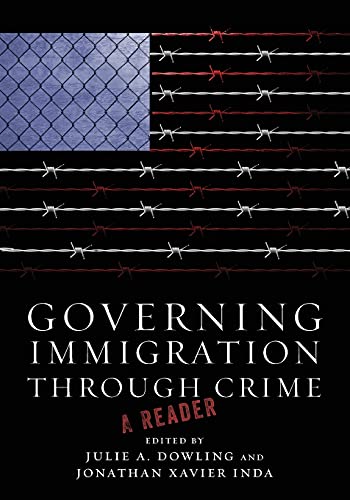
In the United States, immigration is generally seen as a law and order issue. Amidst increasing anti-immigrant sentiment, unauthorized migrants have been cast as lawbreakers. Governing Immigration Through Crime offers a comprehensive and accessible introduction to the use of crime and punishment to manage undocumented immigrants.
Presenting key readings and cutting-edge scholarship, this volume examines a range of contemporary criminalizing practices: restrictive immigration laws, enhanced border policing, workplace audits, detention and deportation, and increased policing of immigration at the state and local level. Of equal importance, the readings highlight how migrants have managed to actively resist these punitive practices. In bringing together critical theorists of immigration to understand how the current political landscape propagates the view of the "illegal alien" as a threat to social order, this text encourages students and general readers alike to think seriously about the place of undocumented immigrants in American society.
Die Inhaltsangabe kann sich auf eine andere Ausgabe dieses Titels beziehen.
Über die Autorin bzw. den Autor
Julie A. Dowling is Assistant Professor of Latina/Latino Studies at the University of Illinois, Urbana-Champaign. Jonathan Xavier Inda is Associate Professor of Latina/Latino Studies at the University of Illinois, Urbana-Champaign.
Auszug. © Genehmigter Nachdruck. Alle Rechte vorbehalten.
GOVERNING IMMIGRATION THROUGH CRIME
A ReaderStanford University Press
Copyright © 2013 Board of Trustees of the Leland Stanford Junior UniversityAll right reserved.
ISBN: 978-0-8047-7881-7
Contents
Acknowledgments............................................................................................................................................................................viiIntroduction: Governing Migrant Illegality Jonathan Xavier Inda and Julie A. Dowling......................................................................................................1Part I LAW AND CRIMINALIZATION............................................................................................................................................................371. The Legal Production of Mexican/Migrant "Illegality" Nicholas De Genova................................................................................................................412. The Crimmigration Crisis: Immigrants, Crime, and Sovereign Power Juliet P. Stumpf......................................................................................................593. The Security Myth: Punishing Immigrants in the Name of National Security Jennifer M. Chacón.......................................................................................77Part II MANAGING BORDERS..................................................................................................................................................................954. Constructing a Virtual Wall: Race and Citizenship in U.S.-Mexico Border Policing Josiah McC. Heyman....................................................................................995. Spectacle in the Desert: The Minuteman Project on the U.S.-Mexico Border Leo R. Chavez.................................................................................................1156. Bare Life: Border-Crossing Deaths and Spaces of Moral Alibi Roxanne Lynn Doty..........................................................................................................129Part III POLICING THE INTERIOR............................................................................................................................................................1457. The Rise and Fall of Employer Sanctions David Bacon and Bill Ong Hing..................................................................................................................1498. Arizona's SB 1070: Setting Conditions for Violations of Human Rights Here and Beyond Rogelio Sáenz, Cecilia Menjívar, and San Juanita Edilia García.....................1659. Immigration as Local Politics: Re-Bordering Immigration Through Deterrence and Incapacitation Liette Gilbert...........................................................................181Part IV DETENTION AND DEPORTATION.........................................................................................................................................................19510. Pursuant to Deportation: Latinos and Immigrant Detention David Manuel Hernández..................................................................................................19911. "¿Quien sabe?": Deportation and Temporality Among Transnational Mexicans Deborah A. Boehm........................................................................................21712. Exiled by Law: Deportation and the Inviability of Life Susan Bibler Coutin............................................................................................................233Part V IMMIGRANT CONTESTATIONS............................................................................................................................................................24913. (Re)Bordering the Civic Imaginary: Rhetoric, Hybridity, and Citizenship in La Gran Marcha Josue David Cisneros........................................................................25314. Left Out but Not Shut Down: Political Activism and the Undocumented Student Movement Roberto G. Gonzales..............................................................................26915. From Border Control to Border Care: The Political and Ethical Potential of Surveillance James P. Walsh................................................................................285Index......................................................................................................................................................................................303
Chapter One
THE LEGAL PRODUCTION OF MEXICAN/MIGRANT "ILLEGALITY"Nicholas De Genova
Mexican migration to the United States is distinguished by a seeming paradox that is seldom examined: while no other country has supplied nearly as many migrants to the US as has Mexico since 1965, virtually all major changes in US immigration law during this period have created ever more severe restrictions on the conditions of "legal" migration from Mexico. Indeed, this seeming paradox presents itself in a double sense: on the one hand, apparently liberalizing immigration laws have in fact concealed significantly restrictive features, especially for Mexicans; on the other hand, ostensibly restrictive immigration laws purportedly intended to deter migration have nonetheless been instrumental in sustaining Mexican migration, but only by significantly restructuring its legal status as undocumented. Beginning in the 1960s, precisely when Mexican migration escalated dramatically—and ever since—persistent revisions in the law have effectively foreclosed the viable possibilities for the great majority who would migrate from Mexico to do so in accord with the law, and thus have played an instrumental role in the production of a legally vulnerable undocumented workforce of "illegal aliens"
This study elaborates on the historical specificity of contemporary Mexican migration to the US as it has come to be located in the legal (political) economy of the US nation-state, and thereby constituted as an object of the law, especially since 1965. More precisely, this chapter interrogates the history of changes in US immigration law through the specific lens of how these revisions have had a distinct impact upon Mexicans in particular. Only in light of this sociolegal history does it become possible to sustain a critical perspective that is not complicit in the naturalization of Mexican migrants' "illegality" as a mere fact of life, the presumably transparent consequence of unauthorized border crossing or some other violation of immigration law. Indeed, in order to sustain an emphatic concern to de-naturalize the reification of this distinction, I deploy quotes throughout this chapter, wherever the terms "legal" or "illegal" modify migration or migrants.
In addition to simply designating a juridical status in relation to the US nation-state and its laws of immigration, naturalization, and citizenship, migrant "illegality" signals a specifically spatialized sociopolitical condition. "Illegality" is lived through a palpable sense of deportability—the possibility of deportation, which is to say, the possibility of being removed from the space of the US nation-state. The legal production of "illegality" provides an apparatus for sustaining Mexican migrants' vulnerability and tractability—as workers—whose labor-power, inasmuch as it is deportable, becomes an eminently disposable commodity. Deportability is decisive in the legal production of Mexican/migrant "illegality" and the militarized policing of the US-Mexico border, however, only insofar as some are...
„Über diesen Titel“ kann sich auf eine andere Ausgabe dieses Titels beziehen.
Suchergebnisse für Governing Immigration Through Crime: A Reader

Beispielbild für diese ISBN
Governing Immigration Through
Verlag:
Stanford Social Sciences, 2013
ISBN 10: 0804778817
ISBN 13: 9780804778817
Gebraucht
Softcover
Anbieter: World of Books (was SecondSale), Montgomery, IL, USA
Verkäuferbewertung 5 von 5 Sternen

Zustand: Very Good. Item in very good condition! Textbooks may not include supplemental items i.e. CDs, access codes etc. Artikel-Nr. 00100012613
Gebraucht kaufen
EUR 6,39
Versand gratis
Versand innerhalb von USA
Versand innerhalb von USA
Anzahl: 1 verfügbar
Beispielbild für diese ISBN
Governing Immigration Through Crime: A Reader
Verlag:
Stanford Social Sciences, 2013
ISBN 10: 0804778817
ISBN 13: 9780804778817
Gebraucht
Paperback
Anbieter: ThriftBooks-Atlanta, AUSTELL, GA, USA
Verkäuferbewertung 5 von 5 Sternen
Paperback. Zustand: Good. No Jacket. Pages can have notes/highlighting. Spine may show signs of wear. ~ ThriftBooks: Read More, Spend Less. Artikel-Nr. G0804778817I3N00
Gebraucht kaufen
EUR 6,40
Versand gratis
Versand innerhalb von USA
Versand innerhalb von USA
Anzahl: 1 verfügbar
Beispielbild für diese ISBN
Governing Immigration Through Crime : A Reader
Verlag:
Stanford University Press, 2013
ISBN 10: 0804778817
ISBN 13: 9780804778817
Gebraucht
Softcover
Anbieter: Better World Books, Mishawaka, IN, USA
Verkäuferbewertung 5 von 5 Sternen
Zustand: Good. Pages intact with minimal writing/highlighting. The binding may be loose and creased. Dust jackets/supplements are not included. Stock photo provided. Product includes identifying sticker. Better World Books: Buy Books. Do Good. Artikel-Nr. 57584638-6
Gebraucht kaufen
EUR 8,57
Versand gratis
Versand innerhalb von USA
Versand innerhalb von USA
Anzahl: 1 verfügbar
Beispielbild für diese ISBN
Governing Immigration Through Crime
Anbieter: PBShop.store UK, Fairford, GLOS, Vereinigtes Königreich
Verkäuferbewertung 5 von 5 Sternen
PAP. Zustand: New. New Book. Shipped from UK. Established seller since 2000. Artikel-Nr. FW-9780804778817
Neu kaufen
EUR 30,53
EUR 5,93 Versand
Versand von Vereinigtes Königreich nach USA
Versand von Vereinigtes Königreich nach USA
Anzahl: 1 verfügbar
Beispielbild für diese ISBN
Governing Immigration Through Crime: A Reader
Anbieter: Ria Christie Collections, Uxbridge, Vereinigtes Königreich
Verkäuferbewertung 5 von 5 Sternen
Zustand: New. In English. Artikel-Nr. ria9780804778817_new
Neu kaufen
EUR 35,14
EUR 13,34 Versand
Versand von Vereinigtes Königreich nach USA
Versand von Vereinigtes Königreich nach USA
Anzahl: 1 verfügbar
Beispielbild für diese ISBN
Governing Immigration Through Crime: A Reader
Anbieter: Kennys Bookstore, Olney, MD, USA
Verkäuferbewertung 5 von 5 Sternen
Zustand: New. Provides an introduction to the use of crime and punishment as a way to manage undocumented immigration in the United States. Editor(s): Dowling, Julie A.; Inda, Jonathan Xavier. Num Pages: 320 pages. BIC Classification: 1KBB; BTC; JFFN. Category: (G) General (US: Trade). Dimension: 6452 x 4522 x 15. Weight in Grams: 544. . 2013. 1st Edition. Paperback. . . . . Books ship from the US and Ireland. Artikel-Nr. V9780804778817
Neu kaufen
EUR 44,22
EUR 9,37 Versand
Versand innerhalb von USA
Versand innerhalb von USA
Anzahl: 1 verfügbar
Beispielbild für diese ISBN
Governing Immigration Through Crime A Reader
Anbieter: Revaluation Books, Exeter, Vereinigtes Königreich
Verkäuferbewertung 5 von 5 Sternen
Paperback. Zustand: Brand New. 384 pages. 9.90x6.90x0.70 inches. In Stock. Artikel-Nr. x-0804778817
Neu kaufen
EUR 41,13
EUR 14,77 Versand
Versand von Vereinigtes Königreich nach USA
Versand von Vereinigtes Königreich nach USA
Anzahl: 2 verfügbar
Beispielbild für diese ISBN
Governing Immigration Through Crime
Anbieter: Majestic Books, Hounslow, Vereinigtes Königreich
Verkäuferbewertung 4 von 5 Sternen

Zustand: New. pp. 320. Artikel-Nr. 57979094
Neu kaufen
EUR 51,04
EUR 7,68 Versand
Versand von Vereinigtes Königreich nach USA
Versand von Vereinigtes Königreich nach USA
Anzahl: 1 verfügbar
Foto des Verkäufers
Governing Immigration Through Crime : A Reader
Verlag:
Stanford University Press Mär 2013, 2013
ISBN 10: 0804778817
ISBN 13: 9780804778817
Neu
Taschenbuch
Anbieter: AHA-BUCH GmbH, Einbeck, Deutschland
Verkäuferbewertung 5 von 5 Sternen
Taschenbuch. Zustand: Neu. Neuware - In the United States, immigration is generally seen as a law and order issue. Amidst increasing anti-immigrant sentiment, unauthorized migrants have been cast as lawbreakers. Governing Immigration Through Crime offers a comprehensive and accessible introduction to the use of crime and punishment to manage undocumented immigrants. Presenting key readings and cutting-edge scholarship, this volume examines a range of contemporary criminalizing practices: restrictive immigration laws, enhanced border policing, workplace audits, detention and deportation, and increased policing of immigration at the state and local level. Of equal importance, the readings highlight how migrants have managed to actively resist these punitive practices. In bringing together critical theorists of immigration to understand how the current political landscape propagates the view of the 'illegal alien' as a threat to social order, this text encourages students and general readers alike to think seriously about the place of undocumented immigrants in American society. Artikel-Nr. 9780804778817
Neu kaufen
EUR 44,35
EUR 35,00 Versand
Versand von Deutschland nach USA
Versand von Deutschland nach USA
Anzahl: 1 verfügbar
Foto des Verkäufers
Governing Immigration Through Crime: A Reader
Anbieter: moluna, Greven, Deutschland
Verkäuferbewertung 5 von 5 Sternen
Zustand: New. Provides an introduction to the use of crime and punishment as a way to manage undocumented immigration in the United States.Über den AutorrnrnJulie A. Dowling is Assistant Professor of Latina/Latino Studies at the University of Illinoi. Artikel-Nr. 595016210
Neu kaufen
EUR 33,18
EUR 48,99 Versand
Versand von Deutschland nach USA
Versand von Deutschland nach USA
Anzahl: Mehr als 20 verfügbar