
Verwandte Artikel zu Is There a Middle East?: The Evolution of a Geopolitical...
Inhaltsangabe
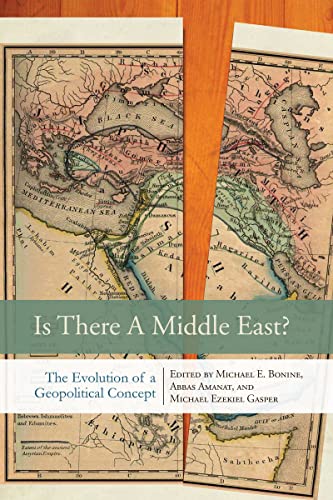
Is the idea of the "Middle East" simply a geopolitical construct conceived by the West to serve particular strategic and economic interests—or can we identify geographical, historical, cultural, and political patterns to indicate some sort of internal coherence to this label? While the term has achieved common usage, no one studying the region has yet addressed whether this conceptualization has real meaning—and then articulated what and where the Middle East is, or is not.
This volume fills the void, offering a diverse set of voices—from political and cultural historians, to social scientists, geographers, and political economists—to debate the possible manifestations and meanings of the Middle East. At a time when geopolitical forces, social currents, and environmental concerns have brought attention to the region, this volume examines the very definition and geographic and cultural boundaries of the Middle East in an unprecedented way.
This volume fills the void, offering a diverse set of voices—from political and cultural historians, to social scientists, geographers, and political economists—to debate the possible manifestations and meanings of the Middle East. At a time when geopolitical forces, social currents, and environmental concerns have brought attention to the region, this volume examines the very definition and geographic and cultural boundaries of the Middle East in an unprecedented way.
Die Inhaltsangabe kann sich auf eine andere Ausgabe dieses Titels beziehen.
Über die Autorinnen und Autoren
Michael E. Bonine is Professor and Head of the Department for Near East Studies and Professor of Geography and Development at the University of Arizona. Abbas Amanat is Professor of History and International and Area Studies at Yale University. Michael Ezekiel Gasper is Assistant Professor of History at Occidental College.
Michael E. Bonine is Professor and Head of the Department for Near East Studies and Professor of Geography and Development at the University of Arizona. Abbas Amanat is Professor of History and International and Area Studies at Yale University. Michael Ezekiel Gasper is Assistant Professor of History at Occidental College.
Auszug. © Genehmigter Nachdruck. Alle Rechte vorbehalten.
Is There a Middle East?
THE EVOLUTION OF A GEOPOLITICAL CONCEPTStanford University Press
Copyright © 2012 Board of Trustees of the Leland Stanford Junior UniversityAll right reserved.
ISBN: 978-0-8047-7526-7
Contents
List of Figures..................................................................................................................................................viiList of Tables...................................................................................................................................................xContributors.....................................................................................................................................................xiPreface..........................................................................................................................................................xviiProblematizing a Virtual Space Abbas Amanat.....................................................................................................................11 The Eastern Question and the Ottoman Empire: The Genesis of the Near and Middle East in the Nineteenth Century Huseyin Yilmaz.................................112 British and U.S. Use and Misuse of the Term "Middle East" Roger Adelson.......................................................................................363 Of Maps and Regions: Where Is the Geographer's Middle East? Michael E. Bonine.................................................................................564 Why Are There No Middle Easterners in the Maghrib? Ramzi Rouighi..............................................................................................1005 When Did the Holy Land Stop Being Holy? Surveying the Middle East as Sacred Geography Daniel Martin Varisco...................................................1196 The River's Edge: The Steppes of the Oxus and the Boundaries of the Near / Middle East and Central Asia, c. 1500–1800 Arash Khazeni.....................1397 An Islamicate Eurasia: Vernacular Perspectives on the Early Modern World Gagan D. S. Sood.....................................................................1528 Scorched Earth: The Problematic Environmental History That Defines the Middle East Diana K. Davis.............................................................1709 American Global Economic Policy and the Civic Order in the Middle East James L. Gelvin........................................................................19110 The Middle East Through the Lens of Critical Geopolitics: Globalization, Terrorism, and the Iraq War Waleed Hazbun...........................................207Conclusion: There Is a Middle East! Michael Ezekiel Gasper......................................................................................................231Notes............................................................................................................................................................243Bibliography.....................................................................................................................................................277Index............................................................................................................................................................307
Chapter One
THE EASTERN QUESTION AND THE OTTOMAN EMPIRE The Genesis of the Near and Middle East in the Nineteenth CenturyHuseyin Yilmaz
NEAR EAST OR MIDDLE EAST maps were first drawn at the height of intense interest in what Karl Marx labeled "the Eternal Eastern Question." It was the content of this question that defined the geography of this region that came to be known as the modern Middle East. Later attempts to give a consistent geographical or cultural definition to the term all followed major international developments or were made in anticipation of major geostrategic shift s, ultimately creating multiple "Middle Easts" that were based on different sets of criteria. Two such attempts in recent memory were the redrawing of the Middle East following the end of the Cold War and the Greater Middle East Partnership discussed in the G-8 summit in 2004.
Despite staying at the center of international politics for more than a century, the region still has no standard textbook definition. In the popular imagination as well as academic studies, the Middle East is oft en conceived of as the locus of an international question rather than a geo graphically or culturally definable region. Except for the questions it posed, there is hardly any common element that defines the various "Middle Easts" constructed in the media, academic scholarship, and political agencies. As the nature and scope of the Middle Eastern Question change, so do the region's boundaries. There has been no secular organizing principle to make the Middle East a meaningful region other than a historical memory built by the very term itself.
At the beginning of the nineteenth century, the term "the Eastern Question" was generically applied to almost all conflicts taking place in Eastern Europe, including those in Poland, Macedonia, and the Caucasus. Toward the late nineteenth century, however, within the context of a broader confrontation between Europe and the Orient, the scope of the Eastern Question was extended to all of Eurasia, producing such formulations as "the Afghan branch of the Eastern Question." Even Americans conceived of their western entanglements as "our Eastern Question" in reference to American-Japanese conflict. Reflecting this holistic view in 1878, Victor Duruy presented the three core problems of the Eastern Question as Constantinople, l'Asie Centrale, and l'Océan Pacifique. In some Christian apocalyptic literature, however, "the Eastern Question" referred specifically to the holy land where the demise of the Ottoman Empire would signal the coming of the Armageddon. For them it was a matter of divine providence foretold in scripture and that was unfolding to fulfill prophecies.
Views on the scope and historical depth of the Eastern Question ranged from a mere Great Power rivalry to an existential conflict between two incompatible worldviews with no beginning point in time. John Marriott, who wrote the now classical account on the subject, stated in 1940 that "from time immemorial, Europe has been confronted with an 'Eastern Question.'" For him, conflicts between the Roman Empire and Hellenistic monarchies and between Christianity and Islam reflected this confrontation. Although the semantic range of the term "the Eastern Question" was extended to include the whole scope of relations between the West and the Orient, unless specified it commonly referred to the Euro-Ottoman context. Albert Sorel, who wrote a widely read textbook on the Eastern Question in 1898, argued that "since the first entry of the Turk into Europe, there has been an Eastern Question." It was this perception of the Eastern Question that gave rise to the notion of the Near Eastern Question by the late nineteenth century, from which current conceptions of the Middle East originated.
The term "the Eastern Question" entered into wider circulation with the 1815 Congress of Vienna. Ironically, among the many eastern questions of the nineteenth century, the Eastern Question that formed the focal theme of European thought and diplomacy for much of this and the early part of the twentieth century initially emerged not as Europe's Turkish problem but as the Ottoman Empire's Egyptian problem. European interest on the Eastern Question seems to have been prompted by the internal crisis...
„Über diesen Titel“ kann sich auf eine andere Ausgabe dieses Titels beziehen.
Suchergebnisse für Is There a Middle East?: The Evolution of a Geopolitical...

Beispielbild für diese ISBN
Is There a Middle East?
Anbieter: PBShop.store UK, Fairford, GLOS, Vereinigtes Königreich
Verkäuferbewertung 5 von 5 Sternen

HRD. Zustand: New. New Book. Shipped from UK. Established seller since 2000. Artikel-Nr. FW-9780804775267
Neu kaufen
EUR 118,11
EUR 9,87 Versand
Versand von Vereinigtes Königreich nach USA
Versand von Vereinigtes Königreich nach USA
Anzahl: 1 verfügbar
Beispielbild für diese ISBN
Is There a Middle East?: The Evolution of a Geopolitical Concept
Anbieter: Ria Christie Collections, Uxbridge, Vereinigtes Königreich
Verkäuferbewertung 5 von 5 Sternen
Zustand: New. In English. Artikel-Nr. ria9780804775267_new
Neu kaufen
EUR 125,09
EUR 13,13 Versand
Versand von Vereinigtes Königreich nach USA
Versand von Vereinigtes Königreich nach USA
Anzahl: 1 verfügbar
Foto des Verkäufers
Is There a Middle East?
Anbieter: moluna, Greven, Deutschland
Verkäuferbewertung 5 von 5 Sternen
Zustand: New. This book offers diverse debates on the possible manifestations and meanings of the term Middle East. Über den AutorMichael E. Bonine is Professor and Head of the Department for Near East Studies and Professor of Geography and . Artikel-Nr. 595016085
Neu kaufen
EUR 123,50
EUR 48,99 Versand
Versand von Deutschland nach USA
Versand von Deutschland nach USA
Anzahl: Mehr als 20 verfügbar
Beispielbild für diese ISBN
Is There a Middle East?: The Evolution of a Geopolitical Concept
Anbieter: Kennys Bookstore, Olney, MD, USA
Verkäuferbewertung 5 von 5 Sternen
Zustand: New. This book offers diverse debates on the possible manifestations and meanings of the term "Middle East." Editor(s): Bonine, Michael E.; Amanat, Abbas; Gasper, Michael Ezekiel. Num Pages: 344 pages, Illustrations. BIC Classification: HBJF1. Category: (G) General (US: Trade). Dimension: 5817 x 3887 x 23. Weight in Grams: 456. . 2011. 1st Edition. Hardcover. . . . . Books ship from the US and Ireland. Artikel-Nr. V9780804775267
Neu kaufen
EUR 163,94
EUR 9,23 Versand
Versand innerhalb von USA
Versand innerhalb von USA
Anzahl: 1 verfügbar
Beispielbild für diese ISBN
Is There a Middle East? The Evolution of a Geopolitical Concept
Anbieter: Revaluation Books, Exeter, Vereinigtes Königreich
Verkäuferbewertung 5 von 5 Sternen
Hardcover. Zustand: Brand New. 1st edition. 341 pages. 9.00x6.00x0.90 inches. In Stock. Artikel-Nr. x-0804775265
Neu kaufen
EUR 165,43
EUR 14,53 Versand
Versand von Vereinigtes Königreich nach USA
Versand von Vereinigtes Königreich nach USA
Anzahl: 2 verfügbar
Foto des Verkäufers
Is There a Middle East? : The Evolution of a Geopolitical Concept
Verlag:
Stanford University Press Nov 2011, 2011
ISBN 10: 0804775265
ISBN 13: 9780804775267
Neu
Hardcover
Anbieter: AHA-BUCH GmbH, Einbeck, Deutschland
Verkäuferbewertung 5 von 5 Sternen
Buch. Zustand: Neu. Neuware - Is the idea of the 'Middle East' simply a geopolitical construct conceived by the West to serve particular strategic and economic interests-or can we identify geographical, historical, cultural, and political patterns to indicate some sort of internal coherence to this label While the term has achieved common usage, no one studying the region has yet addressed whether this conceptualization has real meaning-and then articulated what and where the Middle East is, or is not. This volume fills the void, offering a diverse set of voices-from political and cultural historians, to social scientists, geographers, and political economists-to debate the possible manifestations and meanings of the Middle East. At a time when geopolitical forces, social currents, and environmental concerns have brought attention to the region, this volume examines the very definition and geographic and cultural boundaries of the Middle East in an unprecedented way. Artikel-Nr. 9780804775267
Neu kaufen
EUR 170,02
EUR 35,00 Versand
Versand von Deutschland nach USA
Versand von Deutschland nach USA
Anzahl: 1 verfügbar