
Verwandte Artikel zu Dark Logic: Transnational Criminal Tactics and Global...
Inhaltsangabe
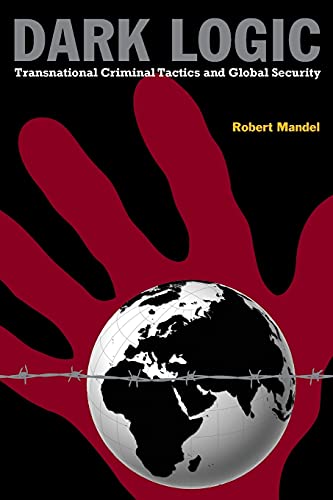
Since the end of the Cold War, transnational non-state forces have been a major source of global instability, with many ominous and disruptive flows of people, goods, and services moving readily across international boundaries. And because these activities are so multifaceted and so intertwined within the fabric of society, they remain largely invisible until the intrusion is well-advanced and difficult to reverse. Thus, the threat posed by transnational organized crime ultimately undermines the total security of countries—including the economic, cultural, and political dimensions—and now presents an international security challenge of staggering proportions.
Surprisingly, no single book so far has fully addressed the scale of this threat to global stability from an international security perspective. In an attempt to rectify that failure, Dark Logic examines in depth when and how transnational organized crime is likely to use corruption and violence to achieve its ends, and when and how these criminal activities most affect individual and state security. Even more important, it pinpoints when and how the negative consequences of these tactics and activities can be most successfully combated. In so doing it provides a unique lens for analyzing today's global security dilemmas.
Given that the threat associated with transnational organized crime can endanger all citizens—from policy makers and security analysts to students, scholars, and the "man and woman on the street"—this book is written in an intelligible and jargon-free style to make it accessible to anyone interested in the ever-growing catalog of threats to national and international security.
Surprisingly, no single book so far has fully addressed the scale of this threat to global stability from an international security perspective. In an attempt to rectify that failure, Dark Logic examines in depth when and how transnational organized crime is likely to use corruption and violence to achieve its ends, and when and how these criminal activities most affect individual and state security. Even more important, it pinpoints when and how the negative consequences of these tactics and activities can be most successfully combated. In so doing it provides a unique lens for analyzing today's global security dilemmas.
Given that the threat associated with transnational organized crime can endanger all citizens—from policy makers and security analysts to students, scholars, and the "man and woman on the street"—this book is written in an intelligible and jargon-free style to make it accessible to anyone interested in the ever-growing catalog of threats to national and international security.
Die Inhaltsangabe kann sich auf eine andere Ausgabe dieses Titels beziehen.
Über die Autorinnen und Autoren
Robert Mandel is Professor of International Affairs at Lewis & Clark College in Portland, Oregon. He has published ten books and more than 40 articles and book chapters dealing with global security and conflict issues. His special continuing interest is in reconceptualizing the prevailing international security environment and the challenges it poses. He has a background in government intelligence work and has testified before the United States Congress.
Robert Mandel is Professor of International Affairs at Lewis & Clark College in Portland, Oregon. He has published ten books and more than 40 articles and book chapters dealing with global security and conflict issues. His special continuing interest is in reconceptualizing the prevailing international security environment and the challenges it poses. He has a background in government intelligence work and has testified before the United States Congress.
Auszug. © Genehmigter Nachdruck. Alle Rechte vorbehalten.
Dark Logic
TRANSNATIONAL CRIMINAL TACTICS AND GLOBAL SECURITYBy Robert MandelStanford University Press
Copyright © 2011 Board of Trustees of the Leland Stanford Junior UniversityAll right reserved.
ISBN: 978-0-8047-6993-8
Contents
List of Illustrations......................................................viiAcknowledgments............................................................ix1 Introduction: The Central Question.......................................12 Transnational Organized Crime's Changing Threat..........................153 Corruption/Violence and Individual/State Security........................414 Major Transnational Criminal Organizations...............................665 Major Transnational Criminal Activities..................................916 Analysis of Case Patterns................................................1277 Links between Transnational Criminals and Terrorists.....................1458 Conclusion: Policy Implications..........................................162Notes......................................................................197Bibliography...............................................................229Index......................................................................251
Chapter One
INTRODUCTIONThe Central Question
SINCE THE END OF THE COLD WAR, transnational nonstate forces have been a major source of global instability, and many ominous disruptive flows of people, goods, and services have moved readily across international boundaries. Deflecting attention away from transnational organized crime as a primary facilitator of these critical disruptive flows was first the sense of euphoria associated with the fall of the Berlin Wall in 1989 and then later the focus on transnational terrorism triggered by the 9/11 terrorist attacks on the United States in 2001. Although some analysts go too far in claiming that currently "the dimensions of global organized crime present a greater international security challenge than anything western democracies had to cope with during the Cold War," the transnational criminal threat is nonetheless highly insidious at a lower level. There is now a pivotal hole in our understanding of transnational criminals' decision making about the means to pursue their illicit ends and the security implications of these decisions.
This investigation begins to remedy this crucial analytical deficiency. Challenging puzzles requiring probing investigation surround the pervasive yet clandestine presence of transnational organized crime in the contemporary world, and focusing on these puzzles provides deeper insight into the nature of its operations and their consequences. So little is known about the modus operandi of transnational criminal organizations, and what little understanding does exist rarely distinguishes among their disruptive tactics or links these tactics to different kinds of security impacts. Consequently, an urgent need exists to explore within the contemporary international relations environment the dark logic behind transnational organized crime, its subtle fluid patterns, and the resulting interference with effective security protection.
Proper appraisal of the disruptive tactics, security impacts, and corrective responses pertaining to transnational organized crime involves considerable complexity. Indeed, upon closer scrutiny, many conventional assumptions about the causes, consequences, and cures of transnational criminal activities prove to be controversial, wrongheaded, or ill-advised. Disagreements abound among experts even about the most basic issue of whether transnational organized crime is worthy of security attention. Today many global political leaders possess conflicting conceptions and misunderstandings about how to gauge the elusive dangers involved, and, as a result, their policy responses have generally failed to achieve stated goals. This investigation's primary aim is to shed significant new light on the topic to create a more coherent and probing comprehension of the operational dynamics of transnational organized crime, the ways in which it disrupts security, the reasons for its success and the failure of attempts to constrain it, and some fresh ideas to help those responsible to grapple more successfully with this global threat.
THE NATURE OF THIS STUDY'S CENTRAL QUESTION
This study focuses on two particular issues: (1) when and how transnational criminal organizations choose corruption and violence tactics and (2) when and how transnational criminal activities generate individual/human and national/state security impacts. The specific central question is as follows:
Under what conditions is it most likely that transnational criminal organizations choose to rely primarily on corruption versus violence in their illicit cross-border transactions, and under what conditions is it most likely that transnational criminal activities primarily influence individual security versus state security?
This constitutes the first major study showing (1) when corruption and violence are most likely to be used, (2) when transnational criminal activities are most likely to affect individual security and state security, and (3) when the negative consequences of these tactics and activities can be most successfully combated. The presumed sequence is that first transnational criminal organizations select tactics to use in their activities, and then these activities generate security impacts, and discerning the criminal choice of tactics and their security impacts relies more on tangible observable behavior rather than elusive underlying motivations.
At this juncture, one might well ask, Why is the distinction between the criminal tactics of corruption and violence worthy of investigation? Certainly it could be argued that, because both tactics represent unruly disruptive behavior, those wishing to combat transnational organized crime would incur an equal responsibility to minimize each, thus making fine distinctions between the two unnecessary (in the colloquial words of one defense analyst, "since both are bad, let's just stamp them both out"). As illustrated in later chapters, however, (1) the vulnerabilities that facilitate widespread criminal corruption are quite distinct from those that facilitate widespread criminal violence, (2) the targets for corruption differ markedly from the targets for violence, and, as a result, (3) the means for containing corruption differ markedly from the means for containing violence.
Similarly, one might ask, What is the rationale for differentiating between the influence of transnational organized crime on individual/human security and the influence of transnational organized crime on national/state security? One could readily assert that the most important issue—given the magnitude of the dangers involved—is to reduce the aggregate threat transnational organized crime poses with regard to any form of security, and that attempting to separate its impact on different types of security is like splitting hairs. Some analysts argue that, especially within democracies, promoting state security automatically enhances individual security, and most analysts of transnational organized crime make little distinction among different types of resulting security implications. Again, as discussed in later chapters, (1) the criminal threat to individual and societal well-being is vastly different from the criminal threat to government functioning; (2) the individual/human and...
„Über diesen Titel“ kann sich auf eine andere Ausgabe dieses Titels beziehen.
Suchergebnisse für Dark Logic: Transnational Criminal Tactics and Global...

Beispielbild für diese ISBN
Dark Logic : Transnational Criminal Tactics and Global Security
Verlag:
Stanford University Press, 2010
ISBN 10: 0804769931
ISBN 13: 9780804769938
Gebraucht
Softcover
Anbieter: Better World Books, Mishawaka, IN, USA
Verkäuferbewertung 5 von 5 Sternen

Zustand: Very Good. Former library copy. Pages intact with possible writing/highlighting. Binding strong with minor wear. Dust jackets/supplements may not be included. Includes library markings. Stock photo provided. Product includes identifying sticker. Better World Books: Buy Books. Do Good. Artikel-Nr. 56352229-6
Gebraucht kaufen
EUR 10,16
Versand gratis
Versand innerhalb von USA
Versand innerhalb von USA
Anzahl: 1 verfügbar
Beispielbild für diese ISBN
Dark Logic: Transnational Criminal Tactics and Global Security [Paperback] Mandel, Robert
Anbieter: GridFreed, San Diego, CA, USA
Verkäuferbewertung 5 von 5 Sternen
Paperback. Zustand: New. As new. Artikel-Nr. 30-03517
Neu kaufen
EUR 19,38
EUR 6,20 Versand
Versand innerhalb von USA
Versand innerhalb von USA
Anzahl: 1 verfügbar
Beispielbild für diese ISBN
Dark Logic
Anbieter: PBShop.store UK, Fairford, GLOS, Vereinigtes Königreich
Verkäuferbewertung 5 von 5 Sternen
PAP. Zustand: New. New Book. Shipped from UK. Established seller since 2000. Artikel-Nr. FW-9780804769938
Neu kaufen
EUR 29,17
EUR 4,90 Versand
Versand von Vereinigtes Königreich nach USA
Versand von Vereinigtes Königreich nach USA
Anzahl: 2 verfügbar
Beispielbild für diese ISBN
Dark Logic: Transnational Criminal Tactics and Global Security
Anbieter: Ria Christie Collections, Uxbridge, Vereinigtes Königreich
Verkäuferbewertung 5 von 5 Sternen
Zustand: New. In English. Artikel-Nr. ria9780804769938_new
Neu kaufen
EUR 33,86
EUR 11,04 Versand
Versand von Vereinigtes Königreich nach USA
Versand von Vereinigtes Königreich nach USA
Anzahl: 2 verfügbar
Beispielbild für diese ISBN
Dark Logic Transnational Criminal Tactics and Global Security
Anbieter: Revaluation Books, Exeter, Vereinigtes Königreich
Verkäuferbewertung 5 von 5 Sternen
Paperback. Zustand: Brand New. 280 pages. 8.90x5.90x0.70 inches. In Stock. Artikel-Nr. x-0804769931
Neu kaufen
EUR 36,64
EUR 11,78 Versand
Versand von Vereinigtes Königreich nach USA
Versand von Vereinigtes Königreich nach USA
Anzahl: 2 verfügbar
Beispielbild für diese ISBN
Dark Logic: Transnational Criminal Tactics and Global Security
Anbieter: Kennys Bookstore, Olney, MD, USA
Verkäuferbewertung 5 von 5 Sternen
Zustand: New. This book constitutes the first major study showing (1) when transnational organized crime is likely to use corruption and violence tactics, (2) when transnational criminal activities most affect individual and state security, and (3) when the negative consequences of these tactics and activities can be most successfully combated. Num Pages: 272 pages, 7 tables, 42 figures. BIC Classification: JPS; JPV. Category: (G) General (US: Trade); (P) Professional & Vocational. Dimension: 226 x 152 x 18. Weight in Grams: 363. . 2010. 1st Edition. paperback. . . . . Books ship from the US and Ireland. Artikel-Nr. V9780804769938
Neu kaufen
EUR 42,38
EUR 9,36 Versand
Versand innerhalb von USA
Versand innerhalb von USA
Anzahl: 1 verfügbar
Foto des Verkäufers
Dark Logic : Transnational Criminal Tactics and Global Security
Verlag:
Stanford University Press Nov 2010, 2010
ISBN 10: 0804769931
ISBN 13: 9780804769938
Neu
Taschenbuch
Anbieter: AHA-BUCH GmbH, Einbeck, Deutschland
Verkäuferbewertung 5 von 5 Sternen
Taschenbuch. Zustand: Neu. Neuware - Since the end of the Cold War, transnational non-state forces have been a major source of global instability, with many ominous and disruptive flows of people, goods, and services moving readily across international boundaries. And because these activities are so multifaceted and so intertwined within the fabric of society, they remain largely invisible until the intrusion is well-advanced and difficult to reverse. Thus, the threat posed by transnational organized crime ultimately undermines the total security of countries-including the economic, cultural, and political dimensions-and now presents an international security challenge of staggering proportions. Surprisingly, no single book so far has fully addressed the scale of this threat to global stability from an international security perspective. In an attempt to rectify that failure, Dark Logic examines in depth when and how transnational organized crime is likely to use corruption and violence to achieve its ends, and when and how these criminal activities most affect individual and state security. Even more important, it pinpoints when and how the negative consequences of these tactics and activities can be most successfully combated. In so doing it provides a unique lens for analyzing today's global security dilemmas. Given that the threat associated with transnational organized crime can endanger all citizens-from policy makers and security analysts to students, scholars, and the 'man and woman on the street'-this book is written in an intelligible and jargon-free style to make it accessible to anyone interested in the ever-growing catalog of threats to national and international security. Artikel-Nr. 9780804769938
Neu kaufen
EUR 37,44
EUR 35,00 Versand
Versand von Deutschland nach USA
Versand von Deutschland nach USA
Anzahl: 2 verfügbar
Foto des Verkäufers
Dark Logic: Transnational Criminal Tactics and Global Security
Verlag:
STANFORD SECURITY STUDIES, 2010
ISBN 10: 0804769931
ISBN 13: 9780804769938
Neu
Kartoniert / Broschiert
Anbieter: moluna, Greven, Deutschland
Verkäuferbewertung 5 von 5 Sternen
Kartoniert / Broschiert. Zustand: New. This book constitutes the first major study showing (1) when transnational organized crime is likely to use corruption and violence tactics, (2) when transnational criminal activities most affect individual and state security, and (3) when the negative cons. Artikel-Nr. 595015881
Neu kaufen
EUR 30,31
EUR 48,99 Versand
Versand von Deutschland nach USA
Versand von Deutschland nach USA
Anzahl: Mehr als 20 verfügbar