
Verwandte Artikel zu Coercion and Governance: The Declining Political Role...
Inhaltsangabe
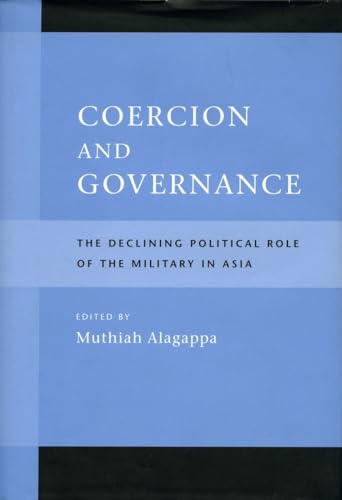
This far-ranging volume offers both a broad overview of the role of the military in contemporary Asia and a close look at the state of civil-military relations in sixteen Asian countries. It provides in-depth discussion of civil-military relations in countries where the military still continues to dominate the political helm as well as others where, in varying degrees, the military is disengaging from politics. Conceptually, the study connects the explanation for the changing relationship of the military to the state to the processes associated with the construction of nation, state, and political system, as well as the development of state capacity, economic growth, and change in the international system.
The book argues that the key to understanding civil-military relations in Asia and elsewhere is the role of coercion, in state and nation building and in the exercise of political authority. As coercion in these processes increases or decreases, so does the political power and influence of the military. Civilian supremacy requires superior political, ideational, moral, and economic power translated into strong institutions that can regulate the military and limit its role in governance.
A key finding of the volume is that, overall, the political power and influence of the military in Asia, though still considerable in some countries, is on the decline. At present only Burma and Pakistan are under military rule, though the military is the central pillar of the totalitarian regime in North Korea. The number of Asian countries under civilian rule has increased dramatically. However, the relationship between the state and the soldier is not a settled issue, and in democratizing countries, civil-military relations is still a contested domain that is being redefined incrementally, often through struggle. The study concludes that, in the long term, the power of the military will continue to decline, and that the growing dominance of democratic civilian control in Asia is likely to endure.
Die Inhaltsangabe kann sich auf eine andere Ausgabe dieses Titels beziehen.
Über die Autorinnen und Autoren
Muthiah Alagappa is Distinguished Senior Fellow at the East-West Center. He is the editor of Asian Security Order: Instrumental and Normative Features (Stanford, 2003), Coercion and Governance: The Declining Political Role of the Military in Asia (Stanford, 2001), Asian Security Practice: Material and Ideational Influences (Stanford, 1998), and Political Legitimacy in Southeast Asia: The Quest for Moral Authority (Stanford, 1995).
Muthiah Alagappa is Distinguished Senior Fellow at the East-West Center. He is the editor of Asian Security Order: Instrumental and Normative Features (Stanford, 2003), Coercion and Governance: The Declining Political Role of the Military in Asia (Stanford, 2001), Asian Security Practice: Material and Ideational Influences (Stanford, 1998), and Political Legitimacy in Southeast Asia: The Quest for Moral Authority (Stanford, 1995).
Von der hinteren Coverseite
This far-ranging volume offers both a broad overview of the role of the military in contemporary Asia and a close look at the state of civil-military relations in sixteen Asian countries. It provides in-depth discussion of civil-military relations in countries where the military still continues to dominate the political helm as well as others where, in varying degrees, the military is disengaging from politics. Conceptually, the study connects the explanation for the changing relationship of the military to the state to the processes associated with the construction of nation, state, and political system, as well as the development of state capacity, economic growth, and change in the international system.
The book argues that the key to understanding civil-military relations in Asia and elsewhere is the role of coercion, in state and nation building and in the exercise of political authority. As coercion in these processes increases or decreases, so does the political power and influence of the military. Civilian supremacy requires superior political, ideational, moral, and economic power translated into strong institutions that can regulate the military and limit its role in governance.
A key finding of the volume is that, overall, the political power and influence of the military in Asia, though still considerable in some countries, is on the decline. At present only Burma and Pakistan are under military rule, though the military is the central pillar of the totalitarian regime in North Korea. The number of Asian countries under civilian rule has increased dramatically. However, the relationship between the state and the soldier is not a settled issue, and in democratizing countries, civil-military relations is still a contested domain that is being redefined incrementally, often through struggle. The study concludes that, in the long term, the power of the military will continue to decline, and that the growing dominance of democratic civilian control in Asia is likely to endure.
The book argues that the key to understanding civil-military relations in Asia and elsewhere is the role of coercion, in state and nation building and in the exercise of political authority. As coercion in these processes increases or decreases, so does the political power and influence of the military. Civilian supremacy requires superior political, ideational, moral, and economic power translated into strong institutions that can regulate the military and limit its role in governance.
A key finding of the volume is that, overall, the political power and influence of the military in Asia, though still considerable in some countries, is on the decline. At present only Burma and Pakistan are under military rule, though the military is the central pillar of the totalitarian regime in North Korea. The number of Asian countries under civilian rule has increased dramatically. However, the relationship between the state and the soldier is not a settled issue, and in democratizing countries, civil-military relations is still a contested domain that is being redefined incrementally, often through struggle. The study concludes that, in the long term, the power of the military will continue to decline, and that the growing dominance of democratic civilian control in Asia is likely to endure.
Aus dem Klappentext
This far-ranging volume offers both a broad overview of the role of the military in contemporary Asia and a close look at the state of civil-military relations in sixteen Asian countries. It provides in-depth discussion of civil-military relations in countries where the military still continues to dominate the political helm as well as others where, in varying degrees, the military is disengaging from politics. Conceptually, the study connects the explanation for the changing relationship of the military to the state to the processes associated with the construction of nation, state, and political system, as well as the development of state capacity, economic growth, and change in the international system.
The book argues that the key to understanding civil-military relations in Asia and elsewhere is the role of coercion, in state and nation building and in the exercise of political authority. As coercion in these processes increases or decreases, so does the political power and influence of the military. Civilian supremacy requires superior political, ideational, moral, and economic power translated into strong institutions that can regulate the military and limit its role in governance.
A key finding of the volume is that, overall, the political power and influence of the military in Asia, though still considerable in some countries, is on the decline. At present only Burma and Pakistan are under military rule, though the military is the central pillar of the totalitarian regime in North Korea. The number of Asian countries under civilian rule has increased dramatically. However, the relationship between the state and the soldier is not a settled issue, and in democratizing countries, civil-military relations is still a contested domain that is being redefined incrementally, often through struggle. The study concludes that, in the long term, the power of the military will continue to decline, and that the growing dominance of democratic civilian control in Asia is likely to endure.
The book argues that the key to understanding civil-military relations in Asia and elsewhere is the role of coercion, in state and nation building and in the exercise of political authority. As coercion in these processes increases or decreases, so does the political power and influence of the military. Civilian supremacy requires superior political, ideational, moral, and economic power translated into strong institutions that can regulate the military and limit its role in governance.
A key finding of the volume is that, overall, the political power and influence of the military in Asia, though still considerable in some countries, is on the decline. At present only Burma and Pakistan are under military rule, though the military is the central pillar of the totalitarian regime in North Korea. The number of Asian countries under civilian rule has increased dramatically. However, the relationship between the state and the soldier is not a settled issue, and in democratizing countries, civil-military relations is still a contested domain that is being redefined incrementally, often through struggle. The study concludes that, in the long term, the power of the military will continue to decline, and that the growing dominance of democratic civilian control in Asia is likely to endure.
Auszug. © Genehmigter Nachdruck. Alle Rechte vorbehalten.
Coercion and Governance
The Declining Political Role of the Military in AsiaStanford University Press
Copyright © 2001 Board of Trustees of the Leland Stanford Junior UniversityAll right reserved.
ISBN: 978-0-8047-4227-6
Contents
List of Tables and Figures...........................................................................................................viiList of Acronyms and Abbreviations...................................................................................................ixPreface..............................................................................................................................xvAcknowledgments......................................................................................................................xixContributors.........................................................................................................................xxiiiIntroduction Muthiah Alagappa.......................................................................................................1PART I. CONCEPTUAL PERSPECTIVE1. Investigating and Explaining Change: An Analytical Framework Muthiah Alagappa....................................................29PART II. DEMOCRATIC CIVILIAN CONTROL2. Japan: From Containment to Normalization Eiichi Katahara.........................................................................693. India: The New Militaries Sunil Dasgupta.........................................................................................92PART III. CONSOLIDATING DEMOCRATIC CIVILIAN CONTROL4. South Korea: Consolidating Democratic Civilian Control Jinsok Jun................................................................1215. Taiwan: The Remaining Challenges Chih-cheng Lo...................................................................................143PART IV. TRANSITION TO DEMOCRATIC CIVILIAN CONTROL6. The Philippines: Not So Military, Not So Civil Eva-Lotta E. Hedman...............................................................1657. Thailand: The Struggle to Redefine Civil-Military Relations James Ockey..........................................................1878. Bangladesh: An Uneasy Accommodation Amena Mohsin.................................................................................2099. Indonesia: On a New Course? Geoffrey Robinson....................................................................................226PART V. ETHNIC AND DOMINANT PARTY CIVILIAN CONTROL10. Malaysia: A Congruence of Interests K. S. Nathan and Geetha Govindasamy.........................................................25911. Singapore: Civil-Military Fusion Tan Tai Yong...................................................................................27612. Sri Lanka: Transformation of Legitimate Violence and Civil-Military Relations Darini Rajasingham-Senanayake.....................294PART VI. COMMUNIST AND TOTALITARIAN CIVILIAN CONTROL13. China: Conditional Compliance James Mulvenon....................................................................................31714. Vietnam: From Revolutionary Heroes to Red Entrepreneurs Thaveeporn Vasavakul....................................................33615. North Korea: Institutionalized Military Intervention Chung-in Moon and Hideshi Takesada.........................................357PART VII. MILITARY CONTROL OF THE STATE16. Pakistan: Return to Praetorianism Babar Sattar..................................................................................38517. Burma: Soldiers as State Builders Mary P. Callahan..............................................................................413PART VIII. CONCLUSION18. Asian Civil-Military Relations: Key Developments, Explanations, and Trajectories Muthiah Alagappa...............................433Notes................................................................................................................................499Bibliography.........................................................................................................................529Index................................................................................................................................575
Chapter One
Investigating and Explaining Change: An Analytical FrameworkMuthiah Alagappa
Covenants without swords are but words. -Thomas Hobbes
Monopoly over the legitimate use of force is as essential a characteristic of the state as compulsory jurisdiction and continuous organization in a given territorial area. -Max Weber
An armed, disciplined body is, in its essence, dangerous to liberty; undisciplined, it is ruinous to society. -Edmund Burke
The wonder ... is not why [the military] rebels against its civilian masters, but why it ever obeys them. -Samuel Finer
A central paradox of the modern state-and its quintessential civil-military relations problem-is how to create a military strong enough to protect the nation-state from external and internal threats but at the same time prevent it from dominating the state or becoming an instrument for internal repression. Monopoly over coercion, as noted in the Introduction, is a defining feature of the modern state. The theoretical justification for this monopoly is the claim to sovereignty: supreme jurisdiction within territorial boundaries and decision-making autonomy in international affairs. In functional terms, monopoly over coercion is deemed essential for ensuring domestic sociopolitical order, for protecting the political community (its ideals, autonomy, and territorial integrity) from external threats, and for creating an international environment conducive to the fulfillment of national goals and purposes. The concentration of the ultimate means of violence in a single institution, however, endows that institution with enormous brute power that can be deployed to dominate the state, curb liberty, or serve partisan purposes.
The conflicting demands of creating a potent institution and preventing it from dominating the state are resolved in the abstract by treating coercion and its institutional containers as instruments of state policy under the direction of a legitimate civilian government. Further, based on the assumption that the state is internally pacified, the military's primary role is deemed to be in the international arena. Although the military's role and its relationship to the government may differ with the political system, in the logic of the modern state the military is at bottom an instrument of the state and subordinate to a legitimate government that is accountable to its citizens. However, practice often departs, at times radically, from this ideal.
To begin with, there is no clear divide between domestic affairs and international affairs. In a number of states, including many in Asia, force is as much an instrument of policy in domestic affairs as it is in international affairs. Second, nonstate political groups often seek to acquire and deploy coercion in pursuit of goals that conflict with those of the state and the incumbent government. Consequently, the government's claim to monopoly over the means and use of coercion within territorial boundaries has seldom been realized. Third, governments themselves are not always legitimate. In fact, the development of a durable, legitimate political system is a major challenge confronting many Asian...
„Über diesen Titel“ kann sich auf eine andere Ausgabe dieses Titels beziehen.
Suchergebnisse für Coercion and Governance: The Declining Political Role...

Beispielbild für diese ISBN
Coercion and Governance: The Declining Political Role of the Military in Asia
Verlag:
Stanford University Press, 2002
ISBN 10: 0804742278
ISBN 13: 9780804742276
Gebraucht
Softcover
Anbieter: Anybook.com, Lincoln, Vereinigtes Königreich
Verkäuferbewertung 5 von 5 Sternen

Zustand: Good. This is an ex-library book and may have the usual library/used-book markings inside.This book has soft covers. In good all round condition. Please note the Image in this listing is a stock photo and may not match the covers of the actual item,1200grams, ISBN:9780804742276. Artikel-Nr. 8608368
Gebraucht kaufen
EUR 9,70
EUR 15,49 Versand
Versand von Vereinigtes Königreich nach USA
Versand von Vereinigtes Königreich nach USA
Anzahl: 1 verfügbar
Beispielbild für diese ISBN
Coercion and Governance: The Declining Political Role of the Military in Asia
Anbieter: Ria Christie Collections, Uxbridge, Vereinigtes Königreich
Verkäuferbewertung 5 von 5 Sternen
Zustand: New. In English. Artikel-Nr. ria9780804742276_new
Neu kaufen
EUR 36,02
EUR 17,58 Versand
Versand von Vereinigtes Königreich nach USA
Versand von Vereinigtes Königreich nach USA
Anzahl: Mehr als 20 verfügbar
Beispielbild für diese ISBN
Coercion and Governance
Anbieter: PBShop.store UK, Fairford, GLOS, Vereinigtes Königreich
Verkäuferbewertung 5 von 5 Sternen
PAP. Zustand: New. New Book. Shipped from UK. Established seller since 2000. Artikel-Nr. FW-9780804742276
Neu kaufen
EUR 47,74
EUR 7,95 Versand
Versand von Vereinigtes Königreich nach USA
Versand von Vereinigtes Königreich nach USA
Anzahl: 15 verfügbar
Beispielbild für diese ISBN
Coercion and Governance: The Declining Political Role of the Military in Asia
Anbieter: Majestic Books, Hounslow, Vereinigtes Königreich
Verkäuferbewertung 4 von 5 Sternen

Zustand: New. pp. 624. Artikel-Nr. 7989574
Neu kaufen
EUR 67,26
EUR 7,65 Versand
Versand von Vereinigtes Königreich nach USA
Versand von Vereinigtes Königreich nach USA
Anzahl: 1 verfügbar
Foto des Verkäufers
Coercion and Governance
Anbieter: moluna, Greven, Deutschland
Verkäuferbewertung 5 von 5 Sternen
Zustand: New. This far-ranging volume offers both a broad overview of the role of the military in contemporary Asia and a close look at the state of civil-military relations in sixteen Asian countries. It discusses these relations in countries where the military continue. Artikel-Nr. 595014662
Neu kaufen
EUR 36,74
EUR 48,99 Versand
Versand von Deutschland nach USA
Versand von Deutschland nach USA
Anzahl: Mehr als 20 verfügbar
Beispielbild für diese ISBN
Coercion and Governance: The Declining Political Role of the Military in Asia
Anbieter: Kennys Bookstore, Olney, MD, USA
Verkäuferbewertung 5 von 5 Sternen
Zustand: New. This far-ranging volume offers both a broad overview of the role of the military in contemporary Asia and a close look at the state of civil-military relations in sixteen Asian countries. It discusses these relations in countries where the military continues to dominate the political realm as well as others where it is disengaging from politics. Editor(s): Alagappa, Muthiah. Num Pages: 624 pages, Illustrations. BIC Classification: 1F; JPS. Category: (P) Professional & Vocational; (U) Tertiary Education (US: College). Dimension: 6452 x 4522 x 51. Weight in Grams: 1055. . 2001. Paperback. . . . . Books ship from the US and Ireland. Artikel-Nr. V9780804742276
Neu kaufen
EUR 79,57
EUR 9,33 Versand
Versand innerhalb von USA
Versand innerhalb von USA
Anzahl: Mehr als 20 verfügbar
Beispielbild für diese ISBN
Coercion and Governance The Declining Political Role of the Military in Asia
Anbieter: Revaluation Books, Exeter, Vereinigtes Königreich
Verkäuferbewertung 5 von 5 Sternen
Paperback. Zustand: Brand New. 1st edition. 594 pages. 10.00x7.00x1.25 inches. In Stock. Artikel-Nr. x-0804742278
Neu kaufen
EUR 77,45
EUR 14,71 Versand
Versand von Vereinigtes Königreich nach USA
Versand von Vereinigtes Königreich nach USA
Anzahl: 2 verfügbar
Foto des Verkäufers
Coercion and Governance | The Declining Political Role of the Military in Asia
Anbieter: preigu, Osnabrück, Deutschland
Verkäuferbewertung 5 von 5 Sternen
Taschenbuch. Zustand: Neu. Coercion and Governance | The Declining Political Role of the Military in Asia | Muthiah Alagappa | Taschenbuch | Einband - flex.(Paperback) | Englisch | 2002 | Stanford University Press | EAN 9780804742276 | Verantwortliche Person für die EU: Mare Nostrum Group B.V., Doelen 72, 4831 GR BREDA, NIEDERLANDE, gpsr[at]mare-nostrum[dot]co[dot]uk | Anbieter: preigu. Artikel-Nr. 104682349
Neu kaufen
EUR 52,50
EUR 70,00 Versand
Versand von Deutschland nach USA
Versand von Deutschland nach USA
Anzahl: 5 verfügbar