
Verwandte Artikel zu Plato and Europe (Cultural Memory in the Present)
Plato and Europe (Cultural Memory in the Present) - Softcover
Buch 32 von 213: Cultural Memory in the Present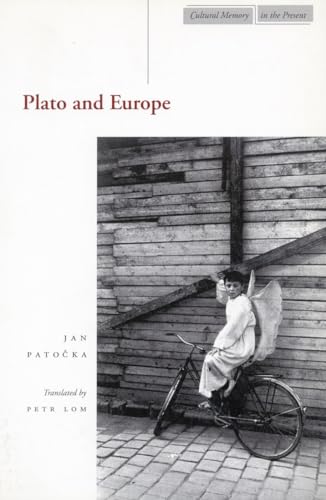
Inhaltsangabe
The Czech philosopher Jan Patocka (1907-1977), who studied with Husserl and Heidegger, is widely recognized as the most influential thinker to come from postwar Eastern Europe. Refusing to join the Communist party after World War II, he was banned from academia and publication for the rest of his life, except for a brief time following the liberalizations of the Prague spring of 1968. Joining Vaclav Havel and Jiri Hajek as a spokesman for the Chart 77 human-rights declaration of 1977, Patocka was harassed by authorities, arrested, and finally died of a heart attack during prolonged interrogation.
Plato and Europe, arguably Patocka's most important book, consists of a series of lectures delivered in the homes of friends after his last banishment from the academy just three years before his death. Here, he presents his most mature ideas about the history of Western philosophy, arguing that the idea of the care of the soul is fundamental to the philosophical tradition beginning with the Greeks. Explaining how the care of the soul is elaborated as the problem of how human beings may make their world one of truth and justice, Patocka develops this thesis through a treatment of Plato, Democritus, and Aristotle, showing how considerations about the soul are of central importance in their writings. He demonstrates in vivid fashion how this idea forms the spiritual heritage of Europe.
Die Inhaltsangabe kann sich auf eine andere Ausgabe dieses Titels beziehen.
Über die Autorin bzw. den Autor
Other books by Jan Patocka published in English are Body, Language, Community: Heretical Essays in the History of Philosophy, and An Introduction to Husserl's Phenomenology.
Von der hinteren Coverseite
The Czech philosopher Jan Patocka (1907-1977), who studied with Husserl and Heidegger, is widely recognized as the most influential thinker to come from postwar Eastern Europe. Refusing to join the Communist party after World War II, he was banned from academia and publication for the rest of his life, except for a brief time following the liberalizations of the Prague spring of 1968. Joining Vaclav Havel and Jiri Hajek as a spokesman for the Chart 77 human-rights declaration of 1977, Patocka was harassed by authorities, arrested, and finally died of a heart attack during prolonged interrogation.
Plato and Europe, arguably Patocka’s most important book, consists of a series of lectures delivered in the homes of friends after his last banishment from the academy just three years before his death. Here, he presents his most mature ideas about the history of Western philosophy, arguing that the idea of the care of the soul is fundamental to the philosophical tradition beginning with the Greeks. Explaining how the care of the soul is elaborated as the problem of how human beings may make their world one of truth and justice, Patocka develops this thesis through a treatment of Plato, Democritus, and Aristotle, showing how considerations about the soul are of central importance in their writings. He demonstrates in vivid fashion how this idea forms the spiritual heritage of Europe.
Plato and Europe, arguably Patocka’s most important book, consists of a series of lectures delivered in the homes of friends after his last banishment from the academy just three years before his death. Here, he presents his most mature ideas about the history of Western philosophy, arguing that the idea of the care of the soul is fundamental to the philosophical tradition beginning with the Greeks. Explaining how the care of the soul is elaborated as the problem of how human beings may make their world one of truth and justice, Patocka develops this thesis through a treatment of Plato, Democritus, and Aristotle, showing how considerations about the soul are of central importance in their writings. He demonstrates in vivid fashion how this idea forms the spiritual heritage of Europe.
Aus dem Klappentext
The Czech philosopher Jan Patocka (1907-1977), who studied with Husserl and Heidegger, is widely recognized as the most influential thinker to come from postwar Eastern Europe. Refusing to join the Communist party after World War II, he was banned from academia and publication for the rest of his life, except for a brief time following the liberalizations of the Prague spring of 1968. Joining Vaclav Havel and Jiri Hajek as a spokesman for the Chart 77 human-rights declaration of 1977, Patocka was harassed by authorities, arrested, and finally died of a heart attack during prolonged interrogation.
Plato and Europe, arguably Patocka s most important book, consists of a series of lectures delivered in the homes of friends after his last banishment from the academy just three years before his death. Here, he presents his most mature ideas about the history of Western philosophy, arguing that the idea of the care of the soul is fundamental to the philosophical tradition beginning with the Greeks. Explaining how the care of the soul is elaborated as the problem of how human beings may make their world one of truth and justice, Patocka develops this thesis through a treatment of Plato, Democritus, and Aristotle, showing how considerations about the soul are of central importance in their writings. He demonstrates in vivid fashion how this idea forms the spiritual heritage of Europe.
Plato and Europe, arguably Patocka s most important book, consists of a series of lectures delivered in the homes of friends after his last banishment from the academy just three years before his death. Here, he presents his most mature ideas about the history of Western philosophy, arguing that the idea of the care of the soul is fundamental to the philosophical tradition beginning with the Greeks. Explaining how the care of the soul is elaborated as the problem of how human beings may make their world one of truth and justice, Patocka develops this thesis through a treatment of Plato, Democritus, and Aristotle, showing how considerations about the soul are of central importance in their writings. He demonstrates in vivid fashion how this idea forms the spiritual heritage of Europe.
„Über diesen Titel“ kann sich auf eine andere Ausgabe dieses Titels beziehen.
Suchergebnisse für Plato and Europe (Cultural Memory in the Present)

Beispielbild für diese ISBN
Plato and Europe
Verlag:
Stanford University Press, 2002
ISBN 10: 0804738017
ISBN 13: 9780804738019
Gebraucht
Paperback
Anbieter: World of Books (was SecondSale), Montgomery, IL, USA
Verkäuferbewertung 5 von 5 Sternen

Paperback. Zustand: Good. The Czech philosopher Jan Patocka (1907-1977) is widely recognized as the most influential thinker to come from postwar Eastern Europe. This book presents his most mature ideas about the history of Western philosophy. Artikel-Nr. 00108157975
Gebraucht kaufen
EUR 11,54
Versand gratis
Versand innerhalb von USA
Versand innerhalb von USA
Anzahl: 1 verfügbar
Beispielbild für diese ISBN
Plato and Europe
Anbieter: PBShop.store UK, Fairford, GLOS, Vereinigtes Königreich
Verkäuferbewertung 5 von 5 Sternen
PAP. Zustand: New. New Book. Shipped from UK. Established seller since 2000. Artikel-Nr. FW-9780804738019
Neu kaufen
EUR 26,63
EUR 4,97 Versand
Versand von Vereinigtes Königreich nach USA
Versand von Vereinigtes Königreich nach USA
Anzahl: 15 verfügbar
Beispielbild für diese ISBN
Plato and Europe
Anbieter: Majestic Books, Hounslow, Vereinigtes Königreich
Verkäuferbewertung 4 von 5 Sternen

Zustand: New. pp. 252. Artikel-Nr. 5459826
Neu kaufen
EUR 35,63
EUR 7,76 Versand
Versand von Vereinigtes Königreich nach USA
Versand von Vereinigtes Königreich nach USA
Anzahl: 3 verfügbar
Beispielbild für diese ISBN
Plato and Europe (Cultural Memory in the Present)
Anbieter: Ria Christie Collections, Uxbridge, Vereinigtes Königreich
Verkäuferbewertung 5 von 5 Sternen
Zustand: New. In English. Artikel-Nr. ria9780804738019_new
Neu kaufen
EUR 35,44
EUR 11,19 Versand
Versand von Vereinigtes Königreich nach USA
Versand von Vereinigtes Königreich nach USA
Anzahl: Mehr als 20 verfügbar
Beispielbild für diese ISBN
Plato and Europe (Cultural Memory in the Present)
Anbieter: Revaluation Books, Exeter, Vereinigtes Königreich
Verkäuferbewertung 5 von 5 Sternen
Paperback. Zustand: Brand New. 1st edition. 223 pages. 9.25x6.25x0.75 inches. In Stock. Artikel-Nr. x-0804738017
Neu kaufen
EUR 36,54
EUR 11,94 Versand
Versand von Vereinigtes Königreich nach USA
Versand von Vereinigtes Königreich nach USA
Anzahl: 2 verfügbar
Beispielbild für diese ISBN
Plato and Europe
Anbieter: Kennys Bookstore, Olney, MD, USA
Verkäuferbewertung 5 von 5 Sternen
Zustand: New. The Czech philosopher Jan Patocka (1907-1977) is widely recognized as the most influential thinker to come from postwar Eastern Europe. This book presents his most mature ideas about the history of Western philosophy. Translator(s): Lom, Petr. Series: Cultural Memory in the Present Series. Num Pages: 252 pages. BIC Classification: HPCA. Category: (G) General (US: Trade); (P) Professional & Vocational; (UP) Postgraduate, Research & Scholarly; (UU) Undergraduate. Dimension: 226 x 157 x 16. Weight in Grams: 348. . 2002. 1st Edition. Paperback. . . . . Books ship from the US and Ireland. Artikel-Nr. V9780804738019
Neu kaufen
EUR 42,43
EUR 9,37 Versand
Versand innerhalb von USA
Versand innerhalb von USA
Anzahl: Mehr als 20 verfügbar
Beispielbild für diese ISBN
PLATO & EUROPE
Anbieter: Speedyhen, Hertfordshire, Vereinigtes Königreich
Verkäuferbewertung 5 von 5 Sternen
Zustand: NEW. Artikel-Nr. NW9780804738019
Neu kaufen
EUR 26,15
EUR 48,95 Versand
Versand von Vereinigtes Königreich nach USA
Versand von Vereinigtes Königreich nach USA
Anzahl: 1 verfügbar
Foto des Verkäufers
Plato and Europe
Anbieter: moluna, Greven, Deutschland
Verkäuferbewertung 5 von 5 Sternen
Zustand: New. The Czech philosopher Jan Patocka (1907-1977) is widely recognized as the most influential thinker to come from postwar Eastern Europe. This book presents his most mature ideas about the history of Western philosophy.Über den Autorrnrn. Artikel-Nr. 595014460
Neu kaufen
EUR 33,18
EUR 48,99 Versand
Versand von Deutschland nach USA
Versand von Deutschland nach USA
Anzahl: 1 verfügbar
Foto des Verkäufers
Plato and Europe
Anbieter: preigu, Osnabrück, Deutschland
Verkäuferbewertung 5 von 5 Sternen
Taschenbuch. Zustand: Neu. Plato and Europe | Jan Patocka | Taschenbuch | Cultural Memory in the Present | Einband - flex.(Paperback) | Englisch | 2002 | Stanford University Press | EAN 9780804738019 | Verantwortliche Person für die EU: Mare Nostrum Group B.V., Doelen 72, 4831 GR BREDA, NIEDERLANDE, gpsr[at]mare-nostrum[dot]co[dot]uk | Anbieter: preigu. Artikel-Nr. 104788446
Neu kaufen
EUR 28,65
EUR 70,00 Versand
Versand von Deutschland nach USA
Versand von Deutschland nach USA
Anzahl: 5 verfügbar