
Verwandte Artikel zu The Body of This Death: Historicity and Sociality in...
Inhaltsangabe
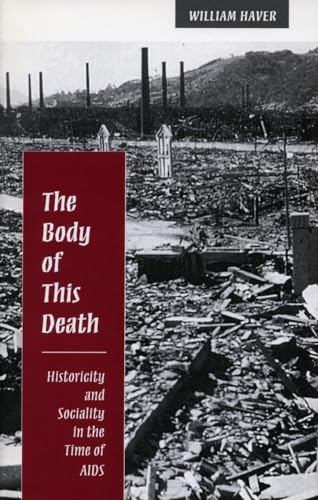
Examining the AIDS pandemic and Japanese A-bomb literature, this book asks the question of how the experience of unimaginable and unrepresentable loss affects the experience and constitution of the social and the discourses of history. It argues that those objects which are presumptively given to thought under the rubrics of “AIDS” and “Hiroshima/Nagasaki” pose an essential threat, in their existentiality, to conceptual thought and, ultimately, to rationality altogether. It therefore argues that any serious thinking about AIDS and nuclear terror must think the essential insufficiency of thought to its putative objects—the insufficiency of “society” to think sociality, the insufficiency of “history” to think historicity.
The author first attempts to think the incapacity of every invocation of historical consciousness (or, indeed, of “history” itself) to think the existential historicity of that event which is presumptively not only its object but its ground. Readings of works by Nishida Kitaro, Ota Yoko, and Takenishi Hiroko written in the aftermath of Hiroshima and Nagasaki attempt to mark the limit of historical consciousness. The author then considers erotic sociality in the time of AIDS, specifically as articulated in texts by David Wojnarowicz, focusing on the themes of vulnerability, anonymity, the erotic, and nomadism.
Die Inhaltsangabe kann sich auf eine andere Ausgabe dieses Titels beziehen.
Über die Autorin bzw. den Autor
William Haver is Associate Professor of History at Binghamton University
Von der hinteren Coverseite
Examining the AIDS pandemic and Japanese A-bomb literature, this book asks the question of how the experience of unimaginable and unrepresentable loss affects the experience and constitution of the social and the discourses of history. It argues that those objects which are presumptively given to thought under the rubrics of “AIDS” and “Hiroshima/Nagasaki” pose an essential threat, in their existentiality, to conceptual thought and, ultimately, to rationality altogether. It therefore argues that any serious thinking about AIDS and nuclear terror must think the essential insufficiency of thought to its putative objects—the insufficiency of “society” to think sociality, the insufficiency of “history” to think historicity.
The author first attempts to think the incapacity of every invocation of historical consciousness (or, indeed, of “history” itself) to think the existential historicity of that event which is presumptively not only its object but its ground. Readings of works by Nishida Kitaro, Ota Yoko, and Takenishi Hiroko written in the aftermath of Hiroshima and Nagasaki attempt to mark the limit of historical consciousness. The author then considers erotic sociality in the time of AIDS, specifically as articulated in texts by David Wojnarowicz, focusing on the themes of vulnerability, anonymity, the erotic, and nomadism.
The author first attempts to think the incapacity of every invocation of historical consciousness (or, indeed, of “history” itself) to think the existential historicity of that event which is presumptively not only its object but its ground. Readings of works by Nishida Kitaro, Ota Yoko, and Takenishi Hiroko written in the aftermath of Hiroshima and Nagasaki attempt to mark the limit of historical consciousness. The author then considers erotic sociality in the time of AIDS, specifically as articulated in texts by David Wojnarowicz, focusing on the themes of vulnerability, anonymity, the erotic, and nomadism.
Aus dem Klappentext
Examining the AIDS pandemic and Japanese A-bomb literature, this book asks the question of how the experience of unimaginable and unrepresentable loss affects the experience and constitution of the social and the discourses of history. It argues that those objects which are presumptively given to thought under the rubrics of AIDS and Hiroshima/Nagasaki pose an essential threat, in their existentiality, to conceptual thought and, ultimately, to rationality altogether. It therefore argues that any serious thinking about AIDS and nuclear terror must think the essential insufficiency of thought to its putative objects the insufficiency of society to think sociality, the insufficiency of history to think historicity.
The author first attempts to think the incapacity of every invocation of historical consciousness (or, indeed, of history itself) to think the existential historicity of that event which is presumptively not only its object but its ground. Readings of works by Nishida Kitaro, Ota Yoko, and Takenishi Hiroko written in the aftermath of Hiroshima and Nagasaki attempt to mark the limit of historical consciousness. The author then considers erotic sociality in the time of AIDS, specifically as articulated in texts by David Wojnarowicz, focusing on the themes of vulnerability, anonymity, the erotic, and nomadism.
The author first attempts to think the incapacity of every invocation of historical consciousness (or, indeed, of history itself) to think the existential historicity of that event which is presumptively not only its object but its ground. Readings of works by Nishida Kitaro, Ota Yoko, and Takenishi Hiroko written in the aftermath of Hiroshima and Nagasaki attempt to mark the limit of historical consciousness. The author then considers erotic sociality in the time of AIDS, specifically as articulated in texts by David Wojnarowicz, focusing on the themes of vulnerability, anonymity, the erotic, and nomadism.
„Über diesen Titel“ kann sich auf eine andere Ausgabe dieses Titels beziehen.
Suchergebnisse für The Body of This Death: Historicity and Sociality in...

Foto des Verkäufers
The Body of This Death: Historicity and Sociality in the Time of AIDS
Verlag:
Stanford University Press, 1996
ISBN 10: 0804727163
ISBN 13: 9780804727167
Gebraucht
Hardcover
Anbieter: Bookbot, Prague, Tschechien
Verkäuferbewertung 5 von 5 Sternen

Hardcover. Zustand: Fair. Anmerkungen / bekritzelt / Stempel; Verschmutzung / Wasserschaden; Abnutzung / Risse - leicht. Examining the AIDS pandemic and Japanese A-bomb literature, this book asks the question of how the experience of unimaginable and unrepresentable loss affects the experience and constitution of the social and the discourses of history. It argues that those objects which are presumptively given to thought under the rubrics of "AIDS" and "Hiroshima/Nagasaki" pose an essential threat, in their existentiality, to conceptual thought and, ultimately, to rationality altogether. It therefore argues that any serious thinking about AIDS and nuclear terror must think the essential insufficiency of thought to its putative objects--the insufficiency of "society" to think sociality, the insufficiency of "history" to think historicity. The author first attempts to think the incapacity of every invocation of historical consciousness (or, indeed, of "history" itself) to think the existential historicity of that event which is presumptively not only its object but its ground. Readings of works by Nishida Kitaro, Ota Yoko, and Takenishi Hiroko written in the aftermath of Hiroshima and Nagasaki attempt to mark the limit of historical consciousness. The author then considers erotic sociality in the time of AIDS, specifically as articulated in texts by David Wojnarowicz, focusing on the themes of vulnerability, anonymity, the erotic, and nomadism. Artikel-Nr. 5f1f2835-d4be-40fb-b08d-f0ed7d7240f4
Gebraucht kaufen
EUR 3,80
EUR 20,99 Versand
Versand von Tschechien nach USA
Versand von Tschechien nach USA
Anzahl: 1 verfügbar
Beispielbild für diese ISBN
The Body of This Death
Verlag:
MK - Stanford University Press, 1997
ISBN 10: 0804727163
ISBN 13: 9780804727167
Neu
Hardcover
Anbieter: PBShop.store UK, Fairford, GLOS, Vereinigtes Königreich
Verkäuferbewertung 5 von 5 Sternen
HRD. Zustand: New. New Book. Shipped from UK. Established seller since 2000. Artikel-Nr. FW-9780804727167
Neu kaufen
EUR 118,49
EUR 5,85 Versand
Versand von Vereinigtes Königreich nach USA
Versand von Vereinigtes Königreich nach USA
Anzahl: 1 verfügbar
Beispielbild für diese ISBN
The Body of This Death: Historicity and Sociality in the Time of AIDS
Anbieter: Ria Christie Collections, Uxbridge, Vereinigtes Königreich
Verkäuferbewertung 5 von 5 Sternen
Zustand: New. In English. Artikel-Nr. ria9780804727167_new
Neu kaufen
EUR 113,92
EUR 13,17 Versand
Versand von Vereinigtes Königreich nach USA
Versand von Vereinigtes Königreich nach USA
Anzahl: 1 verfügbar
Beispielbild für diese ISBN
The Body of This Death: Historicity and Sociality in the Time of AIDS
Anbieter: Kennys Bookstore, Olney, MD, USA
Verkäuferbewertung 5 von 5 Sternen
Zustand: New. Examining the AIDS pandemic and Japanese A-bomb literature, this book asks the question of how the experience of unimaginable and unrepresentable loss affects the experience and constitution of the social and the discourses of history. Num Pages: 244 pages. BIC Classification: DSA; HPCF. Category: (P) Professional & Vocational; (UP) Postgraduate, Research & Scholarly; (UU) Undergraduate. Dimension: 5817 x 3887 x 23. . . 1997. Hardcover. . . . . Books ship from the US and Ireland. Artikel-Nr. V9780804727167
Neu kaufen
EUR 161,12
EUR 9,05 Versand
Versand innerhalb von USA
Versand innerhalb von USA
Anzahl: 1 verfügbar
Foto des Verkäufers
The Body of This Death: Historicity and Sociality in the Time of AIDS
Anbieter: moluna, Greven, Deutschland
Verkäuferbewertung 5 von 5 Sternen
Gebunden. Zustand: New. Examining the AIDS pandemic and Japanese A-bomb literature, this book asks the question of how the experience of unimaginable and unrepresentable loss affects the experience and constitution of the social and the discourses of history.Über den . Artikel-Nr. 595013993
Neu kaufen
EUR 122,58
EUR 48,99 Versand
Versand von Deutschland nach USA
Versand von Deutschland nach USA
Anzahl: Mehr als 20 verfügbar
Beispielbild für diese ISBN
The Body of This Death Historicity and Sociality in the Time of AIDS
Anbieter: Revaluation Books, Exeter, Vereinigtes Königreich
Verkäuferbewertung 5 von 5 Sternen
Hardcover. Zustand: Brand New. 1st edition. 244 pages. 9.00x6.00x1.00 inches. In Stock. Artikel-Nr. x-0804727163
Neu kaufen
EUR 161,01
EUR 11,66 Versand
Versand von Vereinigtes Königreich nach USA
Versand von Vereinigtes Königreich nach USA
Anzahl: 2 verfügbar
Foto des Verkäufers
The Body of This Death : Historicity and Sociality in the Time of AIDS
Verlag:
Stanford University Press Feb 1997, 1997
ISBN 10: 0804727163
ISBN 13: 9780804727167
Neu
Hardcover
Anbieter: AHA-BUCH GmbH, Einbeck, Deutschland
Verkäuferbewertung 5 von 5 Sternen
Buch. Zustand: Neu. Neuware - Examining the AIDS pandemic and Japanese A-bomb literature, this book asks the question of how the experience of unimaginable and unrepresentable loss affects the experience and constitution of the social and the discourses of history. It argues that those objects which are presumptively given to thought under the rubrics of 'AIDS' and 'Hiroshima/Nagasaki' pose an essential threat, in their existentiality, to conceptual thought and, ultimately, to rationality altogether. It therefore argues that any serious thinking about AIDS and nuclear terror must think the essential insufficiency of thought to its putative objects-the insufficiency of 'society' to think sociality, the insufficiency of 'history' to think historicity. The author first attempts to think the incapacity of every invocation of historical consciousness (or, indeed, of 'history' itself) to think the existential historicity of that event which is presumptively not only its object but its ground. Readings of works by Nishida Kitaro, Ota Yoko, and Takenishi Hiroko written in the aftermath of Hiroshima and Nagasaki attempt to mark the limit of historical consciousness. The author then considers erotic sociality in the time of AIDS, specifically as articulated in texts by David Wojnarowicz, focusing on the themes of vulnerability, anonymity, the erotic, and nomadism. Artikel-Nr. 9780804727167
Neu kaufen
EUR 231,95
EUR 30,50 Versand
Versand von Deutschland nach USA
Versand von Deutschland nach USA
Anzahl: 1 verfügbar