
Verwandte Artikel zu Love and Other Consolation Prizes: A Novel
Inhaltsangabe
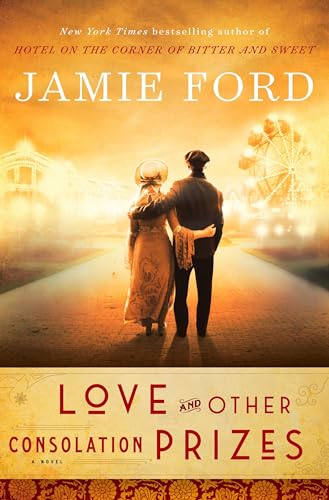
From the bestselling author of Hotel on the Corner of Bitter and Sweet comes a powerful novel, inspired by a true story, about a boy whose life is transformed at Seattle’s epic 1909 World’s Fair.
“An evocative, heartfelt, beautifully crafted story that shines a light on a fascinating, tragic bit of forgotten history.”—Kristin Hannah, author of The Nightingale
For twelve-year-old Ernest Young, a charity student at a boarding school, the chance to go to the World’s Fair feels like a gift. But only once he’s there, amid the exotic exhibits, fireworks, and Ferris wheels, does he discover that he is the one who is actually the prize. The half-Chinese orphan is astounded to learn he will be raffled off—a healthy boy “to a good home.”
The winning ticket belongs to the flamboyant madam of a high-class brothel, famous for educating her girls. There, Ernest becomes the new houseboy and befriends Maisie, the madam’s precocious daughter, and a bold scullery maid named Fahn. Their friendship and affection form the first real family Ernest has ever known—and against all odds, this new sporting life gives him the sense of home he’s always desired.
But as the grande dame succumbs to an occupational hazard and their world of finery begins to crumble, all three must grapple with hope, ambition, and first love.
Fifty years later, in the shadow of Seattle’s second World’s Fair, Ernest struggles to help his ailing wife reconcile who she once was with who she wanted to be, while trying to keep family secrets hidden from their grown-up daughters.
Against a rich backdrop of post-Victorian vice, suffrage, and celebration, Love and Other Consolations is an enchanting tale about innocence and devotion—in a world where everything, and everyone, is for sale.
Praise for Love and Other Consolation Prizes
“Exciting . . . [Jamie] Ford captures the thrill of first kisses and the shock of revealing long-hidden affairs.”—Kirkus Reviews
“Strong . . . A laudable effort that shines light on little known histories.”—Library Journal
“Poignant . . . Vibrantly rendered.”—Booklist
“Combining rich narrative and literary qualities, the book achieves a multi-faceted emotional resonance. It is by turns heart-rending, tragic, disturbing, sanguine, warm, and life-affirming. Perceptive themes that run throughout culminate at the end. A true story from the 1909 Alaska-Yukon-Pacific Exposition inspired this very absorbing and moving novel. Highly recommended.”—Historical Novel Society (Editors’ choice)
“Ford is a master at shining light into dark, forgotten corners of history and revealing the most unexpected and relatable human threads. . . . A beautiful and enthralling story of resilience and the many permutations of love.”—Jessica Shattuck, author of The Women in the Castle
“All the charm and heartbreak of Hotel on the Corner of Bitter and Sweet . . . Based on a true story, Love and Other Consolation Prizes will warm your soul.”—Martha Hall Kelly, author of Lilac Girls
Die Inhaltsangabe kann sich auf eine andere Ausgabe dieses Titels beziehen.
Über die Autorin bzw. den Autor
The son of a Chinese American father, Jamie Ford is the New York Times bestselling author of Hotel on the Corner of Bitter and Sweet, which won the Asian/Pacific American Award for Literature, and Songs of Willow Frost. Having grown up in Seattle, he now lives in Montana with his wife and children.
Auszug. © Genehmigter Nachdruck. Alle Rechte vorbehalten.
Overture
(1962)
4
Ernest Young stood outside the gates on opening day of the new world’s fair, loitering in the shadow of the future. From his lonely vantage point in the VIP parking lot, he could see hundreds of happy people inside, virtually every name in Seattle’s Social Blue Book, wearing their Sunday best on a cool Saturday afternoon. The gaily dressed men and women barely filled half of Memorial Stadium’s raked seating, but they sat together, a waterfall of wool suits and polyester neckties, cut-out dresses and ruffled pillbox hats, cascading down toward a bulwark of patriotic bunting. Ernest saw that the infield had been converted to a speedway for motorboats—an elevated moat, surrounding a dry spot of land where the All-City High School Band had assembled, along with dozens of reporters who milled about smoking cigarettes like lost sailors, marooned on an island of generators and television cameras. As the wind picked up, Ernest could smell gasoline, drying paint, and a hint of sawdust. He could almost hear carpenters tapping finishing nails as the musicians warmed up.
Saying that Ernest wished he could go inside and partake of the celebration was like saying he wished he could dine alone at Canlis restaurant on Valentine’s Day, cross the Atlantic by himself aboard the Queen Mary, or fly first class on an empty Boeing 707. The scenery and the festive occasion were tempting, but the endeavor itself only highlighted the absence of someone with whom to share those moments.
For Ernest, that person was Gracie, his beloved wife of forty-plus years. They’d known each other since childhood, long before they’d bought a house, joined a church, and raised a family. But now their memories had been scattered like bits of broken glass on wet pavement. Reflections of first kisses, anniversaries, the smiles of toddlers, had become images of a Christmas tree left up past Easter, a package of unlit birthday candles, recollections of doctors and cold hospital waiting rooms.
The truth of the matter was that these days Gracie barely remembered him. Her mind had become a one-way mirror. Ernest could see her clearly, but to Gracie he’d been lost behind her troubled, distorted reflection.
Ernest chewed his lip as he leaned against the vacant Cadillac De Ville that he’d spent the better part of the morning polishing. He felt a sigh of vertigo as he stared up at the newly built Space Needle––the showpiece of the Century 21 Expo––the talk of the town, if not the country, and perhaps the entire world. He was supposed to deliver foreign dignitaries to the opening of the Spanish Village Fiesta, but the visitors had been held up—some kind of dispute with the Department of Immigration and Naturalization Services. So he came anyway, to try to remember the happier times.
Ernest smiled as he listened to Danny Kaye take the microphone and read a credo of some kind. The Official World’s Fair Band followed the famous actor as they took over the musical duties for the day and began to play a gliding waltz. Ernest counted the time, one-two-three, one-two-three, as he popped his knuckles and massaged the joints where arthritis reminded him of his age—sixty-four, sixty-five, sixty-something, no one knew for sure. The birth date listed on his chauffeur’s permit had been made up decades earlier, as had the one on his old license with the Gray Top Taxi company. He’d left China as a boy—during a time of war and famine, not record keeping.
Ernest blinked as the waltz ended and a bank of howitzers blasted a twenty-one-gun salute somewhere beyond the main entrance, startling him from his nostalgic debridement. The thundering cannons signaled that President Kennedy had officially opened the world’s fair with the closing of a telegraph circuit sent all the way from his desk at the White House. Ernest had read that the signal would be bounced off a distant sun, Cassiopeia, ten thousand light-years away. He looked up at the blanket of mush that passed for a northwestern sky, and made a wish on an unseen star as people cheered and the orchestra began playing the first brassy strains of “Bow Down to Washington” while balloons were released, rising like champagne bubbles. Some of the nearby drivers honked their horns as the Space Needle’s carillon bells began ringing, heralding the space age, a clarion call that was drowned out by the deafening, crackling roar of a squadron of fighter jets that boomed overhead. Ernest felt the vibration in his bones.
When Mayor Clinton and the City Council had broken ground on the fairgrounds three years ago––when a gathering of reporters had watched those men ceremoniously till the nearby soil with gold-plated shovels––that’s also when Gracie began to cry in her sleep. She’d wake and forget where she was. She’d grow fearful and panic.
Dr. Luke had told Ernest and their daughters, with tears in his eyes, “It’s a rare type of viral meningitis.” Dr. Luke always had a certain sense of decorum, and Ernest knew he was lying for the sake of the girls. Especially since he’d treated Gracie when she was young.
“These things sometimes stay hidden and then come back, decades later,” the doctor had said as the two of them stood on Ernest’s front step. “It’s uncommon, but it happens. I’ve seen it before in other patients. It’s not contagious now. It’s just—”
“A ghost of red-light districts past,” Ernest had interrupted. “A ripple from the water trade.” He shook Dr. Luke’s hand and thanked him profusely for the late-night house call and the doctor’s ample discretion regarding Gracie’s past.
Ernest remembered how shortly after his wife’s diagnosis her condition had worsened. How she’d pulled out her hair and torn at her clothing. How Gracie had been hospitalized and nearly institutionalized a month later, when she’d lost her wits so completely that Ernest had had to fight the specialists who recommended she be given electroshock therapy, or worse—a medieval frontal-lobe castration at Western State Hospital, the asylum famous for its “ice pick” lobotomies.
Ernest hung on as Dr. Luke quietly administered larger doses of penicillin until the madness subsided and Gracie returned to a new version of normal. But the damage had been done. Part of his wife—her memory—was a blackboard that had been scrubbed clean. She still fell asleep while listening to old records by Josephine Baker and Edith Piaf. She still smiled at the sound of rain on the roof, and enjoyed the fragrance of fresh roses from the Cherry Land flower shop. But on most days, Ernest’s presence was like fingernails on that blackboard as Gracie recoiled in fits of either hysteria or anger.
I didn’t know the month of the world’s fair groundbreaking would be our last good month together, Ernest thought as he watched scores of wide-eyed fairgoers––couples, families, busloads of students—pouring through the nearby turnstiles, all smiles and awe, tickets in hand. He heard the stadium crowd cheer as a pyramid of water-skiers whipped around the Aquadrome.
To make matters worse, when Gracie had been in the hospital, agents from the Washington State Highway Department had showed up on Ernest’s doorstep. “Hello, Mr. Young,” they’d said. “We have some difficult news to share. May we come in?”
The...
„Über diesen Titel“ kann sich auf eine andere Ausgabe dieses Titels beziehen.
Suchergebnisse für Love and Other Consolation Prizes: A Novel

Beispielbild für diese ISBN
Love and Other Consolation Pri
Anbieter: World of Books (was SecondSale), Montgomery, IL, USA
Verkäuferbewertung 5 von 5 Sternen

Zustand: Acceptable. Item in acceptable condition! Textbooks may not include supplemental items i.e. CDs, access codes etc. Artikel-Nr. 00101263902
Gebraucht kaufen
EUR 3,77
Versand gratis
Versand innerhalb von USA
Versand innerhalb von USA
Anzahl: 2 verfügbar
Beispielbild für diese ISBN
Love and Other Consolation Pri
Anbieter: World of Books (was SecondSale), Montgomery, IL, USA
Verkäuferbewertung 5 von 5 Sternen
Zustand: Very Good. Item in very good condition! Textbooks may not include supplemental items i.e. CDs, access codes etc. Artikel-Nr. 00105817424
Gebraucht kaufen
EUR 3,77
Versand gratis
Versand innerhalb von USA
Versand innerhalb von USA
Anzahl: 3 verfügbar
Beispielbild für diese ISBN
Love and Other Consolation Pri
Anbieter: World of Books (was SecondSale), Montgomery, IL, USA
Verkäuferbewertung 5 von 5 Sternen
Zustand: Good. Item in good condition. Textbooks may not include supplemental items i.e. CDs, access codes etc. Artikel-Nr. 00088386665
Gebraucht kaufen
EUR 3,77
Versand gratis
Versand innerhalb von USA
Versand innerhalb von USA
Anzahl: 16 verfügbar
Beispielbild für diese ISBN
Love and Other Consolation Prizes: A Novel
Anbieter: ThriftBooks-Reno, Reno, NV, USA
Verkäuferbewertung 5 von 5 Sternen
Hardcover. Zustand: Very Good. No Jacket. May have limited writing in cover pages. Pages are unmarked. ~ ThriftBooks: Read More, Spend Less. Artikel-Nr. G0804176752I4N00
Gebraucht kaufen
EUR 5,96
Versand gratis
Versand innerhalb von USA
Versand innerhalb von USA
Anzahl: 1 verfügbar
Beispielbild für diese ISBN
Love and Other Consolation Prizes: A Novel
Anbieter: ThriftBooks-Atlanta, AUSTELL, GA, USA
Verkäuferbewertung 5 von 5 Sternen
Hardcover. Zustand: Very Good. No Jacket. Former library book; May have limited writing in cover pages. Pages are unmarked. ~ ThriftBooks: Read More, Spend Less. Artikel-Nr. G0804176752I4N10
Gebraucht kaufen
EUR 5,96
Versand gratis
Versand innerhalb von USA
Versand innerhalb von USA
Anzahl: 1 verfügbar
Beispielbild für diese ISBN
Love and Other Consolation Prizes: A Novel
Anbieter: ThriftBooks-Atlanta, AUSTELL, GA, USA
Verkäuferbewertung 5 von 5 Sternen
Hardcover. Zustand: Very Good. No Jacket. May have limited writing in cover pages. Pages are unmarked. ~ ThriftBooks: Read More, Spend Less. Artikel-Nr. G0804176752I4N00
Gebraucht kaufen
EUR 5,96
Versand gratis
Versand innerhalb von USA
Versand innerhalb von USA
Anzahl: 1 verfügbar
Beispielbild für diese ISBN
Love and Other Consolation Prizes: A Novel
Anbieter: ThriftBooks-Dallas, Dallas, TX, USA
Verkäuferbewertung 5 von 5 Sternen
Hardcover. Zustand: Very Good. No Jacket. May have limited writing in cover pages. Pages are unmarked. ~ ThriftBooks: Read More, Spend Less. Artikel-Nr. G0804176752I4N00
Gebraucht kaufen
EUR 5,96
Versand gratis
Versand innerhalb von USA
Versand innerhalb von USA
Anzahl: 1 verfügbar
Beispielbild für diese ISBN
Love and Other Consolation Prizes: A Novel
Verlag:
Random House Publishing Group, 2017
ISBN 10: 0804176752
ISBN 13: 9780804176750
Gebraucht
Hardcover
Anbieter: Better World Books, Mishawaka, IN, USA
Verkäuferbewertung 5 von 5 Sternen
Zustand: Very Good. Former library copy. Pages intact with possible writing/highlighting. Binding strong with minor wear. Dust jackets/supplements may not be included. Includes library markings. Stock photo provided. Product includes identifying sticker. Better World Books: Buy Books. Do Good. Artikel-Nr. 13827291-6
Gebraucht kaufen
EUR 6,25
Versand gratis
Versand innerhalb von USA
Versand innerhalb von USA
Anzahl: 2 verfügbar
Beispielbild für diese ISBN
Love and Other Consolation Prizes: A Novel
Verlag:
Ballantine Books (edition Reprint), 2017
ISBN 10: 0804176752
ISBN 13: 9780804176750
Gebraucht
Hardcover
Anbieter: BooksRun, Philadelphia, PA, USA
Verkäuferbewertung 5 von 5 Sternen
Hardcover. Zustand: Very Good. Reprint. With dust jacket. It's a well-cared-for item that has seen limited use. The item may show minor signs of wear. All the text is legible, with all pages included. It may have slight markings and/or highlighting. Artikel-Nr. 0804176752-11-1-29
Gebraucht kaufen
EUR 6,25
Versand gratis
Versand innerhalb von USA
Versand innerhalb von USA
Anzahl: 1 verfügbar
Beispielbild für diese ISBN
Love and Other Consolation Prizes: A Novel
Verlag:
Random House Publishing Group, 2017
ISBN 10: 0804176752
ISBN 13: 9780804176750
Gebraucht
Hardcover
Anbieter: Better World Books, Mishawaka, IN, USA
Verkäuferbewertung 5 von 5 Sternen
Zustand: Good. Former library copy. Pages intact with minimal writing/highlighting. The binding may be loose and creased. Dust jackets/supplements are not included. Includes library markings. Stock photo provided. Product includes identifying sticker. Better World Books: Buy Books. Do Good. Artikel-Nr. 15966385-75
Gebraucht kaufen
EUR 6,25
Versand gratis
Versand innerhalb von USA
Versand innerhalb von USA
Anzahl: 1 verfügbar