Inhaltsangabe
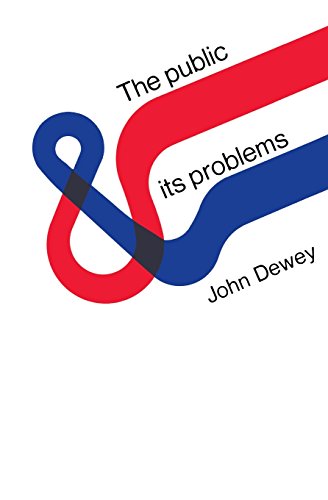
A classic in social and political philosophy. In his characteristic and provocative dialectic style, John Dewey clarifies the meaning and implications of such concepts as "the public," "the state," "government," and "political democracy"; distinguishes his a posteriori reasoning from a priori reasoning which, he argues, permeates less meaningful discussions of basic concepts; and repeatedly demonstrates the interrelationships between fact and theory. As in his other writings, Dewey exhibits his strong faith in the potential of human intelligence to solve the public's problems.
Die Inhaltsangabe kann sich auf eine andere Ausgabe dieses Titels beziehen.
Über die Autorin bzw. den Autor
John Dewey (1859-1952) was an American philosopher, psychologist and educational reformer whose ideas have been influential in education and social reform. Dewey was an important early developer of the philosophy of pragmatism and one of the founders of functional psychology. He was a major representative of progressive education and liberalism. In 1894 Dewey joined the newly founded University of Chicago (1894-1904) where he developed his belief in an empirically based theory of knowledge, becoming associated with the newly emerging Pragmatic philosophy. His time at the University of Chicago resulted in four essays collectively entitled Thought and its Subject-Matter, which was published with collected works from his colleagues at Chicago under the collective title Studies in Logical Theory (1903). During that time Dewey also initiated the University of Chicago Laboratory Schools, where he was able to actualize the pedagogical beliefs that provided material for his first major work on education, The School and Social Progress (1899). In 1899, Dewey was elected president of the American Psychological Association. From 1904 until his retirement in 1930 he was professor of philosophy at both Columbia University and Columbia University's Teachers College. In 1905 he became president of the American Philosophical Association. He was a longtime member of the American Federation of Teachers.
„Über diesen Titel“ kann sich auf eine andere Ausgabe dieses Titels beziehen.
Weitere beliebte Ausgaben desselben Titels

Suchergebnisse für Public & Its Problems

Beispielbild für diese ISBN
The Public and Its Problems
Anbieter: Wonder Book, Frederick, MD, USA
Verkäuferbewertung 5 von 5 Sternen

Zustand: Very Good. Very Good condition. A copy that may have a few cosmetic defects. May also contain light spine creasing or a few markings such as an owner's name, short gifter's inscription or light stamp. Artikel-Nr. K16K-01232
Gebraucht kaufen
EUR 5,31
Versand gratis
Versand innerhalb von USA
Versand innerhalb von USA
Anzahl: 1 verfügbar
Beispielbild für diese ISBN
The Public and Its Problems
Anbieter: ThriftBooks-Atlanta, AUSTELL, GA, USA
Verkäuferbewertung 5 von 5 Sternen
Paperback. Zustand: Fair. No Jacket. Readable copy. Pages may have considerable notes/highlighting. ~ ThriftBooks: Read More, Spend Less. Artikel-Nr. G0804002541I5N00
Gebraucht kaufen
EUR 6,07
Versand gratis
Versand innerhalb von USA
Versand innerhalb von USA
Anzahl: 2 verfügbar
Beispielbild für diese ISBN
The Public and Its Problems
Anbieter: ThriftBooks-Phoenix, Phoenix, AZ, USA
Verkäuferbewertung 5 von 5 Sternen
Paperback. Zustand: Good. No Jacket. Pages can have notes/highlighting. Spine may show signs of wear. ~ ThriftBooks: Read More, Spend Less. Artikel-Nr. G0804002541I3N00
Gebraucht kaufen
EUR 6,07
Versand gratis
Versand innerhalb von USA
Versand innerhalb von USA
Anzahl: 2 verfügbar
Beispielbild für diese ISBN
The Public and Its Problems
Anbieter: ThriftBooks-Phoenix, Phoenix, AZ, USA
Verkäuferbewertung 5 von 5 Sternen
Paperback. Zustand: Fair. No Jacket. Readable copy. Pages may have considerable notes/highlighting. ~ ThriftBooks: Read More, Spend Less. Artikel-Nr. G0804002541I5N00
Gebraucht kaufen
EUR 6,07
Versand gratis
Versand innerhalb von USA
Versand innerhalb von USA
Anzahl: 1 verfügbar
Beispielbild für diese ISBN
The Public and Its Problems
Anbieter: ThriftBooks-Dallas, Dallas, TX, USA
Verkäuferbewertung 5 von 5 Sternen
Paperback. Zustand: Fair. No Jacket. Readable copy. Pages may have considerable notes/highlighting. ~ ThriftBooks: Read More, Spend Less. Artikel-Nr. G0804002541I5N00
Gebraucht kaufen
EUR 6,07
Versand gratis
Versand innerhalb von USA
Versand innerhalb von USA
Anzahl: 1 verfügbar
Beispielbild für diese ISBN
The Public and Its Problems
Anbieter: ThriftBooks-Reno, Reno, NV, USA
Verkäuferbewertung 5 von 5 Sternen
Paperback. Zustand: Very Good. No Jacket. May have limited writing in cover pages. Pages are unmarked. ~ ThriftBooks: Read More, Spend Less. Artikel-Nr. G0804002541I4N00
Gebraucht kaufen
EUR 6,07
Versand gratis
Versand innerhalb von USA
Versand innerhalb von USA
Anzahl: 1 verfügbar
Beispielbild für diese ISBN
The Public and Its Problems
Anbieter: ThriftBooks-Reno, Reno, NV, USA
Verkäuferbewertung 5 von 5 Sternen
Paperback. Zustand: Good. No Jacket. Pages can have notes/highlighting. Spine may show signs of wear. ~ ThriftBooks: Read More, Spend Less. Artikel-Nr. G0804002541I3N00
Gebraucht kaufen
EUR 6,07
Versand gratis
Versand innerhalb von USA
Versand innerhalb von USA
Anzahl: 2 verfügbar
Beispielbild für diese ISBN
The Public and Its Problems
Anbieter: ThriftBooks-Reno, Reno, NV, USA
Verkäuferbewertung 5 von 5 Sternen
Paperback. Zustand: Fair. No Jacket. Readable copy. Pages may have considerable notes/highlighting. ~ ThriftBooks: Read More, Spend Less. Artikel-Nr. G0804002541I5N00
Gebraucht kaufen
EUR 6,07
Versand gratis
Versand innerhalb von USA
Versand innerhalb von USA
Anzahl: 1 verfügbar
Beispielbild für diese ISBN
The Public and Its Problems : An Essay in Political Inquiry
Anbieter: Better World Books, Mishawaka, IN, USA
Verkäuferbewertung 5 von 5 Sternen
Zustand: Good. Used book that is in clean, average condition without any missing pages. Artikel-Nr. 3984501-6
Gebraucht kaufen
EUR 6,10
Versand gratis
Versand innerhalb von USA
Versand innerhalb von USA
Anzahl: 2 verfügbar
Beispielbild für diese ISBN
The Public and Its Problems : An Essay in Political Inquiry
Anbieter: Better World Books, Mishawaka, IN, USA
Verkäuferbewertung 5 von 5 Sternen
Zustand: Good. Former library book; may include library markings. Used book that is in clean, average condition without any missing pages. Artikel-Nr. 9171271-6
Gebraucht kaufen
EUR 6,10
Versand gratis
Versand innerhalb von USA
Versand innerhalb von USA
Anzahl: 1 verfügbar