
Inhaltsangabe
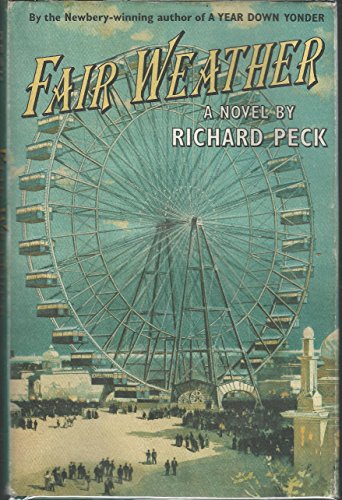
Set at the Chicago World's Fair in 1893, Rosie gets her first taste of big city life as she, her siblings, and their grandfather attend the big event where they soon meet famous people, share an exciting experience, and take in all the wonders the fair has to offer. 40,000 first printing.
Die Inhaltsangabe kann sich auf eine andere Ausgabe dieses Titels beziehen.
Über die Autorin bzw. den Autor
Richard Peck has written more than thirty novels, and in the process has become one of the country’s most highly respected writers for children. In factThe Washington Post called him America’s best living author for young adults.” A versatile writer, he is beloved by middle-graders as well as young adults for his historical and contemporary comedies and coming-of-age novels. He lives in New York City, and spends a great deal of time traveling around the country to speaking engagements at conferences, schools, and libraries.
Mr. Peck is the first children’s book author to have received a National Humanities Medal. He is a Newbery Medal winner (forA Year Down Yonder), a Newbery Honor winner (for A Long Way from Chicago), a two-time National Book Award finalist, and a two-time Edgar Award winner. In addition, he has won a number of major honors for the body of his work, including the Margaret A. Edwards Award, the ALAN Award, and the Medallion from the University of Southern Mississippi.
Mr. Peck is the first children’s book author to have received a National Humanities Medal. He is a Newbery Medal winner (forA Year Down Yonder), a Newbery Honor winner (for A Long Way from Chicago), a two-time National Book Award finalist, and a two-time Edgar Award winner. In addition, he has won a number of major honors for the body of his work, including the Margaret A. Edwards Award, the ALAN Award, and the Medallion from the University of Southern Mississippi.
Auszug. © Genehmigter Nachdruck. Alle Rechte vorbehalten.
Bright Lights and Bad Women
Evening shadows found us clustered at the dining-room table. Aunt Euterpe's huge, unexplored house hulked over us. She hadn't brought electrical wire into it because, as she said, she didn't understand how electricity worked. Blue flame flickered from the gasolier above our heads, making us all look long dead.
We hadn't changed our clothes, as we were already wearing our best. In his ice-cream suit Granddad glowed. Aunt Euterpe had unveiled herself for dinner and drooped at her place like a waxen lily. Timidly she tinkled a tarnished bell beside her plate.
The door fanned open, and in came a woman backward, bearing plates of soup-a big, husky woman in a cook's cap. She looked like she might butcher cattle on her day off. Behind her with more plates was the maid who'd let us in. What a lot of people it took to keep Aunt Euterpe going.
When the big cook skidded the soup plates under our noses, Granddad stared down through his specs. It was a mighty thin soup. You could see the roses on the bottom of the plate. Greasy too, with things floating in it. I was reminded of the Chicago River.
Granddad was not a swearing man, not in front of women and children. But Mama allowed him two oaths in the house. One was hecka-tee. The other was helaca-toot.
"Helaca-toot, Terpie!" he cried out. "What kind of excuse for soup is this? It looks like somethin' drained out of the umbrella stand."
The little maid shied. The big cook glared at Granddad and barged back to the kitchen. "Oh, Papa," Aunt Euterpe whispered.
Though he'd only sampled the soup, Granddad wrung out his moustache and waited for the next course. We all dreaded it, and with good reason. It was boiled mutton and two tough cabbage leaves. Peeping out from under the cabbage were the many eyes of a gray potato. Aunt Euterpe took up her fork in a hopeful way, but Granddad flung back in his chair.
"I'd sooner eat a pan-fried overshoe!" He folded his arms in that stubborn way he had. So did Buster. It was a worry to us how Buster learned his manners from Granddad.
The cook had been listening behind the door. Now she was back, looming over Aunt Euterpe. "Lissen, Miz Fleischacker," she thundered. "I ain't used to having my cookery bad-mouthed, especially by some old hayseed of a-"
"Yes, Mrs. O'Shay," Aunt Euterpe murmured. "It is only a misunderstanding."
The little maid peering around the door vanished when Mrs. O'Shay banged through it.
Lottie shot me a look, and I read it plain. Aunt Euterpe was afraid of her hired help.
Dessert was stewed prunes, and that did it for Granddad. He threw his napkin and pushed back his chair. "I have an idee they're eatin' better than this over at the fairgrounds."
"Papa! You can't think of going to the fair tonight." Aunt Euterpe spoke from behind a napkin pressed to her lips.
"Why not? They'd have the lights on."
"I can't ask Flanagan to bring the carriage around again." Aunt Euterpe quivered. "He wouldn't like it."
When Granddad's dander was up, his chin looked like a clenched fist. "Then how do the common people get to the fair?"
Aunt Euterpe swayed in her chair. "The Illinois Central runs cars down to the gate. But, Papa, it's getting late. You couldn't possibly take these children. Awful, rough types come out after dark. And bad…women."
Bright lights and bad women were no discouragement to Granddad. We were on our way to the fair before we knew. And Aunt Euterpe too, for fear we children would all be murdered and Mama would hold it against her.
We took our second trip by train in a single day. The Illinois Central blazed like a meteor across Chicago, flashing past the lighted windows of people who never looked up. And crowded? It was a regular cattle car. We had to stand up, cheek-by-jowl with perfect strangers, though people stepped aside from Aunt Euterpe's many black veils. Others drew back for a look at Granddad in his finery. But did any man get up to give Aunt Euterpe his seat? Not in Chicago he didn't.
We clung to leather nooses that hung from the ceiling of the car. Lottie and I kept Buster between us. We were worn to a frazzle before we were halfway there. But then we pulled into the cavern of another vast station, this one built expressly for the fair. A human tidal wave swept us through the turnstiles. Ahead of us looked like daybreak. The whole sky was on fire.
Onward we went, and how can I explain how it was to us? There was no night. White electricity had lit the world and erased the stars. Now we were standing beside a long body of water, busy with drifting gondolas. On both sides of the pond stood the great pavilions of the Columbian Exposition, the White City. It was Greece and Rome again, and every column and curlicue lit by an incandescent bulb.
On either side of us plumes of water danced in every hollyhock color. There in the square lake ahead a stone replica of a ship pretended to float. It may have been like the one Christopher Columbus sailed into the New World, sent on his way by Spanish royalty.
We couldn't take it in. We couldn't breathe. Granddad whispered, "Hecka-tee, Edison. What have you done?"
"This is the Court of Honor," Aunt Euterpe said. It shimmered all the way to a pier out into Lake Michigan. "It is one corner of the fair."
"There's more?" There couldn't be.
"Six hundred acres." She pointed out the great Halls of Machinery and Agriculture and Mines, the Hall of Music and the Casino, all of them doubled by the reflecting pool. From the roof of the Hall of Electricity the Westinghouse alternating-current searchlight swept the scene in a terrifying way.
Lottie had my hand in a grip of steel. We hadn't bargained on anything like this. We were scared, of course, but I longed to be a poet, to pin this vision to a page. It had a beauty beyond your wildest dreams, and so big, it made us mice.
It was too much world for me all at once, and I heard Lottie thinking the same. The music of a full brass band playing "The Columbian March" wavered over the summer-thunder sound of all this multitude of people. My eyes stung.
"Granddad," Buster said, "I'm hungry."
Dragging Buster, we drifted in this dream among the crowds. Like Venice, the fair was built on canals, arched with marble bridges. We walked forever beside the Manufacturers Hall. There across more water rose the great cut-glass dome of the Horticultural Building. On an island against the fiery night were the strange swooping roofs of the Japanese village. People moved around us in trances like ours, feeling the light on their faces. Ladies in gondolas trailed their hands in the bright water.
"Where can a fella get some grub?" Granddad called out to all in earshot. "I thought Chicago was a German town. Where's the schnitzel?"
Aunt Euterpe quaked.
A man who didn't know Granddad from Adam turned to say, "Well, old sport, they want an arm and a leg for eats here on the grounds. Try the Midway."
Aunt Euterpe lurched. She grabbed at both us girls.
"What's the Midway, Aunt Euterpe?" Lottie asked.
"It is a sinkhole of corruption," she murmured, low and hopeless. "I made a solemn vow to keep you children clear of it. No decent-"
"Is it where the Ferris wheel is?" Buster piped up. He was always right there when you didn't want him to hear.
"Anybody know where the Midway is?" Granddad called out. People began to point the way.
We led Aunt Euterpe, and she wasn't herself. "If only I hadn't written that letter to your mother," she...
Evening shadows found us clustered at the dining-room table. Aunt Euterpe's huge, unexplored house hulked over us. She hadn't brought electrical wire into it because, as she said, she didn't understand how electricity worked. Blue flame flickered from the gasolier above our heads, making us all look long dead.
We hadn't changed our clothes, as we were already wearing our best. In his ice-cream suit Granddad glowed. Aunt Euterpe had unveiled herself for dinner and drooped at her place like a waxen lily. Timidly she tinkled a tarnished bell beside her plate.
The door fanned open, and in came a woman backward, bearing plates of soup-a big, husky woman in a cook's cap. She looked like she might butcher cattle on her day off. Behind her with more plates was the maid who'd let us in. What a lot of people it took to keep Aunt Euterpe going.
When the big cook skidded the soup plates under our noses, Granddad stared down through his specs. It was a mighty thin soup. You could see the roses on the bottom of the plate. Greasy too, with things floating in it. I was reminded of the Chicago River.
Granddad was not a swearing man, not in front of women and children. But Mama allowed him two oaths in the house. One was hecka-tee. The other was helaca-toot.
"Helaca-toot, Terpie!" he cried out. "What kind of excuse for soup is this? It looks like somethin' drained out of the umbrella stand."
The little maid shied. The big cook glared at Granddad and barged back to the kitchen. "Oh, Papa," Aunt Euterpe whispered.
Though he'd only sampled the soup, Granddad wrung out his moustache and waited for the next course. We all dreaded it, and with good reason. It was boiled mutton and two tough cabbage leaves. Peeping out from under the cabbage were the many eyes of a gray potato. Aunt Euterpe took up her fork in a hopeful way, but Granddad flung back in his chair.
"I'd sooner eat a pan-fried overshoe!" He folded his arms in that stubborn way he had. So did Buster. It was a worry to us how Buster learned his manners from Granddad.
The cook had been listening behind the door. Now she was back, looming over Aunt Euterpe. "Lissen, Miz Fleischacker," she thundered. "I ain't used to having my cookery bad-mouthed, especially by some old hayseed of a-"
"Yes, Mrs. O'Shay," Aunt Euterpe murmured. "It is only a misunderstanding."
The little maid peering around the door vanished when Mrs. O'Shay banged through it.
Lottie shot me a look, and I read it plain. Aunt Euterpe was afraid of her hired help.
Dessert was stewed prunes, and that did it for Granddad. He threw his napkin and pushed back his chair. "I have an idee they're eatin' better than this over at the fairgrounds."
"Papa! You can't think of going to the fair tonight." Aunt Euterpe spoke from behind a napkin pressed to her lips.
"Why not? They'd have the lights on."
"I can't ask Flanagan to bring the carriage around again." Aunt Euterpe quivered. "He wouldn't like it."
When Granddad's dander was up, his chin looked like a clenched fist. "Then how do the common people get to the fair?"
Aunt Euterpe swayed in her chair. "The Illinois Central runs cars down to the gate. But, Papa, it's getting late. You couldn't possibly take these children. Awful, rough types come out after dark. And bad…women."
Bright lights and bad women were no discouragement to Granddad. We were on our way to the fair before we knew. And Aunt Euterpe too, for fear we children would all be murdered and Mama would hold it against her.
We took our second trip by train in a single day. The Illinois Central blazed like a meteor across Chicago, flashing past the lighted windows of people who never looked up. And crowded? It was a regular cattle car. We had to stand up, cheek-by-jowl with perfect strangers, though people stepped aside from Aunt Euterpe's many black veils. Others drew back for a look at Granddad in his finery. But did any man get up to give Aunt Euterpe his seat? Not in Chicago he didn't.
We clung to leather nooses that hung from the ceiling of the car. Lottie and I kept Buster between us. We were worn to a frazzle before we were halfway there. But then we pulled into the cavern of another vast station, this one built expressly for the fair. A human tidal wave swept us through the turnstiles. Ahead of us looked like daybreak. The whole sky was on fire.
Onward we went, and how can I explain how it was to us? There was no night. White electricity had lit the world and erased the stars. Now we were standing beside a long body of water, busy with drifting gondolas. On both sides of the pond stood the great pavilions of the Columbian Exposition, the White City. It was Greece and Rome again, and every column and curlicue lit by an incandescent bulb.
On either side of us plumes of water danced in every hollyhock color. There in the square lake ahead a stone replica of a ship pretended to float. It may have been like the one Christopher Columbus sailed into the New World, sent on his way by Spanish royalty.
We couldn't take it in. We couldn't breathe. Granddad whispered, "Hecka-tee, Edison. What have you done?"
"This is the Court of Honor," Aunt Euterpe said. It shimmered all the way to a pier out into Lake Michigan. "It is one corner of the fair."
"There's more?" There couldn't be.
"Six hundred acres." She pointed out the great Halls of Machinery and Agriculture and Mines, the Hall of Music and the Casino, all of them doubled by the reflecting pool. From the roof of the Hall of Electricity the Westinghouse alternating-current searchlight swept the scene in a terrifying way.
Lottie had my hand in a grip of steel. We hadn't bargained on anything like this. We were scared, of course, but I longed to be a poet, to pin this vision to a page. It had a beauty beyond your wildest dreams, and so big, it made us mice.
It was too much world for me all at once, and I heard Lottie thinking the same. The music of a full brass band playing "The Columbian March" wavered over the summer-thunder sound of all this multitude of people. My eyes stung.
"Granddad," Buster said, "I'm hungry."
Dragging Buster, we drifted in this dream among the crowds. Like Venice, the fair was built on canals, arched with marble bridges. We walked forever beside the Manufacturers Hall. There across more water rose the great cut-glass dome of the Horticultural Building. On an island against the fiery night were the strange swooping roofs of the Japanese village. People moved around us in trances like ours, feeling the light on their faces. Ladies in gondolas trailed their hands in the bright water.
"Where can a fella get some grub?" Granddad called out to all in earshot. "I thought Chicago was a German town. Where's the schnitzel?"
Aunt Euterpe quaked.
A man who didn't know Granddad from Adam turned to say, "Well, old sport, they want an arm and a leg for eats here on the grounds. Try the Midway."
Aunt Euterpe lurched. She grabbed at both us girls.
"What's the Midway, Aunt Euterpe?" Lottie asked.
"It is a sinkhole of corruption," she murmured, low and hopeless. "I made a solemn vow to keep you children clear of it. No decent-"
"Is it where the Ferris wheel is?" Buster piped up. He was always right there when you didn't want him to hear.
"Anybody know where the Midway is?" Granddad called out. People began to point the way.
We led Aunt Euterpe, and she wasn't herself. "If only I hadn't written that letter to your mother," she...
„Über diesen Titel“ kann sich auf eine andere Ausgabe dieses Titels beziehen.
Weitere beliebte Ausgaben desselben Titels

Suchergebnisse für Fair Weather

Beispielbild für diese ISBN
Fair Weather
Anbieter: World of Books (was SecondSale), Montgomery, IL, USA
Verkäuferbewertung 5 von 5 Sternen

Zustand: Good. Item in good condition. Textbooks may not include supplemental items i.e. CDs, access codes etc. Artikel-Nr. 00089737747
Gebraucht kaufen
EUR 5,14
Versand gratis
Versand innerhalb von USA
Versand innerhalb von USA
Anzahl: 4 verfügbar
Beispielbild für diese ISBN
Fair Weather
Verlag:
Dial (edition First Edition), 2001
ISBN 10: 0803725167
ISBN 13: 9780803725164
Gebraucht
Hardcover
Erstausgabe
Anbieter: BooksRun, Philadelphia, PA, USA
Verkäuferbewertung 5 von 5 Sternen
Hardcover. Zustand: Fair. First Edition. With dust jacket. The item might be beaten up but readable. May contain markings or highlighting, as well as stains, bent corners, or any other major defect, but the text is not obscured in any way. Artikel-Nr. 0803725167-7-1-29
Gebraucht kaufen
EUR 5,15
Versand gratis
Versand innerhalb von USA
Versand innerhalb von USA
Anzahl: 1 verfügbar
Beispielbild für diese ISBN
Fair Weather
Verlag:
Penguin Publishing Group, 2001
ISBN 10: 0803725167
ISBN 13: 9780803725164
Gebraucht
Hardcover
Anbieter: Better World Books, Mishawaka, IN, USA
Verkäuferbewertung 5 von 5 Sternen
Zustand: Very Good. Pages intact with possible writing/highlighting. Binding strong with minor wear. Dust jackets/supplements may not be included. Stock photo provided. Product includes identifying sticker. Better World Books: Buy Books. Do Good. Artikel-Nr. 16207776-6
Gebraucht kaufen
EUR 5,74
Versand gratis
Versand innerhalb von USA
Versand innerhalb von USA
Anzahl: 1 verfügbar
Beispielbild für diese ISBN
Fair Weather
Verlag:
Penguin Publishing Group, 2001
ISBN 10: 0803725167
ISBN 13: 9780803725164
Gebraucht
Hardcover
Anbieter: Better World Books: West, Reno, NV, USA
Verkäuferbewertung 5 von 5 Sternen
Zustand: Good. Former library copy. Pages intact with minimal writing/highlighting. The binding may be loose and creased. Dust jackets/supplements are not included. Includes library markings. Stock photo provided. Product includes identifying sticker. Better World Books: Buy Books. Do Good. Artikel-Nr. 930815-6
Gebraucht kaufen
EUR 5,80
Versand gratis
Versand innerhalb von USA
Versand innerhalb von USA
Anzahl: 1 verfügbar
Beispielbild für diese ISBN
Fair Weather
Verlag:
Penguin Publishing Group, 2001
ISBN 10: 0803725167
ISBN 13: 9780803725164
Gebraucht
Hardcover
Anbieter: Better World Books, Mishawaka, IN, USA
Verkäuferbewertung 5 von 5 Sternen
Zustand: Good. Former library copy. Pages intact with minimal writing/highlighting. The binding may be loose and creased. Dust jackets/supplements are not included. Includes library markings. Stock photo provided. Product includes identifying sticker. Better World Books: Buy Books. Do Good. Artikel-Nr. 930815-6
Gebraucht kaufen
EUR 5,80
Versand gratis
Versand innerhalb von USA
Versand innerhalb von USA
Anzahl: 2 verfügbar
Beispielbild für diese ISBN
Fair Weather
Anbieter: ThriftBooks-Phoenix, Phoenix, AZ, USA
Verkäuferbewertung 5 von 5 Sternen
Hardcover. Zustand: Very Good. No Jacket. Former library book; May have limited writing in cover pages. Pages are unmarked. ~ ThriftBooks: Read More, Spend Less. Artikel-Nr. G0803725167I4N10
Gebraucht kaufen
EUR 6,29
Versand gratis
Versand innerhalb von USA
Versand innerhalb von USA
Anzahl: 1 verfügbar
Beispielbild für diese ISBN
Fair Weather
Anbieter: ThriftBooks-Atlanta, AUSTELL, GA, USA
Verkäuferbewertung 5 von 5 Sternen
Hardcover. Zustand: Very Good. No Jacket. Former library book; May have limited writing in cover pages. Pages are unmarked. ~ ThriftBooks: Read More, Spend Less. Artikel-Nr. G0803725167I4N10
Gebraucht kaufen
EUR 6,29
Versand gratis
Versand innerhalb von USA
Versand innerhalb von USA
Anzahl: 1 verfügbar
Beispielbild für diese ISBN
Fair Weather
Anbieter: ThriftBooks-Dallas, Dallas, TX, USA
Verkäuferbewertung 5 von 5 Sternen
Hardcover. Zustand: Very Good. No Jacket. Missing dust jacket; May have limited writing in cover pages. Pages are unmarked. ~ ThriftBooks: Read More, Spend Less. Artikel-Nr. G0803725167I4N01
Gebraucht kaufen
EUR 6,29
Versand gratis
Versand innerhalb von USA
Versand innerhalb von USA
Anzahl: 1 verfügbar
Beispielbild für diese ISBN
Fair Weather
Anbieter: Wonder Book, Frederick, MD, USA
Verkäuferbewertung 5 von 5 Sternen
Zustand: Good. Good condition. Good dust jacket. A copy that has been read but remains intact. May contain markings such as bookplates, stamps, limited notes and highlighting, or a few light stains. Artikel-Nr. Q05A-03175
Gebraucht kaufen
EUR 6,73
Versand gratis
Versand innerhalb von USA
Versand innerhalb von USA
Anzahl: 1 verfügbar
Beispielbild für diese ISBN
FAIR WEATHER
Verlag:
Dial Books (2001), New York, 2001
ISBN 10: 0803725167
ISBN 13: 9780803725164
Gebraucht
Hardcover
Erstausgabe
Anbieter: Alkahest Books, Deerfield, IL, USA
Verkäuferbewertung 5 von 5 Sternen
hardcover. Zustand: near fine. Zustand des Schutzumschlags: near fine. First Edition, First Printing. Octavo, green cloth spine over blue boards, 139 pages plus photo credits, and "about the author". Black and white illustrations. Book and dust jacket are in near fine condition. ".Rosie Beckett's family receives a letter--possibly the first letter they've ever received from their aunt Euterpe in distant Chicago. It is 1893, the year of the World's Columbian Exposition--'the wonder of the age.' Tucked inside the pages of the letter are train tickets. Aunt Euterpe is inviting Rosie's family to the fair!" Studio. Artikel-Nr. 000022277
Gebraucht kaufen
EUR 9,76
EUR 5,60 Versand
Versand innerhalb von USA
Versand innerhalb von USA
Anzahl: 1 verfügbar