
Verwandte Artikel zu Battle: The Story of the Bulge
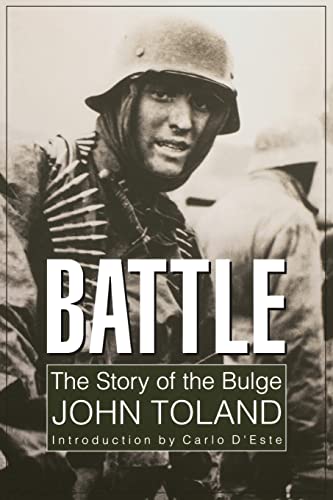
Inhaltsangabe
"The perspective of 15 years, painstaking research, thousands of interviews, extensive analysis and evaluation, and the creative talent of John Toland [paint] the epic struggle on an immense canvas. . . . Toland writes with the authority of a man who was there. . . . He tastes the bitterness of defeat of those who surrendered and writes as if he had the benefit of the eyes and ears of soldiers and generals on the other side of the line. . . . If you could read only one book to understand generals and GIs and what their different wars were like this is the book."—Chicago Sunday Tribune
"The author has devoted years to studying memoirs, interviewing veterans and consulting military documents, both German and American. He also has revisited the old battlefields in Belgium and Luxembourg. . . . Toland has told the whole story with dramatic realism. . . . It is a story of panic, terror and of high-hearted courage."—New York Times Book Review
"For the first time in the growing literature of World War II, the inspiring story of the stubborn, lonely, dogged battle of the Americans locked in this tragic salient is told. . . . gripping . . . You cannot put it down once you start it."—San Francisco Chronicle
Die Inhaltsangabe kann sich auf eine andere Ausgabe dieses Titels beziehen.
Über die Autorin bzw. den Autor
<div>John Toland has written numerous books on World War II, including <i>Infamy: Pearl Harbor and Its Aftermath</i>. Carlo D’Este is the author of <i>Patton: A Genius for War</i> and other works.</div>
Auszug. © Genehmigter Nachdruck. Alle Rechte vorbehalten.
Battle
The Story of the Bulge
By John TolandUNIVERSITY OF NEBRASKA PRESS
Copyright © 1959 John Toland
All rights reserved.
ISBN: 978-0-8032-9437-0All rights reserved.
Contents
PART ONE: Operation "Christrose",
1. THE GHOST FRONT,
2. "WATCH ON THE RHINE",
3. ATTACK,
4. BREAKTHROUGH,
5. DEBACLE,
6. END AT CLERVAUX,
PART TWO: "Hold the Reins Loose",
1. SPEARHEADS THROUGH BELGIUM,
2. SPEARHEADS THROUGH LUXEMBOURG,
3. SURRENDER,
4. A CALL TO MONTGOMERY,
5. FOG OF WAR,
6. THE BATTLE SHAPES,
7. DEATH OF A TOWN,
PART THREE: Black Christmas,
1. THE FORTIFIED GOOSE EGG,
2. "NUTS",
3. THE RUSSIAN HIGH,
4. DAY OF DECISION,
5. "IN THY DARK STREETS",
6. "WE CANNOT FORCE THE MEUSE",
PART FOUR: Twilight of the Gods,
1. QUEEN OF BATTLE,
2. CANDIDATES FOR DEATH,
3. "BRAVE RIFLES ...",
4. IN DUBIOUS BATTLE,
5. JUNCTION AT HOUFFALIZE,
6. "ALLES KAPUTT!",
EPILOGUE,
INDEX,
CHAPTER 1
THE GHOST FRONT
15 December 1944
1
The night of December 15, 1944, was cold and quiet along the Ardennes Front.
At 10:00 P.M. the American troops in Echternach, a quaint medieval town in the Grand Duchy of Luxembourg, were abed or going to bed in yellow patrician houses with dormer windows and mansard roofs. They saw no sign of activity from the Germans in the crumbling cliff-top abbey that overlooked them from across the swift narrow Sauer River. They had nothing to stay up for in Echternach itself. Since September, when the Americans had liberated Luxembourg at the end of their wild dash through France, the town's 3,300 citizens had been living in evacuation quarters behind the hills to the west.
Echternach, the southern anchor of the Ardennes Front, was being held by a single company of riflemen. And by 10:30 P.M. all but a few of them were asleep.
Twisting eighty-five miles through terrain reminiscent of the Berkshires and the Green Mountains, the front was held by six American divisions. Of these six, three divisions were brand-new and had been sent here to get "blooded" — lightly tested in combat before being assigned to a major engagement; the other three, exhausted and bled white in battle, were here to be refitted, retrained.
For the Ardennes Front was the "Ghost Front" — a cold quiet place where artillery was fired mainly for registration and patrols probed the enemy lines only to keep in practice. Within rifle range of each other, German observers watched the Americans eat, and the American observers watched the women come at dusk and steal into the pillboxes of the Siegfried Line. For over two months now both sides had rested and watched and avoided irritating each other.
From Echternach, the front swung northward along the winding Sauer River. The hill-straddling American lines were manned by the 4th Division, which the month before had suffered 7,500 casualties in the brief but bitter battle of Hürtgen Forest. On the German side of the river the battlement-like cliff continued, concealing the forward positions of the Siegfried Line.
About five miles north of Echternach the 9th Armored Division took over. Newly arrived in Europe, it had been in position for just a week. Actually only one combat command — roughly equivalent to an infantry regiment — was on the line; the other two were garrisoned in reserve fifty miles to the north. One week up front, and already the officers were worried: how could their men be battle-tested when there was so little action?
At 10:30 P.M. it was drizzling on the 9th Armored front. "I'm living in a dugout," wrote Lieutenant Clifford Penrose to his wife, "and the damn thing is starting to leak tonight. So don't let a few blurred spots bother you, it isn't beer. We had Spam for supper tonight. And then your package came. Thanks a lot, but next time don't send Spam."
After six miles, where the Our River flows into the Sauer from the north, the lines were taken over by the 28th, another veteran infantry division that had suffered heavily in the Hürtgen Forest.
The front continued north along the Our. This fast-flowing river was only fifty feet wide, but the towering bluffs on both sides restricted vehicular crossing to a few places. One of these crossings, eight miles above the Our's confluence with the Sauer, was at Vianden, a picture-book town that crouches beneath the splendid ruins of a huge rambling castle. This fortress, which had held off Vianden's enemies for centuries, was now an observation post for thirty-six American soldiers.
At 11:00 P.M. most of the men in Vianden were asleep. But in the dining room of the Heintz Hotel, on a table that had served royalty, prime ministers, and great authors, several GIs were patching a boat and talking of the one-armed German sergeant who had been picked up earlier that night on the other side of the river. Ever since, the captive had kept crying in terror, "The Germans come tonight! The Germans come tonight!" He begged them to flee to the west — and take him.
About fifteen miles farther north, the front crossed the Our and poked through the Siegfried Line into Germany. From this breach, the 28th Division positions continued almost due east for another seven or eight miles. Then the 106th Division — the Golden Lions — manned the defenses.
This was not only the newest American division in the Ardennes; it was also the newest Allied division on any front. Transported across France and Belgium through cold rain in open trucks, the men had arrived, drenched and miserable, only a few days before. Immediately some encouragement had come their way. As they took over from the 2nd Division, those battle-wise veterans had shouted, "Lucky guys! You're coming into a rest campl" And a regimental commander of the 2nd had told a regimental commander of the 106th, "It's been very quiet up here, and your men will learn the easy way." By now the young newcomers — these were the first of the eighteen-year-old draftees — were cockier than the veterans and certain they "had it made" for the duration.
"Never expected your little boy to get this far, did you?" nineteen-year-old Pfc. Joe Schectman was writing to his folks in Plymouth, Pennsylvania. "We are billeted as comfortably and safely as we were in England. Of course there's no telling how long I'll be in this paradise. But as long as I am, I'll be safe."
And a few miles to his north 1st Lieutenant Alan Jones, Jr., a regimental staff officer, was staring dreamily from his bunker. He saw nothing but a typical Christmas card scene: icicles two feet long, snow-covered fir trees. At ease in this peaceful world he turned his thoughts to his wife Lynn in Washington, D.C. Soon she would have a baby, their first.
Young Jones's sense of tranquillity was not shared by his father, Major General Alan Jones, commander of the 106th Division. That day he had come up to the front lines and chatted with his son.
Noticing his father's .32 pistol, young Jones had remarked jokingly, "I could use that, Dad."
"I really should give it to you. But I might need it myself." General Jones's tone had been as bantering as his son's, but inwardly he was extremely worried. He had been worried from the first moment he had seen a situation map: his entire division was out on a salient thrust six miles into the Siegfried Line. This area, called the Schnee Eifel (Snow Mountains), was a range of rugged wooded hills, rolling fields, and twisting...
„Über diesen Titel“ kann sich auf eine andere Ausgabe dieses Titels beziehen.
Suchergebnisse für Battle: The Story of the Bulge

Beispielbild für diese ISBN
Battle: The Story of the Bulge
Anbieter: World of Books (was SecondSale), Montgomery, IL, USA
Verkäuferbewertung 5 von 5 Sternen

Zustand: Good. Item in good condition. Textbooks may not include supplemental items i.e. CDs, access codes etc. Artikel-Nr. 00105739901
Gebraucht kaufen
EUR 4,74
Versand gratis
Versand innerhalb von USA
Versand innerhalb von USA
Anzahl: 4 verfügbar
Beispielbild für diese ISBN
Battle: The Story of the Bulge
Anbieter: World of Books (was SecondSale), Montgomery, IL, USA
Verkäuferbewertung 5 von 5 Sternen
Zustand: Acceptable. Item in acceptable condition! Textbooks may not include supplemental items i.e. CDs, access codes etc. Artikel-Nr. 00109508764
Gebraucht kaufen
EUR 4,74
Versand gratis
Versand innerhalb von USA
Versand innerhalb von USA
Anzahl: 1 verfügbar
Beispielbild für diese ISBN
Battle
Anbieter: ThriftBooks-Reno, Reno, NV, USA
Verkäuferbewertung 5 von 5 Sternen
Paperback. Zustand: Good. No Jacket. Pages can have notes/highlighting. Spine may show signs of wear. ~ ThriftBooks: Read More, Spend Less. Artikel-Nr. G0803294379I3N00
Gebraucht kaufen
EUR 6,15
Versand gratis
Versand innerhalb von USA
Versand innerhalb von USA
Anzahl: 1 verfügbar
Beispielbild für diese ISBN
Battle
Anbieter: ThriftBooks-Atlanta, AUSTELL, GA, USA
Verkäuferbewertung 5 von 5 Sternen
Paperback. Zustand: Fair. No Jacket. Readable copy. Pages may have considerable notes/highlighting. ~ ThriftBooks: Read More, Spend Less. Artikel-Nr. G0803294379I5N00
Gebraucht kaufen
EUR 6,15
Versand gratis
Versand innerhalb von USA
Versand innerhalb von USA
Anzahl: 1 verfügbar
Beispielbild für diese ISBN
Battle
Anbieter: ThriftBooks-Phoenix, Phoenix, AZ, USA
Verkäuferbewertung 5 von 5 Sternen
Paperback. Zustand: Fair. No Jacket. Readable copy. Pages may have considerable notes/highlighting. ~ ThriftBooks: Read More, Spend Less. Artikel-Nr. G0803294379I5N00
Gebraucht kaufen
EUR 6,15
Versand gratis
Versand innerhalb von USA
Versand innerhalb von USA
Anzahl: 1 verfügbar
Beispielbild für diese ISBN
Battle
Anbieter: ThriftBooks-Dallas, Dallas, TX, USA
Verkäuferbewertung 5 von 5 Sternen
Paperback. Zustand: Fair. No Jacket. Readable copy. Pages may have considerable notes/highlighting. ~ ThriftBooks: Read More, Spend Less. Artikel-Nr. G0803294379I5N00
Gebraucht kaufen
EUR 6,15
Versand gratis
Versand innerhalb von USA
Versand innerhalb von USA
Anzahl: 1 verfügbar
Beispielbild für diese ISBN
Battle
Anbieter: ThriftBooks-Atlanta, AUSTELL, GA, USA
Verkäuferbewertung 5 von 5 Sternen
Paperback. Zustand: Good. No Jacket. Pages can have notes/highlighting. Spine may show signs of wear. ~ ThriftBooks: Read More, Spend Less. Artikel-Nr. G0803294379I3N00
Gebraucht kaufen
EUR 6,15
Versand gratis
Versand innerhalb von USA
Versand innerhalb von USA
Anzahl: 1 verfügbar
Beispielbild für diese ISBN
Battle: The Story of the Bulge
Verlag:
Bison Books April 1999, 1999
ISBN 10: 0803294379
ISBN 13: 9780803294370
Gebraucht
Paper Back
Anbieter: Eagle Eye Books, Decatur, GA, USA
Verkäuferbewertung 4 von 5 Sternen

Paper Back. Zustand: Used. Artikel-Nr. 762687
Gebraucht kaufen
EUR 5,31
EUR 3,43 Versand
Versand innerhalb von USA
Versand innerhalb von USA
Anzahl: 1 verfügbar
Beispielbild für diese ISBN
Battle : The Story of the Bulge
Verlag:
University of Nebraska Press, 1999
ISBN 10: 0803294379
ISBN 13: 9780803294370
Gebraucht
Softcover
Anbieter: Better World Books, Mishawaka, IN, USA
Verkäuferbewertung 5 von 5 Sternen
Zustand: Good. Pages intact with minimal writing/highlighting. The binding may be loose and creased. Dust jackets/supplements are not included. Stock photo provided. Product includes identifying sticker. Better World Books: Buy Books. Do Good. Artikel-Nr. 6053908-75
Gebraucht kaufen
EUR 10,00
Versand gratis
Versand innerhalb von USA
Versand innerhalb von USA
Anzahl: 1 verfügbar
Beispielbild für diese ISBN
Battle : The Story of the Bulge
Verlag:
University of Nebraska Press, 1999
ISBN 10: 0803294379
ISBN 13: 9780803294370
Gebraucht
Softcover
Anbieter: Better World Books, Mishawaka, IN, USA
Verkäuferbewertung 5 von 5 Sternen
Zustand: Good. Former library copy. Pages intact with minimal writing/highlighting. The binding may be loose and creased. Dust jackets/supplements are not included. Includes library markings. Stock photo provided. Product includes identifying sticker. Better World Books: Buy Books. Do Good. Artikel-Nr. 40533689-6
Gebraucht kaufen
EUR 10,00
Versand gratis
Versand innerhalb von USA
Versand innerhalb von USA
Anzahl: 1 verfügbar