
Verwandte Artikel zu Leading God's People: Wisdom from the Early Church...
Inhaltsangabe
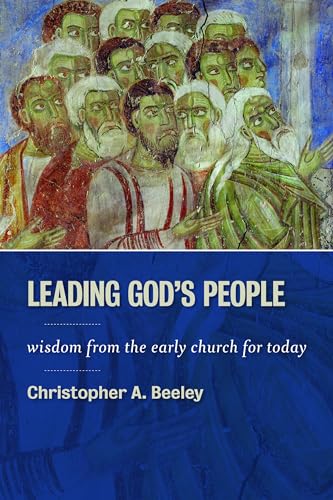
Using the wisdom of the past to address the challenges of the present, Christopher Beeley's Leading God's People presents key principles of church leadership as they were taught by great pastor- theologians of the early church, including Gregory of Nazianzus, Ambrose, Augustine, Chrysostom, and Gregory the Great.
Die Inhaltsangabe kann sich auf eine andere Ausgabe dieses Titels beziehen.
Über die Autorin bzw. den Autor
Christopher A. Beeley is the Jack and Barbara Bovender Professor of Theology, Anglican Studies, and Ministry at Duke University Divinity School, where he also directs the Anglican Episcopal House of Studies. An Episcopal priest with full-time parish experience, he is also the author of Gregory of Nazianzus on the Trinity and the Knowledge of God, for which he won a John Templeton Award for Theological Promise.
Auszug. © Genehmigter Nachdruck. Alle Rechte vorbehalten.
Leading God's People
Wisdom from the Early Church for TodayBy Christopher A. BeeleyWilliam B. Eerdmans Publishing Company
Copyright © 2012 Christopher A. BeeleyAll right reserved.
ISBN: 978-0-8028-6700-1
Contents
Preface.............................................................viiI. The Leadership of the Church.....................................1The Origins and Importance of Church Leadership.....................2Service with Authority..............................................8All for Others......................................................13In Christ...........................................................20Difficulty and Delight..............................................24II. Spirituality for Leadership.....................................28The Order of the Spirit.............................................30Pastoral Virtue.....................................................33Character and Office................................................43The Tragic Alternative..............................................46All from God........................................................51III. The Cure of Souls..............................................54The Art of Arts.....................................................56The Cure of Souls...................................................61The Healing of Christ...............................................74IV. Scripture and Theology..........................................77The Resource of Scripture...........................................80Interpretation according to the Spirit..............................82Pastoral Theology...................................................97Contemplation in Action.............................................101V. The Ministry of the Word.........................................105Word and Sacrament..................................................105Christian Doctrine..................................................108Teach...............................................................113Delight.............................................................116Sway................................................................118Study and Prayer....................................................122The Leader..........................................................125Notes...............................................................129Acknowledgments.....................................................142Suggestions for Further Reading.....................................143Index of Names and Subjects.........................................145Index of Scripture References.......................................147
Chapter One
The Leadership of the Church
* * *
Keep watch over yourselves and over the flock, of which the Holy Spirit has made you overseers, to shepherd the Church of God that he has obtained with the blood of his own Son. Acts 20:28
Anyone who has attended Sunday services knows how crucial church leadership is. When strong leadership is present, we appreciate it palpably, and the entire community benefits in tangible ways. When it is lacking, we know that something of central importance is missing, and we rightly lament its absence. In every period of history Christians have had cause to reflect on what may seem an obvious fact: the effectiveness of the church's leadership is crucial to its vitality and faithfulness, its spiritual health, and its fulfillment of God's mission in the world.
Scripture, tradition, and the experience of countless believers show that God has designed the church in such a way that someone needs to be in charge of each Christian community. Particular people — most often a senior pastor together with assistant clergy and laypeople — are officially entrusted with the authority of leadership for the sake of the entire body. But this is not an automatic thing, as if having appointed leaders were enough in itself. The way in which leadership is exercised is of the utmost importance for the church's life and well-being. While we may regret those instances in which solid leadership was absent or severely impaired, we can also be grateful that there have been so many outstanding church leaders throughout history, beginning with the apostles themselves. Since the first generation of the church there have been distinct leaders, and the basic character and rationale of this leadership is surprisingly well-defined across a variety of cultural, geographical, and historical differences.
The Origins and Importance of Church Leadership
Before we look at the basic identity and work of church leaders, it may be helpful to consider the earliest beginnings of leadership office. The New Testament gives little explicit description of the roles and functions of church leaders, just as it also lacks a formal order of worship. Yet the apostolic writings clearly indicate that leadership was both necessary and centrally important. Jesus himself appointed a distinct group of twelve disciples, with an inner circle of three (Peter, James, and John) and a predominant leader among them (Peter). The gospels record that Jesus spent most of his time and attention with these twelve, and it was to them that he entrusted the furtherance of his mission after his death, resurrection, and ascension. The apostles, who soon included Paul and others, carried on the authority and the work of leadership, including the spread of the gospel and the planting of new churches among peoples and territories beyond Palestine and the Jewish Diaspora. As a result of this spread, it eventually became necessary to appoint new local leaders in each community. In the Pastoral Epistles (1-2 Timothy and Titus) — so named in the modern period because they give unprecedented attention to the office and duties of pastoral leadership — we see the further stabilization of distinct leadership offices in second- or third-generation communities. In recognition of Paul's apostolic authority, many later writers looked to him as the premier example of pastoral or episcopal leadership.
In the New Testament church leaders are commonly, though not exclusively, referred to as overseers or bishops (episkopoi) as well as elders or presbyters (presbyteroi). These two terms are often used interchangeably; and while there may have been a distinct supervisor (bishop) among the group of overseer-elders, they are not clearly demarcated as a radically distinct office. In addition to these primary leaders, all of whom are considered servants or ministers (diakonoi), we occasionally find another group called "deacons" in a more particular sense (also diakonoi). It appears that by the time of the Pastoral Epistles, these functions developed into three distinct offices which were either instituted or supported by the laying on of hands. Yet even here we have relatively little indication of the degree of formality or of all the functions associated with each office.
The simplest and most telling description of early pastoral leadership comes in Paul's address to the leaders from Ephesus in the Acts of the Apostles. According to Luke the evangelist (who wrote Acts), Paul tells the Ephesian elders (presbyteroi) that the Holy Spirit has appointed them to be overseers (episkopoi) as shepherds of God's church (Acts 20:28). Paul calls the same group both presbyters and bishops; he regards their authority as having come from the Holy Spirit; and he characterizes their ministry as that of pastoring, or shepherding sheep. Also illuminating is the...
„Über diesen Titel“ kann sich auf eine andere Ausgabe dieses Titels beziehen.
Suchergebnisse für Leading God's People: Wisdom from the Early Church...

Beispielbild für diese ISBN
Leading God's People: Wisdom from the Early Church for Today
Verlag:
Wm. B. Eerdmans Publishing Co. (edition First Edition), 2012
ISBN 10: 0802867006
ISBN 13: 9780802867001
Gebraucht
Paperback
Erstausgabe
Anbieter: BooksRun, Philadelphia, PA, USA
Verkäuferbewertung 5 von 5 Sternen

Paperback. Zustand: Very Good. First Edition. It's a well-cared-for item that has seen limited use. The item may show minor signs of wear. All the text is legible, with all pages included. It may have slight markings and/or highlighting. Artikel-Nr. 0802867006-8-1
Gebraucht kaufen
EUR 6,85
Versand gratis
Versand innerhalb von USA
Versand innerhalb von USA
Anzahl: 1 verfügbar
Beispielbild für diese ISBN
Leading God's People : Wisdom from the Early Church for Today
Verlag:
Eerdmans Publishing Company, William B., 2012
ISBN 10: 0802867006
ISBN 13: 9780802867001
Gebraucht
Softcover
Anbieter: Better World Books: West, Reno, NV, USA
Verkäuferbewertung 5 von 5 Sternen
Zustand: Good. Former library copy. Pages intact with minimal writing/highlighting. The binding may be loose and creased. Dust jackets/supplements are not included. Includes library markings. Stock photo provided. Product includes identifying sticker. Better World Books: Buy Books. Do Good. Artikel-Nr. 5485336-6
Gebraucht kaufen
EUR 8,15
Versand gratis
Versand innerhalb von USA
Versand innerhalb von USA
Anzahl: 1 verfügbar
Beispielbild für diese ISBN
Leading God's People : Wisdom from the Early Church for Today
Verlag:
Eerdmans Publishing Company, William B., 2012
ISBN 10: 0802867006
ISBN 13: 9780802867001
Gebraucht
Softcover
Anbieter: Better World Books, Mishawaka, IN, USA
Verkäuferbewertung 5 von 5 Sternen
Zustand: Good. Pages intact with minimal writing/highlighting. The binding may be loose and creased. Dust jackets/supplements are not included. Stock photo provided. Product includes identifying sticker. Better World Books: Buy Books. Do Good. Artikel-Nr. 18889387-6
Gebraucht kaufen
EUR 8,15
Versand gratis
Versand innerhalb von USA
Versand innerhalb von USA
Anzahl: 1 verfügbar
Beispielbild für diese ISBN
Leading God's People : Wisdom from the Early Church for Today
Verlag:
Eerdmans Publishing Company, William B., 2012
ISBN 10: 0802867006
ISBN 13: 9780802867001
Gebraucht
Softcover
Anbieter: Better World Books, Mishawaka, IN, USA
Verkäuferbewertung 5 von 5 Sternen
Zustand: Good. Former library copy. Pages intact with minimal writing/highlighting. The binding may be loose and creased. Dust jackets/supplements are not included. Includes library markings. Stock photo provided. Product includes identifying sticker. Better World Books: Buy Books. Do Good. Artikel-Nr. 5485336-6
Gebraucht kaufen
EUR 8,15
Versand gratis
Versand innerhalb von USA
Versand innerhalb von USA
Anzahl: 1 verfügbar
Beispielbild für diese ISBN
Leading God's People: Wisdom from the Early Church for Today
Verlag:
William B. Eerdmans Publishing Company, 2012
ISBN 10: 0802867006
ISBN 13: 9780802867001
Gebraucht
Paperback
Anbieter: ThriftBooks-Atlanta, AUSTELL, GA, USA
Verkäuferbewertung 5 von 5 Sternen
Paperback. Zustand: Good. No Jacket. Pages can have notes/highlighting. Spine may show signs of wear. ~ ThriftBooks: Read More, Spend Less. Artikel-Nr. G0802867006I3N00
Gebraucht kaufen
EUR 8,84
Versand gratis
Versand innerhalb von USA
Versand innerhalb von USA
Anzahl: 1 verfügbar
Beispielbild für diese ISBN
Leading God's People: Wisdom from the Early Church for Today
Verlag:
Wm. B. Eerdmans Publishing Co., 2012
ISBN 10: 0802867006
ISBN 13: 9780802867001
Neu
Softcover
Anbieter: Ria Christie Collections, Uxbridge, Vereinigtes Königreich
Verkäuferbewertung 5 von 5 Sternen
Zustand: New. In English. Artikel-Nr. ria9780802867001_new
Neu kaufen
EUR 23,24
EUR 10,91 Versand
Versand von Vereinigtes Königreich nach USA
Versand von Vereinigtes Königreich nach USA
Anzahl: Mehr als 20 verfügbar
Beispielbild für diese ISBN
Leading God's People: Wisdom from the Early Church for Today
Anbieter: Revaluation Books, Exeter, Vereinigtes Königreich
Verkäuferbewertung 5 von 5 Sternen
Paperback. Zustand: Brand New. 161 pages. 8.25x5.50x0.50 inches. In Stock. Artikel-Nr. x-0802867006
Neu kaufen
EUR 23,92
EUR 11,64 Versand
Versand von Vereinigtes Königreich nach USA
Versand von Vereinigtes Königreich nach USA
Anzahl: 2 verfügbar