
Verwandte Artikel zu Building Cultures of Trust (Emory University Studies...
Inhaltsangabe
American society is experiencing a profound crisis of trust, from government to mass media to educational and religious institutions. And — whether we realize it or not — this crisis affects us all.
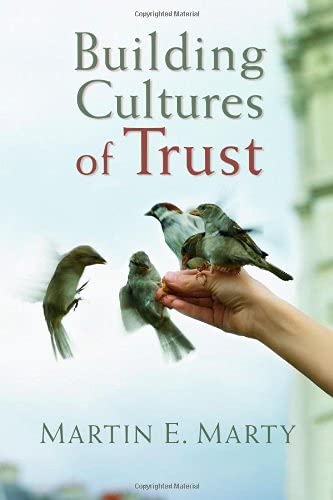
In Building Cultures of Trust, Martin Marty proposes ways of improving the conditions for trust at what might be called the “grass roots” level. He suggests that it makes a difference if citizens put energy into inventing, developing, and encouraging “cultures of trust” in all areas of life — families, schools, neighborhoods, workplaces, churches, and more. Marty believes that such efforts at trust-building will do more than trickle up to larger areas of society; it will become a slow spreading of habits of honesty, inspiring trust on a culture-changing scale.
Far from naïve, Marty realizes that the reality of human nature tends towards trust-breaking, not trust-building. All the more reason, he argues, to develop strategies to bring about improvements, one small step at a time.
In Building Cultures of Trust, Martin Marty proposes ways of improving the conditions for trust at what might be called the “grass roots” level. He suggests that it makes a difference if citizens put energy into inventing, developing, and encouraging “cultures of trust” in all areas of life — families, schools, neighborhoods, workplaces, churches, and more. Marty believes that such efforts at trust-building will do more than trickle up to larger areas of society; it will become a slow spreading of habits of honesty, inspiring trust on a culture-changing scale.
Far from naïve, Marty realizes that the reality of human nature tends towards trust-breaking, not trust-building. All the more reason, he argues, to develop strategies to bring about improvements, one small step at a time.
Die Inhaltsangabe kann sich auf eine andere Ausgabe dieses Titels beziehen.
Auszug. © Genehmigter Nachdruck. Alle Rechte vorbehalten.
BUILDING CULTURES OF TRUST
By Martin E. MartyWilliam B. Eerdmans Publishing Company
Copyright © 2010 Martin E. MartyAll right reserved.
ISBN: 978-0-8028-6546-5
Contents
ACKNOWLEDGMENTS...................................................................................viii1. To Build Cultures of Trust.....................................................................12. Seven Levels Where Risk and Trust Meet.........................................................173. Scripted Resources.............................................................................394. Humanistic Reflections.........................................................................655. Correcting "Category Mistakes".................................................................996. Conversation and "What It Means to Be Human"...................................................1177. Where Science and Religion Meet: Public Life...................................................1378. How to Build Cultures of Trust Relating Science, Religion, and Public Life.....................159INDEX.............................................................................................185
Chapter One
To Build Cultures of Trust* * *
Conversations during the seasons in which this book was in process often went something like this:
"So you are writing a book on 'trust.' I don't associate you with that topic. Why did you take it up?"
My answer: "There has been some modest association. I have edited two little books with the word 'trust' in the title — they were written for specialized audiences — but now I hope you will associate me with the theme. This time it has a broader base and is aimed at a general readership."
The conversation partner: "Again, why did you take it up? You must think that trust is an urgent issue."
"Yes."
"If it's urgent," the partner would say, "why doesn't it show up in the opinion polls where citizens rank issues in their order of importance?"
"This is not the kind of topic that pollsters can easily address," I say. "It's harder to frame questions about 'trust' — or 'faith' or 'hope' or 'love' — than it is to ask for opinions about definite, hard-edged choices, such as, 'Do you favor bombing a nation that might become a nuclear threat?' 'Do you favor this party or that presidential candidate?' Trust is a more elusive theme."
The conversation partner typically continues with something like this: "Then how do you determine that this topic deserves so much attention?"
"Begin by looking in the mirror and observing yourself," I say. "You take pains to ward off identity theft because you don't trust the crooks out there. You are wary of potential scam artists who lead you to mistrust much of what is offered on your computer screen. You have a friend whose marriage broke up because a once-trusted spouse broke a covenant. You are careful about writing recommendations or endorsements because you ask yourself, 'Do I trust this person enough to risk my reputation on commending her character and potential performance?' Here is one that is often overlooked: Do you trust experts — for example, scientists — who have so much control of your life? Or, for one more sample: Do you trust the clergy, once presumably subjects of simple trust, when so many make headlines by betraying trust?"
After such an exchange, I would get something like this volley back from friends who are ready to become critical readers:
"So, what do you think you can do about the threats to trust or the breakdown of trust? No one elected you to the office of Improving Trust Relations or to anything else. The world is not waiting for self-appointed experts to rescue them from those who cause people to mistrust or distrust other people or institutions. Does being a historian give you a special vantage point, a set of tools, any kind of expertise that you might put to work to address the theme?"
"I am not sure I would trust anyone," I reply, "who makes very big claims about his expertise on the subject of trust. I am sure that historians can at best make small claims, contributing their part by the stories they choose, the ways they tell them, and the kinds of analysis that go with their work."
"Stop! I'm busy," my presumed conversational partner responds. "Make your case that historians have any special angle on such a topic as this."
"Well, think about it. What do historians write about that does not very directly or at least implicitly come down to 'trust'? War, diplomacy, treaty-making and treaty-keeping, the making of laws and policies, the operations of churches and other voluntary associations. Or, closer to home in what is called 'social history,' marrying and divorcing and child-rearing are finally about overcoming mistrust and distrust or demonstrating trustworthiness. The historian who writes stories about these does not have to be a scold or a police officer, a policymaker or a know-it-all. But he or she can encourage the development of curiosity, take notes, do research, reflect, and then emphasize the issue of trust in human history and present-day affairs. Page through newspapers, if you can still locate some, or consult the Internet, and you will find in any given day's headlines and stories accounts of events that historians tomorrow and ever after can see related to trust. They do not have to reduce everything to that subject. Nor do they need to make extravagant claims for their treatment of it, or of their potential for making some contribution in the areas they have chosen and defined."
The historian — or at least this historian — next hears from the other: "So, let me ask what is your shtick, your special angle, your preliminary discovery or proposal, your potential contribution?"
This historian replies: "My shtick, my angle, is this: First, any talk of improving trust must begin with the individual, her character, her resolve, her potential for change. We have to start there, though my approach has a more or less social drive, one that builds on individual commitment. Since plenty of writers through the ages have discussed personal trust, I will treat it mainly in the beginning of the book before turning over to others the development of the theme. Some of them address the questions about the individual as part of their lifelong research and writing."
"So, if the individual in isolation is only a part of the trust equation," says our unsatisfied, still-curious invented interlocutor, "I suppose you are going to turn cosmic on us and offer a generic and universal address to the issue of trust. I suppose you have a plan for making the institutions of advertising, televising, educating, war-making, caregiving, and so on better carriers of trust relations."
Now the historian says, "Stop! There are many steps along the way between the isolated, self-reforming individual at one extreme, and at the other extreme, the custodians of large establishments and institutions that do not appear to be very malleable and are not prospects for massive, immediate, and permanent change."
"Such as?"
"Such as what this book is about. It relates the individual to social forms, called 'cultures' and 'subcultures,' that can be open to change and can be changed. You can call this approach 'meliorative,' as I do, because it advocates understandings and strategies that can improve ('make better') the conditions of trusting. It is not 'meliorist,'...
„Über diesen Titel“ kann sich auf eine andere Ausgabe dieses Titels beziehen.
Suchergebnisse für Building Cultures of Trust (Emory University Studies...

Beispielbild für diese ISBN
Building Cultures of Trust (Em
Anbieter: World of Books (was SecondSale), Montgomery, IL, USA
Verkäuferbewertung 5 von 5 Sternen

Zustand: Good. Good condition ex-library book with usual library markings and stickers. Artikel-Nr. 00107761311
Gebraucht kaufen
EUR 4,80
Versand gratis
Versand innerhalb von USA
Versand innerhalb von USA
Anzahl: 1 verfügbar
Beispielbild für diese ISBN
Building Cultures of Trust (Em
Anbieter: World of Books (was SecondSale), Montgomery, IL, USA
Verkäuferbewertung 5 von 5 Sternen
Zustand: Very Good. Item in very good condition! Textbooks may not include supplemental items i.e. CDs, access codes etc. Artikel-Nr. 00102863576
Gebraucht kaufen
EUR 4,80
Versand gratis
Versand innerhalb von USA
Versand innerhalb von USA
Anzahl: 1 verfügbar
Beispielbild für diese ISBN
Building Cultures of Trust (Emory University Studies in Law and Religion (EUSLR))
Anbieter: BooksRun, Philadelphia, PA, USA
Verkäuferbewertung 5 von 5 Sternen
Hardcover. Zustand: Very Good. With dust jacket. It's a well-cared-for item that has seen limited use. The item may show minor signs of wear. All the text is legible, with all pages included. It may have slight markings and/or highlighting. Artikel-Nr. 0802865461-8-1-29
Gebraucht kaufen
EUR 4,81
Versand gratis
Versand innerhalb von USA
Versand innerhalb von USA
Anzahl: 1 verfügbar
Beispielbild für diese ISBN
Building Cultures of Trust
Verlag:
William B. Eerdmans Publishing Company, 2010
ISBN 10: 0802865461
ISBN 13: 9780802865465
Gebraucht
Hardcover
Anbieter: ThriftBooks-Atlanta, AUSTELL, GA, USA
Verkäuferbewertung 5 von 5 Sternen
Hardcover. Zustand: Very Good. No Jacket. May have limited writing in cover pages. Pages are unmarked. ~ ThriftBooks: Read More, Spend Less. Artikel-Nr. G0802865461I4N00
Gebraucht kaufen
EUR 6,38
Versand gratis
Versand innerhalb von USA
Versand innerhalb von USA
Anzahl: 1 verfügbar
Beispielbild für diese ISBN
Building Cultures of Trust
Verlag:
William B. Eerdmans Publishing Company, 2010
ISBN 10: 0802865461
ISBN 13: 9780802865465
Gebraucht
Hardcover
Anbieter: ThriftBooks-Atlanta, AUSTELL, GA, USA
Verkäuferbewertung 5 von 5 Sternen
Hardcover. Zustand: Very Good. No Jacket. Former library book; May have limited writing in cover pages. Pages are unmarked. ~ ThriftBooks: Read More, Spend Less. Artikel-Nr. G0802865461I4N10
Gebraucht kaufen
EUR 6,38
Versand gratis
Versand innerhalb von USA
Versand innerhalb von USA
Anzahl: 1 verfügbar
Beispielbild für diese ISBN
Building Cultures of Trust
Verlag:
William B. Eerdmans Publishing Company, 2010
ISBN 10: 0802865461
ISBN 13: 9780802865465
Gebraucht
Hardcover
Anbieter: ThriftBooks-Dallas, Dallas, TX, USA
Verkäuferbewertung 5 von 5 Sternen
Hardcover. Zustand: As New. No Jacket. Pages are clean and are not marred by notes or folds of any kind. ~ ThriftBooks: Read More, Spend Less. Artikel-Nr. G0802865461I2N00
Gebraucht kaufen
EUR 6,38
Versand gratis
Versand innerhalb von USA
Versand innerhalb von USA
Anzahl: 1 verfügbar
Beispielbild für diese ISBN
Building Cultures of Trust
Verlag:
William B. Eerdmans Publishing Company, 2010
ISBN 10: 0802865461
ISBN 13: 9780802865465
Gebraucht
Hardcover
Anbieter: ThriftBooks-Atlanta, AUSTELL, GA, USA
Verkäuferbewertung 5 von 5 Sternen
Hardcover. Zustand: Good. No Jacket. Pages can have notes/highlighting. Spine may show signs of wear. ~ ThriftBooks: Read More, Spend Less. Artikel-Nr. G0802865461I3N00
Gebraucht kaufen
EUR 6,38
Versand gratis
Versand innerhalb von USA
Versand innerhalb von USA
Anzahl: 1 verfügbar
Beispielbild für diese ISBN
Building Cultures of Trust
Verlag:
William B. Eerdmans Publishing Company, 2010
ISBN 10: 0802865461
ISBN 13: 9780802865465
Gebraucht
Hardcover
Anbieter: ThriftBooks-Dallas, Dallas, TX, USA
Verkäuferbewertung 5 von 5 Sternen
Hardcover. Zustand: Very Good. No Jacket. Former library book; May have limited writing in cover pages. Pages are unmarked. ~ ThriftBooks: Read More, Spend Less. Artikel-Nr. G0802865461I4N10
Gebraucht kaufen
EUR 6,38
Versand gratis
Versand innerhalb von USA
Versand innerhalb von USA
Anzahl: 1 verfügbar
Beispielbild für diese ISBN
Building Cultures of Trust
Verlag:
Eerdmans Publishing Company, William B., 2010
ISBN 10: 0802865461
ISBN 13: 9780802865465
Gebraucht
Hardcover
Anbieter: Better World Books, Mishawaka, IN, USA
Verkäuferbewertung 5 von 5 Sternen
Zustand: Very Good. Former library copy. Pages intact with possible writing/highlighting. Binding strong with minor wear. Dust jackets/supplements may not be included. Includes library markings. Stock photo provided. Product includes identifying sticker. Better World Books: Buy Books. Do Good. Artikel-Nr. 2914478-6
Gebraucht kaufen
EUR 6,42
Versand gratis
Versand innerhalb von USA
Versand innerhalb von USA
Anzahl: 1 verfügbar
Beispielbild für diese ISBN
Building Cultures of Trust
Verlag:
Eerdmans Publishing Company, William B., 2010
ISBN 10: 0802865461
ISBN 13: 9780802865465
Gebraucht
Hardcover
Anbieter: Better World Books, Mishawaka, IN, USA
Verkäuferbewertung 5 von 5 Sternen
Zustand: Good. Former library copy. Pages intact with minimal writing/highlighting. The binding may be loose and creased. Dust jackets/supplements are not included. Includes library markings. Stock photo provided. Product includes identifying sticker. Better World Books: Buy Books. Do Good. Artikel-Nr. 8099252-75
Gebraucht kaufen
EUR 6,42
Versand gratis
Versand innerhalb von USA
Versand innerhalb von USA
Anzahl: 1 verfügbar