
Verwandte Artikel zu The Intolerance of Tolerance
Inhaltsangabe
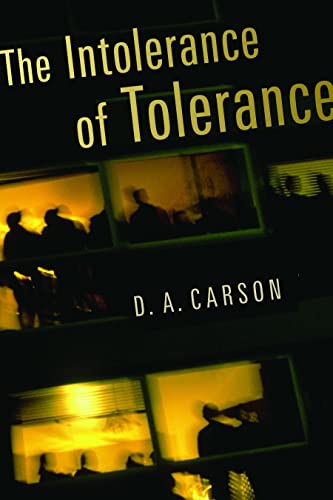
Tolerance currently occupies a very high place in Western societies: it is considered gauche, even boorish, to question it. In The Intolerance of Tolerance, however, questioning tolerance -- or, at least, contemporary understandings of tolerance -- is exactly what D. A . Carson does.
Carson traces the subtle but enormous shift in the way we have come to understand tolerance over recent years -- from defending the rights of those who hold different beliefs to affirming all beliefs as equally valid and correct. He looks back at the history of this shift and discusses its implications for culture today, especially its bearing on democracy, discussions about good and evil, and Christian truth claims.
Using real-life examples that will sometimes arouse laughter and sometimes make the blood boil, Carson argues not only that the "new tolerance" is socially dangerous and intellectually debilitating but also that it actually leads to genuine intolerance of all who struggle to hold fast to their beliefs.
Carson traces the subtle but enormous shift in the way we have come to understand tolerance over recent years -- from defending the rights of those who hold different beliefs to affirming all beliefs as equally valid and correct. He looks back at the history of this shift and discusses its implications for culture today, especially its bearing on democracy, discussions about good and evil, and Christian truth claims.
Using real-life examples that will sometimes arouse laughter and sometimes make the blood boil, Carson argues not only that the "new tolerance" is socially dangerous and intellectually debilitating but also that it actually leads to genuine intolerance of all who struggle to hold fast to their beliefs.
Die Inhaltsangabe kann sich auf eine andere Ausgabe dieses Titels beziehen.
Über die Autorin bzw. den Autor
D.A. Carson is research professor of New Testament at Trinity Evangelical Divinity School, Deerfield, Illinois. He has written or edited more than fifty other books, including The Gagging of God: Christianity Confronts Pluralism, Becoming Conversant with the Emerging Church, and Christ and Culture Revisited.
Auszug. © Genehmigter Nachdruck. Alle Rechte vorbehalten.
The Intolerance of Tolerance
By D. A. CARSONWilliam B. Eerdmans Publishing Company
Copyright © 2012 D. A. CarsonAll right reserved.
ISBN: 978-0-8028-3170-5
Contents
Preface.............................................................ix1. Introduction: The Changing Face of Tolerance.....................12. What Is Going On?................................................193. Jottings on the History of Tolerance.............................474. Worse Than Inconsistency.........................................795. The Church and Christian Truth Claims............................976. And Still There Is Evil..........................................1277. Tolerance, Democracy, and Majoritarianism........................1418. Ways Ahead: Ten Words............................................161Index of Names......................................................177Index of Subjects...................................................181Index of Scripture References.......................................185
Chapter One
Introduction: The Changing Face of Tolerance* * *
To speak of "the intolerance of tolerance" might strike some people as nothing more than arrant nonsense — an obscure oxymoron, perhaps, as meaningless as talk about the hotness of cold or the blackness of white. Tolerance currently occupies a very high place in Western culture, a bit like motherhood and apple pie in America in the early 1950s: it is considered rather gauche to question it. To hint, as my title does, that this tolerance might itself on occasion be intolerant is unlikely to win many friends. To put the matter in a slightly more sophisticated way, tolerance has become part of the Western "plausibility structure." As far as I know, the expression "plausibility structure" was coined by sociologist Peter L. Berger. He uses it to refer to structures of thought widely and almost unquestioningly accepted throughout a particular culture. One of his derivative arguments is that in tight, monolithic cultures (e.g., Japan), the reigning plausibility structures may be enormously complex — that is, there may be many interlocking stances that are widely assumed and almost never questioned. By contrast, in a highly diverse culture like what dominates many nations in the Western world, the plausibility structures are necessarily more restricted, for the very good reason that there are fewer stances held in common. The plausibility structures that do remain, however, tend to be held with extra tenacity, almost as if people recognize that without such structures the culture will be in danger of flying apart. And tolerance, I am suggesting, is, in much of the Western world, part of this restricted but tenaciously held plausibility structure. To saunter into the public square and question it in some way or other not only is to tilt at windmills but is also culturally insensitive, lacking in good taste, boorish.
But I press on regardless, persuaded that the emperor has no clothes, or, at best, is sporting no more than Jockey shorts. The notion of tolerance is changing, and with the new definitions the shape of tolerance itself has changed. Although a few things can be said in favor of the newer definition, the sad reality is that this new, contemporary tolerance is intrinsically intolerant. It is blind to its own shortcomings because it erroneously thinks it holds the moral high ground; it cannot be questioned because it has become part of the West's plausibility structure. Worse, this new tolerance is socially dangerous and is certainly intellectually debilitating. Even the good that it wishes to achieve is better accomplished in other ways. Most of the rest of this chapter is devoted to unpacking and defending this thesis.
The Old Tolerance and the New
Let's begin with dictionaries. In the Oxford English Dictionary, the first meaning of the verb "to tolerate" is "To endure, sustain (pain or hardship)." That usage is becoming obsolete, but it still surfaces today when we say that a patient has a remarkable ability to tolerate pain. The second meaning: "To allow to exist or to be done or practised without authoritative interference or molestation; also gen. to allow, permit." Third: "To bear without repugnance; to allow intellectually, or in taste, sentiment, or principle; to put up with." Webster's Unabridged Dictionary is similar: "1. to allow; permit; not interfere with. 2. to recognize and respect (others' beliefs, practices, etc.) without necessarily agreeing or sympathizing. 3. to put up with; to bear; as, he tolerates his brother-in-law. 4. in medicine, to have tolerance for (a specified drug, etc.)." Even the computer-based dictionary Encarta includes in its list "ACCEPT EXISTENCE OF DIFFERENT VIEWS to recognize other people's right to have different beliefs or practices without an attempt to suppress them." So far so good: all these definitions are on the same page. When we turn to Encarta's treatment of the corresponding noun "tolerance," however, a subtle change appears: "1. ACCEPTANCE OF DIFFERENT VIEWS the accepting of the differing views of other people, e.g., in religious or political matters, and fairness toward the people who hold these different views."
This shift from "accepting the existence of different views" to "acceptance of different views," from recognizing other people's right to have different beliefs or practices to accepting the differing views of other people, is subtle in form, but massive in substance. To accept that a different or opposing position exists and deserves the right to exist is one thing; to accept the position itself means that one is no longer opposing it. The new tolerance suggests that actually accepting another's position means believing that position to be true, or at least as true as your own. We move from allowing the free expression of contrary opinions to the acceptance of all opinions; we leap from permitting the articulation of beliefs and claims with which we do not agree to asserting that all beliefs and claims are equally valid. Thus we slide from the old tolerance to the new.
The problem of what "tolerance" means is in fact more difficult than these few comments on dictionary entries might suggest. For in contemporary usage, both meanings continue in popular use, and often it is unclear what the speaker or writer means. For instance, "She is a very tolerant person": does this mean she gladly puts up with a lot of opinions with which she disagrees, or that she thinks all opinions are equally valid? A Muslim cleric says, "We do not tolerate other religions": does this mean that, according to this cleric, Muslims do not think that other religions should be permitted to exist, or that Muslims cannot agree that other religions are as valid as Islam? A Christian pastor declares, "Christians gladly tolerate other religions": does this mean, according to the pastor, that Christians gladly insist that other religions have as much right to exist as Christianity does, or that Christians gladly assert that all religions are equally valid? "You Christians are so intolerant," someone asserts: does this mean that Christians wish all positions contrary to their own were extirpated, or that Christians insist that Jesus is the only way to God? The former is patently untrue; the latter is certainly true (at least, if Christians are trying to be faithful to the Bible): Christians do think that Jesus is the only way to God. But...
„Über diesen Titel“ kann sich auf eine andere Ausgabe dieses Titels beziehen.
Suchergebnisse für The Intolerance of Tolerance

Beispielbild für diese ISBN
The Intolerance of Tolerance
Verlag:
Eerdmans (edition NEW HARDBOUN), 2012
ISBN 10: 0802831702
ISBN 13: 9780802831705
Gebraucht
Hardcover
Anbieter: BooksRun, Philadelphia, PA, USA
Verkäuferbewertung 5 von 5 Sternen

Hardcover. Zustand: Very Good. NEW HARDBOUN. With dust jacket. It's a well-cared-for item that has seen limited use. The item may show minor signs of wear. All the text is legible, with all pages included. It may have slight markings and/or highlighting. Artikel-Nr. 0802831702-11-1-29
Gebraucht kaufen
EUR 4,96
Versand gratis
Versand innerhalb von USA
Versand innerhalb von USA
Anzahl: 2 verfügbar
Beispielbild für diese ISBN
The Intolerance of Tolerance
Anbieter: World of Books (was SecondSale), Montgomery, IL, USA
Verkäuferbewertung 5 von 5 Sternen
Zustand: Good. Item in good condition. Textbooks may not include supplemental items i.e. CDs, access codes etc. Artikel-Nr. 00110116507
Gebraucht kaufen
EUR 5,39
Versand gratis
Versand innerhalb von USA
Versand innerhalb von USA
Anzahl: 1 verfügbar
Beispielbild für diese ISBN
The Intolerance of Tolerance
Anbieter: ThriftBooks-Reno, Reno, NV, USA
Verkäuferbewertung 5 von 5 Sternen
Hardcover. Zustand: Very Good. No Jacket. May have limited writing in cover pages. Pages are unmarked. ~ ThriftBooks: Read More, Spend Less. Artikel-Nr. G0802831702I4N00
Gebraucht kaufen
EUR 6,01
Versand gratis
Versand innerhalb von USA
Versand innerhalb von USA
Anzahl: 1 verfügbar
Beispielbild für diese ISBN
The Intolerance of Tolerance
Anbieter: ThriftBooks-Atlanta, AUSTELL, GA, USA
Verkäuferbewertung 5 von 5 Sternen
Hardcover. Zustand: Very Good. No Jacket. May have limited writing in cover pages. Pages are unmarked. ~ ThriftBooks: Read More, Spend Less. Artikel-Nr. G0802831702I4N00
Gebraucht kaufen
EUR 6,01
Versand gratis
Versand innerhalb von USA
Versand innerhalb von USA
Anzahl: 2 verfügbar
Beispielbild für diese ISBN
The Intolerance of Tolerance
Anbieter: ThriftBooks-Dallas, Dallas, TX, USA
Verkäuferbewertung 5 von 5 Sternen
Hardcover. Zustand: Very Good. No Jacket. Former library book; May have limited writing in cover pages. Pages are unmarked. ~ ThriftBooks: Read More, Spend Less. Artikel-Nr. G0802831702I4N10
Gebraucht kaufen
EUR 6,01
Versand gratis
Versand innerhalb von USA
Versand innerhalb von USA
Anzahl: 1 verfügbar
Beispielbild für diese ISBN
The Intolerance of Tolerance
Anbieter: ThriftBooks-Atlanta, AUSTELL, GA, USA
Verkäuferbewertung 5 von 5 Sternen
Hardcover. Zustand: Very Good. No Jacket. Missing dust jacket; May have limited writing in cover pages. Pages are unmarked. ~ ThriftBooks: Read More, Spend Less. Artikel-Nr. G0802831702I4N01
Gebraucht kaufen
EUR 6,01
Versand gratis
Versand innerhalb von USA
Versand innerhalb von USA
Anzahl: 1 verfügbar
Beispielbild für diese ISBN
The Intolerance of Tolerance
Anbieter: ThriftBooks-Atlanta, AUSTELL, GA, USA
Verkäuferbewertung 5 von 5 Sternen
Hardcover. Zustand: Very Good. No Jacket. Former library book; May have limited writing in cover pages. Pages are unmarked. ~ ThriftBooks: Read More, Spend Less. Artikel-Nr. G0802831702I4N10
Gebraucht kaufen
EUR 6,01
Versand gratis
Versand innerhalb von USA
Versand innerhalb von USA
Anzahl: 1 verfügbar
Beispielbild für diese ISBN
The Intolerance of Tolerance
Anbieter: ThriftBooks-Phoenix, Phoenix, AZ, USA
Verkäuferbewertung 5 von 5 Sternen
Hardcover. Zustand: Very Good. No Jacket. May have limited writing in cover pages. Pages are unmarked. ~ ThriftBooks: Read More, Spend Less. Artikel-Nr. G0802831702I4N00
Gebraucht kaufen
EUR 6,01
Versand gratis
Versand innerhalb von USA
Versand innerhalb von USA
Anzahl: 1 verfügbar
Beispielbild für diese ISBN
The Intolerance of Tolerance
Anbieter: ThriftBooks-Dallas, Dallas, TX, USA
Verkäuferbewertung 5 von 5 Sternen
Hardcover. Zustand: Very Good. No Jacket. May have limited writing in cover pages. Pages are unmarked. ~ ThriftBooks: Read More, Spend Less. Artikel-Nr. G0802831702I4N00
Gebraucht kaufen
EUR 6,01
Versand gratis
Versand innerhalb von USA
Versand innerhalb von USA
Anzahl: 2 verfügbar
Beispielbild für diese ISBN
The Intolerance of Tolerance
Anbieter: ThriftBooks-Dallas, Dallas, TX, USA
Verkäuferbewertung 5 von 5 Sternen
Hardcover. Zustand: Good. No Jacket. Pages can have notes/highlighting. Spine may show signs of wear. ~ ThriftBooks: Read More, Spend Less. Artikel-Nr. G0802831702I3N00
Gebraucht kaufen
EUR 6,01
Versand gratis
Versand innerhalb von USA
Versand innerhalb von USA
Anzahl: 1 verfügbar