
Verwandte Artikel zu The Seven Last Words from the Cross
Inhaltsangabe
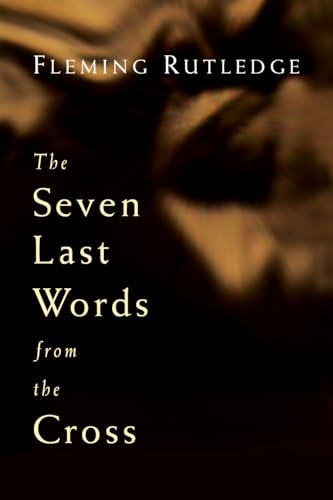
For at least a century, at special three-hour services on Good Friday, it has been the custom in many churches to reflect on the Seven Last Words of Jesus from the Cross. In this tradition, Fleming Rutledge here presents seven eloquent meditations on these final sayings of Jesus.
Rutledge links the sayings from the cross with contemporary events and concerns, but also incorporates recent biblical scholarship and modern questions about the death of Christ, particularly in light of Mel Gibson's film The Passion of the Christ. Rutledge shows how each word or saying from the Cross affords an opportunity for readers to gain a deeper understanding of the horrific death suffered by Jesus.
Intending for this book to lead readers into a genuine devotional experience, Rutledge has made every effort to evoke and preserve the contemplative atmosphere of the three-hour Good Friday memorial. The book includes frequent references to hymns associated with this special day, and each meditation ends with an appropriate hymn text for personal prayer and reflection.
Rutledge links the sayings from the cross with contemporary events and concerns, but also incorporates recent biblical scholarship and modern questions about the death of Christ, particularly in light of Mel Gibson's film The Passion of the Christ. Rutledge shows how each word or saying from the Cross affords an opportunity for readers to gain a deeper understanding of the horrific death suffered by Jesus.
Intending for this book to lead readers into a genuine devotional experience, Rutledge has made every effort to evoke and preserve the contemplative atmosphere of the three-hour Good Friday memorial. The book includes frequent references to hymns associated with this special day, and each meditation ends with an appropriate hymn text for personal prayer and reflection.
Die Inhaltsangabe kann sich auf eine andere Ausgabe dieses Titels beziehen.
Über die Autorin bzw. den Autor
Fleming Rutledge is an Episcopal priest, a best-selling author, and a widely recognized preacher whose published sermon collections have received acclaim across denominational lines. Her other books include Help My Unbelief, Three Hours: Sermons for Good Friday, Advent: The Once and Future Coming of Jesus Christ, and The Crucifixion: Understanding the Death of Jesus Christ, which won Christianity Today's 2017 Book of the Year Award.
Von der hinteren Coverseite
For at least a century, at special three-hour services on Good Friday, it has been the custom in many churches to reflect on the Seven Last Words of Jesus from the Cross. In this tradition, Fleming Rutledge here presents seven eloquent meditations on these final sayings of Jesus.
Rutledge links the sayings from the cross with contemporary events and concerns, but also incorporates recent biblical scholarship and modern questions about the death of Christ, particularly in light of Mel Gibsonbs film "The Passion of the Christ." Rutledge shows how each word or saying from the Cross affords an opportunity for readers to gain a deeper understanding of the horrific death suffered by Jesus.
Intending for this book to lead readers into a genuine devotional experience, Rutledge has made every effort to evoke and preserve the contemplative atmosphere of the three-hour Good Friday memorial. The book includes frequent references to hymns associated with this special day, and each meditation ends with an appropriate hymn text for personal prayer and reflection.
Auszug. © Genehmigter Nachdruck. Alle Rechte vorbehalten.
The Seven Last Words from the Cross
By FLEMING RUTLEDGEWilliam B. Eerdmans Publishing Company
Copyright © 2005 Wm. B. Eerdmans Publishing Co.All right reserved.
ISBN: 0-8028-2786-1
Contents
AUTHOR'S NOTE............................................................................................ixFIRST MEDITATION "Father, forgive them, for they know not what they do".................................1SECOND MEDITATION "Verily I say unto thee, today thou shalt be with me in Paradise".....................13THIRD MEDITATION "Woman, behold thy son! ... Behold thy mother!"........................................25FOURTH MEDITATION "My God, my God, why hast thou forsaken me?"..........................................35FIFTH MEDITATION "I thirst".............................................................................49SIXTH MEDITATION "It is finished".......................................................................59SEVENTH MEDITATION "Father, into thy hands I commend my spirit".........................................71FIRST MEDITATION "Father, forgive them, for they know not what they do".................................71
Chapter One
FIRST MEDITATION"Father, forgive them, for they know not what they do"
Two others also, who were criminals, were led away to be put to death with him. And when they came to the place which is called The Skull, there they crucified him, and the criminals, one on the right and one on the left. And Jesus said, "Father, forgive them; for they know not what they do." LUKE 23:32-34
For Christians, Good Friday is the crucial day, not only of the year but of world history. The source of the word crucial is significant. It comes from the Latin crux, meaning "cross." Here is Webster's definition of crucial: "Having the nature of a final choice or supreme trial; supremely critical; decisive." That conveys something of the unique character of this day. The early Christian apostles proclaimed the Cross and Resurrection of Jesus Christ to be the decisive turning point for all the ages of the created universe (Col. 1:15-20; Heb. 1:1-4). On this day we set aside our other concerns to meditate upon what this astonishing claim might mean.
The four New Testament Gospels record seven "words," or sayings, from the crucified Jesus of Nazareth. It has long been customary on Good Friday to preach seven meditations on the Seven Words. In the traditional order, the first saying is from the Gospel of Luke: "Father, forgive them, for they know not what they do." In order to enter into this saying, we need to reflect on what is being forgiven.
Good Friday is an unrelenting day. It is unrelenting like the regimes of Pol Pot, Idi Amin, Saddam Hussein, and many, many others who throughout human history have mercilessly put people to death by torture. We in twenty-first-century America are shocked and horrified to hear of the terrible things that were done to people in the dungeons of men like Saddam. We can scarcely imagine these things, living as we do in a country where inhuman behavior is against the law.
In Jesus' time, crucifixion was not against the law. It was carried out by the law. It was an exceptionally gruesome method of torturing a person to death, carried out by the government not in secret dungeons but in public. Not even the celebrated film by Mel Gibson, The Passion of the Christ, can convey the full ghastliness of crucifixion to a modern audience. We don't understand it because we have never seen anything like it in the flesh. The situation was very different in New Testament times. Everybody had seen crucified men along the roadsides of the Roman Empire. Everyone knew what it looked like, smelled like, sounded like - the horrific sight of completely naked men in agony, the smell and sight of their bodily functions taking place in full view of all, the sounds of their groans and labored breathing going on for hours and, in some cases, for days. Perhaps worst of all is the fact that no one cared. All of this took place in public, and no one cared. That is why, from the early Christian era, a verse from the book of Lamentations was attached to the Good Friday scene: "Is it nothing to you, all you who pass by?" (1:12).
For Jews and Gentiles alike in those days, a crucified person was as low and despised as it was possible to be. Crucifixion sent an unmistakable signal: this person that you see before you is not fit to live, not even human (as the Romans put it, such a person was damnatio ad bestias, meaning "condemned to the death of a beast" - although in our society it would be considered unacceptable to kill even an animal in such a way). There was nothing religious, nothing uplifting or inspiring about a crucifixion. On the contrary, it was deliberately intended to be obscene, in the original sense of that word; the Oxford English Dictionary suggests "disgusting, repulsive, filthy, foul, abominable, loathsome." It is therefore of the utmost importance to note that in an era when crucifixion was still going on and was widely practiced throughout the Roman Empire, Christians were proclaiming a degraded, condemned, crucified person as the Son of God and Savior of the world. By any ordinary standard, and especially by religious standards, this was simply unthinkable. Here is one of the most powerful arguments for the truth of the Christian faith: the human religious imagination could not have arrived at a notion so utterly foreign to generally accepted spiritual ideas as that of a crucified Messiah.
We are so accustomed to seeing crosses, wearing them on chains, carrying them in processions, and so forth, that it is almost impossible to grasp their original horror. We are accustomed to thinking of the Cross merely as a "religious symbol," like the Star of David or the yin-yang. Yet at the most fundamental level - this can't be emphasized strongly enough - the Cross is in no way "religious." This is very hard for us to understand today. Overtime, we have developed ways of romanticizing violent death so as to make it seem spiritual and inspiring. Cruel methods of execution such as burning at the stake have been sanctified over the generations so that they appear "religious"; Joan of Arc, for example, is depicted in the flames with her eyes uplifted in holy awe. The typical "religious" Easter card shows the Cross in a soft, flattering light, surrounded by lilies; you would never know that it was originally an instrument of extreme brutality. We need to make a conscious effort to understand that the Cross in reality is, by a very long way, the most irreligious, unspiritual object ever to find its way into the heart of faith. This fact is a powerful testimony to the unique significance of the death of Christ.
Now that we have The Passion of the Christ, for better and worse, it is not as necessary as it once was to spell out the peculiar horror of crucifixion for modern audiences. Not even this film can depict its full ghastliness, however, because we are always aware that it is not "real." In any case, Mr. Gibson pays more exquisite attention to the scourging than to the crucifixion itself.
What we need to reflect upon today is the striking fact that the Four Evangelists tell us nothing at all about Christ's physical suffering. Why is that? It must be because they want to emphasize something else. It is our role, this Good Friday, to try to understand what that is. Perhaps we can...
„Über diesen Titel“ kann sich auf eine andere Ausgabe dieses Titels beziehen.
Suchergebnisse für The Seven Last Words from the Cross

Beispielbild für diese ISBN
The Seven Last Words from the Cross
Anbieter: World of Books (was SecondSale), Montgomery, IL, USA
Verkäuferbewertung 5 von 5 Sternen

Zustand: Good. Item in good condition. Textbooks may not include supplemental items i.e. CDs, access codes etc. Artikel-Nr. 00101388291
Gebraucht kaufen
EUR 3,99
Versand gratis
Versand innerhalb von USA
Versand innerhalb von USA
Anzahl: 3 verfügbar
Beispielbild für diese ISBN
The Seven Last Words from the Cross
Anbieter: BooksRun, Philadelphia, PA, USA
Verkäuferbewertung 5 von 5 Sternen
Paperback. Zustand: Very Good. It's a well-cared-for item that has seen limited use. The item may show minor signs of wear. All the text is legible, with all pages included. It may have slight markings and/or highlighting. Artikel-Nr. 0802827861-11-1
Gebraucht kaufen
EUR 4,21
Versand gratis
Versand innerhalb von USA
Versand innerhalb von USA
Anzahl: 1 verfügbar
Beispielbild für diese ISBN
The Seven Last Words from the Cross
Anbieter: BooksRun, Philadelphia, PA, USA
Verkäuferbewertung 5 von 5 Sternen
Paperback. Zustand: Very Good. It's a well-cared-for item that has seen limited use. The item may show minor signs of wear. All the text is legible, with all pages included. It may have slight markings and/or highlighting. Artikel-Nr. 0802827861-8-1
Gebraucht kaufen
EUR 4,39
Versand gratis
Versand innerhalb von USA
Versand innerhalb von USA
Anzahl: 1 verfügbar
Beispielbild für diese ISBN
The Seven Last Words from the Cross
Verlag:
William B. Eerdmans Publishing Company, 2004
ISBN 10: 0802827861
ISBN 13: 9780802827869
Gebraucht
Paperback
Anbieter: ThriftBooks-Reno, Reno, NV, USA
Verkäuferbewertung 5 von 5 Sternen
Paperback. Zustand: Very Good. No Jacket. May have limited writing in cover pages. Pages are unmarked. ~ ThriftBooks: Read More, Spend Less. Artikel-Nr. G0802827861I4N00
Gebraucht kaufen
EUR 6,17
Versand gratis
Versand innerhalb von USA
Versand innerhalb von USA
Anzahl: 1 verfügbar
Beispielbild für diese ISBN
The Seven Last Words from the Cross
Verlag:
William B. Eerdmans Publishing Company, 2004
ISBN 10: 0802827861
ISBN 13: 9780802827869
Gebraucht
Paperback
Anbieter: ThriftBooks-Dallas, Dallas, TX, USA
Verkäuferbewertung 5 von 5 Sternen
Paperback. Zustand: Very Good. No Jacket. May have limited writing in cover pages. Pages are unmarked. ~ ThriftBooks: Read More, Spend Less. Artikel-Nr. G0802827861I4N00
Gebraucht kaufen
EUR 6,17
Versand gratis
Versand innerhalb von USA
Versand innerhalb von USA
Anzahl: 1 verfügbar
Beispielbild für diese ISBN
The Seven Last Words from the Cross
Verlag:
William B. Eerdmans Publishing Company, 2004
ISBN 10: 0802827861
ISBN 13: 9780802827869
Gebraucht
Paperback
Anbieter: ThriftBooks-Atlanta, AUSTELL, GA, USA
Verkäuferbewertung 5 von 5 Sternen
Paperback. Zustand: Very Good. No Jacket. Former library book; May have limited writing in cover pages. Pages are unmarked. ~ ThriftBooks: Read More, Spend Less. Artikel-Nr. G0802827861I4N10
Gebraucht kaufen
EUR 6,17
Versand gratis
Versand innerhalb von USA
Versand innerhalb von USA
Anzahl: 1 verfügbar
Beispielbild für diese ISBN
The Seven Last Words from the Cross
Verlag:
William B. Eerdmans Publishing Company, 2004
ISBN 10: 0802827861
ISBN 13: 9780802827869
Gebraucht
Paperback
Anbieter: ThriftBooks-Dallas, Dallas, TX, USA
Verkäuferbewertung 5 von 5 Sternen
Paperback. Zustand: Good. No Jacket. Pages can have notes/highlighting. Spine may show signs of wear. ~ ThriftBooks: Read More, Spend Less. Artikel-Nr. G0802827861I3N00
Gebraucht kaufen
EUR 6,17
Versand gratis
Versand innerhalb von USA
Versand innerhalb von USA
Anzahl: 1 verfügbar
Beispielbild für diese ISBN
The Seven Last Words from the Cross
Verlag:
William B. Eerdmans Publishing Company, 2004
ISBN 10: 0802827861
ISBN 13: 9780802827869
Gebraucht
Paperback
Anbieter: ThriftBooks-Atlanta, AUSTELL, GA, USA
Verkäuferbewertung 5 von 5 Sternen
Paperback. Zustand: Very Good. No Jacket. May have limited writing in cover pages. Pages are unmarked. ~ ThriftBooks: Read More, Spend Less. Artikel-Nr. G0802827861I4N00
Gebraucht kaufen
EUR 6,17
Versand gratis
Versand innerhalb von USA
Versand innerhalb von USA
Anzahl: 1 verfügbar
Beispielbild für diese ISBN
The Seven Last Words from the Cross
Verlag:
William B. Eerdmans Publishing Company, 2004
ISBN 10: 0802827861
ISBN 13: 9780802827869
Gebraucht
Paperback
Anbieter: ThriftBooks-Phoenix, Phoenix, AZ, USA
Verkäuferbewertung 5 von 5 Sternen
Paperback. Zustand: Very Good. No Jacket. May have limited writing in cover pages. Pages are unmarked. ~ ThriftBooks: Read More, Spend Less. Artikel-Nr. G0802827861I4N00
Gebraucht kaufen
EUR 6,17
Versand gratis
Versand innerhalb von USA
Versand innerhalb von USA
Anzahl: 1 verfügbar
Beispielbild für diese ISBN
The Seven Last Words from the Cross
Verlag:
William B. Eerdmans Publishing Company, 2004
ISBN 10: 0802827861
ISBN 13: 9780802827869
Gebraucht
Paperback
Anbieter: ThriftBooks-Dallas, Dallas, TX, USA
Verkäuferbewertung 5 von 5 Sternen
Paperback. Zustand: As New. No Jacket. Pages are clean and are not marred by notes or folds of any kind. ~ ThriftBooks: Read More, Spend Less. Artikel-Nr. G0802827861I2N00
Gebraucht kaufen
EUR 6,17
Versand gratis
Versand innerhalb von USA
Versand innerhalb von USA
Anzahl: 1 verfügbar