
Verwandte Artikel zu Eerdmans Dictionary of the Bible
Inhaltsangabe
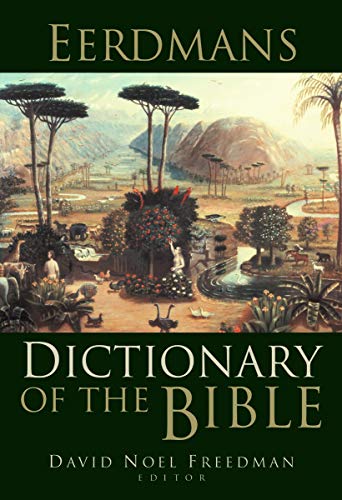
The Eerdmans Dictionary of the Bible gathers nearly 5,000 alphabetically ordered articles that thoroughly yet clearly explain all the books, persons, places, and significant terms found in the Bible. The Dictionary also explores the background of each biblical book and related writings and discusses cultural, natural, geographical, and literary phenomena--matters that Bible students at all levels may encounter in reading or discussion.
Nearly 600 first-rate Bible authorities have contributed to the Eerdmans Dictionary of the Bible. Intended as a tool for practical Bible use, this illustrated dictionary reflects recent archaeological discoveries and the breadth of current biblical scholarship, including insights from critical analysis of literary, historical, sociological, and other methodological issues. The editorial team has also incorporated articles that explore and interpret important focuses of biblical theology, text and transmission, Near Eastern archaeology, extrabiblical writings, and pertinent ecclesiastical traditions--all of which help make the Eerdmans Dictionary of the Bible the most comprehensive and up-to-date one-volume Bible dictionary on the market today.Die Inhaltsangabe kann sich auf eine andere Ausgabe dieses Titels beziehen.
Über die Autorinnen und Autoren
David Noel Freedman (1922–2008) was a prolific, influential biblical scholar and the longtime holder of an endowed chair in Hebrew biblical studies at the University of California, San Diego.
David Noel Freedman (1922'2008) was a prolific, influential biblical scholar and the longtime holder of an endowed chair in Hebrew biblical studies at the University of California, San Diego.
Auszug. © Genehmigter Nachdruck. Alle Rechte vorbehalten.
Excerpt
A
A
A symbol used to designate the Codex Alexandrinus.
AARON (Heb.)
A descendant of Levi and brother of Moses (Exod.6:20; Num. 26:59; 1 Chr. 6:3[MT 5:22]), a co-leaderwith Moses and their sister Miriam leading the Israelitesout of Egypt through the wilderness (Mic.6:4; Exod. 4:10-16; 7:1-25), and Israel's first highpriest and ancestor of the priestly family ofAaronite priests (Exod. 28:1-2; Num. 18:1-7).
High Priest (Exodus-Numbers and Chronicles)
Aaron and his descendants are repeatedly featuredas central figures and the predominant priests ofIsrael's cult in Exodus-Numbers and 1-2 Chronicles.Approximately 85 percent of the total number(346) of references to Aaron in the Bible are concentratedin the pentateuchal books of Exodus, Leviticus,and Numbers. There, particularly in the socalledPriestly portions of the Pentateuch, Aaronand his sons are the exalted high priests who overseeIsrael's sacrifices and cult centered in the arkand tabernacle (Exod. 27-30). The Aaronites are incharge of the Urim and Thummim, the sacred lotsfor determining Yahweh's will (Exod. 28:30; Lev.8:5-9; Num. 27:21). Aaron and his sons are the onlypriests authorized to preside at various rituals andofferings (Lev. 6-8). The actual ordination ceremonyfor Aaron and his sons is narrated in Lev. 8-9.Lev. 21 lists a series of regulations designed tomaintain the holiness of the Aaronite priesthood.Aaron is a descendant of the priestly tribe of Levi(Exod. 6:16-25), but Aaron and his sons represent aspecial clan among the Levites who alone are authorizedto come near and officiate at rituals associatedwith the tent of meeting (Num. 3:5-10).Aaron and his sons are assigned the duty of blessingthe Israelites in the form of the so-calledAaronic benediction in Num. 6:22-27. The priestlypredominance of Aaron over other Levites is emphasizedin the revolt of Korah, Dathan, andAbiram in Num. 16, the budding of Aaron's rod inNum. 17, and the classification of priestly responsibilitiesamong the Aaronites and other Levites inNum. 18.
The postexilic book of 1-2 Chronicles reflectsan exalted view of the Aaronite priesthood similarto that found in the Priestly tradition of the Pentateuch.Aaron and his descendants make offeringsand atonement at "the most holy place" (1 Chr.6:49[34]). The Aaronite priests are "set apart" fromother Levites for the most sacred duties of templeworship in burning incense, ministering, and blessing(1 Chr. 23-24; cf. 2 Chr. 26:16-21).
Elsewhere in the Old Testament
Allusions to Aaron or Aaronite priests are very rareor absent in other sections of the OT such as theDeuteronomistic history or the prophetic books.Even the exilic book of Ezekiel, which devotes significantattention to matters of priests and templeworship, never mentions Aaron or the Aaronites.Instead, Ezekiel designates another priestly group,the Zadokites, as the true high priests who receiveassistance from the Levites (Ezek. 40:46; 44:15:48:11). 1-2 Samuel and 1-2 Kings likewise rarelymention the Aaronite priesthood and instead focuson the Levites and the Zadokites as priests duringIsrael's monarchy (e.g., 1 Kgs. 2:27). Thus, theAaronic priesthood apparently played little role inmuch of the preexilic and exilic literature (Deuteronomistichistory, Ezekiel). However, the figure ofAaron and the Aaronite priesthood apparentlyemerged as the preeminent priestly group in theSecond Temple or postexilic period in charge ofworship and rituals in the Jerusalem temple.
Negative and Nonpriestly Portrayals
Sections of the Pentateuch that scholars often dateas earlier than the exilic Priestly traditions tend toportray Aaron in a nonpriestly role as a co-leaderwith Moses (Exod. 4:27-31; 11:10; 12:31; 16:33-34).These earlier traditions in the Pentateuch also portrayAaron negatively in opposition or rebellionagainst Moses or Yahweh (Exod. 32, the idolatry ofthe golden calf; Num. 12, the rebellion of Aaron andMiriam against Moses; Num. 20, the unfaithfulnessof Moses and Aaron in hitting the rock). The oneprophetic reference to Aaron in Mic. 6:4 lists Aaronas simply a co-leader of the Israelites in the wildernessalong with Moses and Miriam.
New Testament
Aaron's priesthood diminishes in importance inlight of the atoning significance of Jesus' death andresurrection in the NT. Acts 7:40 recalls Aaron'sidolatrous involvement with the golden calf. Thebook of Hebrews recognizes Aaron's legitimate roleas high priest (Heb. 5:4), and yet it affirms Christ asnow the greater high priest who arose "according tothe order of Melchizedek" (cf. Gen. 14:17-24) ratherthan "according to the order of Aaron" (Heb. 7:11).
Character: A Summary
The present form of the biblical text balancesAaron's prominence as leader and priest with anawareness of the potential for disobedience amongall leaders, even a high priest like Aaron (Exod.32:1-6, 25; Lev. 10:1-3; Num. 12:1-16; 20:1-13). Inthe end, both the high priest Aaron and the incomparableprophet and leader Moses are condemnedto die outside the Promised Land of Canaan (Num.20:12, 22-29; Deut. 34:1-12). Aaron, like many leadersand prominent figures in the Bible, is humanlyflawed, but he remained at the same time an effectiveagent for the blessing and saving work of Godamong God's people.
Bibliography. A. Cody, A History of Old TestamentPriesthood. AnBib 35 (Rome, 1969); W. Horbury,"The Aaronic Priesthood in the Epistle to theHebrews," JSNT 19 (1983): 43-71; R. D. Nelson,Raising Up a Faithful Priest: Community and Priesthoodin Biblical Theology (Louisville, 1993); L.Sabourin, Priesthood: A Comparative Study. Studiesin the History of Religions 25 (Leiden, 1973).
Dennis T. Olson
AB (Heb.)
The fifth month of the Hebrew sacred calendar(July/Aug.); this postexilic name was borrowed bythe Jews from the Babylonian Abu. In this monththe grapes and figs are harvested and on the seventhday a great fast commemorates the destructionof Jerusalem by Nebuchadnezzar (587/586B.C.E.).
ABADDON (Heb.)
The "place of destruction" from the verb 'abad, "toperish" or "to fail." In its five occurrences in the OT(Ps. 88:ll[MT 12]; Job 26:6; 28:22; 31:12; Prov.15:11), it is a synonym of "Sheol."
In the NT Gk. Abaddon is the name of an angelthat rules over the deadly swarm of locusts, whichthe visionary sees as plaguing humanity, and overhell itself (Rev. 9:11). The basis of this "personification"seems to trace back to Job 28:22, whereAbaddon speaks, along with "death."
Jim West
ABAGTHA (Heb.)
One of the seven eunuchs of King Ahasuerus(Xerxes I, ca. 480 B.C.E.) who served as his chamberlains(Esth. 1:10). The name is probably of MiddleIranian origin (perhaps "gift of good fortune").
ABANA (Heb.)
A river, along with the Pharpar River to the south,that feeds the vast Ghouta oasis wherein Damascusis located. The modern name of the river is Barada;its source is in a large pool high in the Anti-LebanonMountains (usually identified with Mt.Amana; cf. Cant. 4:8). The river descends eastwarddown the mountain, flows through Damascus, anddisappears into a marshy take E of the city. TheAbana and the Pharpar are largely responsible forthe fertility for which the region of Damascus is famous;they provide a hedge against the encroachmentof the eastern desert.
Naaman, the commander of the Arameanforces, compares the Abana (Q Amana) and thePharpar to the Jordan River in which Elisha toldhim to wash seven times to cure his leprosy (2 Kgs.5:12).
Ronald A. Simkins
ABARIM (Heb.)
A...
„Über diesen Titel“ kann sich auf eine andere Ausgabe dieses Titels beziehen.
Suchergebnisse für Eerdmans Dictionary of the Bible

Beispielbild für diese ISBN
Eerdmans Dictionary of the Bible
Verlag:
William B Eerdmans Publishing Co, 2000
ISBN 10: 0802824005
ISBN 13: 9780802824004
Gebraucht
Hardcover
Anbieter: World of Books (was SecondSale), Montgomery, IL, USA
Verkäuferbewertung 5 von 5 Sternen

Hardback. Zustand: Good. The Eerdmans Dictionary of the Bible gathers nearly 5,000 alphabetically ordered articles that thoroughly yet clearly explain all the books, persons, places, and significant terms found in the Bible. The Dictionary also explores the background of each biblical book and related writings and discusses cultural, natural, geographical, and literary phenomena--matters that Bible students at all levels may encounter in reading or discussion. Nearly 600 first-rate Bible authorities have contributed to the Eerdmans Dictionary of the Bible. Intended as a tool for practical Bible use, this illustrated dictionary reflects recent archaeological discoveries and the breadth of current biblical scholarship, including insights from critical analysis of literary, historical, sociological, and other methodological issues. The editorial team has also incorporated articles that explore and interpret important focuses of biblical theology, text and transmission, Near Eastern archaeology, extrabiblical writings, and pertinent ecclesiastical traditions--all of which help make the Eerdmans Dictionary of the Bible the most comprehensive and up-to-date one-volume Bible dictionary on the market today. Features of the Eerdmans Dictionary of the Bible: Nearly 5,000 entries explain every book, person, place, significant event, and distinctive term or expression found in the BibleWritten by nearly 600 respected authorities in the field of biblical scholarshipIncludes 112 informative charts and photos and a 12-page section of color mapsSupplementary aids include lists of abbreviations, pronunciation guide, transliteration key, and concise bibliographies to guide further researchEntries cover the Deuterocanonicals as well as the Hebrew and New Testament scripturesBased on the New Revised Standard version of the Bible, with attention given to alternate readings in other major translations. Artikel-Nr. CIN0802824005G
Gebraucht kaufen
EUR 26,83
Versand gratis
Versand innerhalb von USA
Versand innerhalb von USA
Anzahl: 1 verfügbar
Beispielbild für diese ISBN
Eerdmans Dictionary of the Bible
Verlag:
William B Eerdmans Publishing Co, 2000
ISBN 10: 0802824005
ISBN 13: 9780802824004
Gebraucht
Hardcover
Anbieter: World of Books (was SecondSale), Montgomery, IL, USA
Verkäuferbewertung 5 von 5 Sternen
Hardback. Zustand: Fair. The Eerdmans Dictionary of the Bible gathers nearly 5,000 alphabetically ordered articles that thoroughly yet clearly explain all the books, persons, places, and significant terms found in the Bible. The Dictionary also explores the background of each biblical book and related writings and discusses cultural, natural, geographical, and literary phenomena--matters that Bible students at all levels may encounter in reading or discussion. Nearly 600 first-rate Bible authorities have contributed to the Eerdmans Dictionary of the Bible. Intended as a tool for practical Bible use, this illustrated dictionary reflects recent archaeological discoveries and the breadth of current biblical scholarship, including insights from critical analysis of literary, historical, sociological, and other methodological issues. The editorial team has also incorporated articles that explore and interpret important focuses of biblical theology, text and transmission, Near Eastern archaeology, extrabiblical writings, and pertinent ecclesiastical traditions--all of which help make the Eerdmans Dictionary of the Bible the most comprehensive and up-to-date one-volume Bible dictionary on the market today. Features of the Eerdmans Dictionary of the Bible: Nearly 5,000 entries explain every book, person, place, significant event, and distinctive term or expression found in the BibleWritten by nearly 600 respected authorities in the field of biblical scholarshipIncludes 112 informative charts and photos and a 12-page section of color mapsSupplementary aids include lists of abbreviations, pronunciation guide, transliteration key, and concise bibliographies to guide further researchEntries cover the Deuterocanonicals as well as the Hebrew and New Testament scripturesBased on the New Revised Standard version of the Bible, with attention given to alternate readings in other major translations. Artikel-Nr. 00109479821
Gebraucht kaufen
EUR 26,83
Versand gratis
Versand innerhalb von USA
Versand innerhalb von USA
Anzahl: 4 verfügbar
Beispielbild für diese ISBN
Eerdmans Dictionary of the Bible
Verlag:
Eerdmans (edition Edition Unstated), 2000
ISBN 10: 0802824005
ISBN 13: 9780802824004
Gebraucht
Hardcover
Anbieter: BooksRun, Philadelphia, PA, USA
Verkäuferbewertung 5 von 5 Sternen
Hardcover. Zustand: Good. Edition Unstated. With dust jacket. It's a preowned item in good condition and includes all the pages. It may have some general signs of wear and tear, such as markings, highlighting, slight damage to the cover, minimal wear to the binding, etc., but they will not affect the overall reading experience. Ex-Library. Artikel-Nr. 0802824005-11-1-12_29
Gebraucht kaufen
EUR 28,61
Versand gratis
Versand innerhalb von USA
Versand innerhalb von USA
Anzahl: 2 verfügbar
Beispielbild für diese ISBN
Eerdmans Dictionary of the Bible
Verlag:
Eerdmans (edition Edition Unstated), 2000
ISBN 10: 0802824005
ISBN 13: 9780802824004
Gebraucht
Hardcover
Anbieter: BooksRun, Philadelphia, PA, USA
Verkäuferbewertung 5 von 5 Sternen
Hardcover. Zustand: Very Good. Edition Unstated. With dust jacket. It's a well-cared-for item that has seen limited use. The item may show minor signs of wear. All the text is legible, with all pages included. It may have slight markings and/or highlighting. Artikel-Nr. 0802824005-11-1-29
Gebraucht kaufen
EUR 33,05
Versand gratis
Versand innerhalb von USA
Versand innerhalb von USA
Anzahl: 2 verfügbar
Beispielbild für diese ISBN
Eerdmans Dictionary of the Bible
Anbieter: WorldofBooks, Goring-By-Sea, WS, Vereinigtes Königreich
Verkäuferbewertung 5 von 5 Sternen
Hardback. Zustand: Very Good. The book has been read, but is in excellent condition. Pages are intact and not marred by notes or highlighting. The spine remains undamaged. Artikel-Nr. GOR004322278
Gebraucht kaufen
EUR 43,82
EUR 6,68 Versand
Versand von Vereinigtes Königreich nach USA
Versand von Vereinigtes Königreich nach USA
Anzahl: 4 verfügbar
Beispielbild für diese ISBN
Eerdmans Dictionary of the Bible
Anbieter: Phatpocket Limited, Waltham Abbey, HERTS, Vereinigtes Königreich
Verkäuferbewertung 5 von 5 Sternen
Zustand: Good. Your purchase helps support Sri Lankan Children's Charity 'The Rainbow Centre'. Ex-library, so some stamps and wear, but in good overall condition. Our donations to The Rainbow Centre have helped provide an education and a safe haven to hundreds of children who live in appalling conditions. Artikel-Nr. Z1-C-034-02551
Gebraucht kaufen
EUR 42,34
EUR 12,69 Versand
Versand von Vereinigtes Königreich nach USA
Versand von Vereinigtes Königreich nach USA
Anzahl: 1 verfügbar
Beispielbild für diese ISBN
Eerdmans Dictionary of the Bible
Verlag:
William B Eerdmans Publishing Co, 2000
ISBN 10: 0802824005
ISBN 13: 9780802824004
Gebraucht
Hardcover
Anbieter: Anybook.com, Lincoln, Vereinigtes Königreich
Verkäuferbewertung 5 von 5 Sternen
Zustand: Good. This is an ex-library book and may have the usual library/used-book markings inside.This book has hardback covers. In good all round condition. Dust jacket in good condition. Please note the Image in this listing is a stock photo and may not match the covers of the actual item,2200grams, ISBN:9780802824004. Artikel-Nr. 7870112
Gebraucht kaufen
EUR 43,83
EUR 20,27 Versand
Versand von Vereinigtes Königreich nach USA
Versand von Vereinigtes Königreich nach USA
Anzahl: 1 verfügbar
Beispielbild für diese ISBN
Eerdmans Dictionary of the Bible
Verlag:
William B. Eerdmans Publishing Company, Grand Rapids, MI, 2000
ISBN 10: 0802824005
ISBN 13: 9780802824004
Gebraucht
Hardcover
Erstausgabe
Anbieter: Ground Zero Books, Ltd., Silver Spring, MD, USA
Verkäuferbewertung 5 von 5 Sternen
Hardcover. Zustand: Very good. Zustand des Schutzumschlags: Very good. New Edition, First Printing [Stated]. xxxiii, [1] 1425, [21--including color maps] pages. Two column format. Illustrations. This is a heavy volume and if shipped outside of the United States will require an additional shipping payment. Information printed inside front and back covers and on fep and rep. Contents includes a List of Maps; Consulting Editors, Contributors, Preface, Introduction, Abbreviations, and Entries A-Z. Two terms in the title of this volume require some comment (i.e. definition or explanation and elaboration): "Bible" and "Dictionary". "Bible" refers to the Christian Bible, as commonly used in places where the great majority of the people have some affiliation with the christian Church, and includes both the Old and Net Testaments. The OT for Protestands is the same as the Hevrew Scriptires acknoledges by the Jewish community as sacred Scripture. Catholic Christians also accept the Apocrypha or Deuterocaonicals as part of the OT. all of the above are treated in this Dictionary, as well as the NT, which is accepted as canonical scripture by practically all Christian groups. As for the second term, Bible dictionaries generally come in two sizes: multivolume versions and one-volume dictionaries like the familiar Eerdmans Bible Dictionary of which the present volume represents not merely a new edition but in essence a fresh beginning. The one-volume Bible dictionary is interned to be a rapid-response reference work. It should supply sufficient factual information about books and persons, places and events, define words and longer expressions, and thereby fulfill the basic purpose of any dictionary: to explain. The Eerdmans Dictionary of the Bible gathers nearly 5,000 alphabetically ordered articles that thoroughly yet clearly explain all the books, persons, places, and significant terms found in the Bible. The Dictionary also explores the background of each biblical book and related writings and discusses cultural, natural, geographical, and literary phenomena--matters that Bible students at all levels may encounter in reading or discussion. Nearly 600 first-rate Bible authorities have contributed to the Eerdmans Dictionary of the Bible. Intended as a tool for practical Bible use, this illustrated dictionary reflects recent archaeological discoveries and the breadth of current biblical scholarship, including insights from critical analysis of literary, historical, sociological, and other methodological issues. The editorial team has also incorporated articles that explore and interpret important focuses of biblical theology, text and transmission, Near Eastern archaeology, extrabiblical writings, and pertinent ecclesiastical traditions--all of which help make the Eerdmans Dictionary of the Bible the most comprehensive and up-to-date one-volume Bible dictionary on the market today. Artikel-Nr. 86968
Gebraucht kaufen
EUR 91,69
EUR 4,45 Versand
Versand innerhalb von USA
Versand innerhalb von USA
Anzahl: 1 verfügbar
Beispielbild für diese ISBN
Eerdmans Dictionary of the Bible
Anbieter: Revaluation Books, Exeter, Vereinigtes Königreich
Verkäuferbewertung 5 von 5 Sternen
Hardcover. Zustand: Brand New. 1425 pages. 10.00x7.00x2.50 inches. In Stock. Artikel-Nr. 0802824005
Neu kaufen
EUR 150,74
EUR 41,73 Versand
Versand von Vereinigtes Königreich nach USA
Versand von Vereinigtes Königreich nach USA
Anzahl: 1 verfügbar