
Verwandte Artikel zu James: Volume 28 (MACARTHUR NEW TESTAMENT COMMENTARY)
James: Volume 28 (MACARTHUR NEW TESTAMENT COMMENTARY) - Hardcover
Buch 3 von 42: MacArthur Bible Studies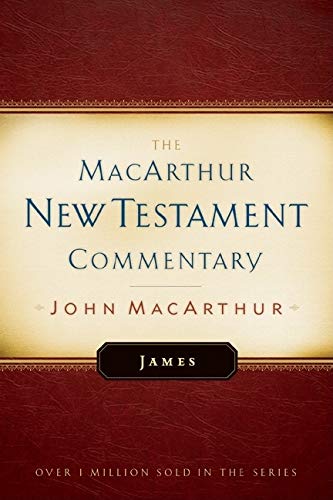
Inhaltsangabe
Faith without works is dead. This truth, which emphasizes the fact that spiritual fruit will accompany genuine belief, lies at the heart of this epistle. As captivating as it is convicting, the book of James outlines the practical implications of a living faith.
Join John MacArthur as he explains each verse in a way that is both doctrinally precise and intensely practical. Taking into account the cultural, theological, and Old Testament contexts of each passage, MacArthur tackles interpretive challenges and fairly evaluates differing views, giving the reader confidence in his conclusions.
The MacArthur New Testament Commentary series comes from the experience, wisdom, and insight of one of the most trusted ministry leaders and Bible scholars of our day. Each volume was written to be as comprehensive and accurate as possible, dealing thoroughly with every key phrase and word in the Scripture without being unnecessarily technical. This commentary will help to give a better, fuller, richer understanding of God's Word, while challenging the reader to a vibrant personal spiritual walk.
A great resource for pastors, teachers, leaders, students, or anyone desiring to dig deeper into Scripture
Die Inhaltsangabe kann sich auf eine andere Ausgabe dieses Titels beziehen.
Über die Autorin bzw. den Autor
JOHN MACARTHUR is the pastor-teacher of Grace Community Church in Sun Valley, California; president of The Master's College and Seminary; and featured teacher for the Grace to You media ministry. Weekly telecasts and daily radio broadcasts of "Grace to You" are seen and heard by millions worldwide. John has also written several bestselling books, including The MacArthur Study Bible, The Gospel According to Jesus, The New Testament Commentary series, Twelve Ordinary Men, and The Truth War. He and his wife, Patricia, have four married children and fifteen grandchildren.
Von der hinteren Coverseite
James
Faith without works is dead. This truth, which emphasizes the fact that spiritual fruit will accompany genuine belief, lies at the heart of this epistle. As captivating as it is convicting, the book of James outlines the practical implications of a living faith. The application it calls for is as pertinent today as it was in the first century.
Join John MacArthur as he explains each verse in a way that is both doctrinally precise and intensely practical.
The MacArthur New Testament Commentary series comes from the experience, wisdom, and insight of one of the most trusted ministry leaders and Bible scholars of our day. Each volume was written to be as comprehensive and accurate as possible, dealing thoroughly with every key phrase and word in the Scripture without being unnecessarily technical. This commentary will help to give a better, fuller, richer understanding of God's Word, while challenging the reader to a vibrant personal spiritual walk.
Unleashing God’s Truth one verse at a time
“Clear, reasonable, understandable, devout—all things and more can be honestly said about this generation’s greatest single-author pastoral commentary set. The MacArthur New Testament Commentary series is a help to Christians and preachers. Forged in the study, fired in the pulpit, these comments on the whole New Testament are a gift from one who loves Christ, given to Christ’s bride, the church.”
—Mark Denver, pastor, Capitol Hill Baptist Church, Washington, D.C.
“Dr. MacArthur’s love for the Scripture and his many years of diligent study have resulted in a resource that is a great gift to the Body of Christ. I have found this tool to be a great help as I study the Word and teach it to women. I often refer to this set of commentaries to enhance my understanding of the text and to shed light on difficult passages and questions.”
—Nancy Leigh DeMoss, author, Revive our Hearts radio teacher
“John MacArthur has provided a compelling example of pastoral ministry based on the Word of God. Now the fruit of that ministry is available to us all: careful attention to the text of Scripture and faithful theological exposition, all in the service of the church of Jesus Christ. Both pastor and layperson will benefit for years to come from this unique commentary series.”
—C.J. Mahaney, president of Sovereign Grace Ministries
“The MacArthur New Testament Commentary is nothing less than a library of faithful exegesis and exposition. This project is unparalleled in our times, and John MacArthur has produced a masterful commentary series that demands attention and deserves a place in every preacher’s library.”
—R. Albert Mohler, Jr., PhD, president of The Southern Baptist Theological Seminary, Louisville, KY
Aus dem Klappentext
James
Faith without works is dead. This truth, which emphasizes the fact that spiritual fruit will accompany genuine belief, lies at the heart of this epistle. As captivating as it is convicting, the book of James outlines the practical implications of a living faith. The application it calls for is as pertinent today as it was in the first century.
Join John MacArthur as he explains each verse in a way that is both doctrinally precise and intensely practical.
The MacArthur New Testament Commentary series comes from the experience, wisdom, and insight of one of the most trusted ministry leaders and Bible scholars of our day. Each volume was written to be as comprehensive and accurate as possible, dealing thoroughly with every key phrase and word in the Scripture without being unnecessarily technical. This commentary will help to give a better, fuller, richer understanding of God's Word, while challenging the reader to a vibrant personal spiritual walk.
Auszug. © Genehmigter Nachdruck. Alle Rechte vorbehalten.
The MacArthur New Testament Commentary James
By John MacArthurMoody Publishers
Copyright © 1998 John MacArthur
All rights reserved.
ISBN: 978-0-8024-0900-3All rights reserved.
Contents
Preface,
Introduction,
Outline,
1. The Man and His Message,
2. From Trouble to Triumph—Part 1,
3. From Trouble to Triumph—Part 2,
4. The Fault for Temptation,
5. Born to Holiness,
6. Belief That Behaves—Part 1,
7. Belief That Behaves—Part 2,
8. The Evil of Favoritism in the Church—Part 1,
9. The Evil of Favoritism in the Church—Part 2,
10. Dead Faith,
11. Living Faith,
12. Taming the Tongue,
13. Earthly and Heavenly Wisdom,
14. The Danger of Being a Friend of the World,
15. Drawing Near to God,
16. The Blasphemous Sin of Defaming Others,
17. Responding to the Will of God,
18. Judgment on the Wicked Rich,
19. How to Face Trials Patiently,
20. Stop Swearing,
21. The Power of Righteous Praying,
22. Saving a Soul from Death,
Bibliography,
Index of Greek Words,
Index of Scripture,
Index of Subjects,
CHAPTER 1
The Man and His Message
(James 1:1)
James, a bond-servant of God and of the Lord Jesus Christ, to the twelve tribes who are dispersed abroad: Greetings. (1:1)
Counterfeiting is a major problem in our society. Forged money, credit cards, jewelry, works of art, and virtually everything else of value are passed off as genuine to deceive the unwary. Consequently, valuable commodities must be carefully examined to determine their genuineness.
That is also true of the most valuable commodity of all—saving faith. A right relationship to the living, holy God of the universe with the promise of eternal heaven is incomparably priceless. Those who think they have it should carefully examine and test it to determine its validity. To be deceived by counterfeit money or a counterfeit work of art results only in temporal loss; to be deceived by a counterfeit faith results in eternal tragedy.
The master counterfeiter of saving faith is Satan. Disguising themselves as "angels of light" (2 Cor. 11:14–15), he and his servants deceive the unwary through false systems of religion, including false forms of Christianity. Thinking they are on the narrow path leading to heaven, those who are trapped in counterfeit religion, or who simply trust in their personal concept of salvation, are actually on the way to eternal damnation.
That deception extends to those within biblical Christianity who are deluded about their salvation.
To be deceived about one's relationship to God is the most dangerous and frightening delusion possible. Near the end of the Sermon on the Mount our Lord graphically portrayed that tragedy:
Not everyone who says to Me, "Lord, Lord," will enter the kingdom of heaven, but he who does the will of My Father who is in heaven will enter. Many will say to Me on that day, "Lord, Lord, did we not prophesy in Your name, and in Your name cast out demons, and in Your name perform many miracles?" And then I will declare to them, "I never knew you; depart from me, you who practice lawlessness." (Matt 7:21–23)
Because of the ever-present danger of counterfeit faith, God's Word continually calls for professed salvation to be tested for validity. In Psalm 17:3 David declared the results of God's testing his faith: "You have tried my heart; You have visited me by night; You have tested me and You find nothing." In Psalm 26:1–2 he pleaded, "Vindicate me, O Lord, for I have walked in my integrity, and I have trusted in the Lord without wavering. Examine me, O Lord, and try me; test my mind and my heart." He echoed that plea in the familiar words of Psalm 139: "Search me, O God, and know my heart; try me and know my anxious thoughts; and see if there be any hurtful way in me, and lead me in the everlasting way" (vv. 23–24). Amid the chaos and desolation following the destruction of Jerusalem, Jeremiah cried out to his fellow Israelites, "Let us examine and probe our ways, and let us return to the Lord" (Lam. 3:40).
Through Ezekiel, the Lord says of the genuinely repentant man: "Because he considered and turned away from all his transgressions which he had committed, he shall surely live; he shall not die" (Ezek. 18:28; cf. Ps. 119:59). Through the prophet Haggai, the Lord exhorted His people, "Consider your ways!" (Hag. 1:5, 7).
The New Testament also repeatedly stresses the necessity of testing faith. John the Baptist challenged the religious leaders of his day to "bear fruit in keeping with repentance" (Matt. 3:8). Describing his ministry to King Agrippa, Paul related how he "kept declaring both to those of Damascus first, and also at Jerusalem and then throughout all the region of Judea, and even to the Gentiles, that they should repent and turn to God, performing deeds appropriate to repentance" (Acts 26:20). He admonished the Galatians, "Each one must examine his own work" (Gal. 6:4), and the Corinthians, "Test yourselves to see if you are in the faith; examine yourselves! Or do you not recognize this about yourselves, that Jesus Christ is in you—unless indeed you fail the test?" (2 Cor. 13:5).
The intended and inevitable result of saving faith is a life of good works, and it was for that very purpose that Christ redeemed the church. After declaring that salvation is by grace alone, the apostle Paul reminds believers that "we are His workmanship, created in Christ Jesus for good works, which God prepared beforehand so that we would walk in them" (Eph. 2:8–10). "For the grace of God has appeared," Paul wrote to Titus, "bringing salvation to all men, instructing us to deny ungodliness and worldly desires and to live sensibly, righteously and godly in the present age" (Titus 2:11–12; cf. v. 14). The writer of Hebrews warned his readers: "Let us fear if, while a promise remains of entering His rest, any one of you may seem to have come short of it" (Heb. 4:1; cf. 12:15). The fearful possibility of missing out on salvation calls for stringent self-examination. When the writer of Hebrews illustrated the essence of saving faith, he described the courageous obedience of Old Testament believers who demonstrated their salvation in lives of loyalty and faithfulness to God (11:1–39).
The first epistle of John mentions many marks of genuine faith. It must go beyond mere verbal profession (1:6–10; 2:4, 9) and must include obedience to God (2:3, 5–6; 3:24; 5:2–3). The redeemed are marked by not loving the world (2:15), by living a righteous life (2:29), by forsaking and avoiding sin (3:6, 9), and by loving fellow believers (3:14; 4:7, 11).
But no passage of Scripture more clearly presents the tests of true and living faith than the Sermon on the Mount. Here Jesus sets forth an extensive series of tests aimed at showing self-righteous Jews—typified by the proud, boastful, self-satisfied scribes and Pharisees (see 5:20)—how far short of genuine salvation they fell. By so doing, He unmasked their false religion, hypocrisy, and counterfeit salvation.
The sermon begins with the Beatitudes (Matt. 5:3–12), which delineate the attitudes that are to accompany genuine saving faith. Those attitudes include meekness, mercy, joy in persecution, humility, a sense of sinfulness, and a deep longing for righteousness.
The next section (5:13–16) reveals the outworking of Beatitude virtues in the lives of the truly redeemed, who are as "salt and light" in the evil, dark, fallen world. Instead of being an influence for evil, they influence the world with God-given righteousness.
True salvation will be marked by genuine commitment to the Word of God (5:17–20), by external righteous behavior that stems from internal righteousness of the heart (5:21–48), by proper worship (6:1–18), by a correct view of money and material possessions (6:19–34), and by right personal relationships (7:1–12).
Jesus concludes the sermon by describing two paths to eternal destiny—the broad one that leads to damnation, and the narrow one that leads to life, which he exhorted His hearers to enter (7:13). He warned them to avoid false prophets, who sought to divert them onto the broad path that leads to destruction (vv. 15–20), and described the frightening consequences of empty profession in light of certain coming judgment (vv. 21–27).
It seems clear that James was profoundly influenced by the Sermon on the Mount—the truths of which he doubtless heard in person from Jesus, either on that occasion or others—and many of its themes have parallels in his epistle. In fact, the book of James may well be viewed as a practical commentary on that sermon. Like His Lord before him, James presents a series of tests by which the genuineness of salvation can be determined.
His Biography
The first verse of this epistle introduces us to the human author, a bond-servant of God and of the Lord Jesus Christ . As explained in the Introduction, the James who penned this epistle was the half brother of the Lord. Contrary to Roman Catholic dogma, Joseph and Mary had other children after Jesus was born. That truth is implied in Matthew's statement that Joseph kept Mary a virgin until the birth of Jesus (Matt. 1:25) and is explicit in Luke's description of Jesus as Mary's firstborn son (Luke 2:7, emphasis added). Those children were His half brothers and half sisters (cf. Matt. 12:46–47; Mark 3:31–35; Luke 8:19–21; John 2:12). Matthew 13:55 and Mark 6:3 list Jesus' half brothers as James, Joseph (Joses), Simon, and Judas. Paul explicitly calls James "the Lord's brother" (Gal. 1:19). Mark also refers to Jesus' half sisters, although not by name. That both Matthew and Mark list James first implies that he was the eldest of Jesus' half brothers.
Surprisingly, although they grew up with Him and observed firsthand His sinless, perfect life, Jesus' brothers did not at first believe in Him. John records their unbelief exhibited by challenging Jesus to reveal Himself openly:
Now the feast of the Jews, the Feast of Booths, was near. Therefore His brothers said to Him, "Leave here and go into Judea, so that Your disciples also may see Your works which You are doing. For no one does anything in secret when he himself seeks to be known publicly. If You do these things, show Yourself to the world." For not even His brothers were believing in Him. (John 7:2–5)
Their unbelief bore sad testimony to the truth of Jesus' declaration that "a prophet is not without honor except in his hometown and among his own relatives and in his own household" (Mark 6:4). So strong was His brothers' unbelief that they even thought Jesus had taken leave of His senses (Mark 3:21). (It is worth noting that His brothers' unbelief disproves the apocryphal accounts of Jesus' alleged childhood miracles—as does the direct statement of John 2:11 that changing the water into wine at Cana was the "beginning of His signs," emphasis added.) Their unbelief apparently lasted throughout Jesus' earthly life and ministry.
But by the time those who believed in Him gathered in Jerusalem after His resurrection, something remarkable had happened. Acts 1:13 notes that the apostles were there, and verse 14 adds: "These all [the apostles] with one mind were continually devoting themselves to prayer, along with the women, and Mary the mother of Jesus, and with His brothers" (emphasis added). What happened to change His skeptical, unbelieving brothers into devoted followers? Paul gives the answer in 1 Corinthians 15:7, noting that after Jesus' resurrection, "He appeared to James." Doubtless as a result of that personal, post-resurrection appearance, James came to saving faith in the Lord Jesus Christ.
The church was born on the Day of Pentecost and James, although not an apostle, soon became one of its key leaders. When Paul visited Jerusalem, he discovered that James, as well as Peter and John, were pillars of the church there (Gal. 2:9–12). Because the apostles were frequently away preaching the gospel, James eventually became the preeminent leader of the Jerusalem church. To borrow a contemporary term, he was its senior pastor. Following his miraculous release from Herod's jail, Peter ordered the astounded believers to "report these things to James and the brethren" (Acts 12:17), clearly indicating that James had become the one to whom important news was to be first reported.
James presided over the pivotal Jerusalem Council (Acts 15), which had been convened to decide the momentous question of whether salvation required obedience to the Mosaic Law or was by grace alone working through faith. After much debate, Peter, Paul, and Barnabas reported God's gracious salvation of Gentiles through their ministries (vv. 6–12). James then reinforced Peter's point, handed down the council's decision (vv. 12–21), and most likely composed the resulting letter to Gentile believers (vv. 23–29). Many years later, when Paul returned to Jerusalem at the end of his third missionary journey, James again appears in the presiding role. Luke reports that "after we arrived in Jerusalem, the brethren received us gladly. And the following day Paul went in with us to James, and all the elders were present" (Acts 21:17–18). The plurality of elders did not negate James's primary leadership role, as equality of apostolic office did not negate Peter's leadership of the Twelve.
Also known as James the Just because of his righteous life, he was martyred about a.d. 62, according to Josephus.
His Character
a bond-servant of God and of the Lord Jesus Christ, (1:16)
In spite of his prominence, what stands out in the first verse of his epistle is James's humility. He does not describe himself as Mary's son and the Lord's brother, refer to his position as head of the Jerusalem church, or mention that the resurrected Christ personally appeared to him. Instead, he describes himself simply as a bond-servant of God and of the Lord Jesus Christ. Doulos (bond-servant) depicts a slave, a person deprived of all personal freedom and totally under the control of his master. Absolute obedience and loyalty to his master (who provided him with food, clothing, and housing) was required of every doulos. In contrast to the andrapodon, who was made a slave, the doulos was born a slave. James had become a doulos by his new birth through faith in Jesus Christ.
To be a doulos of God was considered a great honor in Jewish culture. Such Old Testament luminaries as Abraham (Gen. 26:24), Isaac (Gen. 24: 14), Jacob (Ezek. 28: 25), Job (Job 1:8), Moses (Ex. 14:31), Joshua (Josh. 24:29), Caleb (Num. 14:24), David (2 Sam. 3:18), Isaiah (Isa. 20:3), and Daniel (Dan. 6:20) are described as God's servants. In the New Testament, Epaphras (Col. 4:12), Timothy (Phil. 1:1), Paul (Rom. 1:1), Peter (2 Pet. 1:1), Jude (Jude 1), John (Rev. 1:1), and our Lord Himself (Acts 3:13) all bore the title of doulos. By taking that title, James numbered himself with those honored not for who they were, but whom they served—the living God.
His Ministry
to the twelve tribes who are dispersed abroad: Greetings. (1:1c)
In addition to his vital leadership role in the Jerusalem church, James also had a wider ministry. The term twelve tribes was a title commonly used in the New Testament to refer to the nation of Israel (cf. Matt. 19:28; Acts 26:7; Rev. 21:12). Although the twelve tribes split into two nations (Israel, the northern kingdom, and Judah, the southern kingdom), God's chosen people always consisted of the Jews from all twelve tribes, which one day God will sovereignly reunite (Ezek. 37:15–22). When the kingdom split after Solomon's reign, ten tribes made up the northern kingdom of Israel, and Benjamin and Judah formed the southern kingdom of Judah. After the fall and deportation of Israel to Assyria (722 B.C.), some of the remnant of the ten tribes moved south, thus preserving the twelve tribes in Judah's land. Although tribal identity could not be established with certainty after Judah was conquered and Jerusalem and temple records were destroyed by Babylon (586 b.c.), God will restore the nation and delineate each person's tribal identity in the future (Isa. 11:12–13; Jer.3:18;50:19; Ezek. 37; Rev. 7: 5–8).
James was therefore addressing all Jews who [were] dispersed abroad, regardless of their tribal origins. In this context, abroad refers to any place in the world outside of Palestine. Over the previous several hundred years, various conquerors (including the Romans in 63 B.C.) had deported Jews from their homeland and spread them throughout the known world. In addition, many other Jews had voluntarily moved to other countries for business or other reasons (cf. Acts 2:5–11). By New Testament times, many Jews lived abroad. The Greek word diaspora ("scattering") became a technical term to identify Jews living outside Palestine (cf. 1 Pet. 1:1).
From the message of the letter itself, as well as from James's frequent addressing of his readers as brothers, it is clear that he is writing to Jewish Christians. It is likely that most of those believers were converted in or near Jerusalem and may have once been under James's pastoral care to some degree. James's primary audience were those Jews who had fled because of persecution and were still suffering trials because of their faith (1:2). To give them confidence, hope, and strength to endure those trials, James gave them a series of tests (see the Introduction) by which they could determine the genuineness of their faith.
(Continues...)
Excerpted from The MacArthur New Testament Commentary James by John MacArthur. Copyright © 1998 John MacArthur. Excerpted by permission of Moody Publishers.
All rights reserved. No part of this excerpt may be reproduced or reprinted without permission in writing from the publisher.
Excerpts are provided by Dial-A-Book Inc. solely for the personal use of visitors to this web site.
„Über diesen Titel“ kann sich auf eine andere Ausgabe dieses Titels beziehen.
Suchergebnisse für James: Volume 28 (MACARTHUR NEW TESTAMENT COMMENTARY)

Beispielbild für diese ISBN
James MacArthur New Testament Commentary: Volume 28
Anbieter: ThriftBooks-Atlanta, AUSTELL, GA, USA
Verkäuferbewertung 5 von 5 Sternen

Hardcover. Zustand: Fair. No Jacket. Former library book; Readable copy. Pages may have considerable notes/highlighting. ~ ThriftBooks: Read More, Spend Less. Artikel-Nr. G0802409008I5N10
Gebraucht kaufen
EUR 8,99
Versand gratis
Versand innerhalb von USA
Versand innerhalb von USA
Anzahl: 1 verfügbar
Beispielbild für diese ISBN
James MacArthur New Testament Commentary: Volume 28
Anbieter: ThriftBooks-Atlanta, AUSTELL, GA, USA
Verkäuferbewertung 5 von 5 Sternen
Hardcover. Zustand: Very Good. No Jacket. Missing dust jacket; May have limited writing in cover pages. Pages are unmarked. ~ ThriftBooks: Read More, Spend Less. Artikel-Nr. G0802409008I4N01
Gebraucht kaufen
EUR 8,99
Versand gratis
Versand innerhalb von USA
Versand innerhalb von USA
Anzahl: 1 verfügbar
Beispielbild für diese ISBN
James MacArthur New Testament Commentary: Volume 28
Anbieter: ThriftBooks-Dallas, Dallas, TX, USA
Verkäuferbewertung 5 von 5 Sternen
Hardcover. Zustand: Very Good. No Jacket. Missing dust jacket; May have limited writing in cover pages. Pages are unmarked. ~ ThriftBooks: Read More, Spend Less. Artikel-Nr. G0802409008I4N01
Gebraucht kaufen
EUR 8,99
Versand gratis
Versand innerhalb von USA
Versand innerhalb von USA
Anzahl: 1 verfügbar
Beispielbild für diese ISBN
James MacArthur New Testament Commentary: Volume 28
Anbieter: ThriftBooks-Atlanta, AUSTELL, GA, USA
Verkäuferbewertung 5 von 5 Sternen
Hardcover. Zustand: Good. No Jacket. Missing dust jacket; Pages can have notes/highlighting. Spine may show signs of wear. ~ ThriftBooks: Read More, Spend Less. Artikel-Nr. G0802409008I3N01
Gebraucht kaufen
EUR 8,99
Versand gratis
Versand innerhalb von USA
Versand innerhalb von USA
Anzahl: 1 verfügbar
Beispielbild für diese ISBN
James
Anbieter: World of Books (was SecondSale), Montgomery, IL, USA
Verkäuferbewertung 5 von 5 Sternen
Zustand: Acceptable. Item in acceptable condition! Textbooks may not include supplemental items i.e. CDs, access codes etc. Artikel-Nr. 00107389854
Gebraucht kaufen
EUR 14,15
Versand gratis
Versand innerhalb von USA
Versand innerhalb von USA
Anzahl: 1 verfügbar
Foto des Verkäufers
James: The MacArthur New Testament Commentary
Anbieter: Easy Chair Books, Lexington, MO, USA
Verkäuferbewertung 5 von 5 Sternen
Hardcover. Zustand: Very Good. Zustand des Schutzumschlags: Good. Light discoloring; tight square binding; very good shape. The jacket has light discoloring and wear. Quantity Available: 1. Category: Theology & Religion; ISBN: 0802409008. ISBN/EAN: 9780802409003. Inventory No: 221626. Artikel-Nr. 221626
Gebraucht kaufen
EUR 10,19
EUR 4,84 Versand
Versand innerhalb von USA
Versand innerhalb von USA
Anzahl: 1 verfügbar
Beispielbild für diese ISBN
James: MacArthur New Testament Commentary: Volume 28
Anbieter: AwesomeBooks, Wallingford, Vereinigtes Königreich
Verkäuferbewertung 5 von 5 Sternen
Hardcover. Zustand: Very Good. James: MacArthur New Testament Commentary: Volume 28 This book is in very good condition and will be shipped within 24 hours of ordering. The cover may have some limited signs of wear but the pages are clean, intact and the spine remains undamaged. This book has clearly been well maintained and looked after thus far. Money back guarantee if you are not satisfied. See all our books here, order more than 1 book and get discounted shipping. Artikel-Nr. 7719-9780802409003
Gebraucht kaufen
EUR 17,73
EUR 4,78 Versand
Versand von Vereinigtes Königreich nach USA
Versand von Vereinigtes Königreich nach USA
Anzahl: 2 verfügbar
Beispielbild für diese ISBN
James: MacArthur New Testament Commentary: Volume 28
Anbieter: WorldofBooks, Goring-By-Sea, WS, Vereinigtes Königreich
Verkäuferbewertung 5 von 5 Sternen
Hardback. Zustand: Very Good. The book has been read, but is in excellent condition. Pages are intact and not marred by notes or highlighting. The spine remains undamaged. Artikel-Nr. GOR004166030
Gebraucht kaufen
EUR 19,05
EUR 6,50 Versand
Versand von Vereinigtes Königreich nach USA
Versand von Vereinigtes Königreich nach USA
Anzahl: 1 verfügbar
Beispielbild für diese ISBN
James: MacArthur New Testament Commentary: Volume 28
Verlag:
Moody Press,U.S. 99/y /01 M, 1998
ISBN 10: 0802409008
ISBN 13: 9780802409003
Gebraucht
Hardcover
Anbieter: Bahamut Media, Reading, Vereinigtes Königreich
Verkäuferbewertung 5 von 5 Sternen
Hardcover. Zustand: Very Good. Shipped within 24 hours from our UK warehouse. Clean, undamaged book with no damage to pages and minimal wear to the cover. Spine still tight, in very good condition. Remember if you are not happy, you are covered by our 100% money back guarantee. Artikel-Nr. 6545-9780802409003
Gebraucht kaufen
EUR 18,18
EUR 8,11 Versand
Versand von Vereinigtes Königreich nach USA
Versand von Vereinigtes Königreich nach USA
Anzahl: 1 verfügbar
Beispielbild für diese ISBN
James
Anbieter: Revaluation Books, Exeter, Vereinigtes Königreich
Verkäuferbewertung 5 von 5 Sternen
Hardcover. Zustand: Brand New. new edition edition. 320 pages. 9.50x6.25x1.00 inches. In Stock. Artikel-Nr. zk0802409008
Neu kaufen
EUR 59,05
EUR 14,52 Versand
Versand von Vereinigtes Königreich nach USA
Versand von Vereinigtes Königreich nach USA
Anzahl: 1 verfügbar