
Inhaltsangabe
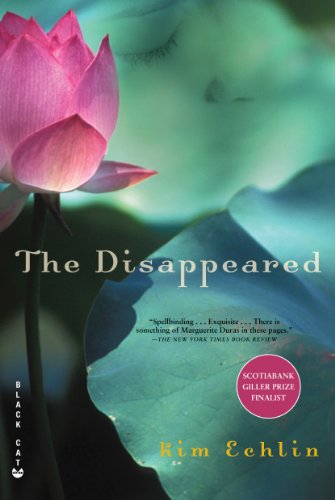
A fiercely beautiful love story for the ages, The Disappeared traces one woman’s three-decades-long journey from the peaceful streets of Montreal to the war-torn villages of Cambodia, as a brief affair turns into a grand passion of loss and remembrance, set against one of the most brutal genocides of our time. When sixteen-year-old Anne Greves first meets Serey, a Cambodian student forced to leave his country during the rise of the Khmer Rouge, she never considers the consequences of their complicated romance. Swept up in the infatuation of young love, Anne ignores her father’s wishes and embraces her relationship with Serey in Montreal’s smoky jazz clubs and in his cramped yellow bedroom. But when the borders of Cambodia are reopened, Serey must risk his life to return home in search of his family. A decade later, Anne will travel halfway around the world to find him, and to save their love from the same tragic forces that first brought them together. In aching, tender prose, Kim Echlin challenges our notions of how to both claim the past of move on after insufferable loss. Part elegy, part love letter, part call to arms, The Disappeared is a soaring tribute to those who have disappeared in the violent conflicts throughout history.
Die Inhaltsangabe kann sich auf eine andere Ausgabe dieses Titels beziehen.
Über die Autorin bzw. den Autor
Kim Echlin is the author of Dagmar's Daughter and Elephant Winter, which won the Torgi Talking Book of the Year Award and was short-listed for the Chapters/Books in Canada First Novel Award. She lives in Toronto.
Auszug. © Genehmigter Nachdruck. Alle Rechte vorbehalten.
The Disappeared
By KIM ECHLINBLACK CAT
Copyright © 2009 Kim EchlinAll right reserved.
ISBN: 978-0-8021-7066-8
Chapter One
Mau was a small man with a scar across his left cheek. I chose him at the Russian market from a crowd of drivers with soliciting eyes. They drove bicycles and tuk tuks, rickshaws and motos. A few had cars. They pushed in against me, trying to gain my eye, to separate me from the crowd.The light in Mau's eyes was a pinprick through black paper. He assessed and calculated. I chose him because when he stepped forward, the others fell back. I told him it might take many nights. I told him I needed to go to all the nightclubs of Phnom Penh. The light of his eyes twisted into mine. When I told him what I was doing, the pinprick opened and closed over a fleeting compassion. Then he named his price, which was high, and said, I can help you, borng srei.
Bones work their way to the surface. Thirty years have passed since that day in the market in Phnom Penh. I still hear your voice. I first met you in old Montreal at L'air du temps, where I went to hear Buddy Guy sing "I Can't Quit the Blues." I was sixteen, and it was Halloween night. Charlotte and her friends did not wear costumes, but I used the occasion to disguise my age by putting on a shiny red eye mask decorated at the temples with yellow and purple feathers. My long kinked hair was loose and I wore a ribbed black sweater, my widest jeans, leather boots. As soon as we were past the doorman, I pulled off my mask and I saw you looking at me. We took a round table close to the stage in the smoke-filled room. All through the first set I rolled cigarettes and passed them to the girls at my table and listened to Buddy Guy pleading the blues, eyebrows way up, eyes wide open, singing "Stone Crazy" and "No Lie," then squeezing his eyes shut he sang about homely-girl-love and begging-for-it-love, and I kept glancing over to see if you were looking at me.
I did not avoid your mud dark eyes. Between sets you stood, lifted your chair above your head and walked through the crowd toward me. You were slim and wiry and you wore a white T-shirt and faded jeans and your black hair was tied back at the nape of your neck. Your leather jacket was scuffed and your runners worn. You shifted sideways to let a tray go by and you said to the girls at my table, Can I join you? I brought my own seat.
The girls looked at each other and someone said yes and you put your chair in beside me, its back against the table. Charlotte said, You play in No Exit, I've seen you at the pub. What's your name?
Serey.
They poured you a beer from the pitcher and you talked in your soft voice to all of us. Asked, What are you studying? When you turned to me I had to say, I'm still in high school.
Charlotte said, I'm her Latin tutor. Her name is Anne Greves. You asked, Is Latin difficult? A girl across the table liked you and she said, I study Latin. You said you tutored math at the university. Said you'd seen them around, but not me.
Charlotte said, Her father teaches there and she doesn't want to be seen.
You smiled again and your front tooth had a half-moon chip and you said, Cool, in a strange accent of Quebec and English and something else I could not place.
The house lights went down. You leaned close and whispered, I want to touch your hair.
I did not say no or yes, but I felt the warm pressure of your palm against my skull. Then you put your elbows on the back of your chair.
You spoke with the mix of interest and inattention I was familiar with in men. Your excited eyes flickered to the stage, to the table you came from, to me. You wanted to know who was watching you. You wanted to see Buddy Guy and the horns and guitars up front. You wanted to watch me.
Years later you said, I remember watching you roll cigarettes with one hand. Fidgeting when the girls at your table talked. You seemed so free. I remember the light in your hair.
It was a time when young people from everywhere were driving Volkswagen buses through the mountains of Afghanistan and chanting in ashrams in India. But boys like you were not hippies or peaceniks or backpackers; colonized boys like you had always been sent abroad to study. You had been away for six years and you had learned to be at home in three languages, to navigate the manners and peculiarities of the West. Your education was mathematics and rock music. You knew functions and relations and your musician friends sang against war and had love-ins for peace. It was a time when young people believed the world could be borderless, like music. All this was naive, looking back. You were five years older, and you spoke a language I had never heard. And there was that animal feeling, the smell of your leather jacket, the quiver in my stomach, Buddy Guy's voice and your breath on my ear.
Years later you said, Do you remember in those days, the shock of an Asian guy with a white girl, or a black with white, or a French with English, all of us pretending nothing was forbidden? I never had the courage to ask a white girl until you, that night at L'air du temps.
Buddy Guy walked out for the last set in a green jacket that he took off while he played, hammering and pulling and bending strings with his left hand as he shook the right arm free, his right-hand fingers plucking and picking so he could shake off the left sleeve. His jacket fell to the floor and he grinned out at us when we clapped at his clowning. His mother had died that year and he said he was going to get a polka dot guitar in her honor but he did not have it yet. He played sounds he had heard other places and other times, horns and fiddles, concocting a New Orleans gumbo, a little of this, a little of that, paying homage to Muddy and B.B. and Junior. And then he got down to his own work. He sang about Lord-have-mercy-blues in "One Room Country Shack" and impatient love in "Just Playing My Axe," and with that great big charming smile he sang "Mary Had a Little Lamb," and about asking for a nickel from an angel and about strange feelings and broken hearts and, with a shake of his head, about women he could not please but we all knew he could please anyone, and I wished the lights would never come up. You put your muscled arm around my shoulder and pulled me close and you asked in a soft, soft voice, Can I take you home? A few people were dancing on the sides and you took my hand and pulled me up to dance too and you could sway at the hips but you had this way of moving your hands that was not rock and roll and not the blues but a small graceful bend backward in your wrist at the end of a beat.
Charlotte and the girls at my table were putting on their coats, pulling bags over their shoulders, flipping their long hair from inside warm collars like shirts flapping on a clothesline, and I said to them, See you.
We walked north on cobbled streets through the chill autumn air. You said, Would you like to come and see my band?
Maybe, I said. Where do you come from?
Cambodia.
Halloween revelers passed us, laughing and calling to each other in joual, hurrying through the darkness wrapped in black capes and devil masks and angel wings. Cambodia? I pulled my eye mask down.
You touched the feathers and said, Anne Greves, I like it here. Things are unimaginably free here.
I knew from that first walk home.
Outside my father's apartment on l'avenue du Parc I turned to face you and drew you under the iron staircase. You put your lips on my lips and I remember your eyes through the holes in my mask and the touch of your...
„Über diesen Titel“ kann sich auf eine andere Ausgabe dieses Titels beziehen.
Weitere beliebte Ausgaben desselben Titels

Suchergebnisse für Disappeared

Beispielbild für diese ISBN
The Disappeared
Anbieter: World of Books (was SecondSale), Montgomery, IL, USA
Verkäuferbewertung 5 von 5 Sternen

Zustand: Good. Item in good condition. Textbooks may not include supplemental items i.e. CDs, access codes etc. Artikel-Nr. 00036489826
Gebraucht kaufen
EUR 4,46
Versand gratis
Versand innerhalb von USA
Versand innerhalb von USA
Anzahl: 5 verfügbar
Beispielbild für diese ISBN
The Disappeared
Anbieter: ThriftBooks-Dallas, Dallas, TX, USA
Verkäuferbewertung 5 von 5 Sternen
Paperback. Zustand: Very Good. No Jacket. May have limited writing in cover pages. Pages are unmarked. ~ ThriftBooks: Read More, Spend Less. Artikel-Nr. G0802170668I4N00
Gebraucht kaufen
EUR 6,33
Versand gratis
Versand innerhalb von USA
Versand innerhalb von USA
Anzahl: 1 verfügbar
Beispielbild für diese ISBN
The Disappeared
Verlag:
Grove/Atlantic, Incorporated, 2009
ISBN 10: 0802170668
ISBN 13: 9780802170668
Gebraucht
Softcover
Anbieter: Better World Books, Mishawaka, IN, USA
Verkäuferbewertung 5 von 5 Sternen
Zustand: Very Good. Pages intact with possible writing/highlighting. Binding strong with minor wear. Dust jackets/supplements may not be included. Stock photo provided. Product includes identifying sticker. Better World Books: Buy Books. Do Good. Artikel-Nr. 3494299-6
Gebraucht kaufen
EUR 6,41
Versand gratis
Versand innerhalb von USA
Versand innerhalb von USA
Anzahl: 1 verfügbar
Beispielbild für diese ISBN
The Disappeared
Verlag:
Grove/Atlantic, Incorporated, 2009
ISBN 10: 0802170668
ISBN 13: 9780802170668
Gebraucht
Softcover
Anbieter: Better World Books, Mishawaka, IN, USA
Verkäuferbewertung 5 von 5 Sternen
Zustand: Good. Pages intact with minimal writing/highlighting. The binding may be loose and creased. Dust jackets/supplements are not included. Stock photo provided. Product includes identifying sticker. Better World Books: Buy Books. Do Good. Artikel-Nr. 5240962-75
Gebraucht kaufen
EUR 6,41
Versand gratis
Versand innerhalb von USA
Versand innerhalb von USA
Anzahl: 1 verfügbar
Beispielbild für diese ISBN
The Disappeared
Anbieter: Wonder Book, Frederick, MD, USA
Verkäuferbewertung 5 von 5 Sternen
Zustand: Very Good. Very Good condition. A copy that may have a few cosmetic defects. May also contain light spine creasing or a few markings such as an owner's name, short gifter's inscription or light stamp. Artikel-Nr. K10N-00012
Gebraucht kaufen
EUR 6,98
Versand gratis
Versand innerhalb von USA
Versand innerhalb von USA
Anzahl: 4 verfügbar
Beispielbild für diese ISBN
The Disappeared
Anbieter: AwesomeBooks, Wallingford, Vereinigtes Königreich
Verkäuferbewertung 5 von 5 Sternen
Paperback. Zustand: Very Good. The Disappeared This book is in very good condition and will be shipped within 24 hours of ordering. The cover may have some limited signs of wear but the pages are clean, intact and the spine remains undamaged. This book has clearly been well maintained and looked after thus far. Money back guarantee if you are not satisfied. See all our books here, order more than 1 book and get discounted shipping. Artikel-Nr. 7719-9780802170668
Gebraucht kaufen
EUR 12,84
EUR 5,77 Versand
Versand von Vereinigtes Königreich nach USA
Versand von Vereinigtes Königreich nach USA
Anzahl: 2 verfügbar
Beispielbild für diese ISBN
The Disappeared
Anbieter: Bahamut Media, Reading, Vereinigtes Königreich
Verkäuferbewertung 5 von 5 Sternen
Paperback. Zustand: Very Good. This book is in very good condition and will be shipped within 24 hours of ordering. The cover may have some limited signs of wear but the pages are clean, intact and the spine remains undamaged. This book has clearly been well maintained and looked after thus far. Money back guarantee if you are not satisfied. See all our books here, order more than 1 book and get discounted shipping. Artikel-Nr. 6545-9780802170668
Gebraucht kaufen
EUR 12,84
EUR 8,07 Versand
Versand von Vereinigtes Königreich nach USA
Versand von Vereinigtes Königreich nach USA
Anzahl: 2 verfügbar
Beispielbild für diese ISBN
The Disappeared
Anbieter: Revaluation Books, Exeter, Vereinigtes Königreich
Verkäuferbewertung 5 von 5 Sternen
Paperback. Zustand: Brand New. 224 pages. 8.00x5.50x0.75 inches. In Stock. Artikel-Nr. x-0802170668
Neu kaufen
EUR 19,21
EUR 11,56 Versand
Versand von Vereinigtes Königreich nach USA
Versand von Vereinigtes Königreich nach USA
Anzahl: 2 verfügbar
Beispielbild für diese ISBN
The Disappeared
Anbieter: Mooney's bookstore, Den Helder, Niederlande
Verkäuferbewertung 4 von 5 Sternen

Zustand: Very good. Artikel-Nr. E-9780802170668-2-2
Gebraucht kaufen
EUR 36,44
EUR 14,95 Versand
Versand von Niederlande nach USA
Versand von Niederlande nach USA
Anzahl: 1 verfügbar
Foto des Verkäufers
The Disappeared
Verlag:
GROVE PR BLACK CAT, 2009
ISBN 10: 0802170668
ISBN 13: 9780802170668
Neu
Kartoniert / Broschiert
Anbieter: moluna, Greven, Deutschland
Verkäuferbewertung 5 von 5 Sternen
Kartoniert / Broschiert. Zustand: New. Über den AutorrnrnKim Echlin is the author of Dagmar s Daughter and Elephant Winter, which won the Torgi Talking Book of the Year Award and was short-listed for the Chapters/Books in Canada First Novel Award. She lives in. Artikel-Nr. 898724993
Neu kaufen
EUR 18,55
EUR 48,99 Versand
Versand von Deutschland nach USA
Versand von Deutschland nach USA
Anzahl: Mehr als 20 verfügbar