
Verwandte Artikel zu Last Stone: A Masterpiece of Criminal Interrogation
Inhaltsangabe
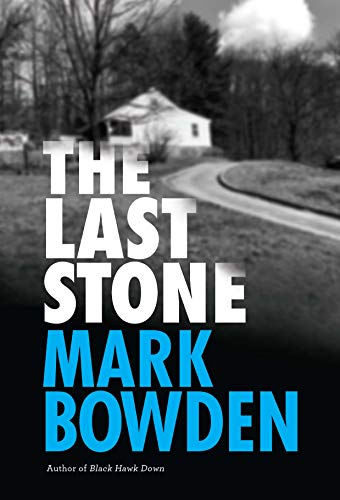
On March 29, 1975, sisters Katherine and Sheila Lyon, age 10 and 12, vanished from a shopping mall in suburban Washington, D.C. As shock spread, then grief, a massive police effort found nothing. The investigation was shelved, and mystery endured. Then, in 2013, a cold case squad detective found something he and a generation of detectives had missed. It pointed them toward a man named Lloyd Welch, then serving time for child molestation in Delaware.
As a cub reporter for a Baltimore newspaper, Mark Bowden covered the frantic first weeks of the story. In The Last Stone, he returns to write its ending. Over months of intense questioning and extensive investigation of Welch’s sprawling, sinister Appalachian clan, five skilled detectives learned to sift truth from determined lies. How do you get a compulsive liar with every reason in the world to lie to tell the truth? The Last Stone recounts a masterpiece of criminal interrogation, and delivers a chilling and unprecedented look inside a disturbing criminal mind.
Die Inhaltsangabe kann sich auf eine andere Ausgabe dieses Titels beziehen.
Über die Autorin bzw. den Autor
Mark Bowden is the author of thirteen books, including the #1 New York Times bestseller Black Hawk Down. He reported at the Philadelphia Inquirer for twenty years and now writes for the Atlantic, Vanity Fair, and other magazines. He is also the writer in residence at the University of Delaware. His most recent book is Hue 1968: A Turning Point of the American War in Vietnam.
Auszug. © Genehmigter Nachdruck. Alle Rechte vorbehalten.
The Last Stone
By Mark BowdenGrove Atlantic, Inc.
Copyright © 2019 Mark Bowden
All rights reserved.
ISBN: 978-0-8021-4730-1All rights reserved.
Contents
Cover,
Also by Mark Bowden,
Title Page,
Copyright,
Dedication,
Epigraph,
Map,
1: The First Lie,
2: Finding Lloyd,
3: In All "Honestly",
4: The Test,
5: Teddy,
6: One Hundred and One Percent the God's Honest Truth,
7: The Clan,
8: The Duffel Bag,
9: Wanna Get High?,
10: The Whole Thing from Beginning to End,
11: A Trick or the Truth?,
12: My Only Ace,
13: The Truth Is the Truth,
Acknowledgments,
Back Cover,
CHAPTER 1
The First Lie
April 1, 1975
Lloyd Welch got himself good and high before he went back to Wheaton Plaza on April Fools' Day. He was stoned enough not to listen when his stepmom, Edna, warned him, "Don't get mixed up in this."
But Lloyd was already mixed up in it, enough to scare him. He needed to do something, even if it meant running a big risk. The marijuana buzz, he figured, would soothe him and help him think straight. Such was his teenage logic.
Screwing up came naturally. He was a seventh-grade dropout with, at age eighteen, a pathetic whisper of a mustache. His long, thick dark brown hair was parted in the middle, strapped down with a headband. He was scrawny and acned and mean; life had treated him harshly, and it showed. And, man, could he talk. Lloyd was a con artist. Words tumbled from him pell-mell, as if their sheer number and urgency could persuade. Whatever was true in what he said came wrapped in slippery layers of guile.
The story Lloyd planned to tell that day concerned two little girls who had gone missing from Wheaton Plaza a week earlier — Sheila and Kate Lyon. Their disappearance had created a media storm. Every newspaper and TV and radio station between Richmond and Baltimore was reporting on the hunt. Children were on lockdown. The Lyon girls' father, John, was a local radio personality, and this gave the crisis even more notoriety. After a week, past the point where odds favored ever finding the girls alive, the police in Montgomery County, Maryland, were desperate. The public had flooded them with tips, none of which had helped. The girls had vanished. In the days since their disappearance, both had had birthdays; Sheila had turned thirteen, and Kate, on Easter Sunday, eleven. The heart of every parent ached.
The plaza was a Main Street of sorts for the suburban sprawl northwest of Washington, DC. An enormous cross-shaped structure that had opened eight years earlier, it had stores on both sides of two partly sheltered promenades. The longer of the two was anchored at its ends by the department stores Montgomery Ward and Woodward & Lothrop; it had a roof open to the sky along the center and was ornamented at intervals with bush-filled brick planters, the sides of which doubled as seating areas. Where the two promenades intersected was a square with a fountain and a modernist sculpture, then decorated for Easter. The mall's style was futuristic, with the long horizontal lines, sharp angles, and neon hues that artists and filmmakers associated with the space age. It was more than a place to shop; it was a social center, a place to see and be seen. Unlike traditional small towns, few of the residential communities that sprouted outside big cities in the 1950s had anything like a nucleus. So the mall filled a need beyond commerce, and like those being built in suburbs all over America, Wheaton Plaza was an immediate and enduring sensation. A towering sign above its vast parking lot spelled out its name, each huge black letter set in a giant orange ball that glowed at night. There were specialty shops, a three-screen cinema, a Peoples drugstore, and plenty of food outlets, including a Roy Rogers, an ice cream shop, and a popular pizza joint called the Orange Bowl. With schools out for spring break, unseasonably warm weather, and sunshine, the plaza was a magnet, especially for children.
Lloyd walked in by himself, looking for a security guard. His plan was to tell his story to a mall cop and leave, but he had a poor sense of situation. Any scrap of new intelligence about the Lyon sisters at that point was a very big deal. The mall cop immediately called the police. "Now I'm screwed," Lloyd thought. "My stepmom was right." Two detectives, Steve Hargrove and Mike Thilia, came promptly. Lloyd was taken to police headquarters, and as soon as a tape recorder was turned on, he did what he did best.
He told them he was twenty-two. He said he had finished high school. He had been at the mall with his wife, Helen. None of this was true. He had seen two little girls who fit the Lyon sisters' description — the same ages, blond hair, the elder one (Sheila) with glasses — talking in the mall to an older man with a tape recorder. All of this was unremarkable; pictures of the girls had been everywhere, on TV, in newspapers, and on telephone poles — the police had posted thousands of leaflets. The unknown "tape recorder man" had been widely reported as the prime suspect. Lloyd offered a detailed description: hair gray around the ears, black and thick on top; a dark, stubbly face — "like a heavy shaver" — about six one, six two; wearing a brown suit, white shirt, and black tie; and carrying a brown briefcase that held the portable recorder. He said he'd overheard the man explaining to the girls that he recorded people's voices and then put them on the radio. This same story had been in all the news reports and was known by just about everyone breathing within a radius of two hundred miles. Lloyd said he later saw both girls leaving the mall with the man and had seen them again outside as they drove off.
"All right, let me ask you a couple of questions before we get to the second time you saw him," said Hargrove. "What brought your attention to the man and the little girls in the first place?"
"Well, because an older man talking to two small girls, just walk up and talk to them, the girls wouldn't know exactly what to say if he was asking some kind of questions," Lloyd said, words spilling out awkwardly. "And the girls looked pretty young, [one] about twelve, the other ten, a little younger than that maybe. I'm not sure how old they were, because I didn't see their face[s], and they just caught my attention when he said he was putting them on the air, and he looked pretty old to be talking to someone that young"— as if it were uncommon for adults to speak with children.
"Did he appear to be alone?"
"Yes, he was alone."
"Working by himself?"
"Right, until he started talking to those two girls."
Lloyd said he saw the man pull the tape recorder out and show it to the girls, and that he himself watched them for five or ten minutes, which is a long time to sit and watch three strangers.
"I was sitting down at the time because I was walking around so much I was tired, and I sat down and that's when I saw him talking to them." He said he had been walking around the mall applying for jobs.
"Did you hear him ask the girls any specific questions?" Hargrove asked.
"Not at the time I was there, no. I didn't hear that."
"Did you hear the girls say anything?"
"One of the girls laughed, you know. Giggled, like."
"Which one? The taller one?"
"The taller one."
Lloyd was a fount of particulars about the girls' departure.
"I came through the Peoples drugstore, and he was standing there, and they were getting ready to cross...
„Über diesen Titel“ kann sich auf eine andere Ausgabe dieses Titels beziehen.
Suchergebnisse für Last Stone: A Masterpiece of Criminal Interrogation

Beispielbild für diese ISBN
The Last Stone: A Masterpiece of Criminal Interrogation
Anbieter: World of Books (was SecondSale), Montgomery, IL, USA
Verkäuferbewertung 5 von 5 Sternen

Hardback. Zustand: Good. The true story of a cold case, a compulsive liar, and five determined detectives, from the number-one New York Times best-selling author and master journalist (The Wall Street Journal). On March 29, 1975, sisters Katherine and Sheila Lyons, ages 10 and 12, vanished from a shopping mall in suburban Washington, DC. As shock spread, then grief, a massive police effort found nothing. The investigation was shelved, and the mystery endured. Then, in 2013, a cold case squad detective found something he and a generation of detectives had missed. It pointed them toward a man named Lloyd Welch, then serving time for child molestation in Delaware. The acclaimed author of Black Hawk Down and Hue 1968 had been a cub reporter for a Baltimore newspaper at the time of the original disappearance, and covered the frantic first weeks of the story. In The Last Stone, he returns to write its ending. Over months of intense questioning and extensive investigation of Welch's sprawling, sinister Appalachian clan, five skilled detectives learned to sift truth from determined lies. How do you get a compulsive liar with every reason in the world to lie to tell the truth? The Last Stone recounts a masterpiece of criminal interrogation, and delivers a chilling and unprecedented look inside a disturbing criminal mind. Artikel-Nr. 00099726931
Gebraucht kaufen
EUR 3,99
Versand gratis
Versand innerhalb von USA
Versand innerhalb von USA
Anzahl: 9 verfügbar
Beispielbild für diese ISBN
The Last Stone: A Masterpiece of Criminal Interrogation
Anbieter: World of Books (was SecondSale), Montgomery, IL, USA
Verkäuferbewertung 5 von 5 Sternen
Hardback. Zustand: Very Good. The true story of a cold case, a compulsive liar, and five determined detectives, from the number-one New York Times best-selling author and master journalist (The Wall Street Journal). On March 29, 1975, sisters Katherine and Sheila Lyons, ages 10 and 12, vanished from a shopping mall in suburban Washington, DC. As shock spread, then grief, a massive police effort found nothing. The investigation was shelved, and the mystery endured. Then, in 2013, a cold case squad detective found something he and a generation of detectives had missed. It pointed them toward a man named Lloyd Welch, then serving time for child molestation in Delaware. The acclaimed author of Black Hawk Down and Hue 1968 had been a cub reporter for a Baltimore newspaper at the time of the original disappearance, and covered the frantic first weeks of the story. In The Last Stone, he returns to write its ending. Over months of intense questioning and extensive investigation of Welch's sprawling, sinister Appalachian clan, five skilled detectives learned to sift truth from determined lies. How do you get a compulsive liar with every reason in the world to lie to tell the truth? The Last Stone recounts a masterpiece of criminal interrogation, and delivers a chilling and unprecedented look inside a disturbing criminal mind. Artikel-Nr. 00107894105
Gebraucht kaufen
EUR 3,99
Versand gratis
Versand innerhalb von USA
Versand innerhalb von USA
Anzahl: 2 verfügbar
Foto des Verkäufers
The Last Stone: A Masterpiece of Criminal Interrogation
Anbieter: Dream Books Co., Denver, CO, USA
Verkäuferbewertung 5 von 5 Sternen
Zustand: good. Gently used with minimal wear on the corners and cover. A few pages may contain light highlighting or writing, but the text remains fully legible. Dust jacket may be missing, and supplemental materials like CDs or codes may not be included. May be ex-library with library markings. Ships promptly! Artikel-Nr. DBV.0802147305.G
Gebraucht kaufen
EUR 4,00
Versand gratis
Versand innerhalb von USA
Versand innerhalb von USA
Anzahl: 1 verfügbar
Beispielbild für diese ISBN
The Last Stone: A Masterpiece of Criminal Interrogation
Verlag:
Atlantic Monthly Press (edition First Edition), 2019
ISBN 10: 0802147305
ISBN 13: 9780802147301
Gebraucht
Hardcover
Erstausgabe
Anbieter: BooksRun, Philadelphia, PA, USA
Verkäuferbewertung 5 von 5 Sternen
Hardcover. Zustand: Very Good. First Edition. With dust jacket. It's a well-cared-for item that has seen limited use. The item may show minor signs of wear. All the text is legible, with all pages included. It may have slight markings and/or highlighting. Artikel-Nr. 0802147305-11-1-29
Gebraucht kaufen
EUR 5,72
Versand gratis
Versand innerhalb von USA
Versand innerhalb von USA
Anzahl: 1 verfügbar
Beispielbild für diese ISBN
The Last Stone: A Masterpiece of Criminal Interrogation
Anbieter: ThriftBooks-Phoenix, Phoenix, AZ, USA
Verkäuferbewertung 5 von 5 Sternen
Hardcover. Zustand: Good. No Jacket. Former library book; Pages can have notes/highlighting. Spine may show signs of wear. ~ ThriftBooks: Read More, Spend Less. Artikel-Nr. G0802147305I3N10
Gebraucht kaufen
EUR 5,93
Versand gratis
Versand innerhalb von USA
Versand innerhalb von USA
Anzahl: 1 verfügbar
Beispielbild für diese ISBN
The Last Stone: A Masterpiece of Criminal Interrogation
Anbieter: ThriftBooks-Dallas, Dallas, TX, USA
Verkäuferbewertung 5 von 5 Sternen
Hardcover. Zustand: Good. No Jacket. Pages can have notes/highlighting. Spine may show signs of wear. ~ ThriftBooks: Read More, Spend Less. Artikel-Nr. G0802147305I3N00
Gebraucht kaufen
EUR 6,03
Versand gratis
Versand innerhalb von USA
Versand innerhalb von USA
Anzahl: 1 verfügbar
Beispielbild für diese ISBN
The Last Stone: A Masterpiece of Criminal Interrogation
Anbieter: ThriftBooks-Atlanta, AUSTELL, GA, USA
Verkäuferbewertung 5 von 5 Sternen
Hardcover. Zustand: Good. No Jacket. Former library book; Pages can have notes/highlighting. Spine may show signs of wear. ~ ThriftBooks: Read More, Spend Less. Artikel-Nr. G0802147305I3N10
Gebraucht kaufen
EUR 6,03
Versand gratis
Versand innerhalb von USA
Versand innerhalb von USA
Anzahl: 1 verfügbar
Beispielbild für diese ISBN
The Last Stone: A Masterpiece of Criminal Interrogation
Anbieter: ThriftBooks-Atlanta, AUSTELL, GA, USA
Verkäuferbewertung 5 von 5 Sternen
Hardcover. Zustand: Very Good. No Jacket. Former library book; May have limited writing in cover pages. Pages are unmarked. ~ ThriftBooks: Read More, Spend Less. Artikel-Nr. G0802147305I4N10
Gebraucht kaufen
EUR 6,03
Versand gratis
Versand innerhalb von USA
Versand innerhalb von USA
Anzahl: 1 verfügbar
Beispielbild für diese ISBN
The Last Stone: A Masterpiece of Criminal Interrogation
Anbieter: ThriftBooks-Atlanta, AUSTELL, GA, USA
Verkäuferbewertung 5 von 5 Sternen
Hardcover. Zustand: Good. No Jacket. Pages can have notes/highlighting. Spine may show signs of wear. ~ ThriftBooks: Read More, Spend Less. Artikel-Nr. G0802147305I3N00
Gebraucht kaufen
EUR 6,03
Versand gratis
Versand innerhalb von USA
Versand innerhalb von USA
Anzahl: 1 verfügbar
Beispielbild für diese ISBN
The Last Stone : A Masterpiece of Criminal Interrogation
Verlag:
Grove/Atlantic, Incorporated, 2019
ISBN 10: 0802147305
ISBN 13: 9780802147301
Gebraucht
Hardcover
Anbieter: Better World Books, Mishawaka, IN, USA
Verkäuferbewertung 5 von 5 Sternen
Zustand: Good. Former library copy. Pages intact with minimal writing/highlighting. The binding may be loose and creased. Dust jackets/supplements are not included. Includes library markings. Stock photo provided. Product includes identifying sticker. Better World Books: Buy Books. Do Good. Artikel-Nr. 16223697-75
Gebraucht kaufen
EUR 6,25
Versand gratis
Versand innerhalb von USA
Versand innerhalb von USA
Anzahl: 4 verfügbar