
Inhaltsangabe
Taut, spare, and compellingly readable, The Good Doctor is a brilliant literary high-wire act short enough to be devoured in one or two sittings. When Laurence Waters arrives at the small rural hospital in a South African homeland where Frank works, Frank is immediately suspicious. Everything about Laurence grates on Frank, from his smoking in their shared room, to his unfamiliar optimism about what the doctors can truly accomplish among the local populationbut Laurence seems oblivious, immediately and repeatedly declaring Frank his friend despite the other's indifference. Frank originally came to the hospital to get his bearings after his wife left him for his best friendbut denial of the higher-level post he was promised when he came, and the disillusionment of working at a completely ineffectual hospital (it’s always deserted, an entire wing closed off and gradually being looted of any reusable equipment lacks basic supplies), has hardened him into cynical apathywhich makes Laurence’s optimism all the more irritating.
Laurence starts planning a campaign to bring the hospital to the people,” by running clinics in nearby villages. A group of soldiers have arrived in the village, reportedly looking for holes in the border where smuggling has become rampant. Then Laurence’s African-American girlfriend Zanele, who has adopted an African name and dress, and who shares his political idealism (but not much actual intimacy, it seems) comes to visit, and Laurence and Frank host a party. During the flush of drunkenness the tensions between the staff melt away (the Cuban couple estranged by Frank having had an affair with the woman; the strained power relations between Frank and the other doctors and Tehogo, the young black African man who works as the caretaker and unlicensed nurse). But in the aftermath of the party this quickly melts awayespecially when Frank goes to return the cassettes Tehogo lent him for the party, and accidentally discovers a cache of looted metal fittings from the hospital in Tehogo’s room. Finally, Laurence talks Frank into spending an evening with Zanele while he is on dutywhich ends in a bizarre encounter with an apartheid-era local despot and a furtive sexual union with Zanele. Frank is understandably relieved that a few days later an appointment to see his estranged wife to sign divorce papers allows him a chance to get away.
When Frank returns, Laurence meets him by telling him everything’s changed. Laurence has ignored Frank’s wish not to report Tehogo’s theft, and in so doing has revealed that Frank was the one who discovered it. The clinic has become a huge public relations coup, raising awareness and goodwill toward the hospital though its capacities are no better than before, and everyone but Frank seems swept up in its success. And a secret Frank has been keeping from Laurence since their first day of friendshipthe married poor black woman Frank has been sleeping with off and on for years, sometimes for moneycomes to light, in a way, when the woman comes to Laurence at the end of the clinic to tell him she needs an abortion, and that it must be done at her home. Enjoying Laurence’s discomfort with this moral dilemma, Frank does not help with the procedure and when he guiltily goes to check on the patient the next night, she and the shack where she lived, where he would go to meet her, are gone. Meanwhile Tehogo has more or less completely stopped coming in to work. Convinced that his affair’s husband is somehow linked to the former despot and to a rash of recent robberies because of his white car, Frank tips the colonel leading the group of soldiersa brutal Afrikaner under whom, as a conscript, Frank had been forced to help torture black informants before the end of apartheidas to where he thinks the despot’s encampment is hiding. Soon after, a soldier turns up with Tehogo, vitally wounded from a gunshot. As Frank tends to the wound obsessively to assuage his guilt at po
Laurence starts planning a campaign to bring the hospital to the people,” by running clinics in nearby villages. A group of soldiers have arrived in the village, reportedly looking for holes in the border where smuggling has become rampant. Then Laurence’s African-American girlfriend Zanele, who has adopted an African name and dress, and who shares his political idealism (but not much actual intimacy, it seems) comes to visit, and Laurence and Frank host a party. During the flush of drunkenness the tensions between the staff melt away (the Cuban couple estranged by Frank having had an affair with the woman; the strained power relations between Frank and the other doctors and Tehogo, the young black African man who works as the caretaker and unlicensed nurse). But in the aftermath of the party this quickly melts awayespecially when Frank goes to return the cassettes Tehogo lent him for the party, and accidentally discovers a cache of looted metal fittings from the hospital in Tehogo’s room. Finally, Laurence talks Frank into spending an evening with Zanele while he is on dutywhich ends in a bizarre encounter with an apartheid-era local despot and a furtive sexual union with Zanele. Frank is understandably relieved that a few days later an appointment to see his estranged wife to sign divorce papers allows him a chance to get away.
When Frank returns, Laurence meets him by telling him everything’s changed. Laurence has ignored Frank’s wish not to report Tehogo’s theft, and in so doing has revealed that Frank was the one who discovered it. The clinic has become a huge public relations coup, raising awareness and goodwill toward the hospital though its capacities are no better than before, and everyone but Frank seems swept up in its success. And a secret Frank has been keeping from Laurence since their first day of friendshipthe married poor black woman Frank has been sleeping with off and on for years, sometimes for moneycomes to light, in a way, when the woman comes to Laurence at the end of the clinic to tell him she needs an abortion, and that it must be done at her home. Enjoying Laurence’s discomfort with this moral dilemma, Frank does not help with the procedure and when he guiltily goes to check on the patient the next night, she and the shack where she lived, where he would go to meet her, are gone. Meanwhile Tehogo has more or less completely stopped coming in to work. Convinced that his affair’s husband is somehow linked to the former despot and to a rash of recent robberies because of his white car, Frank tips the colonel leading the group of soldiersa brutal Afrikaner under whom, as a conscript, Frank had been forced to help torture black informants before the end of apartheidas to where he thinks the despot’s encampment is hiding. Soon after, a soldier turns up with Tehogo, vitally wounded from a gunshot. As Frank tends to the wound obsessively to assuage his guilt at po
Die Inhaltsangabe kann sich auf eine andere Ausgabe dieses Titels beziehen.
Von der hinteren Coverseite
When Laurence Waters arrives at his rural hospital posting in a former homeland of the new South Africa, Frank, a fellow doctor there, is instantly suspicious. Laurence is everything Frank is not - young, optimistic, and full of new schemes. The two become uneasy friends, while the rest of the meagre staff in the deserted hospital view Laurence with a mixture of awe and mistrust.
The tired, ghostly town beyond the hospital is also coping with new arrivals, and the return of old faces. The Brigadier, a self-fashioned dictator from apartheid days, is rumoured to be still alive. And down at Mama's Place, the town's only watering hole, a group of soldiers have moved in with their malign commandant, a man Frank has met before and is keen to avoid for his own dark reasons. Laurence wants to help - but in a world where the past is demanding restitution from the present, his ill-starred idealism cannot last.
Auszug. © Genehmigter Nachdruck. Alle Rechte vorbehalten.
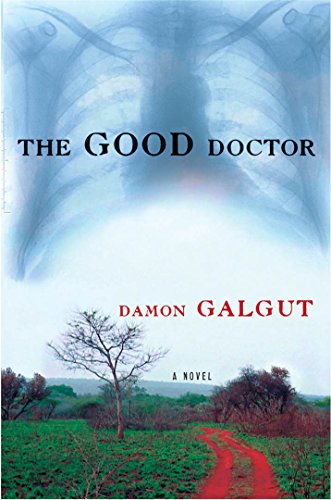
The Good Doctor
By Damon GalgutGrove Press
Copyright © 2004 Damon GalgutAll right reserved.
ISBN: 9780802141699
Chapter One
The first time I saw him I thought, he won’t last.
I was sitting in the office in the late afternoon and he appeared suddenly in the doorway, carrying a suitcase in one hand and wearing plain clothes – jeans and a brown shirt – with his white coat on top. He looked young and lost and a bit bewildered, but that wasn’t why I thought what I did. It was because of something else, something I could see in his face.
He said, ‘Hello…? Is this the hospital?’
His voice was unexpectedly deep for somebody so tall and thin.
‘Come in,’ I said. ‘Put down your bag.’
He came in, but he didn’t put down the bag. He held it close while he looked around at the pink walls, the empty chairs, the dusty desk in the corner, the frail plants wilting in their pots. I could see that he thought there’d been some kind of mistake. I felt sorry for him.
‘I’m Frank Eloff,’ I said.
‘I’m Laurence Waters.’
‘I know.’
‘You know...?’
He seemed amazed that we should be expecting him, though he’d been sending faxes for days already, announcing his arrival.
‘We’re sharing a room,’ I told him. ‘Let me take you over.’
The room was in a separate wing. We had to cross an open space of ground, close to the parking lot. When he came in he must have walked this way, but now he looked at the path through the long grass, the ragged trees overhead dropping their burden of leaves, as if he’d never seen them before.
We went down the long passage to the room. I’d lived and slept alone in here until today. Two beds, a cupboard, a small carpet, a print on one wall, a mirror, a green sofa, a low coffee table made of synthetic wood, a lamp. It was all basic standard issue. The few occupied rooms all looked the same, as in some featureless bleak hotel. The only trace of individuality was in the configuration of the furniture, but I’d never bothered to shift mine around till two days ago, when an extra bed had been brought in. I also hadn’t added anything. There was no personality in the ugly, austere furniture; against this neutral backdrop, even a piece of cloth would have been revealing.
‘You can take that bed,’ I said. ‘There’s space in the cupboard. The bathroom’s through that door.’
‘Oh. Yes. Okay.’ But he still didn’t put down his bag.
I’d only heard two weeks before that I would have to share a room. Dr Ngema had called me in. I wasn’t happy, but I didn’t refuse. And in the days that followed I came around, in spite of myself, to the idea of sharing. It might not be so bad. We might get on well, it might be good to have company, my life here could be pleasantly different. So in a way I started looking forward with curiosity to this change. And before he arrived I did a few things to make him welcome. I put the new bed under the window and made it up with fresh linen. I cleared a few shelves in the cupboard. I swept and cleaned, which is something I don’t do very often.
But room was ugly and bare. And Laurence Waters didn’t look to me like the person I’d pictured in my head. I now that he was standing here I could see, through his eyes, how invisible that effort was. The don’t know what I’d imagined, but it wasn’t this bland, biscuit-coloured young man, almost a boy still, who was at last putting his suitcase down.
He took his glasses off and rubbed them on his sleeve. He put them on again and said wearily, ‘I don’t understand.’
‘What?’
‘This whole place.’
‘The hospital?’
‘Not just the hospital. I mean...’ He waved a hand to indicate the world out there. He meant the town outside the hospital walls.
‘You asked to come here.’
‘But I didn’t know that it would be like this. Why?’ he said with sudden intensity. ‘I don’t understand.’
‘We can talk about it later. But I’m on duty now, I have to go back to the office.’
‘I must see Dr Ngema,’ he said abruptly. ‘She’s expecting me.’
‘Don’t worry about that now. You can do it in the morning. No hurry.’
‘What should I do now?’
‘Whatever you like. Unpack, settle in. Or come and sit with me. I’ll be finished in a couple of hours.’
I left him alone and went back. He was shocked and depressed. I understood that; I’d felt it myself when I first arrived. You came expecting one thing and were met by something else completely.
You came expecting a busy modern hospital – rural maybe, and small, but full of activity – in a town where things were happening. This was the capital of what used to be one of the homelands, so whatever the morality of the politics that gave rise to it, you expected a place full of administration and movement, people coming and going. And when you’d turned off the main route to the border and were coming in on the one minor road that led here, it might still look – when you saw the place from a distance – like what you’d expected. There was the main street, leading to the centre where the fountain and the statue stood, the shop-fronts and pavements and streetlights, and all the buildings beyond. It looked neat and calibrated and exact. Not a bad place to be.
And then you arrived and you saw. Maybe the first clue was a disturbing detail; a crack that ran through an otherwise pristine wall, or a set of broken windows in an office you passed. Or the fact that the fountain was dry and full of old sand at the bottom. And you slowed down, looking around you with vague anxiety, and suddenly it all came into clear focus. The weeds in the joints of the pavements and bricks, the grass growing at places in the street, the fused lamps and the empty shops behind their blank glass fronts and the mildew and damp and blistered paint and the marks of rain on every surface and the slow tumbling down of solid structures, sometimes grain by grain, sometimes in pieces. And you were not sure any more of where you were.
And there were no people. That was the last thing you noticed, though you realized then that it was the first thing to give you that uneasy hollow feeling: the place was deserted. There was, yes, a car cruising slowly down a back road, an official uniform or two ambling along a pavement, and maybe a figure slouching on a footpath through an overgrown plot of land, but mostly the space was empty. Uninhabited. No human chaos, no movement.
A ghost town.
‘It’s like something terrible happened here,’ Laurence said. ‘That’s how it feels.’
‘Ja, but the opposite is true. Nothing has ever happened here. Nothing ever will. That’s the problem.’
Continues...
Excerpted from The Good Doctorby Damon Galgut Copyright © 2004 by Damon Galgut. Excerpted by permission.
All rights reserved. No part of this excerpt may be reproduced or reprinted without permission in writing from the...
„Über diesen Titel“ kann sich auf eine andere Ausgabe dieses Titels beziehen.
Weitere beliebte Ausgaben desselben Titels

Suchergebnisse für The Good Doctor

Beispielbild für diese ISBN
The Good Doctor: A Novel
Anbieter: World of Books (was SecondSale), Montgomery, IL, USA
Verkäuferbewertung 5 von 5 Sternen

Zustand: Good. Item in good condition. Textbooks may not include supplemental items i.e. CDs, access codes etc. Artikel-Nr. 00106068611
Gebraucht kaufen
EUR 6,67
Versand gratis
Versand innerhalb von USA
Versand innerhalb von USA
Anzahl: 1 verfügbar
Beispielbild für diese ISBN
The Good Doctor: A Novel
Anbieter: World of Books (was SecondSale), Montgomery, IL, USA
Verkäuferbewertung 5 von 5 Sternen
Zustand: Very Good. Item in very good condition! Textbooks may not include supplemental items i.e. CDs, access codes etc. Artikel-Nr. 00104318515
Gebraucht kaufen
EUR 6,67
Versand gratis
Versand innerhalb von USA
Versand innerhalb von USA
Anzahl: 1 verfügbar
Beispielbild für diese ISBN
The Good Doctor
Verlag:
Grove/Atlantic, Incorporated, 2004
ISBN 10: 0802141692
ISBN 13: 9780802141699
Gebraucht
Softcover
Anbieter: Better World Books, Mishawaka, IN, USA
Verkäuferbewertung 5 von 5 Sternen
Zustand: Very Good. 1 Edition. Former library copy. Pages intact with possible writing/highlighting. Binding strong with minor wear. Dust jackets/supplements may not be included. Includes library markings. Stock photo provided. Product includes identifying sticker. Better World Books: Buy Books. Do Good. Artikel-Nr. 12413268-75
Gebraucht kaufen
EUR 6,68
Versand gratis
Versand innerhalb von USA
Versand innerhalb von USA
Anzahl: 1 verfügbar
Beispielbild für diese ISBN
The Good Doctor: A Novel
Anbieter: Wonder Book, Frederick, MD, USA
Verkäuferbewertung 5 von 5 Sternen
Zustand: Good. Good condition. A copy that has been read but remains intact. May contain markings such as bookplates, stamps, limited notes and highlighting, or a few light stains. Artikel-Nr. F09B-03462
Gebraucht kaufen
EUR 6,76
Versand gratis
Versand innerhalb von USA
Versand innerhalb von USA
Anzahl: 1 verfügbar
Beispielbild für diese ISBN
The Good Doctor
Verlag:
Grove/Atlantic, Incorporated, 2004
ISBN 10: 0802141692
ISBN 13: 9780802141699
Gebraucht
Softcover
Anbieter: Better World Books: West, Reno, NV, USA
Verkäuferbewertung 5 von 5 Sternen
Zustand: Very Good. 1 Edition. Pages intact with possible writing/highlighting. Binding strong with minor wear. Dust jackets/supplements may not be included. Stock photo provided. Product includes identifying sticker. Better World Books: Buy Books. Do Good. Artikel-Nr. 4129221-6
Gebraucht kaufen
EUR 6,89
Versand gratis
Versand innerhalb von USA
Versand innerhalb von USA
Anzahl: 1 verfügbar
Beispielbild für diese ISBN
The Good Doctor
Anbieter: ThriftBooks-Dallas, Dallas, TX, USA
Verkäuferbewertung 5 von 5 Sternen
Paperback. Zustand: Fair. No Jacket. Readable copy. Pages may have considerable notes/highlighting. ~ ThriftBooks: Read More, Spend Less. Artikel-Nr. G0802141692I5N00
Gebraucht kaufen
EUR 8,86
Versand gratis
Versand innerhalb von USA
Versand innerhalb von USA
Anzahl: 1 verfügbar
Beispielbild für diese ISBN
The Good Doctor
Anbieter: ThriftBooks-Dallas, Dallas, TX, USA
Verkäuferbewertung 5 von 5 Sternen
Paperback. Zustand: Good. No Jacket. Pages can have notes/highlighting. Spine may show signs of wear. ~ ThriftBooks: Read More, Spend Less. Artikel-Nr. G0802141692I3N00
Gebraucht kaufen
EUR 8,86
Versand gratis
Versand innerhalb von USA
Versand innerhalb von USA
Anzahl: 1 verfügbar
Beispielbild für diese ISBN
The Good Doctor
Anbieter: ThriftBooks-Phoenix, Phoenix, AZ, USA
Verkäuferbewertung 5 von 5 Sternen
Paperback. Zustand: Good. No Jacket. Pages can have notes/highlighting. Spine may show signs of wear. ~ ThriftBooks: Read More, Spend Less. Artikel-Nr. G0802141692I3N00
Gebraucht kaufen
EUR 8,86
Versand gratis
Versand innerhalb von USA
Versand innerhalb von USA
Anzahl: 1 verfügbar
Beispielbild für diese ISBN
The Good Doctor
Anbieter: ThriftBooks-Dallas, Dallas, TX, USA
Verkäuferbewertung 5 von 5 Sternen
Paperback. Zustand: Good. No Jacket. Former library book; Pages can have notes/highlighting. Spine may show signs of wear. ~ ThriftBooks: Read More, Spend Less. Artikel-Nr. G0802141692I3N10
Gebraucht kaufen
EUR 8,86
Versand gratis
Versand innerhalb von USA
Versand innerhalb von USA
Anzahl: 1 verfügbar
Foto des Verkäufers
The Good Doctor
Anbieter: The Haunted Bookshop, LLC, Iowa City, IA, USA
Verkäuferbewertung 5 von 5 Sternen
Paperback. Zustand: Good. Artikel-Nr. 00091248
Gebraucht kaufen
EUR 5,42
EUR 4,82 Versand
Versand innerhalb von USA
Versand innerhalb von USA
Anzahl: 1 verfügbar