
Verwandte Artikel zu Italian Neighbors
Inhaltsangabe
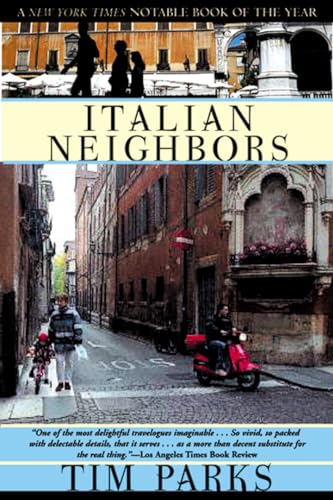
A New York Times Notable Book of the Year: A deliciously entertaining account of expatriate life in a small village just outside Verona, Italy.
Tim Parks is anything but a gentleman in Verona. So after ten years of living with his Italian wife, Rita, in a typical provincial Italian neighborhood, the novelist found that he had inadvertently collected a gallery full of splendid characters. In this wittily observed account, Parks introduces readers to his home town, with a statue of the Virgin at one end of the street, a derelict bottle factory at the other, and a wealth of exotic flora and fauna in between.
Via Colombare, the village's main street, offers an exemplary hodgepodge of all that is new and old in the bel paese, a point of collision between invading suburbia and diehard peasant tradition. It is a world of creeping vines, stuccoed walls, shotguns, security cameras, hypochondria, and expensive sports cars. More than a mere travelogue, Italian Neighbors is a vivid portrait of the real Italy and a compelling story of how even the most foreign people and places gradually assume the familiarity of home.
"One of the most delightful travelogues imaginable . . . so vivid, so packed with delectable details." —Los Angeles Times Book Review
Die Inhaltsangabe kann sich auf eine andere Ausgabe dieses Titels beziehen.
Über die Autorin bzw. den Autor
Tim Parks is the author of fifteen works of fiction and nonfiction including Europa, which was shortlisted for the Booker Prize, Italian Education, and A Season with Verona.
Auszug. © Genehmigter Nachdruck. Alle Rechte vorbehalten.
Italian Neighbors
By Tim ParksGrove Atlantic, Inc.
Copyright © 1992 Tim Parks
All rights reserved.
ISBN: 978-0-8021-4034-0All rights reserved.
CHAPTER 1
AFA
HOW TO FORGET THE DAY we arrived in Montecchio? How to even begin to describe the weather to someone who has not been in the Veneto in July? For the weather must surely have played its part in how things went.
We're not talking about heat, really. Or that's only part of the problem. The temperature is maybe only 88 or 90, which is not impossibly hot. One has managed with 95 and more on beaches down south or in the mountains. But there is no sunshine with this heat today, no blue sky, no color, no air. Above you — and it doesn't seem very far above you either — is a uniform, oppressive, at once damp and gritty grayness, the sun only a suspicion somewhere, a blond thumbprint, a smudge. Nor is there the slightest inkling that this strange, simmering, spongy atmosphere is going to roll itself up into some kind of raincloud or liberating storm. There's not a breath, not a whisper of wind.
You don't notice it perhaps in the town, but as you leave Verona, heading east, you suddenly become aware how miserable visibility is. The hills immediately to the north whose cherry blossoms you enjoyed so much in spring, the toothy peaks of the Alps which were so dramatic in sharp and slanting winter light, have all disappeared. Perhaps you're not seeing more than a couple of miles. And if — and God forbid — you were to turn south into the Bassa Padana itself, Po-bound across the open plain, you might well find, beyond Nogarole Rocca, toward Mantua, a sort of brilliant gray heat fog, so dense the world will seem a haze and the other cars ghosts, and the vines and fruit trees and towering maize and tobacco plants one vast steaming minestrone of a landscape....
But we are going to Montecchio, which, like Verona itself, lies at the foot of those first now invisible hills that mark the beginning of the long climb up to the Alps. And curiously it is the Alps, one is always told, which are one of the guilty parties as far as this weather is concerned. But only in the sense that they shut out the merciful winds that might otherwise blow away everything that makes the atmosphere in the plain so unpleasant: the slow accumulation of exhaust fumes, the exhalations of a thousand pig and chicken factories, and the abundant insecticides that hover and mingle in the stale air over what otherwise, or in other weather, would be scenes of exquisite beauty.
The local name for the whole phenomenon is afa — or lo smog (pronounced "zzzmog"). One picks one's shirt away from armpits and feels uncomfortable about the crotch. The only thing close to it in British terms perhaps is a packed Friday-afternoon rush hour on bus or train when the Standard has taken up half its front page to tell you WHAT A SIZZLER!
But just at the moment we are traveling behind the rusty white Fiat 127 of our future padrona di casa. We are going to see and, we hope, move into a 1200-square-foot flat in the outlying village of Montecchio. Hence our own car, an aging tangerine Volkswagen Passat, is loaded to the stops with all our worldly belongings; the trunk is held down by shotcord over piles of boxes, the handlebar of one of our bicycles is creeping down the windshield.
Across the toneless, almost invisible countryside, the narrow road is flanked by low cement walls, deep flood emergency dikes, dusty poplars, cypresses, vines. We pass an occasional peasant figure, broad-butted on his puttering motorino, helmetless, cigarette in the corner of his mouth. Or it might be a woman, shopping bag between fat knees, kerchief tight on gray hair, monumental somehow despite precarious movement, the face so grimly set. Other vehicles our cautious guide chooses to overtake are a tractor with an aging dog balancing on the mudguard and a three-wheeled furgoncino, a sort of motorized wheelbarrow with tiny cabin, handlebar drive, and a pile of scrap metal rattling perilously behind. Meanwhile we ourselves are overtaken by bikes so white and fast my side mirror doesn't appear to register them, space-suited riders flashing into the distance, and then of course the usual chase of black or metallic Mercedeses, Alfas, Lancias, BMWs. It was a traffic mix, a social mix, with which one was to become familiar.
Perhaps ten minutes out of town, without any noticeable change of speed, we find we are in a built-up area again; first a loose alignment of stuccoed houses, then the broad open space of Montecchio's main, Montecchio's only real piazza: small shops, tall cedars in two patches of scrubby green, a gas pump with a weighbridge for trucks, a war memorial. All at once, the buildings close in, the road narrows drastically, the pavement on each side rises to three feet above ground level. Stout legs and slim are barely a foot from the passenger window. And still the traffic doesn't change speed. We emerge, cross a bridge, wind left past the glaring heterogeneity of a huge new red-brick church, then more bridges, ditches and streams, until, just before the road climbs out of the village and into the hills, our would-be padrona indicates left and we are in Via Colombare.
Narrow, perhaps two hundred yards long, and straight as straight, Via Colombare achieves an exquisite confusion of invading suburbia and peasant tradition. It is where furgoncino and Mercedes both come home to lunch. Closely packed along either side, the houses are all different: two, three, or four stories, one facing this way, one that, some centuries old, others new, handsome or poverty-stricken, crude or lavish; one pink-stuccoed, one blue, one green, many with just bare, pitted concrete the same grim color as today's unpromising sky. There may be a new Alfa 75 drawn up outside one door, and a decrepit straw-hatted grandfather on rickety chair parked outside the next. To add to the sense of emblematic collision, from the far end of the street a painted Madonna gazes from her shrine in the wall of a cherry orchard, right along the flat ribbon of patchy asphalt to where a derelict bottling factory is due for redevelopment opposite.
There is no sidewalk in Via Colombare. The front doors of most of the older, poorer houses thus open directly onto the hot asphalt. Their owners have to remember to keep their window shutters tied back lest a truck (presumably lost) carry them away (one day an old stone balcony went). And where the newer houses of urban arrivals or contadini made good are set back from the road, or perhaps there is a garden, the welcome breathing space that might result is lost because of the obsession with tall and elaborate iron railings as an indicator of wealth. Likewise gates must be tall and iron and complicated and where possible rendered all the more impressive by the addition of little brick and stucco shelters with terra-cotta roofs.
It was by these gates, as we parked the car, and by the humbler doorways with their fly curtains, as we climbed out, that the street's inhabitants had begun, if not quite to gather, then at least to appear: a heavy woman with the alibi of a broom, a man not quite intent on forcing his dog into the trunk of his car, others with no more excuse than the walls or railings they were leaning on. And it was impossible not to get the feeling that they were there to watch us. Not in any way suspiciously, not with hostility. But with curiosity, yes. With definite and considerable interest.
Well, we felt uncomfortable enough with the heat, the humidity. It was possible we looked out of sorts. And of course...
„Über diesen Titel“ kann sich auf eine andere Ausgabe dieses Titels beziehen.
Suchergebnisse für Italian Neighbors

Beispielbild für diese ISBN
Italian Neighbors
Anbieter: World of Books (was SecondSale), Montgomery, IL, USA
Verkäuferbewertung 5 von 5 Sternen

Paperback. Zustand: Fair. A New York Times Notable Book of the Year: A deliciously entertaining account of expatriate life in a small village just outside Verona, Italy. Tim Parks is anything but a gentleman in Verona. So after ten years of living with his Italian wife, Rita, in a typical provincial Italian neighborhood, the novelist found that he had inadvertently collected a gallery full of splendid characters. In this wittily observed account, Parks introduces readers to his home town, with a statue of the Virgin at one end of the street, a derelict bottle factory at the other, and a wealth of exotic flora and fauna in between. Via Colombare, the village's main street, offers an exemplary hodgepodge of all that is new and old in the bel paese, a point of collision between invading suburbia and diehard peasant tradition. It is a world of creeping vines, stuccoed walls, shotguns, security cameras, hypochondria, and expensive sports cars. More than a mere travelogue, Italian Neighbors is a vivid portrait of the real Italy and a compelling story of how even the most foreign people and places gradually assume the familiarity of home. "One of the most delightful travelogues imaginable . . . so vivid, so packed with delectable details." --Los Angeles Times Book Review. Artikel-Nr. 00110646665
Gebraucht kaufen
EUR 5,18
Versand gratis
Versand innerhalb von USA
Versand innerhalb von USA
Anzahl: 1 verfügbar
Beispielbild für diese ISBN
Italian Neighbors
Anbieter: World of Books (was SecondSale), Montgomery, IL, USA
Verkäuferbewertung 5 von 5 Sternen
Paperback. Zustand: Good. A New York Times Notable Book of the Year: A deliciously entertaining account of expatriate life in a small village just outside Verona, Italy. Tim Parks is anything but a gentleman in Verona. So after ten years of living with his Italian wife, Rita, in a typical provincial Italian neighborhood, the novelist found that he had inadvertently collected a gallery full of splendid characters. In this wittily observed account, Parks introduces readers to his home town, with a statue of the Virgin at one end of the street, a derelict bottle factory at the other, and a wealth of exotic flora and fauna in between. Via Colombare, the village's main street, offers an exemplary hodgepodge of all that is new and old in the bel paese, a point of collision between invading suburbia and diehard peasant tradition. It is a world of creeping vines, stuccoed walls, shotguns, security cameras, hypochondria, and expensive sports cars. More than a mere travelogue, Italian Neighbors is a vivid portrait of the real Italy and a compelling story of how even the most foreign people and places gradually assume the familiarity of home. "One of the most delightful travelogues imaginable . . . so vivid, so packed with delectable details." --Los Angeles Times Book Review. Artikel-Nr. 00094314008
Gebraucht kaufen
EUR 5,18
Versand gratis
Versand innerhalb von USA
Versand innerhalb von USA
Anzahl: 11 verfügbar
Beispielbild für diese ISBN
Italian Neighbors
Anbieter: ThriftBooks-Atlanta, AUSTELL, GA, USA
Verkäuferbewertung 5 von 5 Sternen
Paperback. Zustand: Good. No Jacket. Pages can have notes/highlighting. Spine may show signs of wear. ~ ThriftBooks: Read More, Spend Less. Artikel-Nr. G0802140343I3N00
Gebraucht kaufen
EUR 6,07
Versand gratis
Versand innerhalb von USA
Versand innerhalb von USA
Anzahl: 3 verfügbar
Beispielbild für diese ISBN
Italian Neighbors
Anbieter: ThriftBooks-Dallas, Dallas, TX, USA
Verkäuferbewertung 5 von 5 Sternen
Paperback. Zustand: Fair. No Jacket. Readable copy. Pages may have considerable notes/highlighting. ~ ThriftBooks: Read More, Spend Less. Artikel-Nr. G0802140343I5N00
Gebraucht kaufen
EUR 6,07
Versand gratis
Versand innerhalb von USA
Versand innerhalb von USA
Anzahl: 1 verfügbar
Beispielbild für diese ISBN
Italian Neighbors
Anbieter: ThriftBooks-Dallas, Dallas, TX, USA
Verkäuferbewertung 5 von 5 Sternen
Paperback. Zustand: Good. No Jacket. Pages can have notes/highlighting. Spine may show signs of wear. ~ ThriftBooks: Read More, Spend Less. Artikel-Nr. G0802140343I3N00
Gebraucht kaufen
EUR 6,07
Versand gratis
Versand innerhalb von USA
Versand innerhalb von USA
Anzahl: 3 verfügbar
Beispielbild für diese ISBN
Italian Neighbors
Anbieter: ThriftBooks-Phoenix, Phoenix, AZ, USA
Verkäuferbewertung 5 von 5 Sternen
Paperback. Zustand: Good. No Jacket. Pages can have notes/highlighting. Spine may show signs of wear. ~ ThriftBooks: Read More, Spend Less. Artikel-Nr. G0802140343I3N00
Gebraucht kaufen
EUR 6,07
Versand gratis
Versand innerhalb von USA
Versand innerhalb von USA
Anzahl: 2 verfügbar
Beispielbild für diese ISBN
Italian Neighbors
Anbieter: ThriftBooks-Reno, Reno, NV, USA
Verkäuferbewertung 5 von 5 Sternen
Paperback. Zustand: Good. No Jacket. Pages can have notes/highlighting. Spine may show signs of wear. ~ ThriftBooks: Read More, Spend Less. Artikel-Nr. G0802140343I3N00
Gebraucht kaufen
EUR 6,07
Versand gratis
Versand innerhalb von USA
Versand innerhalb von USA
Anzahl: 2 verfügbar
Beispielbild für diese ISBN
Italian Neighbors
Anbieter: ThriftBooks-Atlanta, AUSTELL, GA, USA
Verkäuferbewertung 5 von 5 Sternen
Paperback. Zustand: Fair. No Jacket. Readable copy. Pages may have considerable notes/highlighting. ~ ThriftBooks: Read More, Spend Less. Artikel-Nr. G0802140343I5N00
Gebraucht kaufen
EUR 6,07
Versand gratis
Versand innerhalb von USA
Versand innerhalb von USA
Anzahl: 1 verfügbar
Beispielbild für diese ISBN
Italian Neighbors
Verlag:
Grove/Atlantic, Incorporated, 2003
ISBN 10: 0802140343
ISBN 13: 9780802140340
Gebraucht
Softcover
Anbieter: Better World Books, Mishawaka, IN, USA
Verkäuferbewertung 5 von 5 Sternen
Zustand: Very Good. Reprint. Pages intact with possible writing/highlighting. Binding strong with minor wear. Dust jackets/supplements may not be included. Stock photo provided. Product includes identifying sticker. Better World Books: Buy Books. Do Good. Artikel-Nr. 4129222-6
Gebraucht kaufen
EUR 6,09
Versand gratis
Versand innerhalb von USA
Versand innerhalb von USA
Anzahl: 2 verfügbar
Beispielbild für diese ISBN
Italian Neighbors
Verlag:
Grove/Atlantic, Incorporated, 2003
ISBN 10: 0802140343
ISBN 13: 9780802140340
Gebraucht
Softcover
Anbieter: Better World Books, Mishawaka, IN, USA
Verkäuferbewertung 5 von 5 Sternen
Zustand: Good. Reprint. Former library copy. Pages intact with minimal writing/highlighting. The binding may be loose and creased. Dust jackets/supplements are not included. Includes library markings. Stock photo provided. Product includes identifying sticker. Better World Books: Buy Books. Do Good. Artikel-Nr. 7586674-20
Gebraucht kaufen
EUR 6,09
Versand gratis
Versand innerhalb von USA
Versand innerhalb von USA
Anzahl: 1 verfügbar