
Verwandte Artikel zu Party Time and The New World Order: Two Plays
Inhaltsangabe
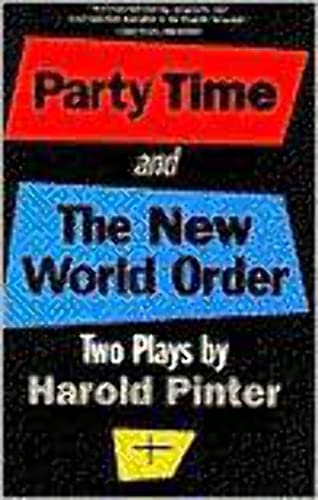
Two plays from the Nobel Prize winner that holds an undisputed place in the front ranks of contemporary playwrights.
These two plays, Party Time and The New World Order, work in chilling tandem, each demonstrating the inevitable brutality that comes with a total conviction of right.
Party Time is a terrifying portrait of the culpable indifference of a privileged class, of the cruelty engendered in its members by political disruption, and of their merciless extinction of dissent. At an elegant cocktail party, a stylish bourgeoisie discusses country clubs and summer homes, while below in the streets a sinister military presence protects them from the unmentionable horrors of poverty, vulgarity, squalor.
In The New World Order, two interrogators harass a man whom they condemn for his questioning of received ideas, and whom we know only as threat to their closed vision of democracy.
Die Inhaltsangabe kann sich auf eine andere Ausgabe dieses Titels beziehen.
Über die Autorin bzw. den Autor
Harold Pinter was born in the London borough of Hackney in 1930. During World War II, Pinter and his family escaped the Blitzkrieg by moving to Cornwall and Reading, which had a profound impact on him. In 1948 Pinter entered the Royal Academy of Dramatic Arts, but after two years he dropped out.
The Room, Pinter’s first play, was written in 1957 and was performed as a student production and the University of Bristol. Pinter’s second play, and one of his best known, The Birthday Party (1957), was initially ill-received by the critics, but with The Caretaker (1960) Pinter secured his theatrical status.
Some of Pinter’s most celebrated theatrical works include Landscape (1968), The Homecoming (1964), Betrayal (1978), and The Go-Between (1980). In 2005, the Swedish Academy awarded Pinter the Nobel Prize in Literature stating that “in his plays [he] uncovers the precipice under everyday prattle and forces entry into oppression’s closed rooms.”
„Über diesen Titel“ kann sich auf eine andere Ausgabe dieses Titels beziehen.
Suchergebnisse für Party Time and The New World Order: Two Plays

Beispielbild für diese ISBN
Party Time and The New World Order
Verlag:
Grove Press (edition First Edition), 1993
ISBN 10: 0802133525
ISBN 13: 9780802133526
Gebraucht
Paperback
Erstausgabe
Anbieter: BooksRun, Philadelphia, PA, USA
Verkäuferbewertung 5 von 5 Sternen

Paperback. Zustand: Fair. First Edition. The item might be beaten up but readable. May contain markings or highlighting, as well as stains, bent corners, or any other major defect, but the text is not obscured in any way. Artikel-Nr. 0802133525-7-1
Gebraucht kaufen
EUR 4,42
Versand gratis
Versand innerhalb von USA
Versand innerhalb von USA
Anzahl: 1 verfügbar
Beispielbild für diese ISBN
Party Time and the New World Order
Anbieter: ThriftBooks-Atlanta, AUSTELL, GA, USA
Verkäuferbewertung 5 von 5 Sternen
Paperback. Zustand: Fair. No Jacket. Readable copy. Pages may have considerable notes/highlighting. ~ ThriftBooks: Read More, Spend Less. Artikel-Nr. G0802133525I5N00
Gebraucht kaufen
EUR 6,38
Versand gratis
Versand innerhalb von USA
Versand innerhalb von USA
Anzahl: 1 verfügbar
Beispielbild für diese ISBN
Party Time and the New World Order
Verlag:
Grove/Atlantic, Incorporated, 1993
ISBN 10: 0802133525
ISBN 13: 9780802133526
Gebraucht
Softcover
Anbieter: Better World Books, Mishawaka, IN, USA
Verkäuferbewertung 5 von 5 Sternen
Zustand: Good. 1 Edition. Former library copy. Pages intact with minimal writing/highlighting. The binding may be loose and creased. Dust jackets/supplements are not included. Includes library markings. Stock photo provided. Product includes identifying sticker. Better World Books: Buy Books. Do Good. Artikel-Nr. 5658461-6
Gebraucht kaufen
EUR 11,02
Versand gratis
Versand innerhalb von USA
Versand innerhalb von USA
Anzahl: 1 verfügbar
Foto des Verkäufers
Party Time ; and, the New World Order: Two Plays (Pinter, Harold)
Verlag:
Avalon Travel Publishing, 1993
ISBN 10: 0802133525
ISBN 13: 9780802133526
Gebraucht
paperback
Anbieter: WeBuyBooks, Rossendale, LANCS, Vereinigtes Königreich
Verkäuferbewertung 5 von 5 Sternen
paperback. Zustand: Very Good. Most items will be dispatched the same or the next working day. A copy that has been read, but is in excellent condition. Pages are intact and not marred by notes or highlighting. The spine remains undamaged. Artikel-Nr. rev5758236566
Gebraucht kaufen
EUR 12,22
EUR 5,27 Versand
Versand von Vereinigtes Königreich nach USA
Versand von Vereinigtes Königreich nach USA
Anzahl: 1 verfügbar
Foto des Verkäufers
Party Time ; and, the New World Order: Two Plays (Pinter, Harold)
Verlag:
Avalon Travel Publishing, 1993
ISBN 10: 0802133525
ISBN 13: 9780802133526
Gebraucht
paperback
Anbieter: WeBuyBooks, Rossendale, LANCS, Vereinigtes Königreich
Verkäuferbewertung 5 von 5 Sternen
paperback. Zustand: Good. Most items will be dispatched the same or the next working day. A copy that has been read but remains in clean condition. All of the pages are intact and the cover is intact and the spine may show signs of wear. The book may have minor markings which are not specifically mentioned. Artikel-Nr. rev1294190086
Gebraucht kaufen
EUR 12,22
EUR 5,27 Versand
Versand von Vereinigtes Königreich nach USA
Versand von Vereinigtes Königreich nach USA
Anzahl: 1 verfügbar
Beispielbild für diese ISBN
Party Time and the New World Order: Two Plays
Anbieter: Revaluation Books, Exeter, Vereinigtes Königreich
Verkäuferbewertung 5 von 5 Sternen
Paperback. Zustand: Brand New. 224 pages. 8.25x5.50x0.50 inches. In Stock. Artikel-Nr. x-0802133525
Neu kaufen
EUR 16,88
EUR 11,63 Versand
Versand von Vereinigtes Königreich nach USA
Versand von Vereinigtes Königreich nach USA
Anzahl: 2 verfügbar
Foto des Verkäufers
Party Time and The New World Order: Two Plays
Verlag:
Grove Press, New York, 1993
ISBN 10: 0802133525
ISBN 13: 9780802133526
Gebraucht
Softcover
Erstausgabe
Anbieter: Between the Covers-Rare Books, Inc. ABAA, Gloucester City, NJ, USA
Verkäuferbewertung 5 von 5 Sternen
Softcover. Zustand: Fine. First American edition. Trade paperback. Fine. Artikel-Nr. 316069
Gebraucht kaufen
EUR 27,16
EUR 4,83 Versand
Versand innerhalb von USA
Versand innerhalb von USA
Anzahl: 1 verfügbar
Foto des Verkäufers
Party Time and The New World Order
Verlag:
Grove Atlantic, Inc. Dez 1993, 1993
ISBN 10: 0802133525
ISBN 13: 9780802133526
Neu
Taschenbuch
Anbieter: AHA-BUCH GmbH, Einbeck, Deutschland
Verkäuferbewertung 5 von 5 Sternen
Taschenbuch. Zustand: Neu. Neuware - Two plays from the Nobel Prize winner that holds an undisputed place in the front ranks of contemporary playwrights.These two plays, Party Time and The New World Order, work in chilling tandem, each demonstrating the inevitable brutality that comes with a total conviction of right.Party Time is a terrifying portrait of the culpable indifference of a privileged class, of the cruelty engendered in its members by political disruption, and of their merciless extinction of dissent. At an elegant cocktail party, a stylish bourgeoisie discusses country clubs and summer homes, while below in the streets a sinister military presence protects them from the unmentionable horrors of poverty, vulgarity, squalor.In The New World Order, two interrogators harass a man whom they condemn for his questioning of received ideas, and whom we know only as threat to their closed vision of democracy. Artikel-Nr. 9780802133526
Neu kaufen
EUR 20,74
EUR 35,00 Versand
Versand von Deutschland nach USA
Versand von Deutschland nach USA
Anzahl: 2 verfügbar
Foto des Verkäufers
Party Time and The New World Order
Anbieter: moluna, Greven, Deutschland
Verkäuferbewertung 5 von 5 Sternen
Zustand: New. Born in London in 1930, Harold Pinter holds an undisputed place in the front ranks of contemporary playwrights. These two plays, Party Time and The New World Order, work in chilling tandem, each demonstrating the inevitable brutality that comes with a total. Artikel-Nr. 898723324
Neu kaufen
EUR 16,67
EUR 48,99 Versand
Versand von Deutschland nach USA
Versand von Deutschland nach USA
Anzahl: Mehr als 20 verfügbar